IOC Refugee Olympic Team to represent more than 100 million displaced people at the Olympic Games
- PARIS 2024
Thirty-six athletes from 11 different countries, hosted by 15 National Olympic Committees (NOCs) and competing across 12 sports were named today as members of the IOC Refugee Olympic Team for Paris 2024. The announcement was made by the International Olympic Committee (IOC) President, Thomas Bach, during a live-streamed ceremony from Olympic House in Lausanne, Switzerland. Appearing at the Olympic Games for the third time, the IOC Refugee Olympic Team will represent the more than 100 million displaced people around the world.
“We welcome all of you with open arms. You are an enrichment to our Olympic Community, and to our societies. With your participation in the Olympic Games, you will demonstrate the human potential of resilience and excellence. This will send a message of hope to the more than 100 million displaced people around the world. At the same time, you will make billions of people around the world aware of the magnitude of the refugee crisis. Therefore, I encourage everyone, around the world, to join us in cheering for you – the IOC Refugee Olympic Team” IOC President Thomas Bach said, when addressing all of the team members, who had joined the meeting virtually.
The composition of the team was approved by the IOC Executive Board (EB) and was based on a number of criteria including, first and foremost, each athlete’s sporting performance and their refugee status as verified by UNHCR, the UN Refugee Agency. Beyond that, the team represents the more than 100 million displaced people around the world. Consideration has also been given to a balanced representation of sport and gender, as well as the spread of countries of origin. The full list of athletes:
Farida Abaroge (donna, Etiopia, Francia, atletica)
Omid Ahmadisafa (uomo, Iran, Germania, pugilato)
Yahya Al Ghotany (uomo, Siria, Giordania, taekwondo)
Mohammad Amin Alsalami (uomo, Siria, Germania, atletica)
Amir Ansari (uomo, Afghanistan, Svezia, ciclismo su strada)
Sibghatullah Arab (uomo, Afghanistan, Germania, judo)
Matin Balsini (uomo, Iran, Regno Unito, nuoto)
Mahboubeh Barbari Zharfi (donna, Iran, Germania, judo)
Edilio Francisco Centeno Nieves (uomo, Venezuela, Messico, tiro sportivo)
Muna Dahouk (donna, Siria, Paesi Bassi, judo)
Jamal Abdelmaji Eisa Mohammed (uomo, Sudan, Israele, atletica)
Saeid Fazloula (uomo, Iran, Germania, canoa sprint)
Tachlowini Gabriyesos (uomo, Eritrea, Israele, atletica)
Eyeru Gebru (donna, Etiopia, Francia, ciclismo su strada)
Yekta Jamali Galeh (donna, Iran, Germania, sollevamento pesi)
Fernando Dayán Jorge Enríquez (uomo, Cuba, USA, canoa sprint)
Dorian Keletela (uomo, Repubblica Democratica del Congo, Francia, atletica)
Adnan Khankan (uomo, Siria, Germania, judo)
Perina Lokure (donna, Sudan del Sud, Kenya, atletica)
Iman Mahdavi (uomo, Iran, Italia, lotta libera)
Farzad Mansouri (uomo, Afghanistan, Regno Unito, taekwondo)
Alaa Maso (uomo, Siria, Germania, nuoto)
Kasra Mehdipournejad (uomo, Iran, Germania, taekwondo)
Cindy Ngamba (donna, Camerun, Regno Unito, pugilato)
Dina Pouryounes Langeroudi (donna, Iran, Paesi Bassi, taekwondo)
Mohammad Rashnonezhad (uomo, Iran, Paesi Bassi, judo)
Amir Rezanejad (uomo, Iran, Germania, canoa slalom)
Ramiro Mora Romero (uomo, Cuba, Regno Unito, sollevamento pesi)
Nigara Shaheen (donna, Afghanistan, Canada, judo)
Luna Solomon (donna, Eritrea, Svizzera, tiro sportivo)
Saman Soltani (donna, Iran, Austria, canoa sprint)
Musa Suliman (uomo, Sudan, Svizzera, atletica)
Manizha Talash (donna, Afghanistan, Spagna, breaking)
Hadi Tiranvalipour (uomo, Iran, Italia, taekwondo)
Jamal Valizadeh (uomo, Iran, Francia, lotta greco-romana)
Dorsa Yavarivafa (donna, Iran, Regno Unito, badminton)
Chef de Mission for the Refugee Olympic Team Masomah Ali Zada, who competed for the Refugee Olympic Team at Tokyo 2020, and was present today during the ceremony, welcomed the athletes: “All of you had a dream, and today your dream to compete at the Olympic Games is closer than ever. With all the challenges that you have faced, you now have a chance to inspire a new generation, represent something bigger than yourselves and show the world what refugees are capable of”.
She added: “I want to tell you: this will be your moment in Paris, enjoy it. I am looking forward to working with all of you to make this the experience of a lifetime”.
The vast majority of the athletes were selected from among the refugee athletes supported by the IOC through the Refugee Athletes Scholarship Programme, funded by the IOC’s Olympic Solidarity programme and managed by the Olympic Refuge Foundation.
UN High Commissioner for Refugees Filippo Grandi said: “The Refugee Olympic Team should remind us of the resilience, courage and hopes of all those uprooted by war and persecution. These athletes represent what human beings can do, even in the face of extreme adversity. The team also reminds us that sport can be transformative for people whose lives have been disrupted in often harrowing circumstances. Transformative not just for Olympians, but for everyone. Sport can offer respite, an escape from daily worries, a sense of safety, a moment of enjoyment. It can give people the chance to heal physically and mentally, and become part of a community again”.
For the first time, the Refugee Olympic Team will compete under its own team emblem – a unifying symbol bringing together diverse athletes and giving the team its own unique identity.
Hailing from different corners of the world, each team member is an individual with their own story. Like the 100 million they stand for, they also have the shared, lived, experience of their journeys – the emblem aims to convey this through its way marker arrow design.
At the centre of the emblem there is a heart, originating from the Olympic Refuge Foundation logo, to represent the belonging the team hopes to inspire and that athletes and displaced people around the world have found through sport.
Ms Ali Zada said: “This emblem brings us all together. We are all unified by our experience – though all different, we have all had a journey to get to where we are. The athletes are not representing a specific country, they are representing the Refugee Olympic Team – having our own emblem creates a sense of belonging and empowers us to also stand for the population of more than 100 million people who share this same experience. I cannot wait to wear it proudly!”.
Supporting refugees and displaced populations remains a key priority for the IOC, and is part of Recommendation 11 of Olympic Agenda 2020+5. The Olympic Refuge Foundation (ORF) was established in 2017 to build on this commitment. The Foundation functions in lieu of a traditional National Olympic Committee, managing the Refugee Athlete Scholarship-holders and the IOC Refugee Olympic Team for Paris 2024.
In addition to supporting elite athletes in their participation in the Olympic Games, the ORF works to provide access to safe sport for people affected by displacement worldwide. Through partnerships or its programmes across the globe, the ORF aims to build a movement where displaced people can enjoy the benefit of sports, wherever they may be, and through which sports can be adopted at all levels as a tool for supporting for refugees.
Since its inception in 2017, the work of the ORF has resulted in almost 400,000 young people being able to access safe sport. More than 1,600 coaches have been trained in delivering safe sport sessions, and its programmes have supported young people in 11 countries across all five continents.
Errigo and Tamberi, chosen as the Italian flag-bearers for Paris 2024, set to receive the Tricolore from Mattarella on 13 Jun
- ITALIA TEAM
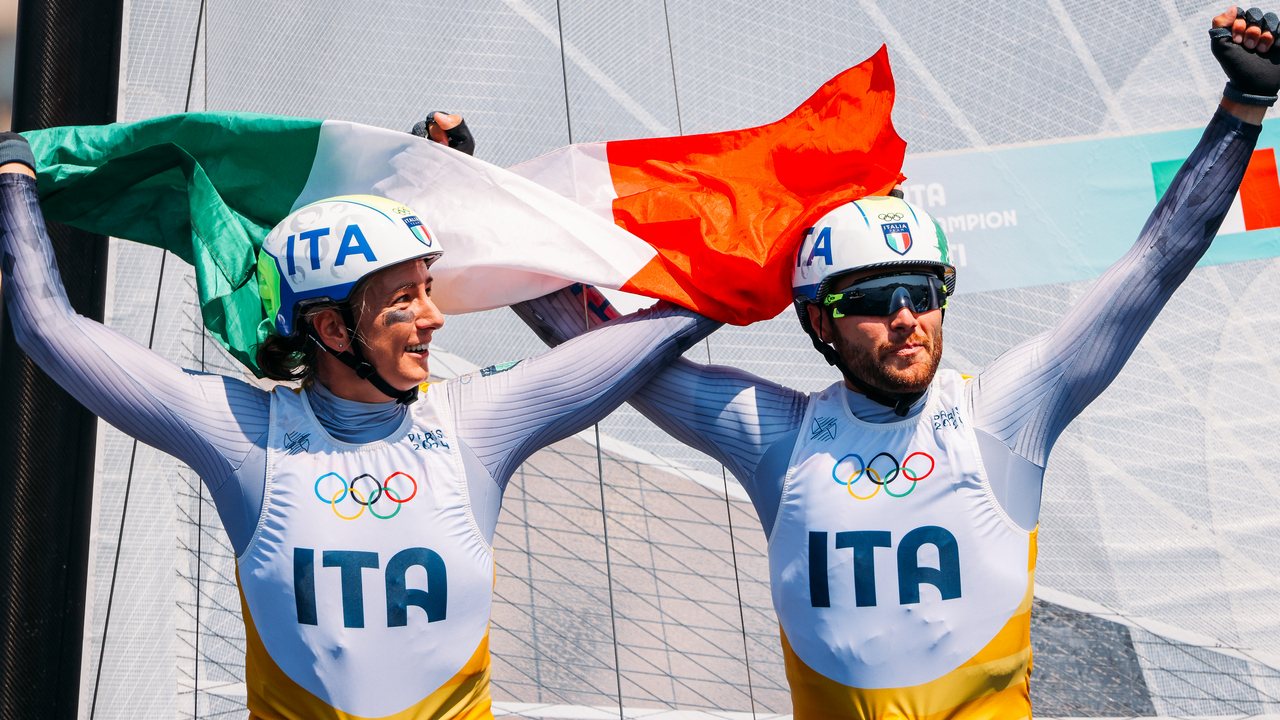
Arianna Errigo and Gianmarco Tamberi have been selected as the Italia Team's flag-bearers for the Paris 2024 Olympic Games. The announcement was made by CONI President Giovanni Malagò during the CONI National Council meeting.
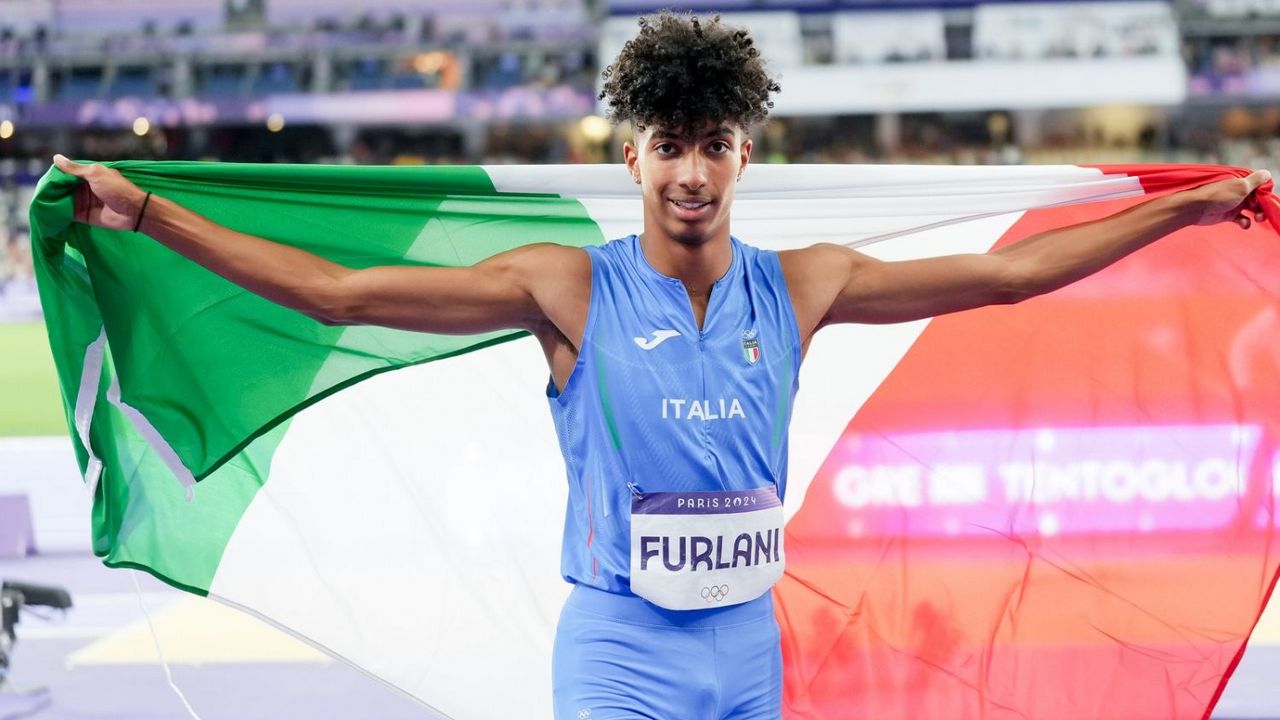
Arianna Errigo, a multiple champion in fencing, including a team foil gold medal and individual silver medal at London 2012, as well as a team bronze medal at Tokyo 2020, and mother to twins Mirea and Stefano, follows in the footsteps of Valentina Vezzali from the same discipline, who carried the flag for Italy in the London edition. Tamberi, Olympic champion in Tokyo 2020 and reigning world and European champion in the high jump, follows on in athletics from Pietro Mennea, who paraded the flag in Seoul in 1988. This is the second time in the history of the Summer Olympics that the Italian team has opted for two flag bearers, implementing indications from the IOC promoting gender equality among athletes: it had previously happened in Tokyo 2020 with Jessica Rossi (shooting) and Elia Viviani (cycling).
Errigo and Tamberi will receive the Tricolore from President of the Republic Sergio Mattarella on 13 June at 11 a.m. at the Quirinale, alongside the flag-bearers of the Italian Paralympic Committee.
The two standard-bearers will parade in the iconic opening ceremony, scheduled to take place along the Seine, on Friday 26 July.
Olympic flame for Paris 2024 lit in symbolic ceremony in Ancient Olympia
- OLYMPIC GAMES
On the eve of 100 days to go, the flame for the Olympic Games Paris 2024 has been lit. It was ignited at the historic birthplace of the Olympic Games in Ancient Olympia in Greece. The Olympic flame, embodying peace and hope, will now journey across Greece before coming to France. After arriving in Marseille on 8 May, it will travel across the entire country, and some French overseas territories, arriving at the Opening Ceremony in Paris on 26 July.
Amongst the dignitaries attending this historic event today were International Olympic Committee (IOC) President Thomas Bach, President of the Hellenic Republic, Her Excellency Katerina Sakellaropoulou, the Vice President of the European Commission, Margaritis Schinas, Paris 2024 Organising Committee President, Tony Estanguet, President of the French National Olympic Committee and IOC Member, David Lappartient, the IOC Members in France, Guy Drut and Jean-Christophe Rolland, the French Minister of Sports and the Olympic and Paralympic Games, Amélie Oudéa-Castéra, the Chair of the IOC’s Paris 2024 Coordination Commission, Pierre-Olivier Beckers Vieujant and the Mayor of Paris, Anne Hidalgo.
In his speech, in front of thousands of people, President Bach highlighted Paris 2024’s dedication to upholding the Olympic values and fostering global unity: "The Olympic Games are the only event that brings the entire world together in peaceful competition. The Olympic athletes send this powerful message: yes, it is possible to compete fiercely against each other and at the same time live peacefully together under one roof. The athletes will shine and show us what greatness humans are capable of with all their excellence, determination and resilience".
He continued: “This power of sport will make the Olympic Games Paris 2024 a great symbol of human excellence and unity of all humankind in all our diversity. These expectations are shared by billions of people around the world. In these difficult times we are living through, with wars and conflicts on the rise, people are fed up with all the hate, the aggression and negative news they are facing day in and day out. In their hearts – in all our hearts – we are longing for something which brings us together. We are longing for something that is unifying. We are longing for something that gives us hope”.
President Bach also spoke of the unified commitment to the success of Paris 2024, praising the innovative spirit of the Organising Committee, expressing confidence in France’s preparations and acknowledging the growing anticipation ahead of this summer’s Games.
He said: “This Olympic flame will carry this Olympic spirit from here, our ancient roots, through all of France and finally to Paris – making the City of Light shine even brighter. The Olympic flame will shine over the first Olympic Games inspired by our Olympic Agenda reforms from start to finish. These Olympic Games will be younger, more inclusive, more urban, more sustainable. These will be the very first Olympic Games with full gender parity, because the IOC allocated exactly 50 per cent of the places to female and male athletes”.
The ceremony also provided an opportunity to acknowledge the work being done by Paris 2024, together with stakeholders from the sporting, political and social sectors in France, in realising an important objective of Olympic Agenda 2020: creating a legacy well before the Olympic competitions have even started. Paris 2024’s concept of delivering “Games Wide Open” has engaged millions of people already by promoting physical activity, education, inclusion, equality and sustainability.
Paris 2024 Organising Committee President Tony Estanguet also spoke at the ceremony, sharing the collective anticipation of the host nation. He said: “France is ready to welcome the Olympic Games, a hundred years after the last summer edition on our soil. It is with great pride and honour that we will be hosting the Olympic Games in the country of their founder, Pierre de Coubertin, where we keep a very strong and special link with Olympism. After the first participation of women in the Games at Paris 1900 and the creation of the first Athletes' Village for Paris 1924, we are ready to write a new chapter in the great Olympic history with the third Games in Paris, France. We want to thank the IOC and Thomas Bach for the enduring help and support, all these years, which have allowed us to conceive and create Games that are not only spectacular, but also more responsible, notably from an environmental point of view, which will make them all the more exceptional. Together, we will organise great Games, and it starts today, with the Olympic Torch Relay”.
The lighting ceremony, held at the Temple of Hera, paid homage to the Olympic Games' Greek heritage, reinforcing the profound link between ancient traditions and the modern Games. The flame was kindled by the high priestess and, along with an olive branch symbolising peace, was passed to the first torchbearer.
This honour was given to Greek rower, Tokyo 2020 Olympic gold medallist Stefanos Douskos, who then passed it on to Laure Manaudou, the first French torchbearer on Greek soil and an Olympic champion at Athens 2004. The flame will now travel onwards, first embarking upon an 11-day journey across Greece, during which the flame will be carried over 5,000 kilometres, through 43 municipalities.
The Olympic flame will then be passed on to the Paris 2024 Organising Committee at an official handover ceremony in the Panathenaic Stadium in Athens before it boards the historic French three-masted ship, Belem. It’s voyage across the Mediterranean will then begin, a journey reflecting the enduring friendship between Greece and France, arriving in the port of Marseille on 8 May, marking the beginning of celebratory festivities in the host nation.
Around 10,000 torchbearers will then carry the Olympic flame over the following 69 days. The route will take them through around 400 cities, across 65 regions in France, and includes visits to six overseas territories (Guadeloupe, French Guiana, Martinique, French Polynesia, Réunion and New Caledonia).
The Olympic Games Paris 2024 begin on 26 July and will continue until 11 August. Thereafter, the Paralympic Games will take place from 28 August until 8 September.
Paris 2024 Olympic Flame Lighting ceremony
- SYMBOLIC MOMENT
The lighting of the Olympic flame is a symbolic moment that has been a tradition of the Olympic Games since 1936. The flame not only represents the positive values that man has always associated with the symbolism of fire, such as peace and friendship, but also acts as a link between the ancient and modern Games.
The Olympic flame that will burn throughout the Olympic Games Paris 2024 will be lit during a ceremony on Tuesday 16 April in an ritual that harks back to the traditions of Ancient Greece.
The idea for the Olympic flame itself comes from the ceremonies of the ancient Olympic Games, which took place in Olympia, Greece on the very site where the Olympic flame lighting ceremony will take place for Paris 2024.
To the ancient Greeks, fire was a sacred element, and perpetual fires were maintained in front of their main temples. During the ancient Olympic Games, a flame burned permanently on the altar of the sanctuary of the goddess Hestia; additional fires were lit at the temples of Zeus and Hera.
Today, the Olympic flame is lit in front of the ruins of the temple of Hera by an actress playing the part of the high priestess, who uses a parabolic dish (known to the ancient Greeks as a Skaphia) to concentrate the sun’s rays and ignite her torch.
The Olympic flame is placed in an urn and brought to the ancient stadium by Hestiada (the priestess keeper of the fire), where it is handed over by the high priestess to a torchbearer along with an olive branch - a universal symbol of peace.
The torchbearer then carries the flame to the Coubertin Grove on the site of the International Olympic Academy, where it is used to light an altar beside the monument in which the heart of Pierre de Coubertin, the founder of the modern Olympic movement, is interred.
At this point, the torchbearer passes the Olympic flame to a second torchbearer, who represents the host country of the Olympic Games - for 2024, this is of course France!
The Olympic flame will then be carried throughout Greece during an 11-day relay, in which more than 550 torchbearers will carry the flame.
The Olympic flame will arrive in Athens ahead of the handover ceremony to the Paris 2024 organising committee at the Panathenaic Stadium on Friday 26 April, with the event getting underway at 17:30 CEST.
Following the ceremony, the Olympic flame will spend the night at the French Embassy in Athens before boarding the Belem (a famous three-masted ship that first launched in 1896) the following day to head for Marseille, France, where it will arrive to great fanfare on 8 May.
The Olympic flame lighting ceremony will take place on 16 April at 10:30 CEST and you can watch every moment live on Olympics.com.
Coverage of the flame lighting ceremony will start at 10:15 CEST.
EOC Executive Committee awards 2027 European Games to Istanbul
- FOURTH EDITION
The European Olympic Committees (EOC) Executive Committee (ExCom) at the meeting held on March 20th unanimously awarded the 4th edition of the European Games, in 2027, to Istanbul.
The carefully-considered decision was taken after EOC Sport Director, Peter Brüll, presented a detailed evaluation report to the ExCom. The report follows an evaluation visit to Istanbul by a delegation of EOC experts in early March. The EOC experts looked at all aspects of the city’s capabilities to host the Games including venues, transport, security, accommodation and athlete facilities.
Commenting on the ExCom decision, EOC President Spyros Capralos said: “The EOC is delighted to have approved Istanbul’s candidature to host the European Games 2027. It is a great news for both Europe’s athletes and the city. Istanbul and Turkey have long been good friends of international sport, with Istanbul having woven sport into the fabric of everyday life for the benefit of its citizens. We know it will be the perfect place for Europe’s best athletes to shine in 2027”.
Further building on the success of Kraków-Malopolska 2023, the EOC and the Istanbul team resolved to ensure an even higher proportion of the competitions serve as qualification events for the Olympic Games LA 2028. This would enable future Turkish Olympians to qualify on home soil, supported by a home audience that includes friends and family.
Istanbul’s venue plan for the European Games 2027 would see no additional construction beyond the venues either already built or already planned for the city.
The Executive Committee’s decision will be presented to the EOC General Assembly in Bucharest in June, for final approval and signing of the relevant contracts.
Photo ANSA
Kite: Riccardo Pianosi and Maggie Eillen Pescetto selected for the Olympic Games
- SAILING
It will be Riccardo Pianosi and Maggie Eillen Pescetto defending the colours of the Italia team in the men's and women's kite races at the Olympic Games.
The Italian sailors chosen for Paris 2024 (although the sailing competitions will be held in Marseille) are the same individuals who secured their Olympic berths at last year's World Championships.
“This is a particularly happy moment in my career,” says Pianosi, fresh from his third consecutive European medal. “Knowing that I will be representing my country at the Olympic Games is a source of great pride. I can't really find the right words to describe this moment, but I feel I must thank everyone who has been close to me: my family and my girlfriend, who have always given me a hand, even in difficult moments, enabling me to achieve this goal. Thanks to the federation and the Navy who made this possible. I'm looking forward to the Games and, dare I say, aiming for a noteworthy performance. I think I can do it and bring home a great result for my country.”
Pescetto was also enthusiastic: “Being able to represent Italy at the Olympic Games is news that left me speechless. The dedication and effort of these years have finally paid off with an opportunity that enables me to fulfil a dream that began long ago. I had discussed it with my grandfather, my greatest supporter and the individual to whom I wholeheartedly dedicate this moment: I knew the road would be long, but he has always supported me as well as my family and my mother, in particular, who has always been close to me. There were challenging moments, as it's natural for any athlete to experience, but all those difficulties fade away when you achieve such a prestigious goal. The great happiness will turn into motivation to give my best”.
World Cup, mission accomplished for the Italian sabre fencers: all of Italy's teams have qualified for Paris
- FENCING
The last stage of Olympic qualification for the men's sabre national team closed with a smile.
The quartet of Luigi Samele, Luca Curatoli, Pietro Torre and Michele Gallo, who were competing in the World Cup on the Budapest (Hungary) pistes, managed to win the ticket for the 2024 Summer Olympics in Paris.
Italy’s (photo FIS) path in the team competition began with a commanding 45-33 triumph over China, only to be halted in the quarter-finals by the United States, who clinched the victory with a score of 45-39.
For coach Nicola Zanotti's boys, the subsequent elimination of Germany in the semifinals, beaten 45-39 by South Korea, was decisive, allowing the Italian team to consolidate its status as the best European nation behind the top four teams in the world ranking.
Italian fencing has achieved a clean sweep in Olympic qualifications, securing spots for the foil teams, as well as those of epee and sabre for women. Just like in Tokyo 2020, they'll be heading to the French capital with all six of their representatives.
Doha World Championships, 10 km: Acerenza and Verani deliver two Olympic passes to Italia Team
- MARATHON SWIMMING
Italy did not fail to show up in the men's 10 km of marathon swimming.
At the World Championships in Doha, Qatar, Domenico Acerenza (photo Federnuoto) swam an excellent race without ever losing contact with the leading group and eventually finished in seventh place with a time of 1:48:30.40.
Also doing well was the other Italian athlete in the race, Dario Verani, who, thanks to a splendid second half of the race, finished right behind his national teammate, in eighth place with a time of 1:48:30.80.
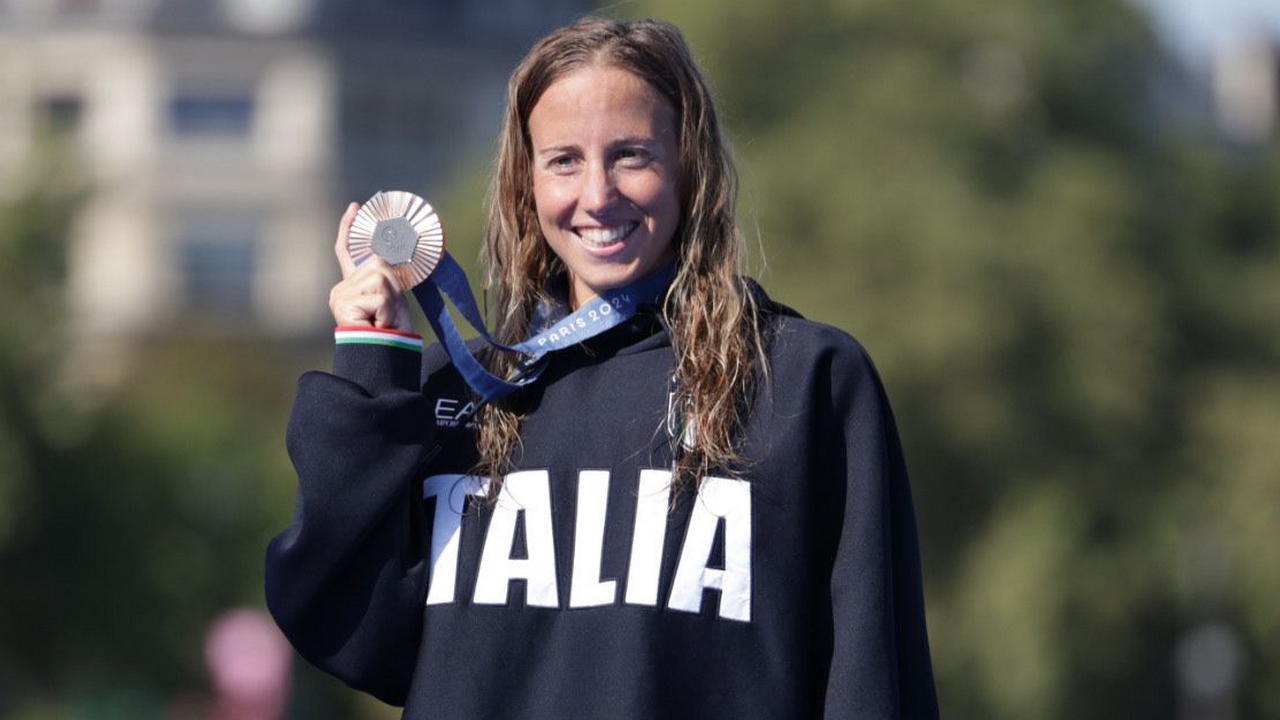
Their respective final positions guarantee an Olympic pass apiece (nation place) for the Italia Team for Paris 2024. That means two more Olympic quota spots in addition to the one won in the women's race by Arianna Bridi.
Olympic pass for Antonio Esposito: the Italian will be in Paris 2024
- JUDO
The number of Italian judo athletes qualified for Paris 2024 has risen to eight.
After Manuel Lombardo, Christian Parlati, Alice Bellandi, Odette Giuffrida, Assunta Scutto, Asya Tavano, and Veronica Toniolo, Antonio Esposito has clinched the Olympic pass in the -81 kg category.
Protagonist of an excellent start to the season made even more precious by his victory at the Linz Grand Prix and consequent entry into the top 10 of the Olympic qualification ranking, the 2018 Tel Aviv European bronze medallist, who secured Italy a place for the French Games in his weight category, has been officially selected by the FIJLKAM National Technical Directorate.
The selection of Esposito (photo IJF) for the Olympic team is final, regardless of any potential alterations in the Olympic Ranking List, even if it benefits other Azzurri. This choice guarantees him a tailored preparation, ensuring an optimal approach to the prestigious event.
Women's Sabre World Cup: National team makes it to the quarter-finals in Sint-Niklaas and qualifies for the Olympic Games
- FENCING
Italian fencing wins another spot at Paris 2024.
With both the Italian foil and epee teams already qualified for the Olympic Games, it was the turn of the women's sabre national team to reach the goal in the last Olympic Qualification stage of the World Cup.
On the piste in Sint-Niklaas, Belgium, Michela Battiston, Martina Criscio, Chiara Mormile and Irene Vecchi (photo Federscherma) beat Greece 45-32, then were defeated 45-41 by Hungary in the quarter-finals. Ukraine's simultaneous victory over the United States in the same round sealed the outcome: Italy go to the Olympics.
The team's qualification allowed coach Nicola Zanotti to field three athletes in the individual Olympic competition.
At this point, only one team is missing for a clean sweep: next weekend in Budapest, the men's national sabre team will compete for the same goal. If the outcome is favourable, the Italian team will join all fencing teams in Paris.
Page 29 of 143