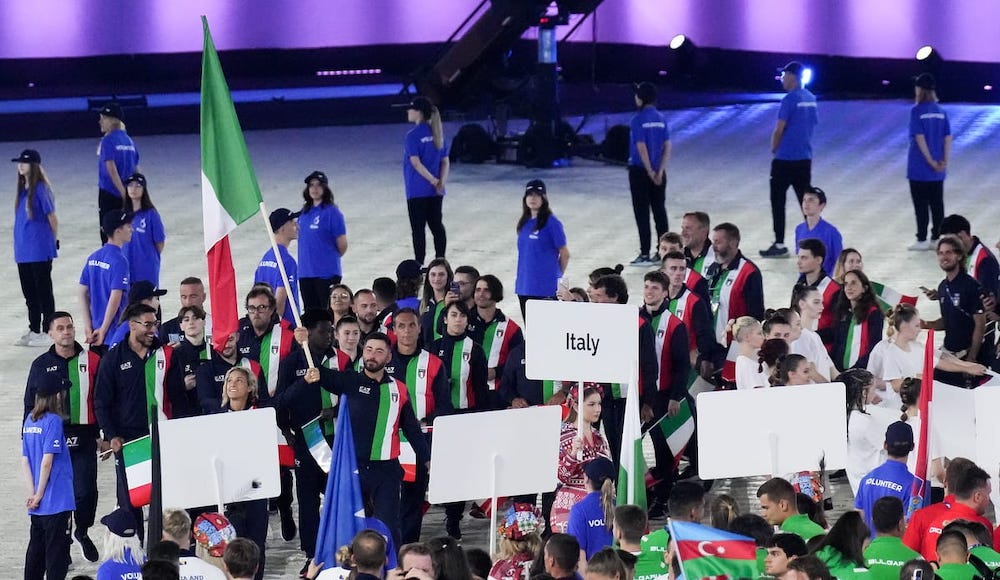
Record-breaking Italy says goodbye to Krakow with 100 medals, Malagò: “Fantastic”
- EUROPEAN GAMES
One hundred podiums, eleven Olympic passes and triumph in the medals table. The Italian team bids farewell to Krakow and the third edition of the European Games with record numbers. The final tally of Italian medals is impressive: 35 golds, 26 silvers and 39 bronzes, almost double the podiums won by Spain (57), Germany (63) and France (62).
The comparison with Baku 2015 (47 podiums) and Minsk 2019 (41 podiums) says a lot about the improvement of Italia Team, represented in Poland by 164 women and 165 men. In the 11 days of competition – with over 7,000 athletes competing in 28 different disciplines – the Italian team excelled across the board, gaining the mathematical certainty of triumph in the medals table with one day still to go.
No fewer than 12 medals (7 gold, 5 silver and 2 bronze) came from the Italian athletics squad, which also won the European Team Championships at the Silesian Stadium in Chorzow. An exceptional points haul also came from shooting, with seven golds, one silver and one bronze, as well as from kickboxing, with 6 golds, 2 silvers and 2 bronzes.
There was no room for improvement in modern pentathlon: Italy won both the men’s and women’s events with Giorgio Malan and Alice Sotero. Fencing did not disappoint either. In Krakow, the focus was on the team competitions, which also counted towards the European Championships, with Italia team climbing onto the podium for every weapon, eventually bringing home two golds, two silvers and as many bronzes. (photo Ferraro-Pagliaricci CONI)
“Simply fantastic! Italia Team honoured its country in the best possible manner, participating in the European Games in Krakow 2023 as one of the protagonists,” said CONI President Giovanni Malagò. “Italian athletes dominated the medals table in terms of the number of golds and the number of medals. Tonight we close a historic, record-breaking Games, in which Italian sport has once again demonstrated its strength in all disciplines.”
“My thanks,” he added, “go to the athletes, the technical staff and all the officials who have made it possible to write this wonderful, unique and indelible chapter of history. In addition to the 100 medals won, including 35 gold, 26 silver and 39 bronze, there were 11 Olympic quota passes won for the 2024 Games. The road to Paris is marked out and Italy is getting closer to its goal, well-aware of its potential, with the aim of bringing even greater joy to its supporters.”
Italy bids farewell to Krakow with Abbes Aziz Mouhiidine as flag-bearer at the closing ceremony in the Henryk Reyman Municipal Stadium and is already looking ahead to the next goals. The most important is just over a year away: the Paris 2024 Olympics.
In Poland, Italia team secured two individual passes in the pentathlon with Alice Sotero and Giorgio Malan, four individual passes in boxing – Giordana Sorrentino and Irma Testa for the women, Salvatore Cavallaro and Mouhiidine for the men, bringing men’s boxing back to the Olympic Games after an absence in Tokyo 2020 – and five national quota passes thanks to Chiara Pellacani in diving, Chiara Rebagliati in archery, Mauro De Filippis and Jessica Rossi in trap and Martina Bartolomei in skeet.
The total number of Italian passes for Paris 2024 therefore rises to 17, but the summer has just begun and there will be many more cards up for grabs. The Italian team is ready, as it demonstrated at the European Games in Krakow.
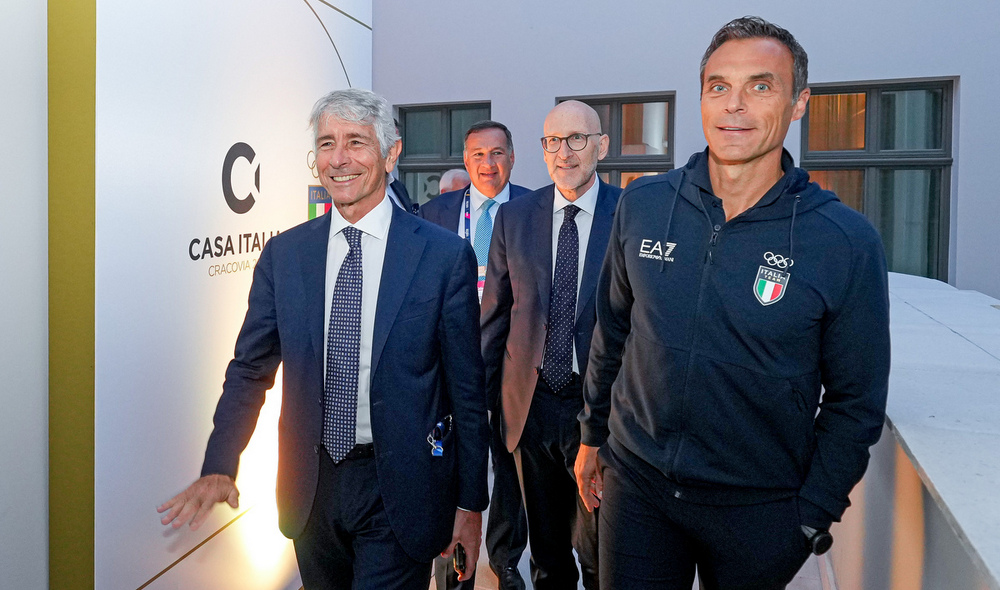
Sports Minister Abodi in Krakow 2023: “I allowed myself a trip to indulge my passion”
- EUROPEAN GAMES
Two days in Krakow to savour the spirit of the European Games. The Minister for Sport and Youth, Andrea Abodi, allowed himself “a trip to indulge his passion” to Poland to show the government’s support for the Italia Team participating in the European Olympic Committees’ event, set to close on Sunday.
Abodi arrived in Poland in the late afternoon yesterday and then took part that evening, with the Italian Ambassador to Poland, Luca Franchetti Pardo, and the President of the EOC, Spyros Capralos, at a dinner with athletes and representatives of the Italian delegation, starting with the CONI General Secretary, Carlo Mornati, and the Head of Mission, Alessio Palombi, and of the European Committees at Casa Italia, CONI’s hospitality house.
During the day the Minister, accompanied by Mornati, attended the Italian national team events in teqball and triathlon, before subsequently moving to the Tauron Arena for the fencing, which saw Italian fencers excel in the team trials of women’s foil (gold) and men's sabre (silver).
“I hope that one day we too can host the European Games, because Rome and Italy are part of the history of Europe,” said Abodi.
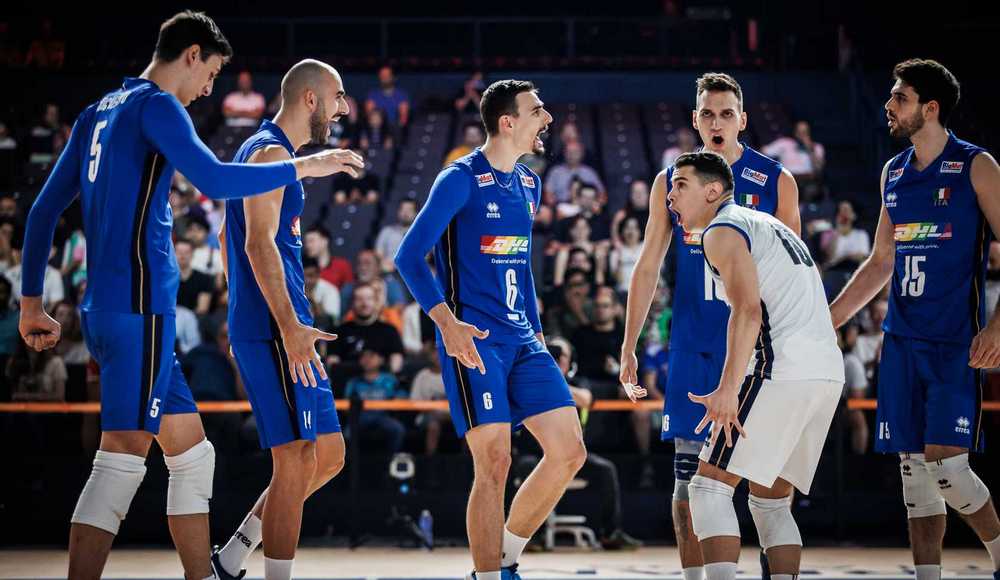
Calendar 2025-2028 approved by the FIVB Board of Administration
- VOLLEYBALL
The FIVB Board of Administration has today approved the FIVB volleyball calendar from 2025-2028, including holding the FIVB Volleyball World Championships biennially and aligning it with the pre-Olympic year.
These adjustments are part of the FIVB’s ongoing efforts to streamline the international volleyball calendar, aiming to enhance the overall fan experience while prioritising the health and wellbeing of the athletes as well as the needs of other key volleyball stakeholders.
As previously announced, the FIVB Volleyball World Championships has now expanded to include 32 teams per gender, with an enhanced competition formula that will be the same for both the men’s and women’s events. The revised format will see 32 teams divided into eight groups of four teams during the round-robin phase. The two best teams from each group will then progress to the direct knockout phase, encompassing the round of 16, quarterfinals, semifinals and final.
The qualification process for the FIVB Volleyball World Championships will see the host(s) secure automatic qualification alongside the reigning World Champion. In addition, the top three teams from each Continental Championship will qualify, with the remaining teams earning their spots through the FIVB World Rankings at the end of the national team season in the year prior to the World Championship.
Subject to approval from the International Olympic Committee, the new volleyball calendar principles will also streamline the qualification process for the Olympic Games Los Angeles 2028. The host nation (USA) will join the five Champions of the Continental Championships, the top three teams of the World Championships 2027 not yet qualified, and the three highest-ranked teams according to the World Ranking not yet qualified.
The FIVB Board of Administration also approved the creation of a working group responsible for determining the specific dates of the FIVB Volleyball Calendar 2025-2028 and presenting this for approval. The working group is composed of Aleksandar Boričić, the FIVB 2nd Executive Vice-President and CEV President, Madelein Meppelink, a FIVB Board of Administration member and the FIVB Athletes’ Commission President, and Fabio Azevedo, a FIVB Board of Administration member and FIVB General Director.
Regarding the bidding process for upcoming editions of the FIVB World Championships, the schedule has been confirmed as follows: August 2023 for the 2025 event, April 2024 for the 2027 event, and August 2024 for the 2029 event.
The detailed volleyball calendar from 2025, along with the hosts for upcoming major events, will be announced at a later stage through official FIVB channels.
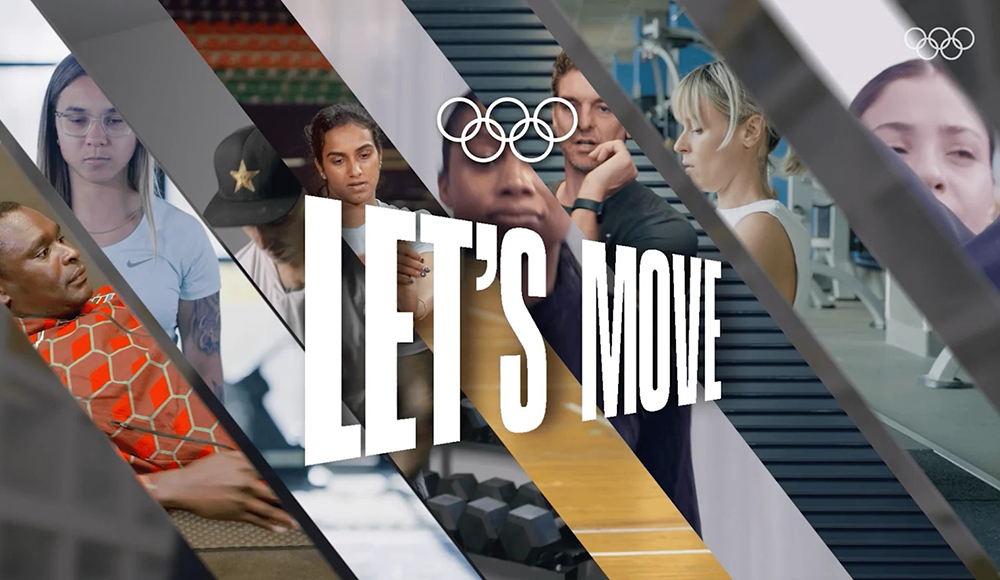
Federica Pellegrini and Francesco Totti supporting the “Let’s Move” campaign. Bach: “Sport unites us”
- OLYMPIC DAY
23 June, Olympic Day, and today, as every year, we celebrate the founding of the International Olympic Committee, founded in 1894. To mark the occasion, the IOC, in cooperation with the World Health Organisation (WHO), has launched an initiative to inspire and motivate the world to be physically active.
“Let’s Move” targets the world population with the aim of using Olympic Day to get active, in any way possible, in any place. Projects include a digital invitation from world sporting stars such as Pau Gasol, Yusra Mardini, Allyson Felix and PV Sindhu. Also participating in the initiative are the Azzurri of the Italia Team, the CONI National Athletes Commission and champions of the calibre of Federica Pellegrini and Francesco Totti. The aim is to schedule 30 minutes of physical activity, together with them, by participating in the “Let’s Move” digital workout in every corner of the globe.
For the occasion, International Olympic Committee President Thomas Bach emphasised the fundamental role that sport can play in inspiring people to exercise and lead a healthy, active lifestyle: “When we play sport, we keep our minds and bodies strong and healthy. When we play sport, it inspires us to always give our best. When we play sport, it makes us dream, spreads joy and unites us. When we play sport, we live by our new Olympic motto: Faster, Higher, Stronger – Together.”
“This,” added the IOC chief, “is the beauty of sport: it inspires the world to move and unites us all, as friends and as a community, regardless of where we are or what type of exercise we do.”
Se te lo dice er Pupone… alzati dal divano e cammina!💪💪💪#OlympicDay #letsmove @Olympics @Totti @Azzurri pic.twitter.com/EhrxgLlzVm
— CONI (@Coninews) June 17, 2023
Malagò at Casa Italia: “Krakow 2023 first real international test of the season”
- EUROPEAN GAMES
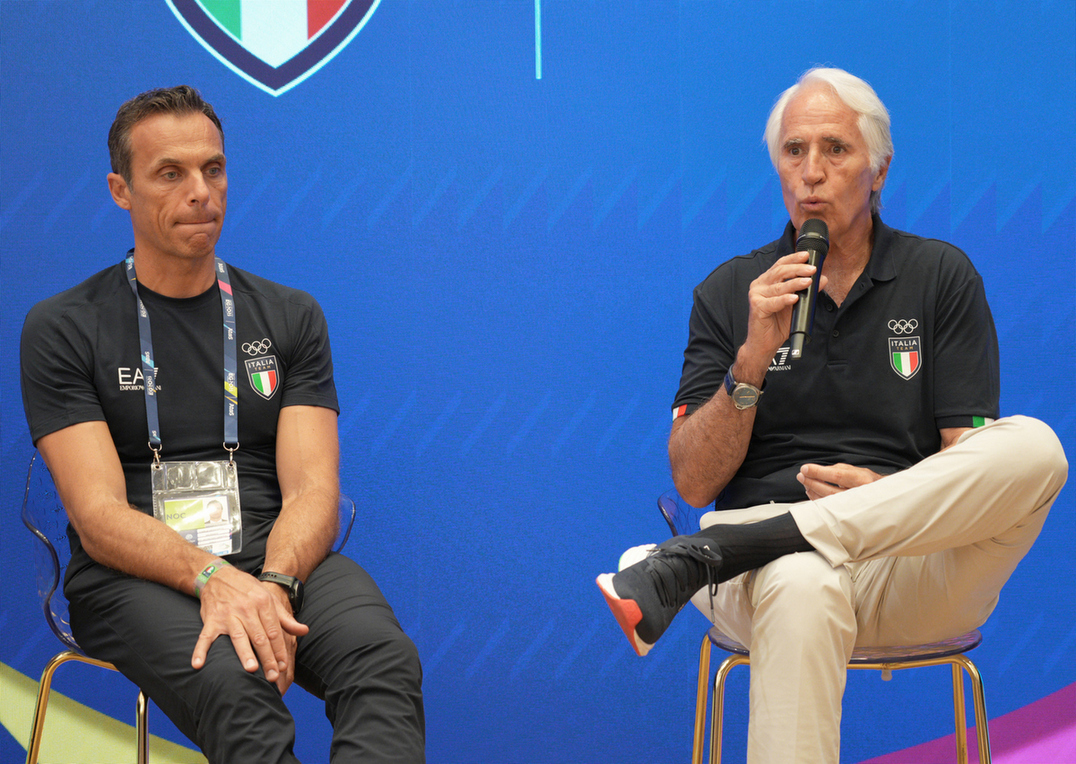
“In 11 sports there are passes for Paris 2024 up for grabs, nine other disciplines also offer a large points haul towards the Olympic rankings: they will be challenging competitions, Krakow 2023 is the first real test of the season.” These were the statements made by Giovanni Malagò at a press conference at Casa Italia in Krakow. The CONI President was welcomed to the Italian headquarters of the European Games 2023, the third edition of the multi-sport event dedicated to the continent’s Olympic Committees: “Casa Italia is now a real trademark,” underlined Malagò. “It’s fantastic. Watching the Italia Team athletes in their official kits, united, brings me closer to sport again.”
“The presence of Gianmarco Tamberi in the athletics team,” continued the CONI president, “gives prestige to our overall participation and makes us very proud. Athletics is the queen of the Games and he is the reigning Olympic champion. Here we have seven Olympic champions (Mauro Nespoli, Jessica Rossi, Gabriele Rossetti, Gianmarco Tamberi, Filippo Tortu, Fausto Desalu and Lorenzo Patta): we want to do better than in Minsk 2019, where we won 41 medals. We have what it takes. And there are also new sports. I expect a very good result from the hosts Poland. I also think that the small countries will win numerous medals: there will be a greater fragmentation than in the past. This challenging period for Jacobs? Today in the Italia Team there is a real sense of team spirit. Marcell experiences problems that any athlete could experience, but he is more exposed because of his popularity. I would like to add that we are also wholeheartedly behind the National Under-21 football team, which is ready to play in the European Championships, which also counts as a qualification round towards Paris 2024.”
“The European Games in Krakow are a unique event,” said CONI Secretary General Carlo Mornati. “The programme is completely new compared to the first two editions, and here in Poland the passes for the Paris 2024 Olympic Games are also up for grabs.”
The Italian National kit for the Paris 2024 Olympic and Paralympic Games
- ITALIA TEAM
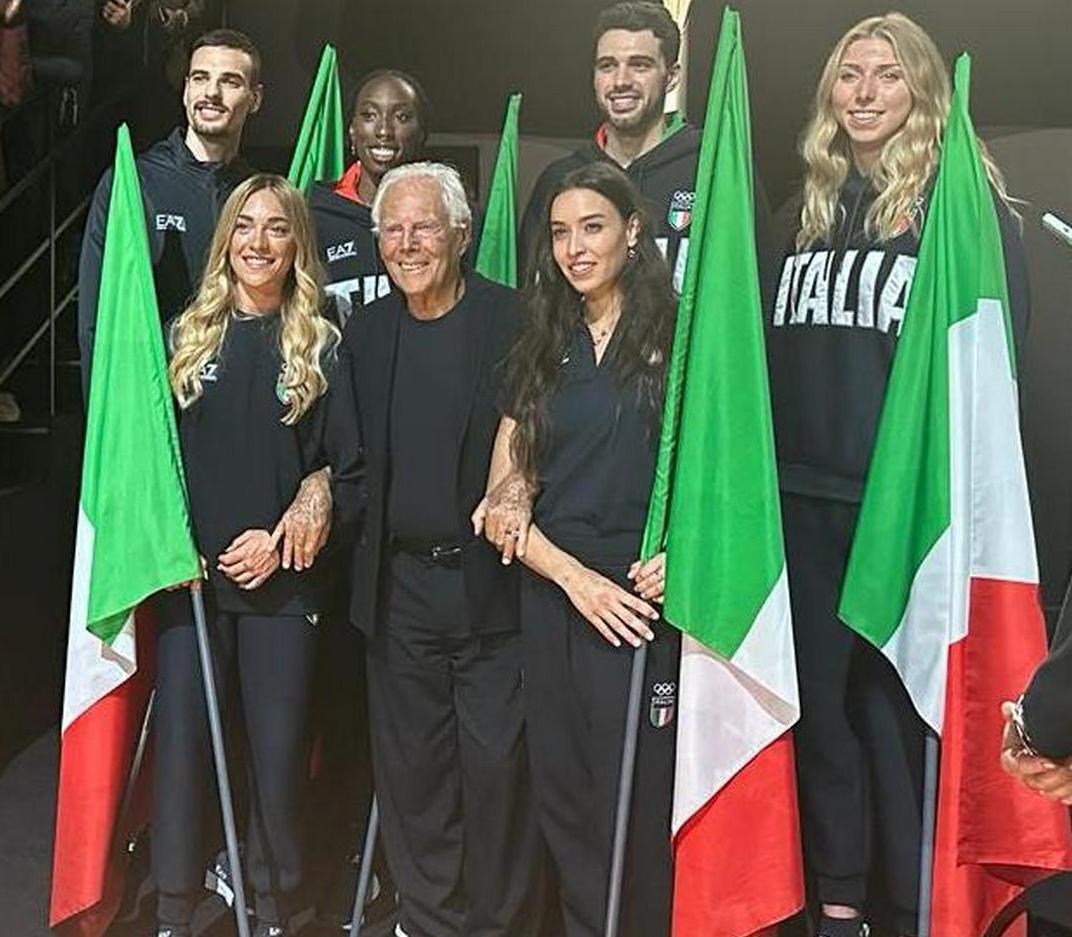
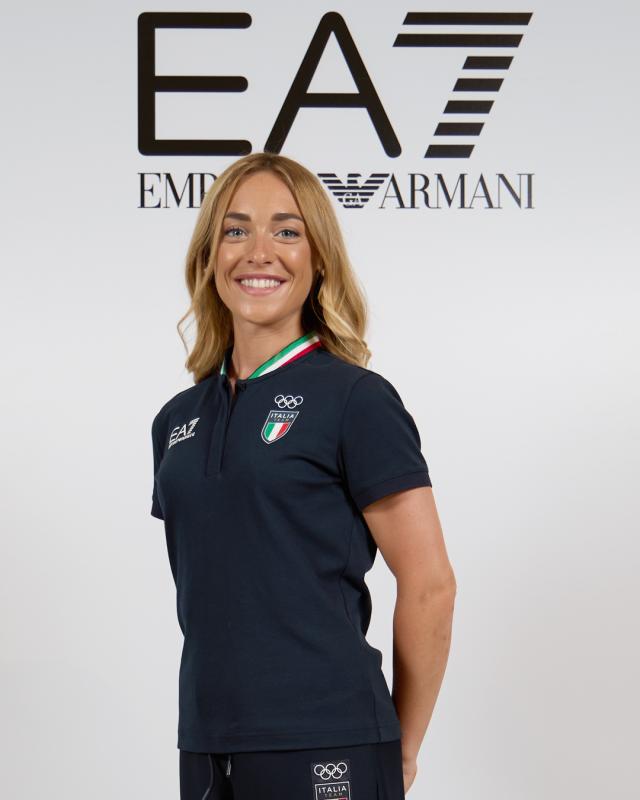
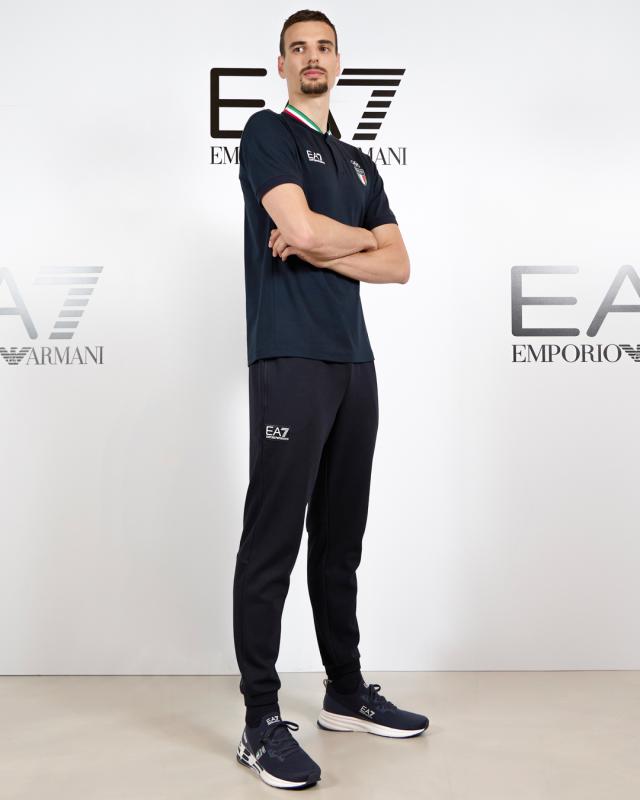
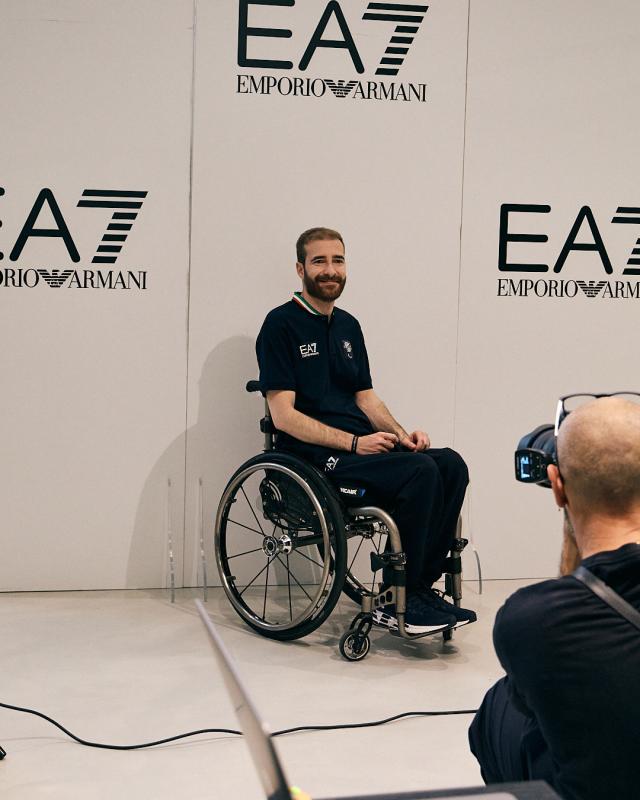
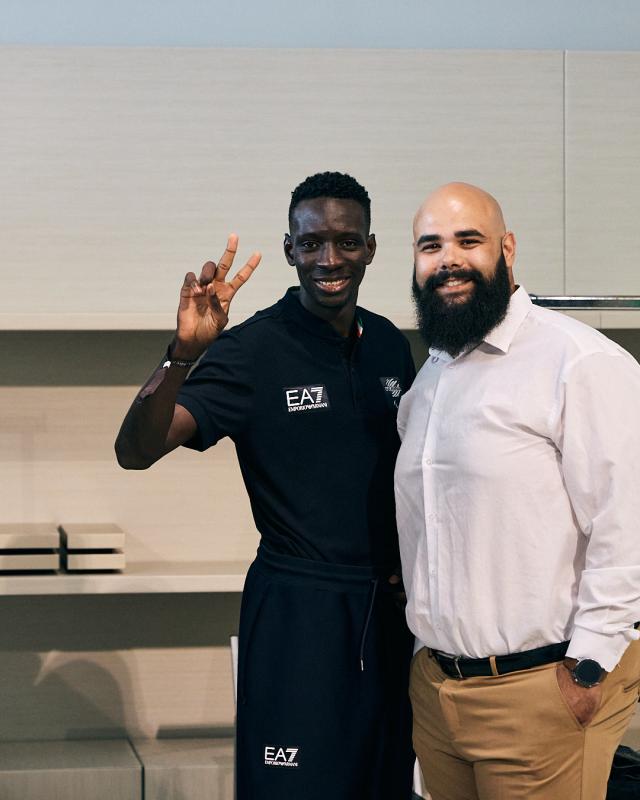
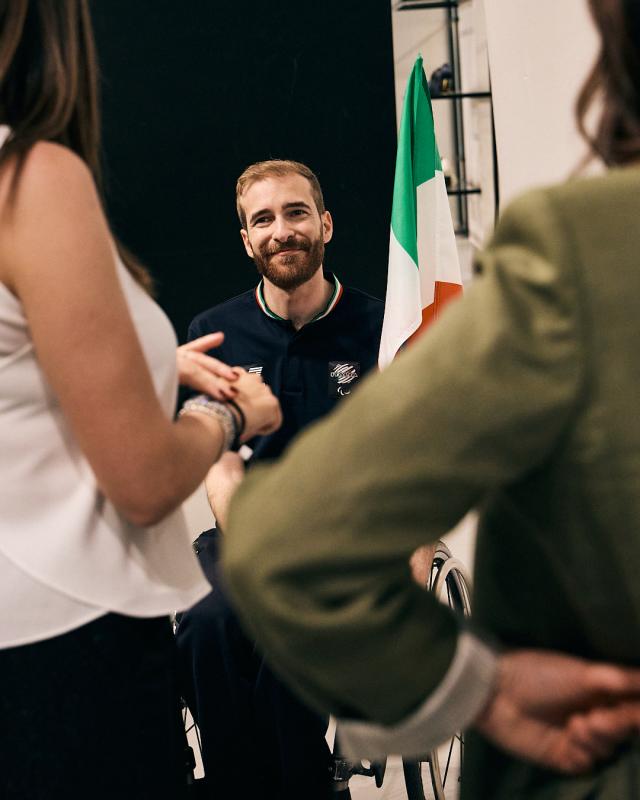
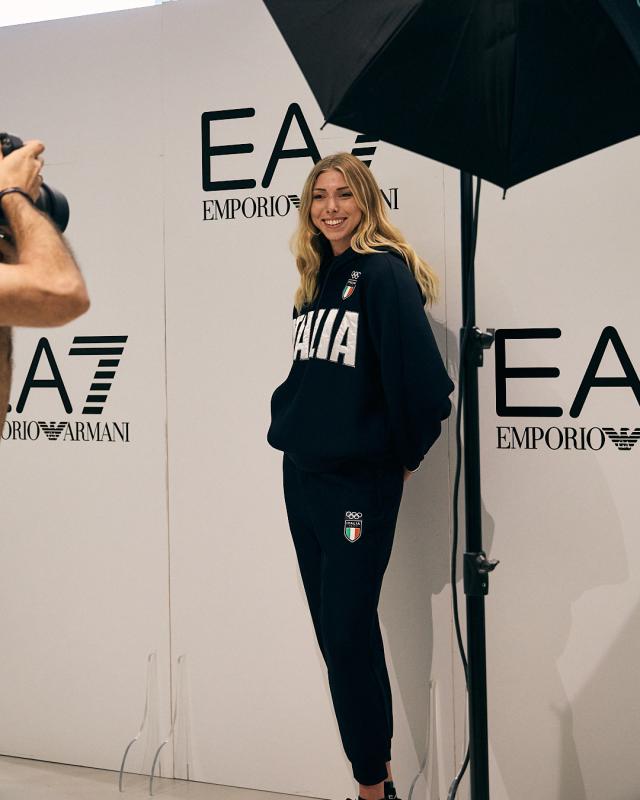
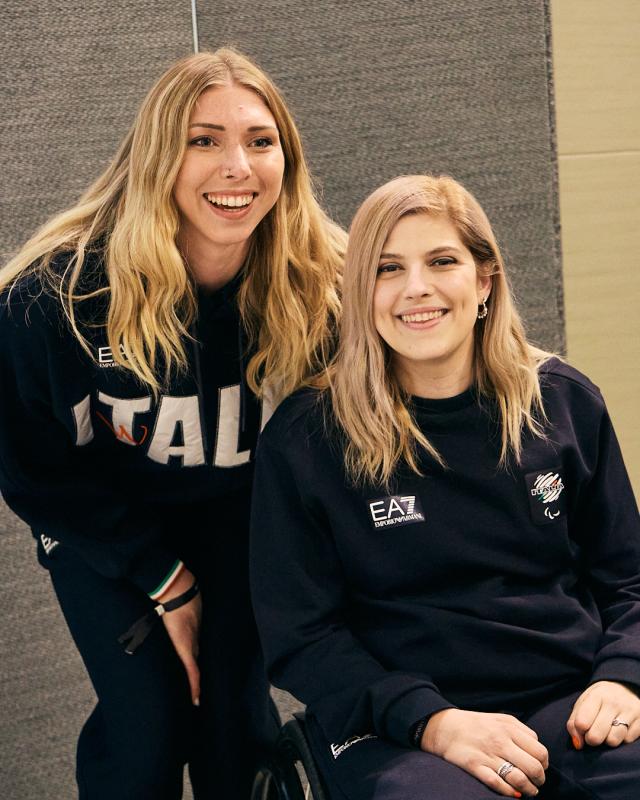
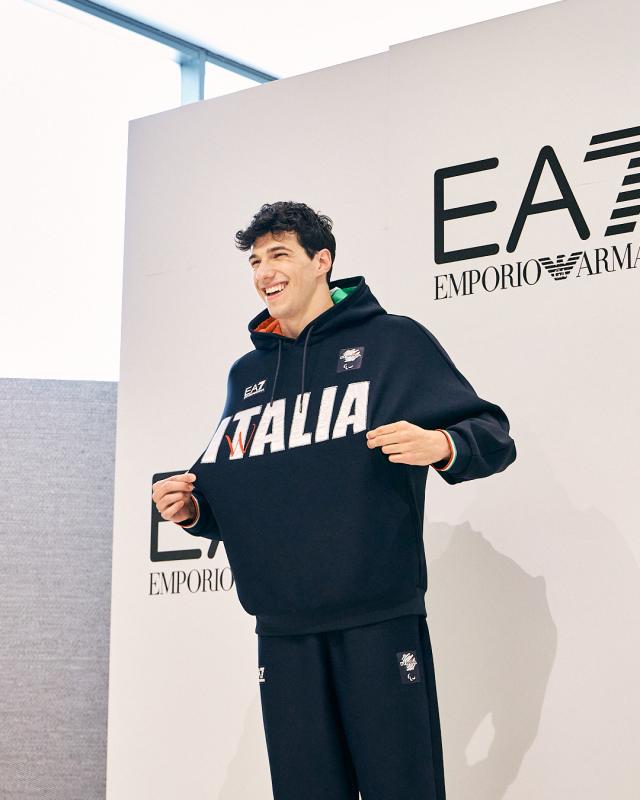
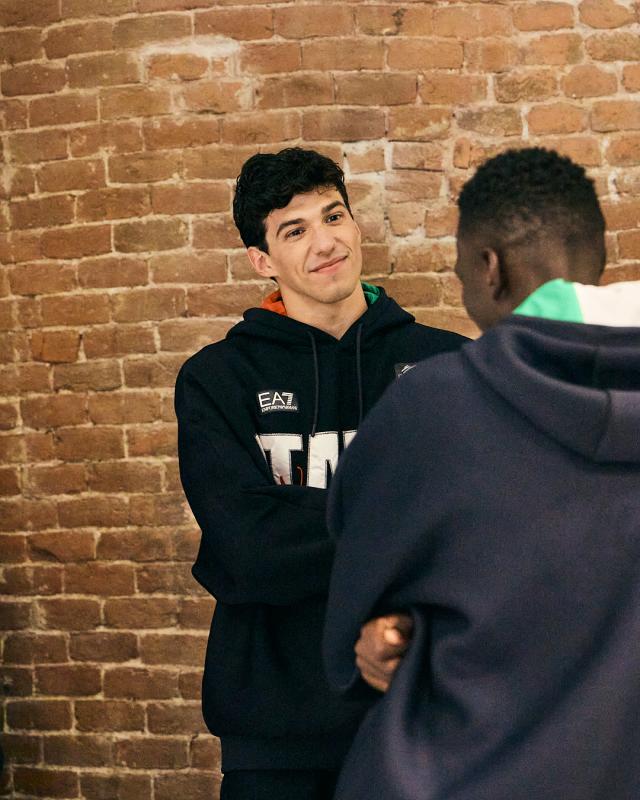
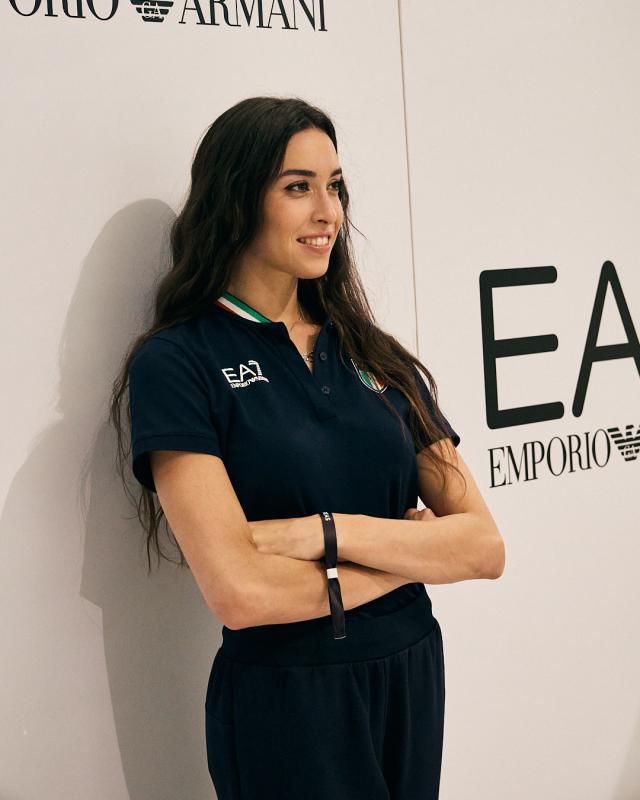
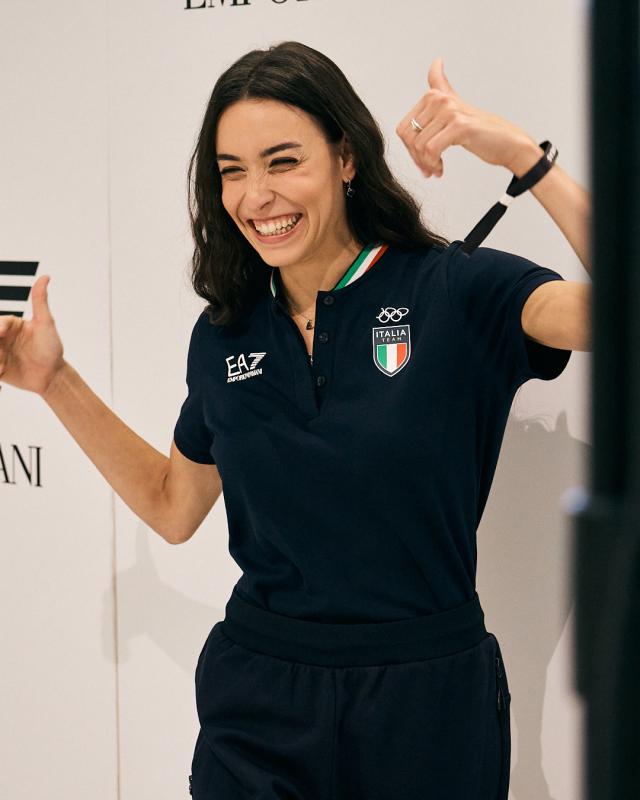
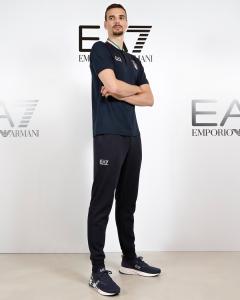
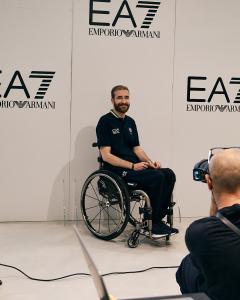
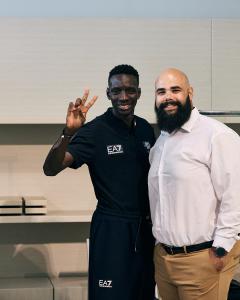
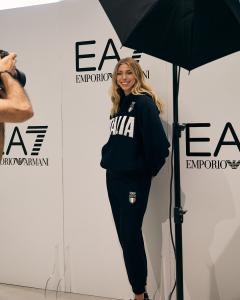
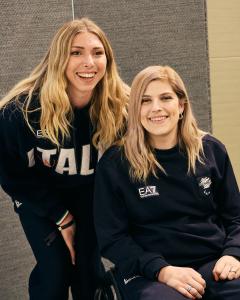
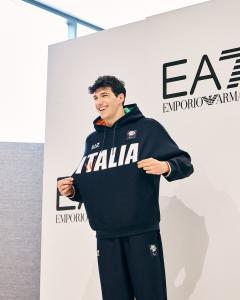
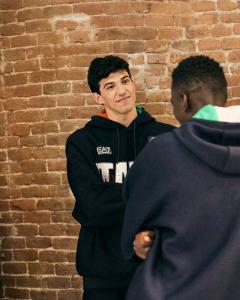
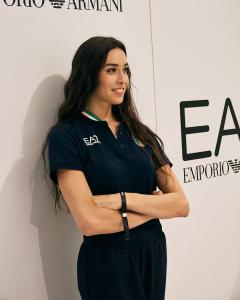
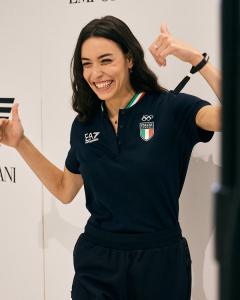
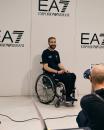
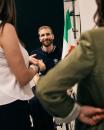
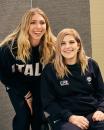
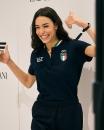
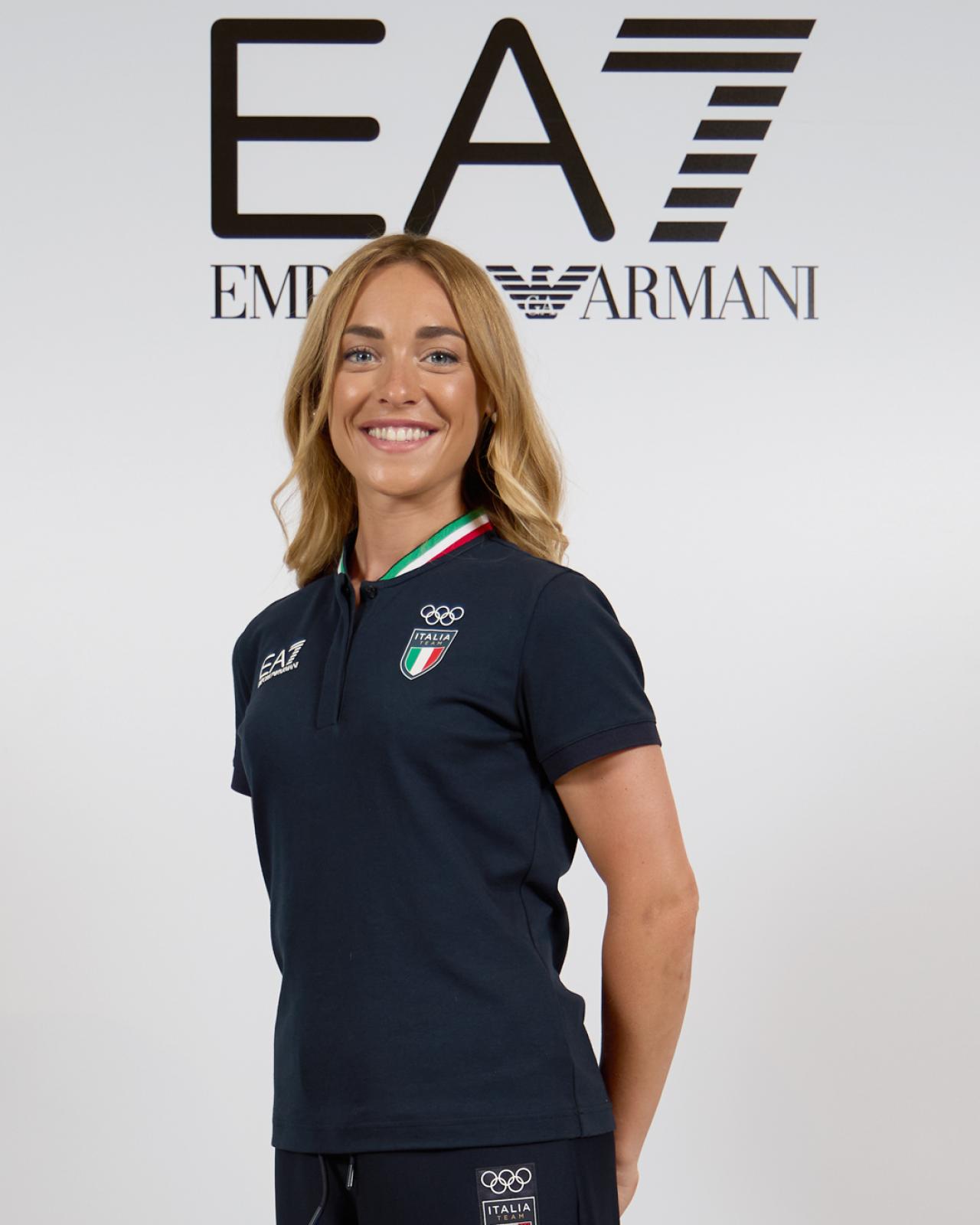
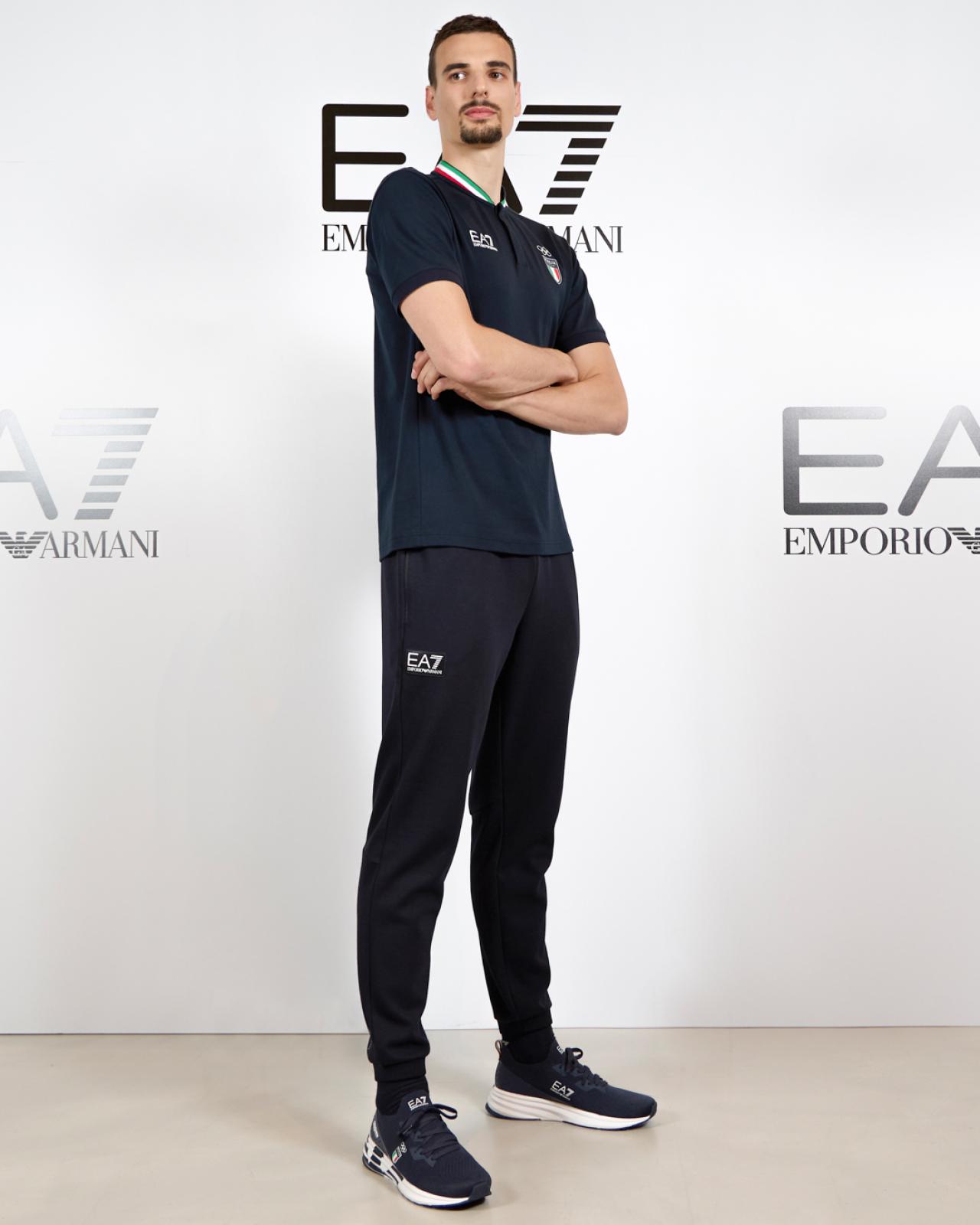
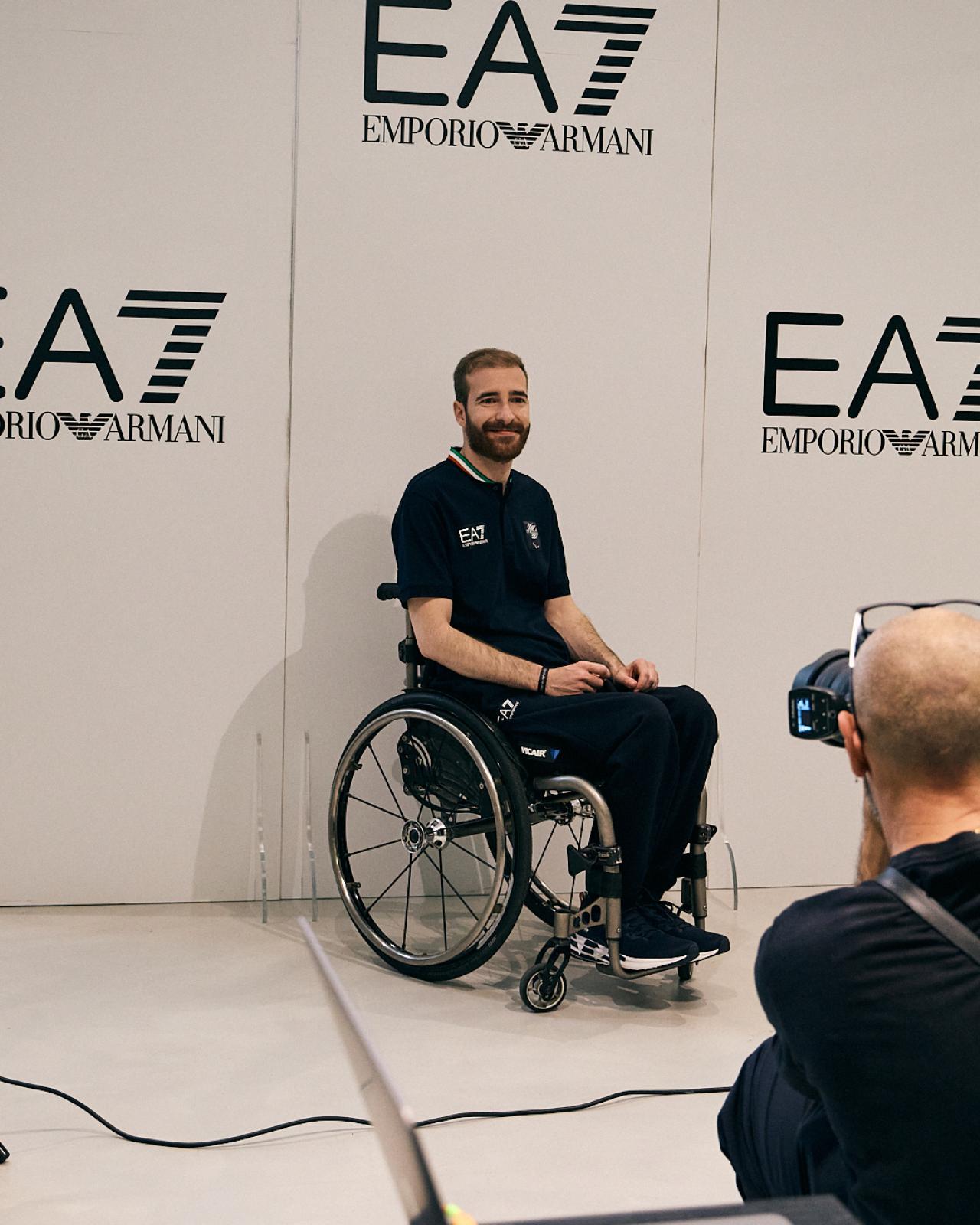
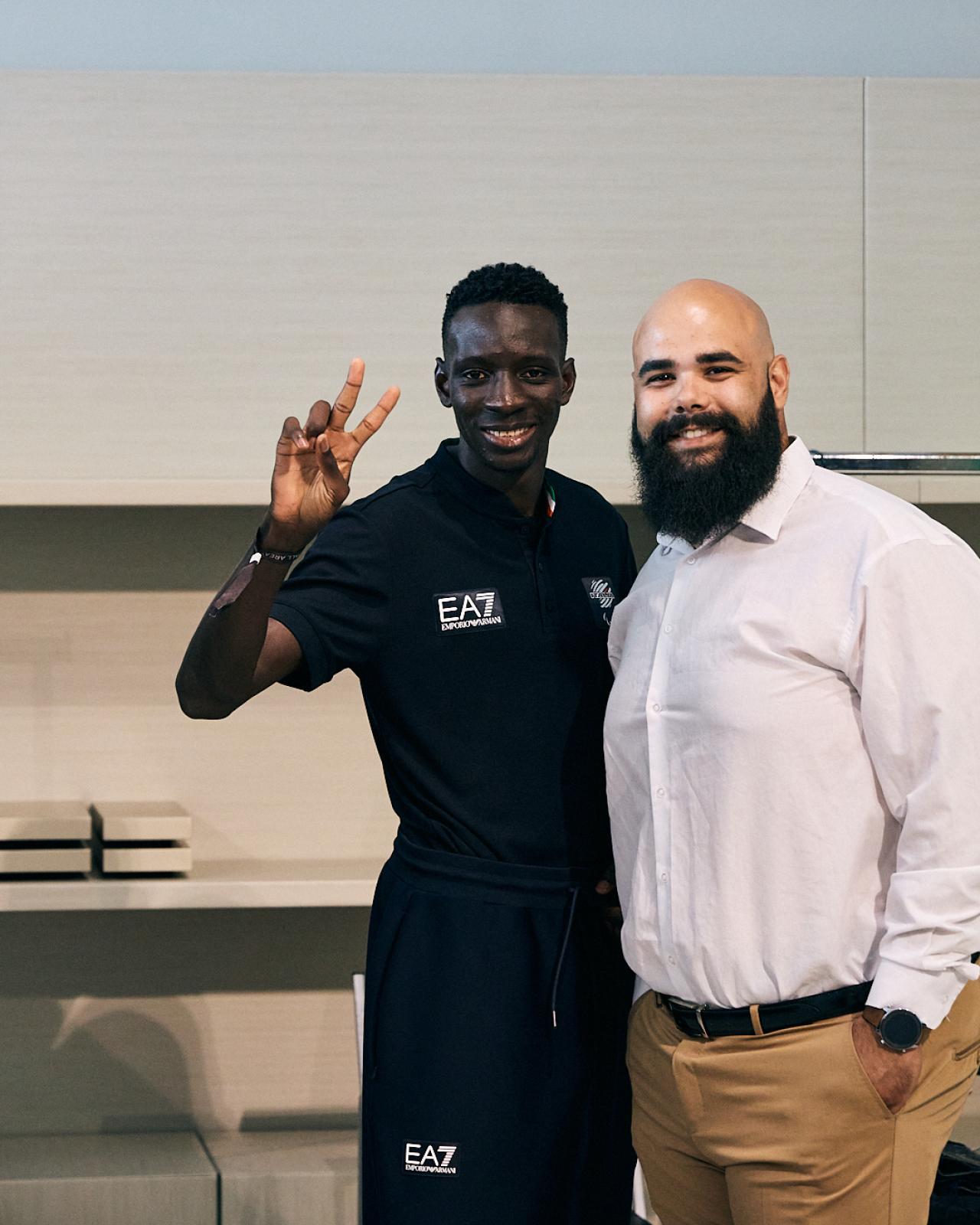
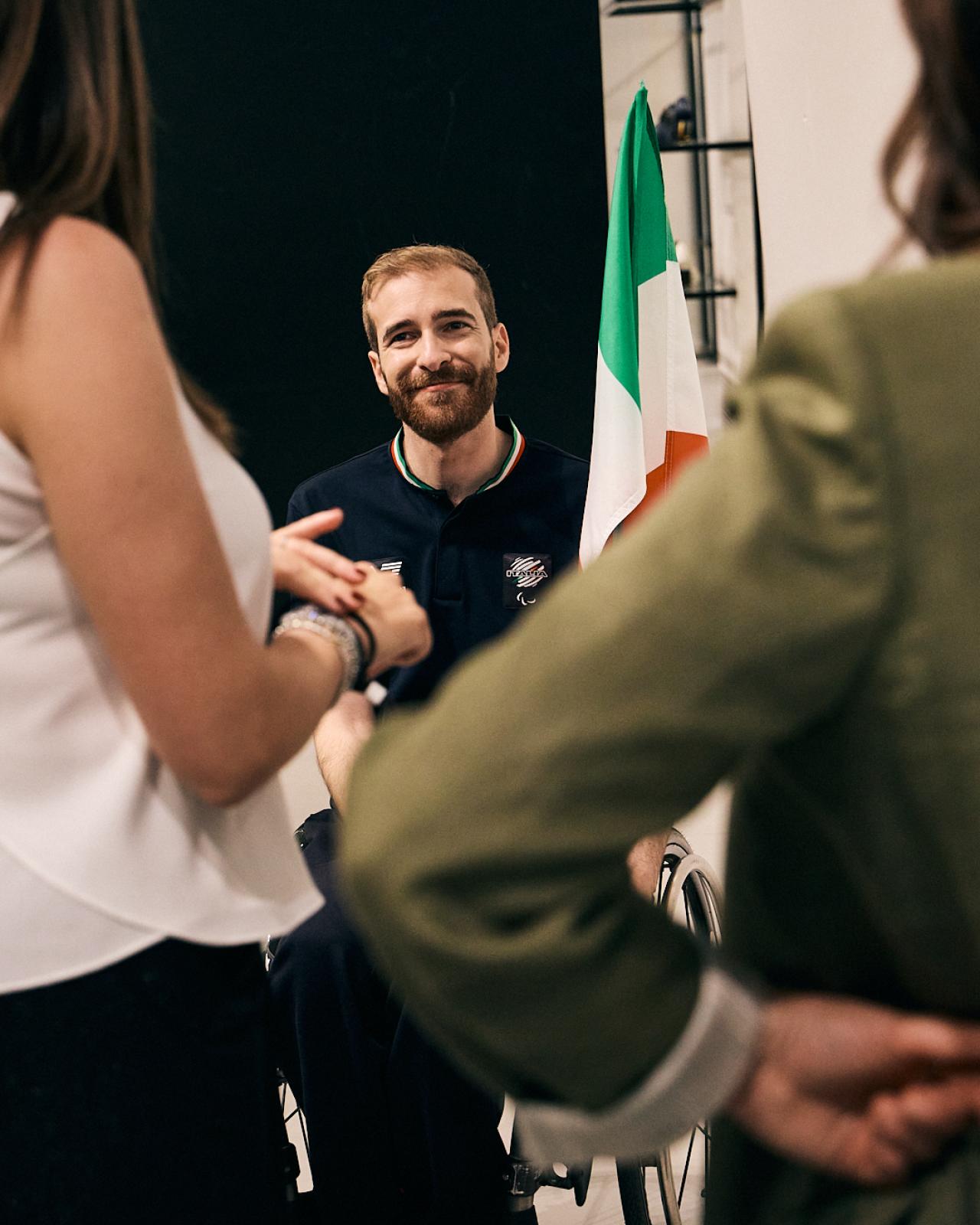
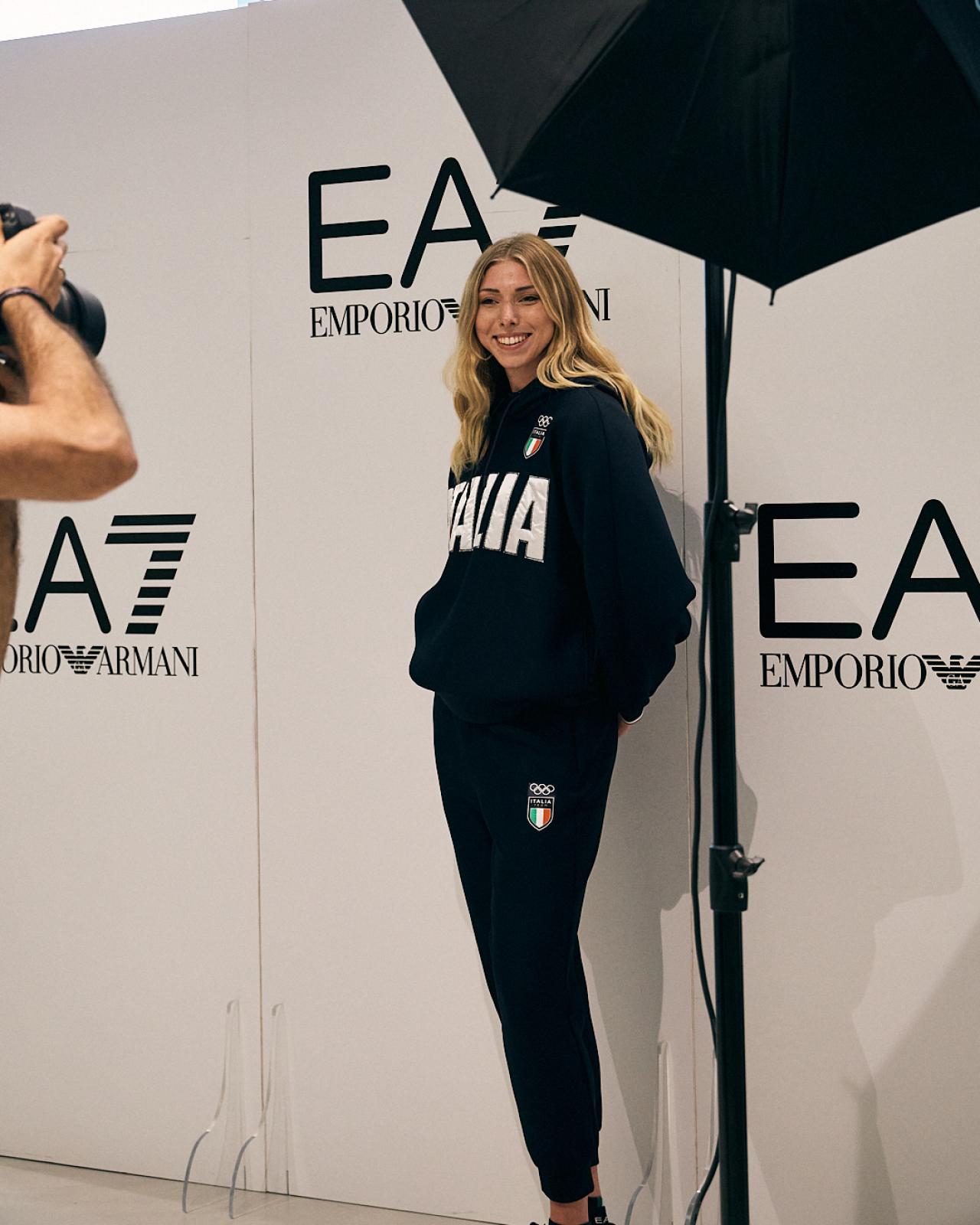
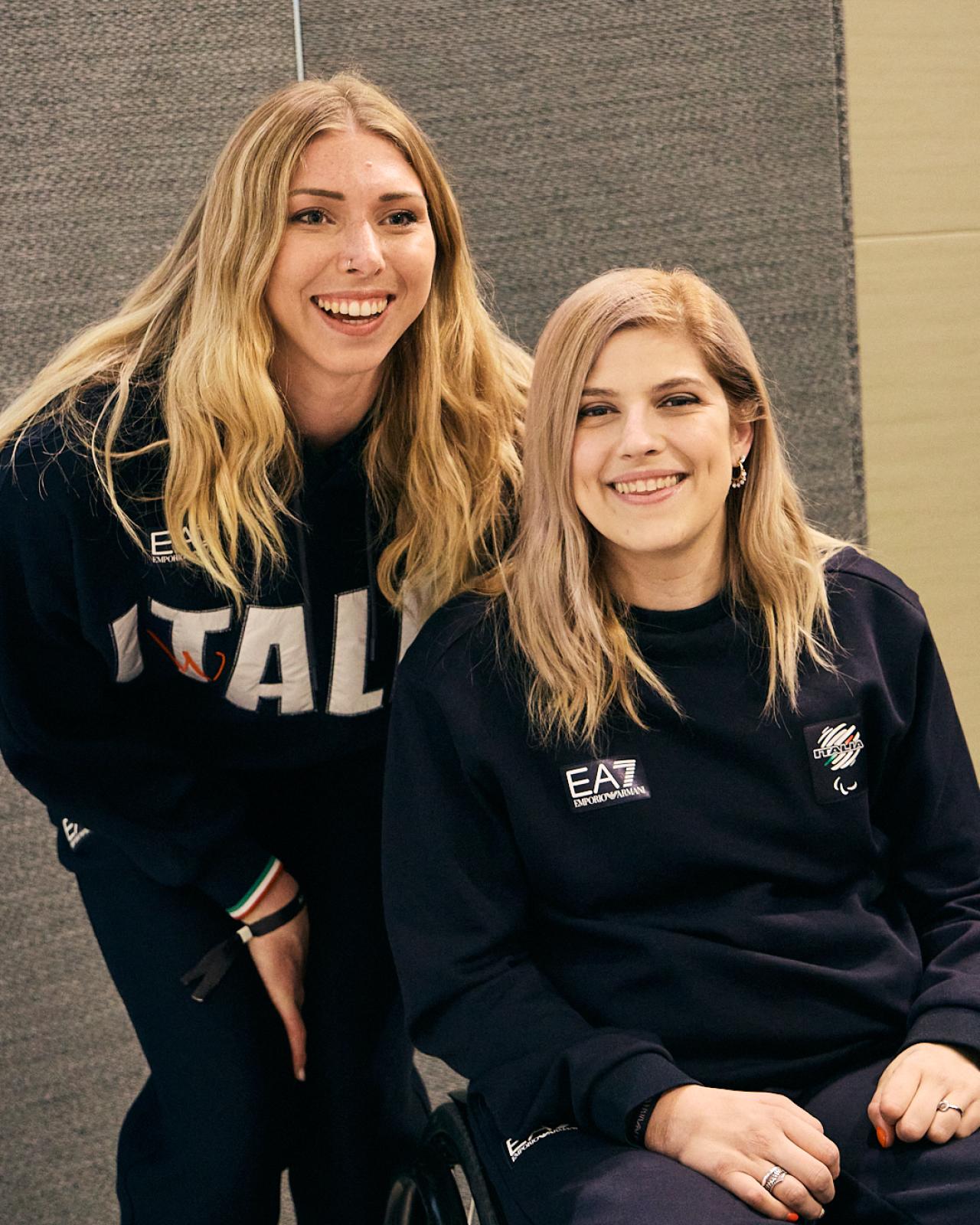
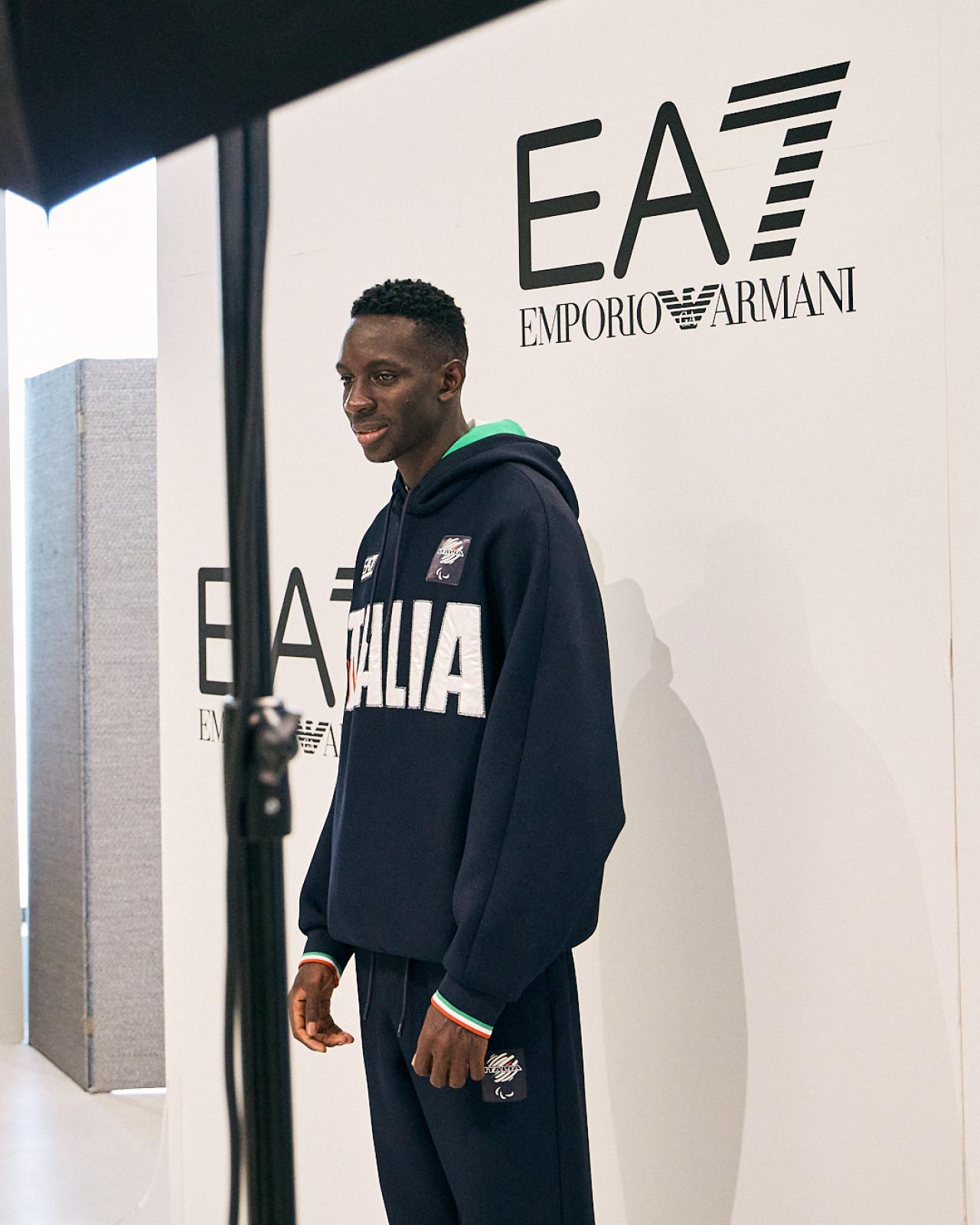
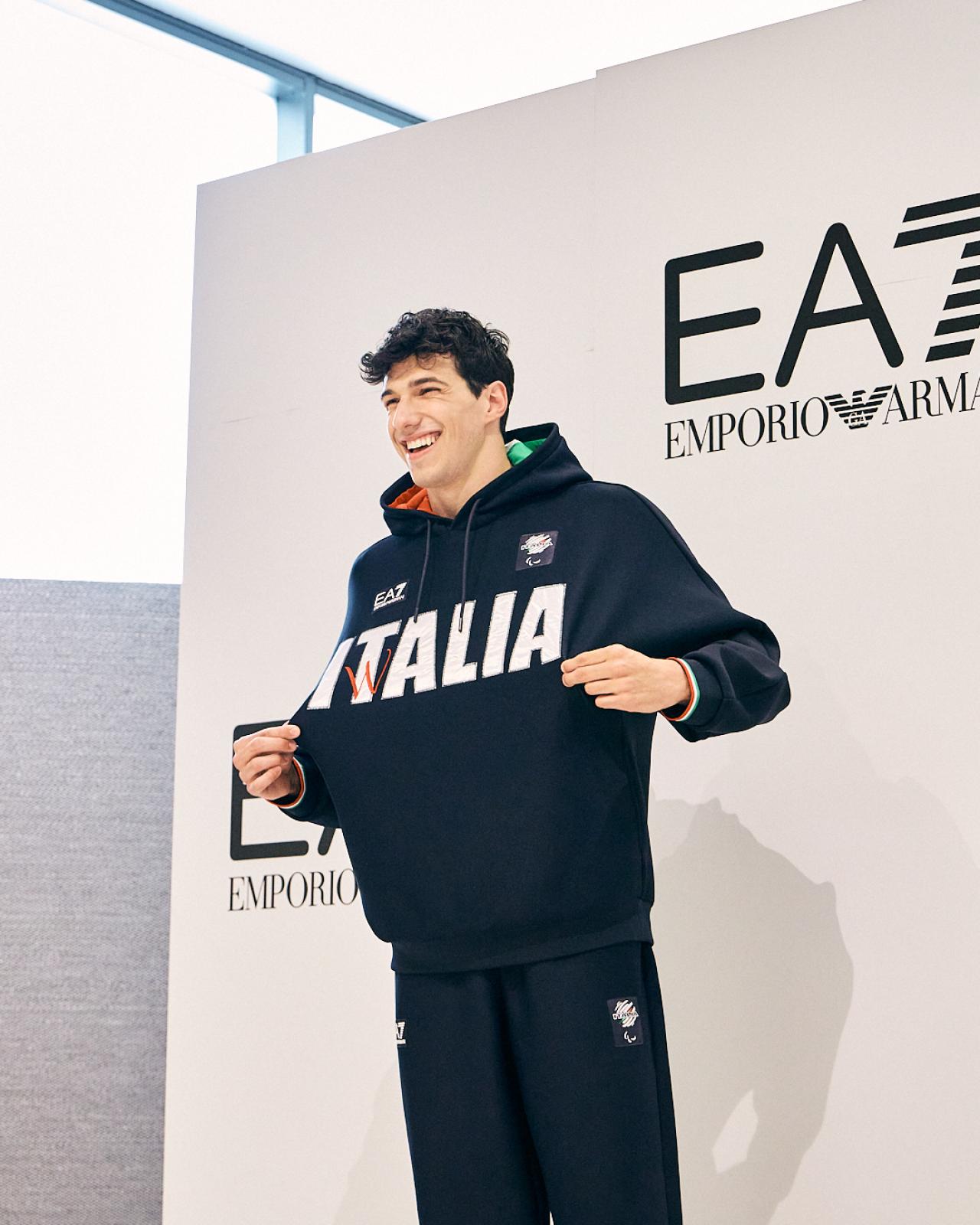
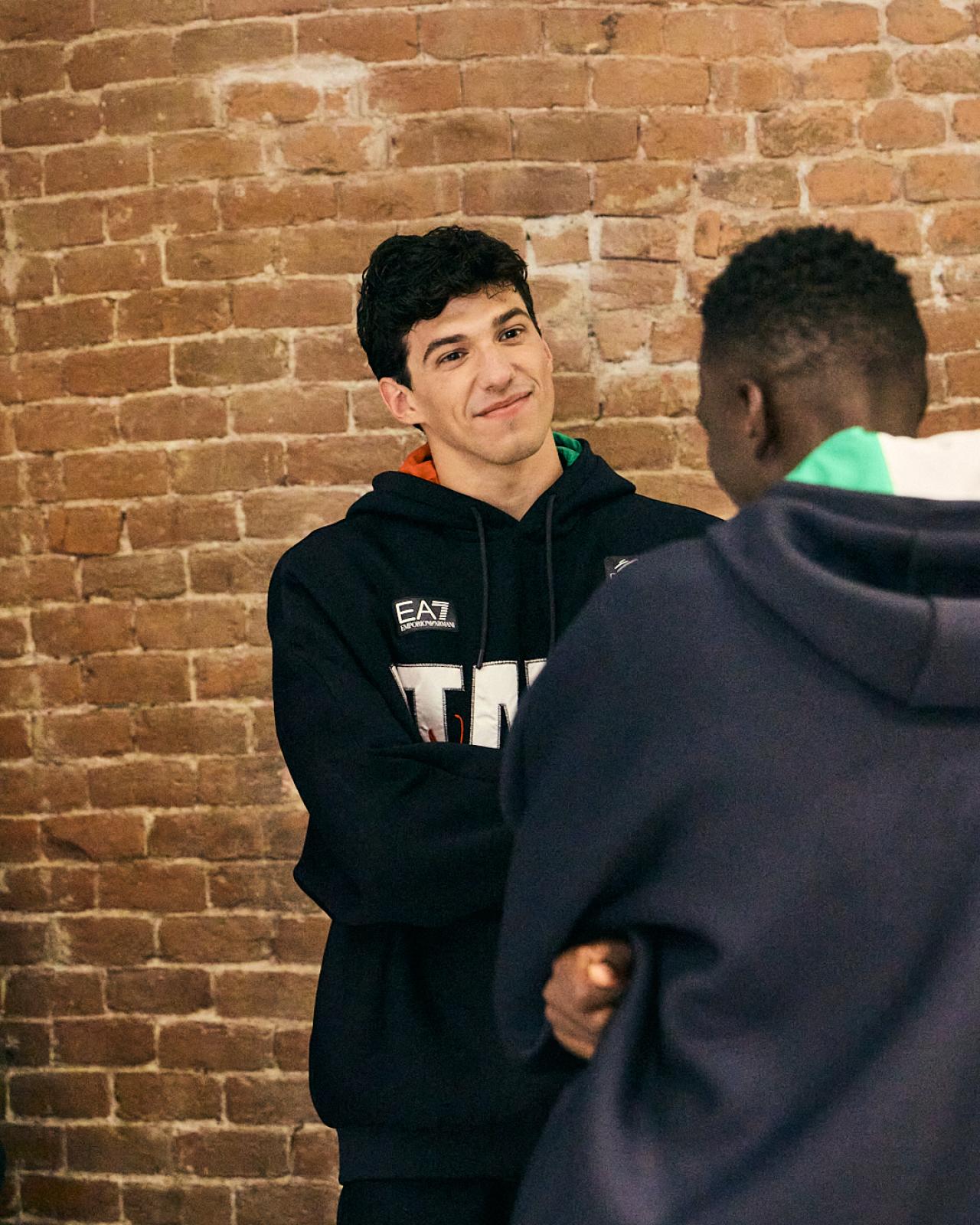
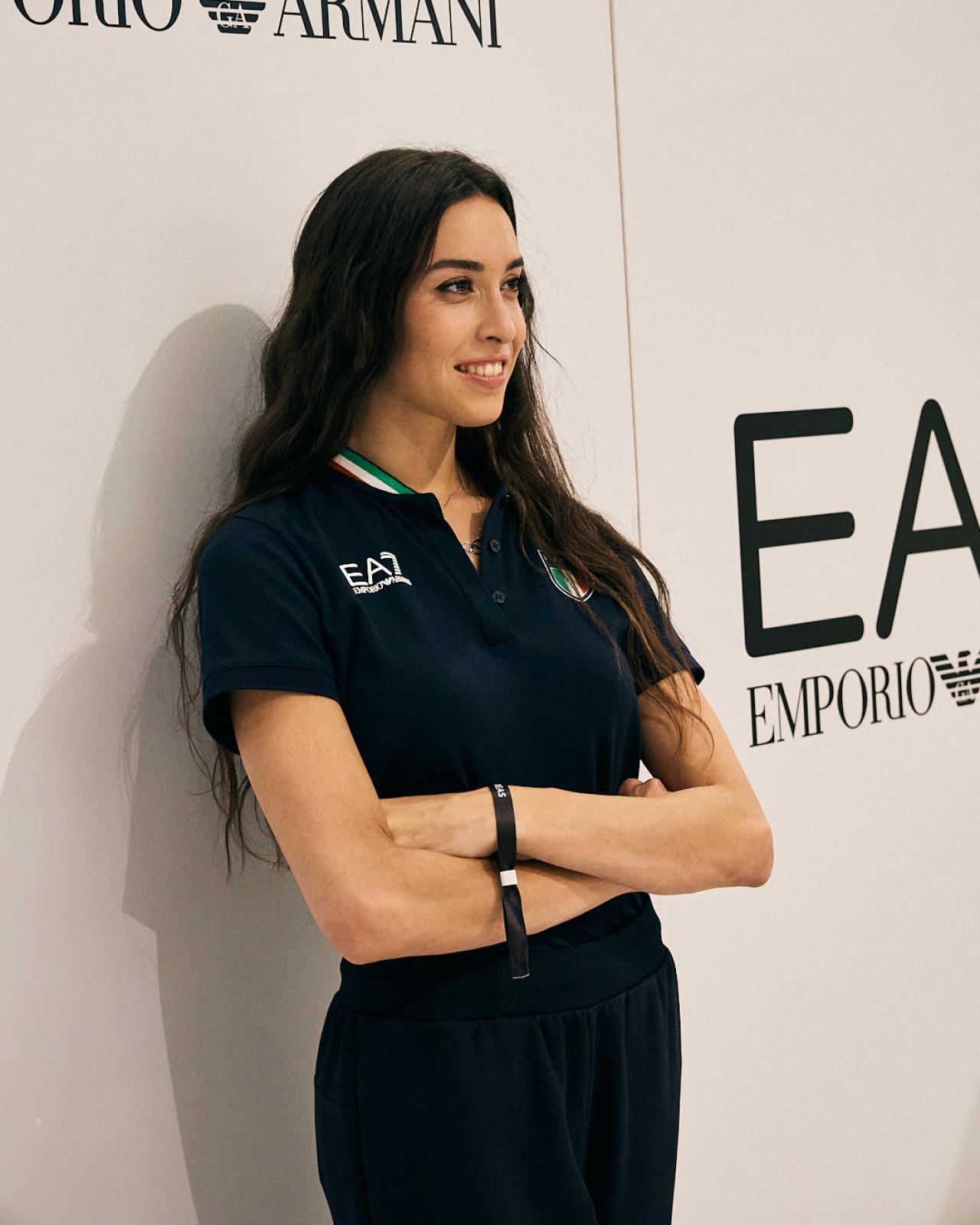
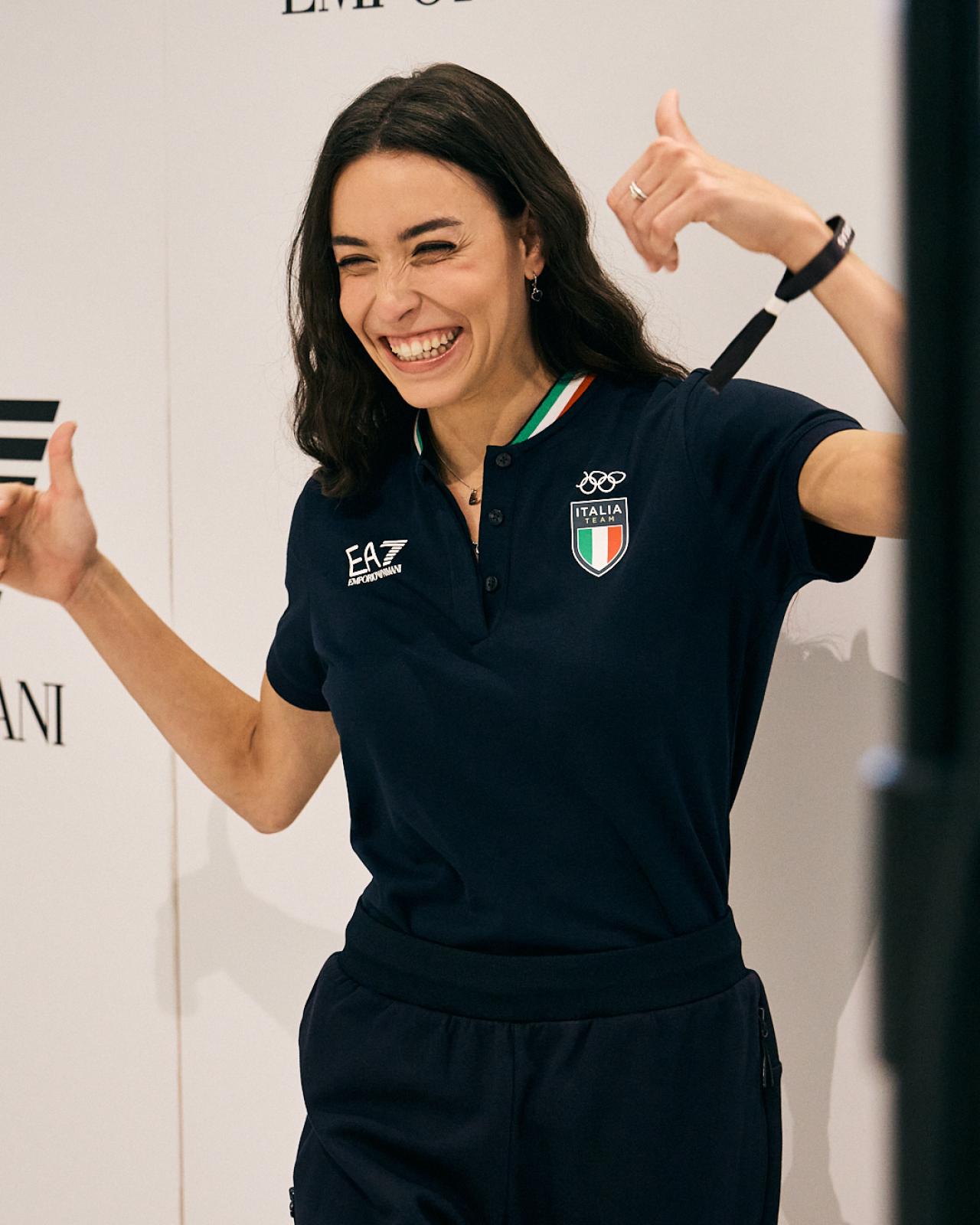
Milan, 17 June 2023 – The kit designed by EA7 Emporio Armani, Official Outfitter for Team Italy at the Paris 2024 Olympic and Paralympic Games, was unveiled today during the presentation of the Emporio Armani Men’s Spring/Summer 2024 collection.
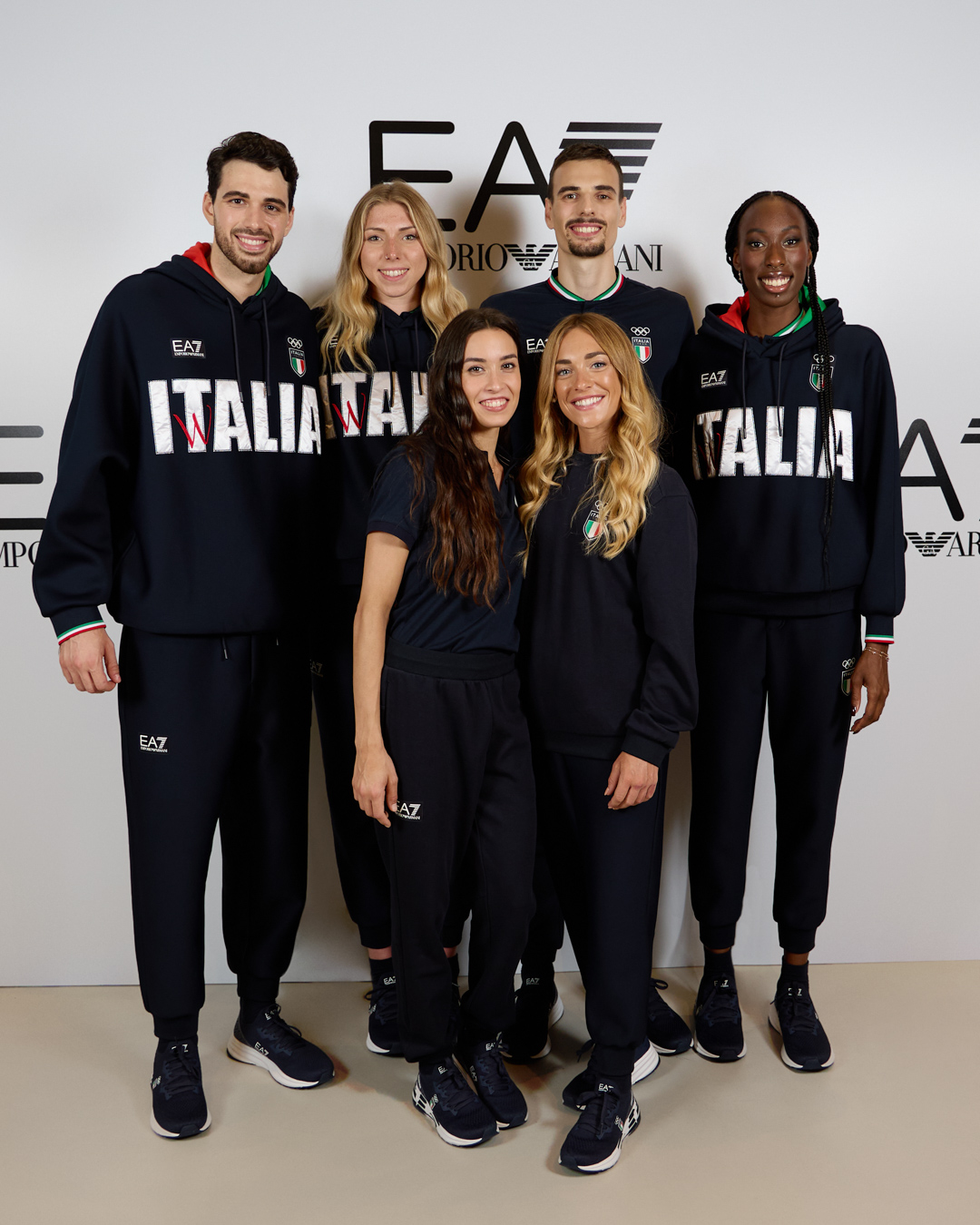 Simone Giannelli, Daniele Lavia, Paola Egonu, Sarah Fahr (volley), Letizia Paternoster (cycling), Alessia Maurelli (rhythmic) and six Paralympic athletes, competing in various disciplines at the Games, walked the Armani/Teatro catwalk in garments created especially for this momentous sporting event.
The collection, fashioned in the elegant and distinctive ‘Armani blue’, includes the iconic podium tracksuit with the phrase ‘W Italia’ prominently featured on the front, where each individual letter is made from satin patches and sewn on with contrasting stitching. The beginning of the national anthem is printed inside the collar of the polo shirts and T-shirts, while the entire first verse can be found inside the jackets. The collection is complemented by trolley bags, bags, backpacks, caps and sneakers.
“My partnership with CONI and CIP dates back to 2012 and continues to bring all parties great satisfaction. Seeking new solutions for the athlete’s kit, which must blend elegance with practicality, is always an exciting challenge for me. For Team Italy in Paris, I have created functional yet stylish garments, designed to catch the eye and foster a powerful sense of belonging in our athletes,” commented Giorgio Armani.
Giorgio Armani will also design the official uniform for athletes to wear during the Olympic Games opening ceremony, planned to take place on the Seine on 26 July 2024, and the Paralympic Games opening ceremony, to take place on 28 August at Place de la Concorde.
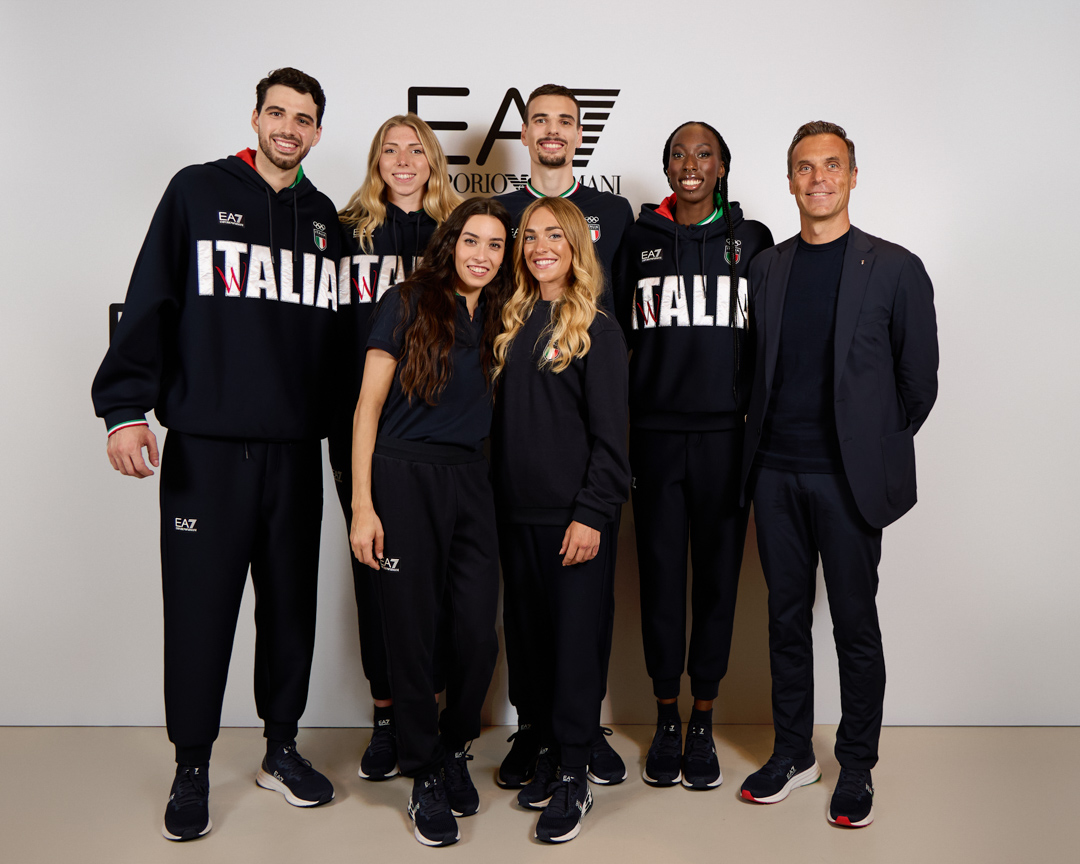 The designer’s collaboration with CONI (Italian National Olympic Committee) and CIP (Italian Paralympic Committee) will continue for the Milano Cortina 2026 Winter Olympic and Paralympic Games. Previously, Giorgio Armani has dressed athletes at the London 2012, Rio 2016 and Tokyo 2020 Summer Olympic and Paralympic Games and the Sochi 2014, Pyeongchang 2018 and Beijing 2022 Winter Games.
The dedicated capsule collection, inspired by the kit to be worn by Team Italy in Paris, will be available at selected Emporio Armani stores, multi-brand stores and online from April 2024.
Armani Photo
Le divise della Squadra Azzurra ai Giochi Olimpici e Paralimpici di Parigi 2024









IOC to launch Let’s Move campaign to inspire and enable the world to move for better health
- OLYMPIC DAY
The International Olympic Committee (IOC) has today announced a new global initiative to inspire and enable the world to move more every day. Led by Olympians and created in collaboration with the World Health Organization (WHO), Let’s Move will begin on Olympic Day, 23 June, with an invitation to make time every day for movement for better health.
The world is moving faster than ever, but people are moving less. Research has found that one in four adults and over 80 per cent of young people do not meet the recommended minimum activity levels needed for optimum health (WHO, 2022). Not having enough time in the day is one of the most common reasons given for not being able to reach this goal. At the same time, starting with just 30 minutes of movement a day has significant health benefits for hearts, bodies and minds.
Regular physical activity can help prevent or manage certain diseases, like heart disease, stroke, diabetes and some types of cancers. It also helps to prevent hypertension, and it reduces symptoms of depression and anxiety. Being active also ensures healthy growth and development in young people and staying healthy in later life.
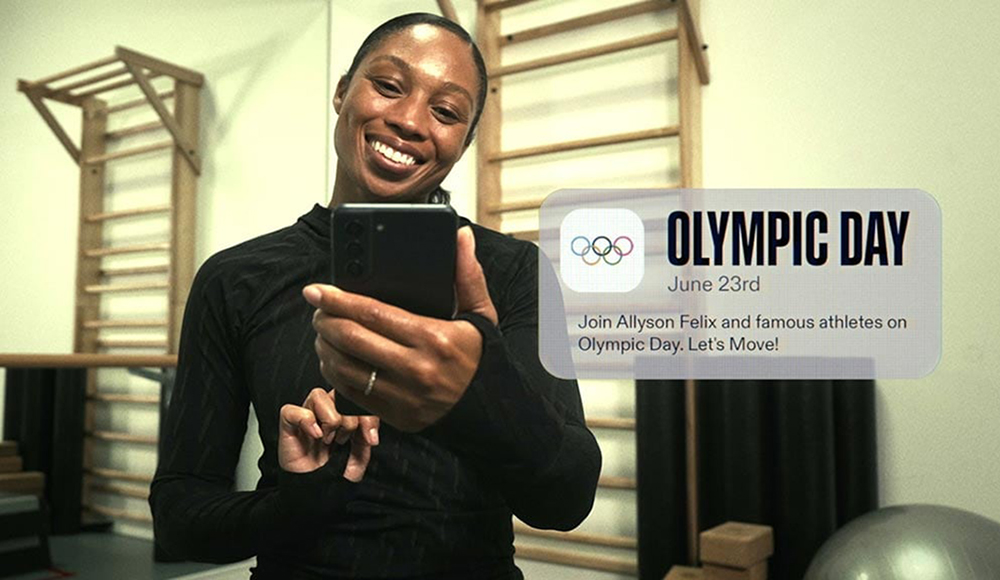
On 23 June, the Olympic Movement will encourage and support people around the world to make this time in their daily lives to move in any way, anywhere. This includes a digital invitation from Olympians Allyson Felix, Pau Gasol, PV Sindhu, Yusra Mardini – to name a few of the athletes involved – to schedule 30 minutes to move this day with them and to join the Let’s Move Olympic Day digital workout from anywhere in the world, with the ambition of turning this into a daily habit.
IOC President Thomas Bach said, “On Olympic Day, we celebrate the Olympic Movement’s mission to make the world a better place through sport. When we do sport, it keeps our mind and body strong and healthy. When we do sport, it inspires us to always give it our best and it makes us dream, it spreads joy and it brings us together. This year, together with the WHO, we are highlighting the positive impacts sport has on both physical and mental health. We want to inspire the world to move more every day. Sport and physical activity are the low-cost, high-impact tool for healthy bodies and healthy minds and resilient communities”.
Dr Tedros Adhanom Ghebreyesus, WHO Director-General, said, “The Olympic Movement has a unique ability to harness the power of increased physical activity through sport for improving public health. Olympians are more than athletes: they are role models for people to enjoy sport and the benefits of physical activity. The Let’s Move initiative, supported by the WHO, combines the power of the Olympics and WHO’s advice on physical activity to help inspire and motivate people to move more for better health”.
Past and future Olympic hosts will also take part in the initiative by encouraging people to exercise in their local communities. Paris 2024 (along with the French Ministry of National Education and Youth and the Ministry of Sport and the Olympic and Paralympic Games) has already introduced 30 minutes of physical activity as part of the school curriculum over the past 12 months, in recognition of the multitude of mental and physical health benefits of daily exercise.
Over 131 mass participation events and digital activations will take place in all corners of the world, being organised by the National Olympic Committees (NOCs) and the wider Olympic Movement, providing an opportunity for everyone to move together on Olympic Day.
Australia: Running a host of “Have a Go” activities in line with Let’s Move, featuring Olympic sports and hosted by Olympians, and looking ahead to Brisbane 2032, 23 -24 June
Barbados: Olympic Day Run, the “GLOW 2K” beginning late in the evening where runners will wear glow-in-the-dark wrist bands, 23 June
Cabo Verde: mega Let’s Move Fitness Class, at the Kebra Kanela Square, 23 June
Croatia: Olympic Day Run in Zagreb, 17 June
Guinea Bissau: Olympic Day Run, starting in the city of Mansoa, where the OlympAfrica Centre is located, 23 June
Italy: Online workouts with Olympians and elite athletes, 1 – 25 June
Mongolia: Olympic Day event in the National Park of Ulaanbaatar, 23 June
Norway: Olympic Day run for children in the main street of Lillehammer, 24 June
People’s Republic of China: Olympic Day will be celebrated in over 10 cities and linked to an online challenge including five events to get active, 1 – 23 June
Samsung Health Olympic Day Step Challenge: Reach 100,000 steps together on the Samsung Health app, 10 – 23 June
Thailand and Lao People’s Democratic Republic: Celebrating together on the second Thai-Lao Friendship Bridge (Mukdahan-Savannakhet), 24 June
Worldwide: A host of city landmarks will light up to inspire the world to move, including in Barcelona, Beijing, Mexico City and Tokyo, 23 June
For more information on global and local participation events on Olympic Day, visit Olympics.com.
The Let’s Move initiative shines a light on the benefits of moving more and contributes to IOC’s Olympism365 strategy, where one of the key aims is to increase access to sports opportunities, and bring the health and societal benefits of physical activity to communities in all corners of the globe.
Let’s Move encourages everyone to share how they are getting active on Olympic Day on social media using #LetsMove #OlympicDay and tagging @Olympics, and to therefore become a source of inspiration for others.
Let’s Move on Olympic Day is the first event in a series of initiatives from the IOC with the ambition of supporting and inspiring the world to move. It will directly contribute to the Olympism365 priority area of “Sport, Health and Active Communities”, which is focused on ensuring that more people, from more diverse backgrounds, can enjoy the mental and physical benefits of participating in sport and physical activity.
Olympic Day is a global celebration of sport and getting active. It takes place on 23 June each year to commemorate the day the International Olympic Committee was founded in 1894 - the birth of the modern Olympic Games.
Olympism365 is the IOC’s strategy aimed at strengthening the role of sport as an important enabler for the UN’s Sustainable Development Goals (SDGs), which it achieves by collaborating with a range of partners from both within and outside the Olympic Movement. The themes and priority areas for Olympism365 reflect the role that sport and Olympism in society can play for the SDGs by contributing to creating healthier and more active communities, more equitable, safer and inclusive communities, peacebuilding, and education and livelihoods.
One such initiative included a joint programme launched by the IOC and WHO in November 2022 that aims to strengthen the role of sport in contributing to the Global Action Plan on Physical Activity target of a 15 per cent reduction in physical inactivity by 2030. The three-year programme will see the IOC and WHO join forces to provide guidance, training and toolkits to both health and sports organisations to help more people to move, alongside increased IOC support for community sport and physical activity participation initiatives.
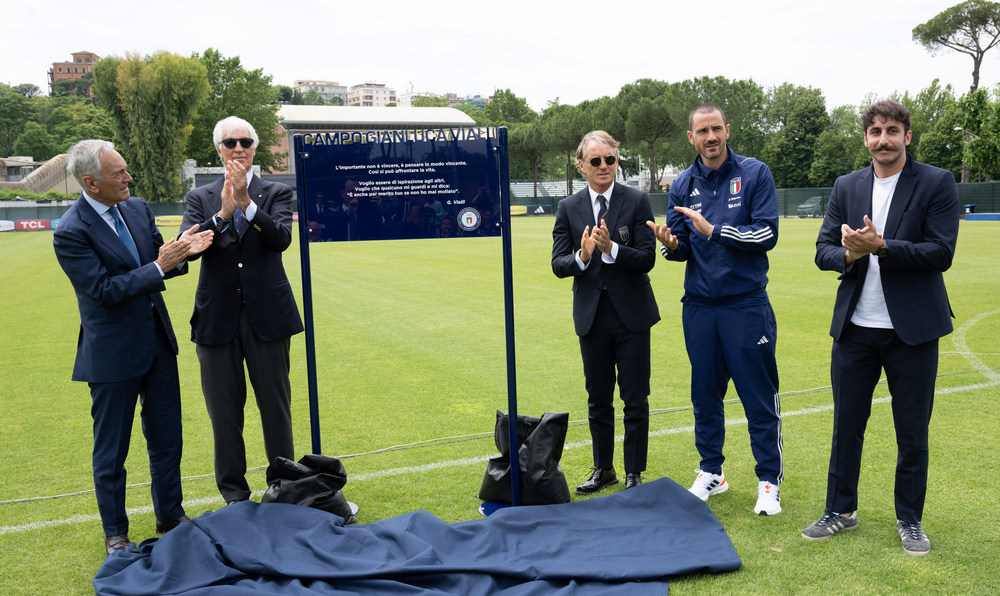
Pitch 3 of the CPO Giulio Onesti named after Gianluca Vialli, Malagò: “A strong message”
- THE CEREMONY
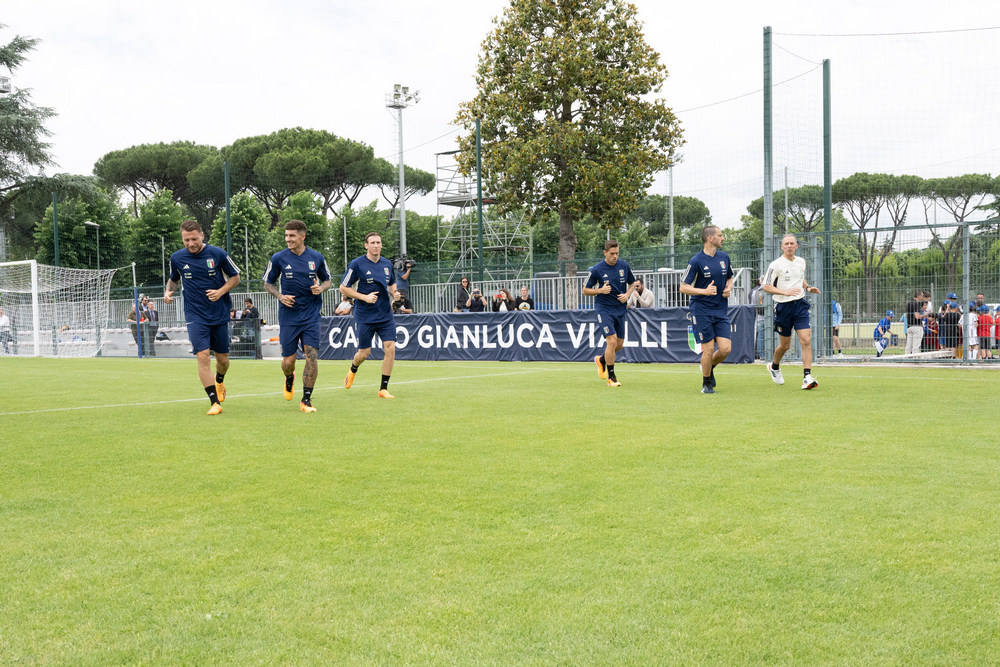
A fitting tribute to a great footballer and a man of rare personal qualities. Pitch 3 of the Giulio Onesti Olympic Preparation Centre was named after Gianluca Vialli this morning. The ceremony, organised on the occasion of the meeting of the national team, of which Vialli was one of the leading lights between 1985 and 1992 – making 59 appearances and scoring 16 goals – was attended by CONI President Giovanni Malagò, the President of the Federazione Italiana Giuoco Calcio Gabriele Gravina, the National team coach Roberto Mancini and captain Leonardo Bonucci. Also present, among others, were CONI Secretary General Carlo Mornati, Deputy Vice President Silvia Salis and IOC Honorary Member Franco Carraro.
Vialli, who passed away in his fifties earlier this year, trained on the pitch named after him many times, first as a player for the National Under-21 team and then with the senior national team. As delegation chief he supported the Azzurri’s preparation ahead of its victory under coach Mancini at the most recent European Championships in 2021.
Vialli’s career, as one of the greatest strikers of the 1980s/1990s, was also studded with successes at club level, winning all three major UEFA competitions. In 1984 he made his Serie A debut with Sampdoria, winning the Coppa Italia, followed by the Cup Winners’ Cup in 1990 and the Scudetto in 1991. In 1992 he moved to Juventus where he remained until 1996, winning the UEFA Cup,
Scudetto, Coppa Italia, Italian Super Cup and the Champions League. In 1996 he moved to Chelsea where he was also player-manager, then sat on the bench at Watford.
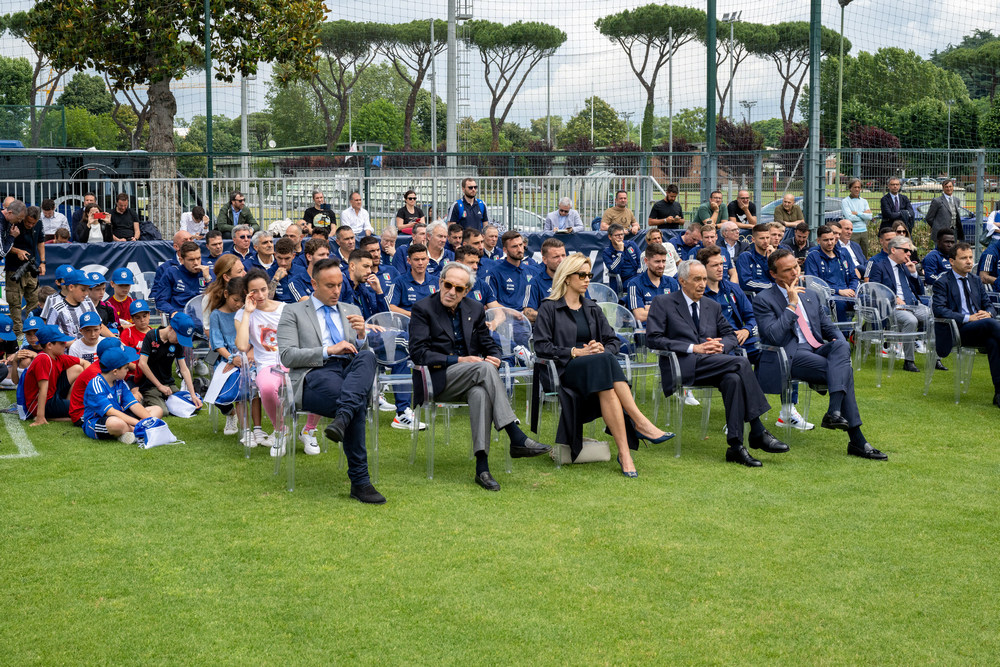
Vialli is also linked to the Olympic world: On 26 February 2006, Vialli, along with other illustrious champions, carried the Olympic flag during the closing ceremony of the 2006 Winter Games in Turin, the only footballer to have had such an honour.
“I wish to thank President Gravina, Roberto Mancini and the entire Federation for this opportunity,” said Malagò. “When we met at the Board a few months ago to discuss the idea of naming the pitch after Vialli, we did not make an emotional choice. CONI wanted to send out a strong message that I think we have delivered very strongly today. We are in the Olympic Preparation Centre, named after our predecessor Giulio Onesti, a gentleman who was sent by the government after the war with the idea of closing CONI. Within a few years, he had transformed himself from liquidator to President with great foresight because he realised that, although there had been political contamination during the period of Fascism, CONI was all about sport, athletes were winning and it was already a leading organisation at international level. The pinnacle was to bring the Olympics to Rome in 1960: the city also benefited from it in terms of sports facilities and this place bears witness to that. Today this field is named after Vialli, but this is the field of all Italian sportsmen and more than ever of the FIGC.”
“Thanks to the CONI President because this is an important moment, especially in wishing to send a tangible message by remembering how much Gianluca meant to the world of football and sport in general,” FIGC President Gravina underlined. “Vialli clearly demonstrated that when you do something with love, with passion, when you turn one of the hardest trials of your life into a time when you set an example, you become a hero. Gianluca was a great professional, a great athlete, a man of great value who gave a message of hope to so many young people who have experienced suffering. We stand shoulder to shoulder with him: he is still with us and will be forever.”
The ceremony to name Pitch 3 after Gianluca Vialli was followed by a training session for Roberto Mancini’s national team which was attended by around 30 young patients from the “Bambino Gesù” Children's Hospital, with whom the FIGC and the national team in particular, have been promoting a series of joint initiatives for many years.
“Gianluca was a great footballer and, above all, a great man,” recalled Mancini. “Only two years ago we were focused on the European Championship, he was going through a difficult time but fully supported us: for this I thank Gravina. They were two wonderful years, and I thank CONI and President Malagò for today’s initiative. Luca has left us physically but he will always remain with us.”
“I remember Gianluca in his greatness in his small gestures,” Bonucci added. “Many times, during the national team meeting, his first thought was to give a moment of joy and happiness to the young athletes who are here with us today. Gianluca wanted to make it clear that what he was going through could be erased with a simple gesture. Today we take forward what he left us. A football pitch is not enough to understand the greatness that Vialli had in giving himself, in giving before receiving; each of us remembers him as a great man and even today he is here with us – he’s probably having a laugh, as he often did at our gatherings. During the European Championship and also afterwards he was an example, a driving force.”
“It is an honour to be here. Luca did so much as a footballer but he also did so much as a man, he left us such a wonderful legacy that it is now up to us to continue. The pitch can’t express how much he did, but it is a great example for future generations who will play in this facility,” concluded Riccardo Vialli, Gianluca’s nephew.
(Photo Di Tondo - CONI)
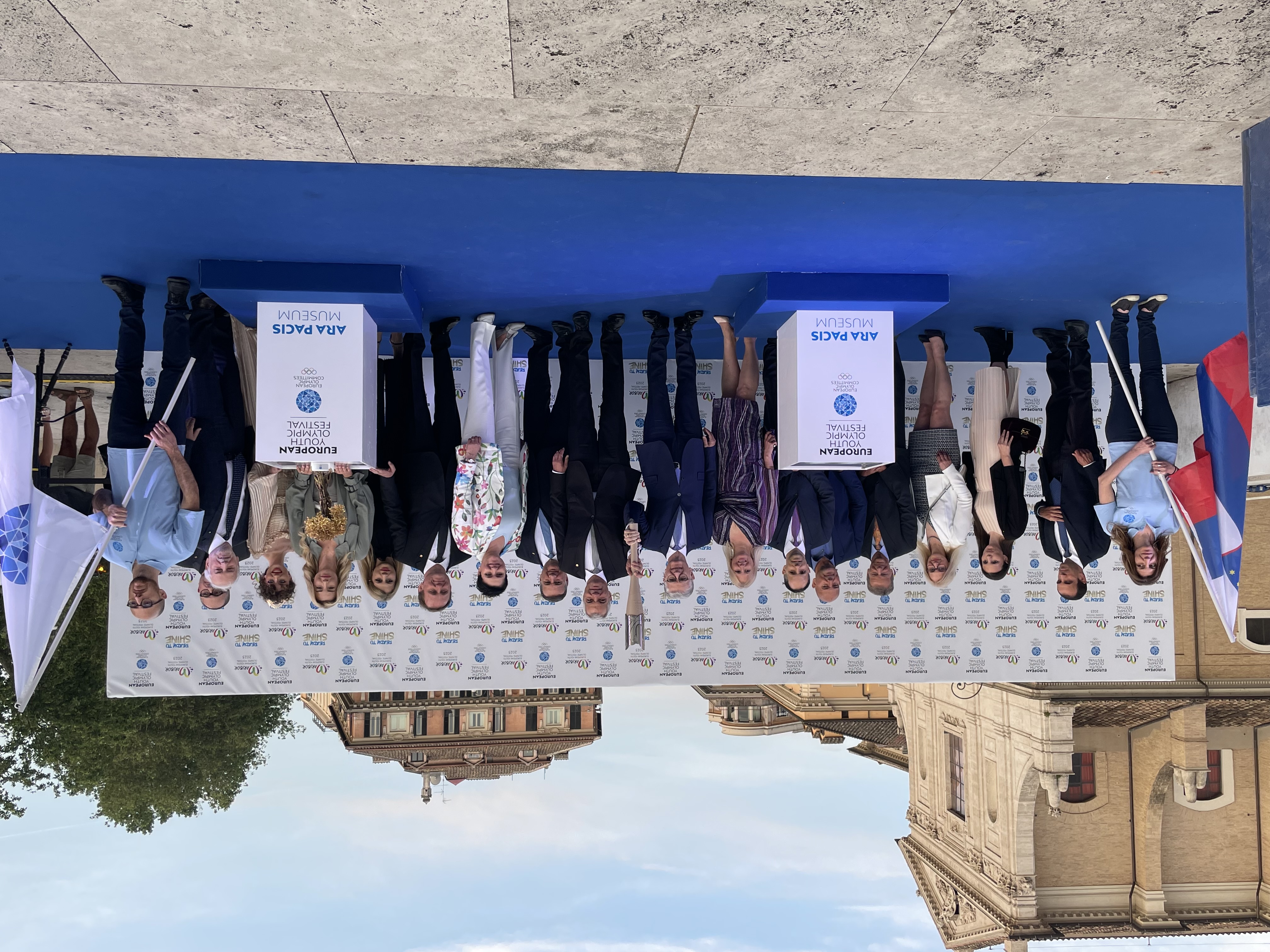
Summer EYOF Maribor 2023 Flame of Peace lit at the Ara Pacis altar
- IN ROME
The Summer European Youth Olympic Festival (EYOF) Maribor 2023 Flame of Peace was lit yesterday at the Ara Pacis altar in Rome.
European Olympic Committees (EOC) President Spyros Capralos presented President of the Slovenian Olympic Committee Franjo Bobinac and Mayor of the Municipality of Maribor Aleksander Saša Arsenovič with the EOC Olive Tree and the Flame of Peace, which signify the peaceful competition that will take place in July. The Ara Pacis altar was built as a symbol of peace and unity.
With almost 50 days to go until the Opening Ceremony on 23 July, Slovenia’s former Ski Cross World Champion Filip Flisar kept the Flame at the end of a memorable ceremony, which was hosted by five-time Italian national figure-skating champion Valentina Marchei.
As he looked ahead to the EYOF, President Capralos thanked the Organising Committee and the Slovenian officials for their preparation and for ensuring that Europe’s best young athletes are able to compete in a top level international multi-sport event.
He said: “Slovenia will become one of five countries to have hosted both a winter and summer EYOF and I must thank the Slovenian Olympic Committee, the local authorities in Maribor and the Slovenian government for their invaluable support.
“Your dedication to Maribor 2023 will see young athletes fulfil their dreams, make lifelong memories and, most importantly, grow as people thanks to their experiences.
“That is the aim of these events. As well as competing, the young people who participate have the chance to learn about the Olympic values and different cultures. And just as they did in Italy in January, our European Young Olympic Ambassadors will play an important role in making this happen in Maribor.”
Amongst the international guests from the Olympic movement attending the ceremony was also Italian National Olympic Committee (CONI) Deputy Vice President Silvia Salis and an EOC delegation, including Vice President Daina Gudzinevičiūtė, Secretary General Raffaele Pagnozzi and Chair of the EYOF Commission Líney Rut Halldórsdóttir.
In his speech President of the Slovenian Olympic Committee Franjo Bobinac said: “Slovenia is extremely proud and honoured to host the summer edition of European Youth Olympic Festival. We are looking forward not only to host a great international sports Festival but also the biggest multisport event ever organised in our country.
“As said many times, sport has the power to change the world, but it is also true that sport talks to the younger generations in a language they understand the best. And EYOF is about the youth.
“Our organising teams from the Municipality of Maribor and Olympic Committee of Slovenia, with high support by the EOC staff, will continue to work as a strong, united team and they will surely deliver an amazing event this summer in Maribor.”
Mayor of Maribor Aleksander Saša Arsenovič said: “EYOF is not only about sports, but also about volunteering, bringing together young people from different countries and building networks to promote sports, peace, friendship and understanding.
“I am sure that some of these young visitors, athletes and volunteers will discover our beautiful city as their new home. Maribor is a green, sustainable, modern and safe city. A city of sports, culture and festivals, a college city, a centre for innovation and creativity!”
The 17th Summer EYOF takes place in Maribor between 23 and 29 July with more than 3,600 athletes competing in 11 sports.
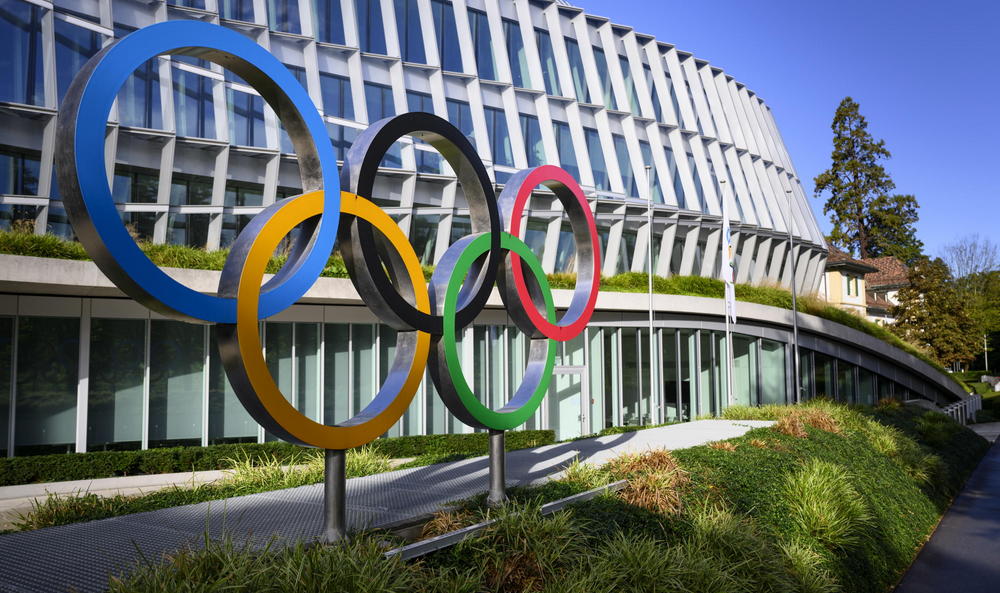
Press Statement
- IOC
The International Olympic Committee (IOC) held a workshop with the Italian National Olympic Committee (CONI) and its partners from the Region of Lombardy and the Autonomous Province of Trento, to explore their interest in hosting a future edition of the Winter Youth Olympic Games. This follows the decision by CONI, Lombardy and Trentino in March to enter a non-committal Continuous Dialogue with the IOC.
As part of its collaborative approach to electing Olympic and Paralympic hosts, the IOC works in partnership with potential hosts to assist them to develop sustainable projects, offering the best possible experience for athletes and spectators and maximum benefits for local communities.
The Youth Olympic Games (YOG) are the highest-level multi-sports event for young elite athletes, combining sport, innovation and a purpose-driven festival. Hosting the YOG can be catalysed to accelerate regional or national youth and youth sport development strategies, to promote youth-related matters such as education, gender equality, health and inclusion, to empower young people with new experiences and skills and to innovate in sports events delivery.
Page 46 of 146