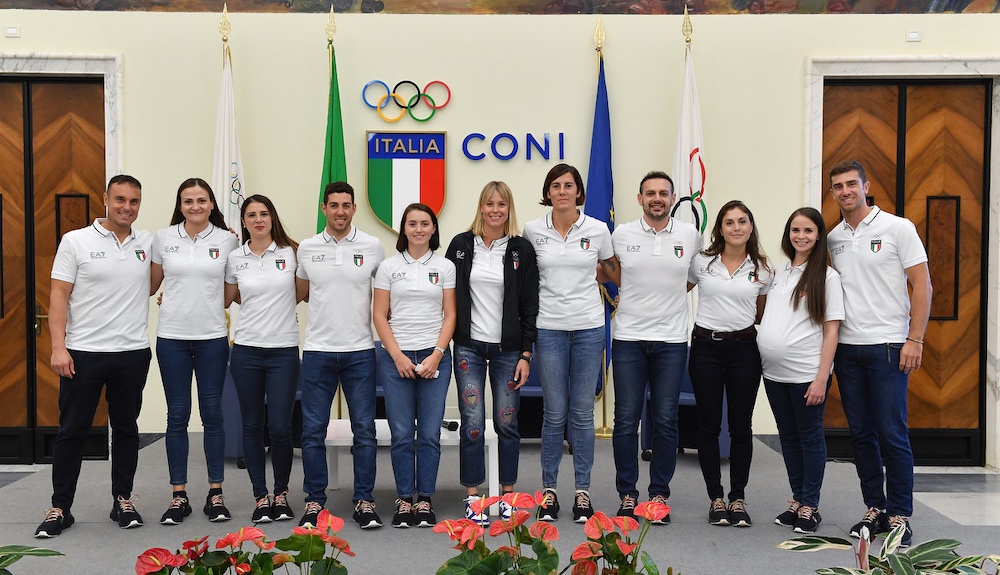
Italian athletes at CONI for the “Stronger Together” forum. Malagò: “Our system is unique in the world”
- CAN NATIONAL ASSEMBLY
Moving forward together, network building, creating a community and strengthening the voice of our athletes. This is the aim of the CONI National Athletes’ Commission (CNA), outlined in the “Stronger Together” forum organised in CONI’s Salone d’Onore at the Foro Italico. “I’m very pleased: with Raffaella Masciadri (President of the CONI National Athletes’ Commission) we have been talking about this meeting for some time”, declared CONI President Giovanni Malagò in his speech at the forum. “I get asked around the world how Italy performs so well given the shortcomings of sport in its schools and the condition of its sports facilities, as well as the divergence between the north, centre and south and its socio-economic issues. It is very simple: we are unique in the world. Everyone tries to understand and even copy us, but our system is so singular that it is not replicable, like a trademark. It is a totally upturned model: everyone else starts with schools, while we base everything on amateur sports clubs and associations. And it works, because in 2022 we are doing even better than in 2021: we are ranked third in the world having won more medals than the 283 we won last year, and the year is not even over yet. Only United States and Australia have done better: we are also ahead of China, which is mind-boggling. However, we must improve, and we will do so with your support and your great expertise. We would not exist if it was not for the athletes”.
The “Stronger Together” forum was opened with a greeting from CONI Secretary General Carlo Mornati: “I am excited because Raffaella Masciadri’s idea is like the egg of Columbus. Gathering you all together has not happened for nearly thirty years and, aside from the content, is very significant in itself. I am a product of the athletes' commissions and it is really good to see that we are an active part of the movement. This is not a trade union. You do not represent athletes but rather sport itself. You implement all the issues across the board. We are central to the movement, as demonstrated by the IOC’s Athletes’ Commission, even if we do not always realise it. But we should be aware of it: the sports movement would not exist without us”, stressed Carlo Mornati.
In the opening part of the proceedings, in the presence of Deputy Vice-President Silvia Salis, Vice-President Claudia Giordani and representatives of the athletes from the various National Sports Federations and Associated Sports Disciplines, IOC member Federica Pellegrini explained how the IOC’s Athletes’ Commission works: “I’ve been working on it for a year and it’s really a blessing”, said the swimming champion. “Hearing how loudly our voice resonates at an international level is really important. The IOC Athletes’ Commission is a central network providing support. I am here today to urge all federations, because having an Athletes’ Commission is fundamental: I implore you, let athletes have a voice”.
CONI National Athletes’ Commission President Raffaela Masciadri and Vice-President Carlo Molfetta then explained the role of the board, while Antonella Del Core and Cristina Lenardon spoke about the regulations of the National Athletes’ Commission. “The name of the forum, ‘Stronger Together’, is taken from the campaign launched by the IOC for the Tokyo Games; a message of hope and unity that we wish to make our own”, explained Masciadri. “Sport has the irresistible power to unite people and we are here today together to network, to collaborate synergistically and to make our athletes’ voices better heard. We want to create a community. There are so many issues to discuss: we ask you to become the spokespersons for our projects, to disseminate them as widely as possible, and at the same time to share your initiatives with us”, added the President of the CONI National Athletes' Commission Board Committee, addressing the representatives of the athletes from the various National Sports Federations and Associated Sports Disciplines present in the CONI Salone d’Onore.
In the second part of the forum, the initiatives carried out by the Board were presented and discussed. Carlo Molfetta and Federico Pellegrino, together with Andrea Benassi, ICS Social Responsibility and Sustainability Project Manager, and Monica Rivelli, FEDUF Project Development Manager, talked about the “Financial Education and Sport’ project” aimed at raising athletes' awareness of the issues regarding economic citizenship, money management awareness, financial planning, savings, economic legality and self-entrepreneurial skills. “It is a valuable opportunity and I have been able to witness it first-hand”, said Pellegrino, two-time Olympic podium finisher in his career in cross-country skiing. “I started winning and consequently earning when I was young. I made a few mistakes in my growth and savings management, but I was lucky because I thought about investing in myself and managed to build a career rich in both sporting and financial satisfaction. But having financial education tools would have really helped me”.
CONI board member Paolo Pizzo then presented the dual career guidelines alongside Marco Fichera, CUSI Representative, and Paolo Bouquet, President of Unisport Italia, after the launch of the first dual career database (www.unisport-italia.it/dual-career). “We have worked on it for six months, a debate that was both intense yet very productive and it was good to do it harmoniously. This project is one of our main targets and I am particularly proud of it. Now we will also discuss it with the Italian Paralympic Committee and then the next step, which is a very ambitious one, will be to systemise these guidelines by talking to the institutional bodies” Pizzo declared.
CONI Vice President Silvia Salis, together with Tatiana Andreoli, Italian archer and member of the CONI National Council and Simona Pantò, Head of Marketing & Communication at Gruppo Barletta, talked about the MyLLENNIUM AWARD - MySPORT award, dedicated to dual careers and reserved for Under-30 athletes. “This award rewards excellence; it is only given if the projects are of the highest standards. It is very important to talk about dual careers; athletes have to make an important cultural shift: we have to make ourselves heard, and to do so, we must learn the dynamics of sports politics”, outlined Salis. “This recognition is very important. Being inspired by the values of sport can also help us on the professional career path once our sporting career is over. We would like to take this project to all the federations and associated disciplines across the country so that as many athletes as possible will be able to participate: we rely on you for this”, explained Andreoli addressing the representatives of the athletes of the various National Sports Federations and Associated Sports Disciplines present in the CONI Salone d’Onore.
Elena Pantaleo and Francesco Marrai, meanwhile, spoke about the “Atleta Eccellente, Eccellente Studente” (Excellent Student, Excellent Athlete) competition named after the late Filippo Mondelli, a project aimed at promoting successful experiences in sport as well as in education, summed up in the symbol of the degree. “The opportunities on offer are incredible”, emphasised world kickboxing champion, Elena Pantaleo, “I was lucky because I had the chance to study thanks to my parents and I am now doing a master’s degree on a full scholarship at Sapienza University. But too many athletes are unaware of these projects: it is crucial to teach athletes that they can study and play sport too; times have changed”. “I graduated in nautical engineering from the University of Genoa, a very demanding but very informative course, an experience that also helped me in sport”, said competitive sailor Marrai, a member of the CONI National Council. “The winners will be announced in the coming weeks”.
The “Stronger Together” forum, which is one of the projects supported by the ICO through Olympic Solidarity, aimed at promoting the Olympic principles and helping National Olympic Committees to prepare athletes for future challenges in their sporting and professional lives, concluded with an illustration of possible future steps towards growing the CONI National Athletes’ Commission. “We need to convey these messages together and promote our projects, which are sometimes still little known and yet are very important for young people”, explained Anna Cappellini, a member of the CONI National Council. “We wish to create a community because only by moving together are we able to move forward” Masciadri concluded.
(Photo Mezzelani/GMT)
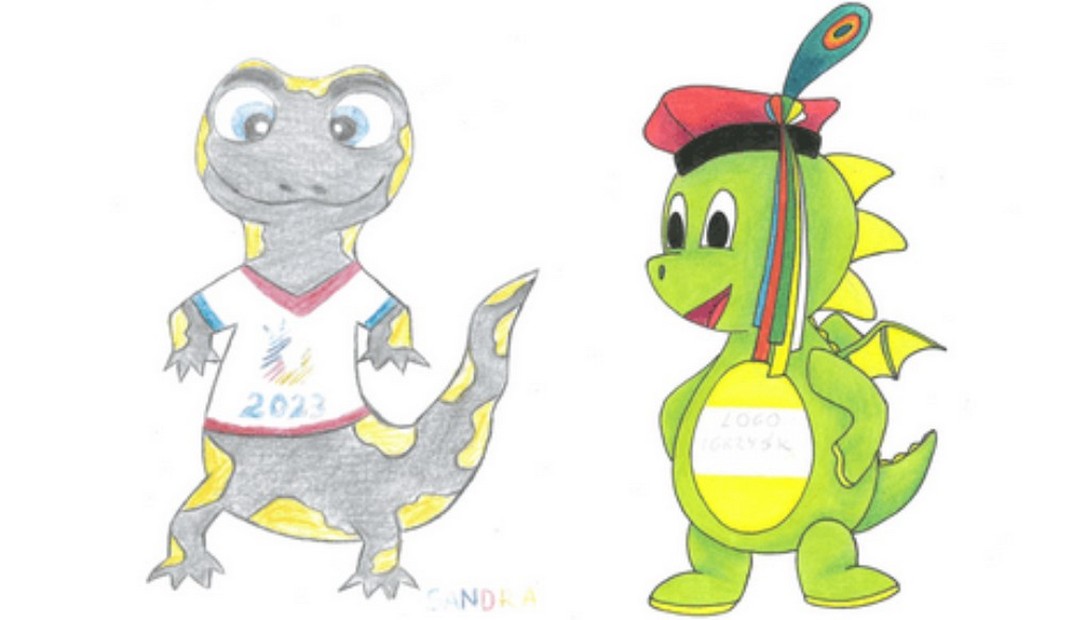
"Krakusek" the Dragon and “Sandra” the Salamander selected as European Games Kraków-Małopolska 2023 mascots
- EUROPEAN OLYMPIC COMMITTEES
"Krakusek" the dragon and “Sandra” the salamander have been chosen as the official mascots for the European Games Kraków-Małopolska 2023. On Friday 14 October it was announced that "Krakusek" the dragon would be the only mascot for the Games, however, after a period of deliberation, the Organising Committee jury agreed that the outstanding illustration of the salamander should join the dragon as the official mascots for the Games.
The initiative, which received over 2,400 entries, was open to young people aged 5-15 across the continent. The exceptional dragon design by 15-year-old Katarzyna Biśta from Libiąż, Poland, perfectly encapsulates the local culture and history of Kraków. Complimenting Krakusek, the creation of the black and gold salamander by 10-year-old Gloria Goryl from Wojnicz, Poland, brilliantly portrays a real creature that calls south Poland its home.
Katarzyna’s illustration won a popular vote on Facebook after reaching the final shortlist featuring the top three designs, which included the salamander. “Krakusek” and “Sandra” will now be reimagined by graphic designers and will become a prominent presence in the build-up to and during the 3 rd edition of the European Games.
The two mascots, one male and one female, will strengthen the message behind the slogan of the Games “We are unity” and will help to promote the importance of gender equality in society. The dragon and the salamander will unite the worlds of mythology and reality and will bring people from different backgrounds together, in a similar way to sport.
“The slogan of the Games is "We are unity". So, we decided that our dragon would need some company,” said Marcin Nowak, President of the European Games 2023 Organising Committee. “In the past, I have participated in many large-scale sports events where there have been two or even three mascots, and this solution has always worked well. The mascots can interact with each other, and I have the impression that if there are more of them, it will be easier to attract a wider audience,” he added.
Dragons hold a special place in the hearts of the people in Kraków, since the Wawel dragon is a symbol of the city. Stories about the legend of the beast that inhabited the cave under the royal castle on the Wawel Hill was passed down from generation to generation, which included anecdotes of the fearsome dragon terrorising the city established by King Krak.
In addition to being the creative force behind the key symbols of this major sporting event, Katarzyna and Gloria will now be invited to both the Opening and Closing Ceremonies with their families, where they will enjoy VIP treatment at the Municipal Stadium in Krakow. They will also receive a personalised mascot inspired by their designs and a package of official European Games 2023 merchandise.
The European Games takes place from 21 June – 2 July 2023, where the continent’s elite level athletes will compete in 25 sports.
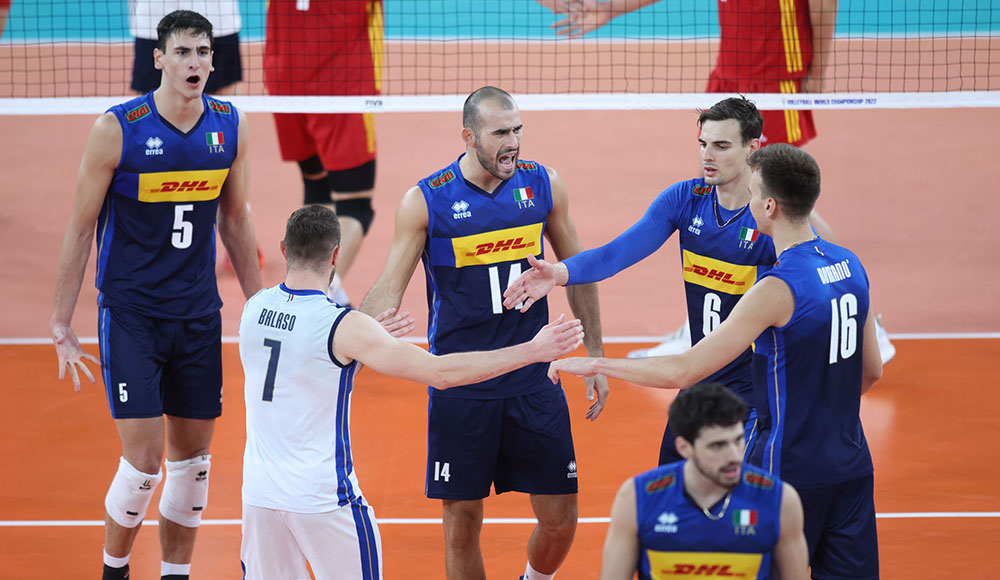
Japan unveiled as first hosts of olympic qualification tournaments
- PARIS 2024 - VOLLEY
Volleyball World and the FIVB can announce that Japan is the first country to be confirmed as a host for one of the eagerly anticipated FIVB Road To Paris Volleyball Qualifier events taking place in 2023.
The country will welcome the volleyball elite as men’s and women’s teams battle for not only a place at the 2024 Olympics in Paris – but also for an event which is traditionally known as the World Cup in Japan.
With participation at Paris 2024 the ultimate goal, countries will head to Japan with the women’s competition running between 16-24 September 2023. The men’s event will follow, beginning on 30 September and finishing on 8 October 2023.
The pools, which will be filled by the serpentine system, will be revealed on 19 December while host cities for the other groups will be announced in due course.
FIVB President Dr Ary S. Graça F° said: “We are delighted to welcome Japan as the first host of an Olympic Qualification Tournament on the road to the Olympic Games Paris 2024. Japan has a long and successful history of hosting major international volleyball events and is well known for the high level of both its men’s and women’s national teams and of course for its passionate fanbase. I have no doubt that next year’s event, which will double up as a World Cup, will be an incredible celebration for our sport and fans all over the world”.
Finn Taylor, Volleyball World CEO, said: “Japan has for so long enjoyed such a wonderful association with our sport so for Japan to host one of the Olympic qualification events is an honor. The fact the event will double up as their traditional World Cup will make the tournament extra special, and we are looking forward to experiencing a wonderful event that promises to be memorable for both teams and players alike”.
Shunichi Kawai, President of the Japan Volleyball Association, said: “I am very pleased to announce the hosting of FIVB Road To Paris Volleyball Qualifier / World Cup 2023 Japan which has been our strong aspiration since 2016. Both men’s and women’s Japanese national teams did very well this season and I feel that they have ability to compete equally with the top teams of the world. I am very sure that they will win the tickets to Paris 2024 in front of a huge Japanese crowd. I would like to thank the FIVB for the support and everyone who were involved, including passionate Japanese fans, for making this happen. We will keep working hard for further success of this tournament”.
OLYMPIC QUALIFICATION EXPLAINED
Twelve teams per gender will participate in the Olympic volleyball competition at Paris 2024. As the host nation, France, the current men’s Olympic volleyball champions, has secured its place in both the men’s and women’s competitions. The other 11 quota places per gender will be allocated via a two-step qualification process that ensures the best volleyball nations can participate at the event while observing the principle of universality.
In particular, six Olympic quota places per gender will be contested during the Olympic Qualification Tournaments where the top 24 teams as per the FIVB Volleyball Senior World Ranking (WR) not yet qualified will be split into three pools of eight teams. The top two teams of each pool will then qualify for the Olympic Games Paris 2024.
The remaining five Olympic places per gender will be filled by selecting the top five not yet qualified teams in the FIVB WR as of the end of the preliminary phase of the Volleyball Nations League (VNL) 2024. To guarantee the principle of universality, these teams will be selected as per the following order of priority: 1) The team(s) from a continent(s) without a qualified team(s) and 2) Top team(s) not yet qualified.
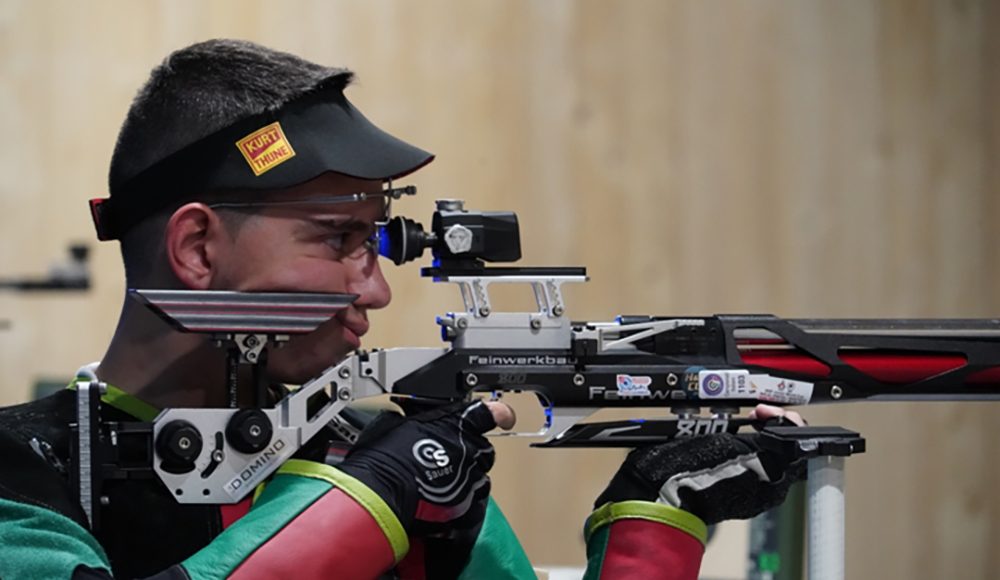
Cairo World Championships: Sollazzo wins silver and secures Olympic quota place for Italy in the 10-metre air rifle
- SHOOTING
Italy has won its first medal at the World Shooting Championships in Cairo. In the 10-metre air rifle, Danilo Dennis Sollazzo produced an outstanding performance all the way to the final before being defeated by India’s Rudrankksh Balasaheb Patil with a score of 17-13.
The final proved unlucky for the Italian, who got off to a solid start, edging as far ahead as 13-9. His opponent, however, staged an unstoppable comeback, surging back to snatch the gold. Danilo Dennis Sollazzo’s silver medal rewards Italy with another Olympic quota place for Paris 2024.
The Azzurri currently qualified for Paris 2024 Olympic Games now stand at five (two men, three women) in three disciplines:
- Shooting [shotgun] - 3 quota places: 1 Trap woman,1 Skeet woman, 1 Skeet man
- Gymnastics (rhythmic) - 1 quota place: all-around individual
- Shooting [pistol&rifle] - 1 quota place: 10m air rifle man
CONI on the innovation podium. Italia Team TV garlanded at SMAU. Gymnastics Championships live from tomorrow
- SUCCESS FOR THE OTT PLATFORM
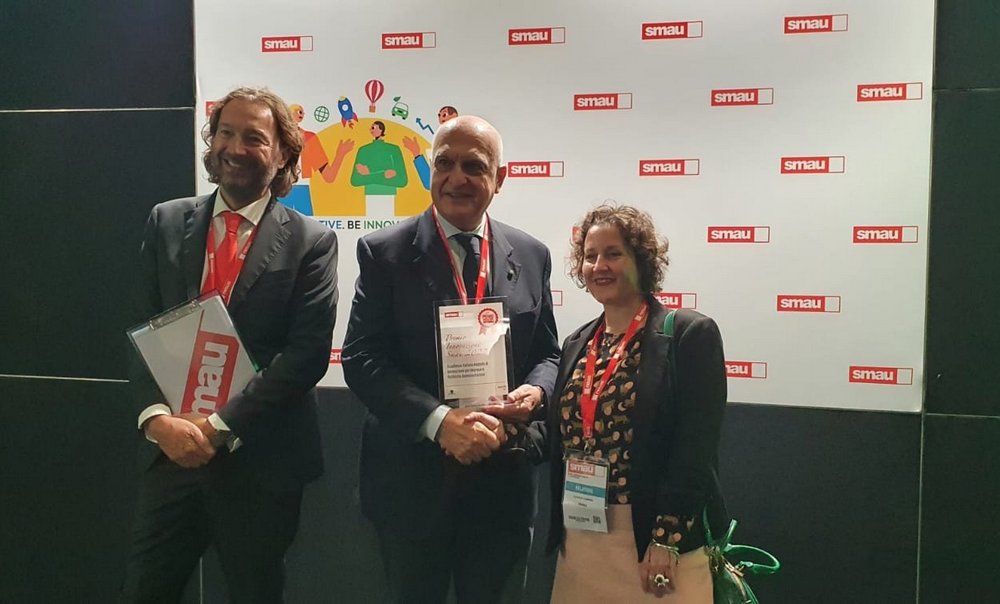
CONI is on the innovation podium: there was special recognition for CONI (Italian National Olympic Committee), who, for once, were not bestowing a medal on one of their own champions, but rather receiving an award for Italia Team TV, the OTT (Over-The-Top Content) platform, which exclusively broadcast the Oran 2022 Mediterranean Games. The success achieved in broadcasting the Algerian event and the quality of the project were recognised yesterday at SMAU Milano, the leading Italian fair for I.T. and communication technologies.
CONI and Italia Team TV were awarded the 2022 SMAU Innovation Award, accepted by the Head of the CONI Communication Office, Danilo di Tommaso. “CONI has sports broadcasting in its DNA, which today also involves innovation”, explained Di Tommaso. “In sport there is effort, sweat and passion, but technology plays an increasingly important role”. The technology developed thanks to the collaboration with the innovative startup Nexting – already a CONI partner – has been fundamental, with the company providing their technological and OTT expertise. Italia Team TV – which can be accessed at the link https://tv.italiateam.sport/ – was created to share and promote the passion and performance of athletes from many sporting disciplines, whilst concurrently helping to supply federations with audiovisual content.
The decisive step forward came just this year: indeed, until 2021 the platform – developed jointly between the Communication Office and the CONI Marketing Department – had broadcast Italian athletes only pre and post-race, for instance during Tokyo 2020, when it screened content produced directly by Casa Italia, the hospitality house and increasingly CONI’s media factory at the Olympic Games.
In the summer of 2022, the Committee decided to air its live OTT broadcasting, on occasion of the Oran Mediterranean Games, seizing the opportunity, just days prior to the start of the event, to acquire the TV rights to broadcast the games in Italy that had not yet been acquired by traditional channels. The Games were thus broadcast from the opening ceremony onwards on two dedicated channels. It proved a success: for the first time, fans were able to follow an international multidisciplinary event live on the CONI website, which was broadcast live directly from the Algerian television-produced stream, making it visible for all the Federations.
Following the Mediterranean Games, the Italia Team TV schedule was enhanced with live broadcasts of the 2022 EYOF (European Youth Olympic Festival) held in July in Banská Bystrica, Slovakia, and then with the Trofeo CONI 2022, Italy’s top multidisciplinary event dedicated to Under-14s hosted in Valdichiana Senese in late September.
But it does not end there. With the technical commentary of Ilaria Colombo and Andrea Massaro, Italia Team TV is set to broadcast competitions 2 of the all around (Friday 14 and Saturday 15 October) and on Sunday 16 the apparatus finals of the Italian Artistic Gymnastics Championships being held in Naples.
Bacosi triumphs in Skeet at the World Championship and wins an Olympic quota place
- SHOTGUN
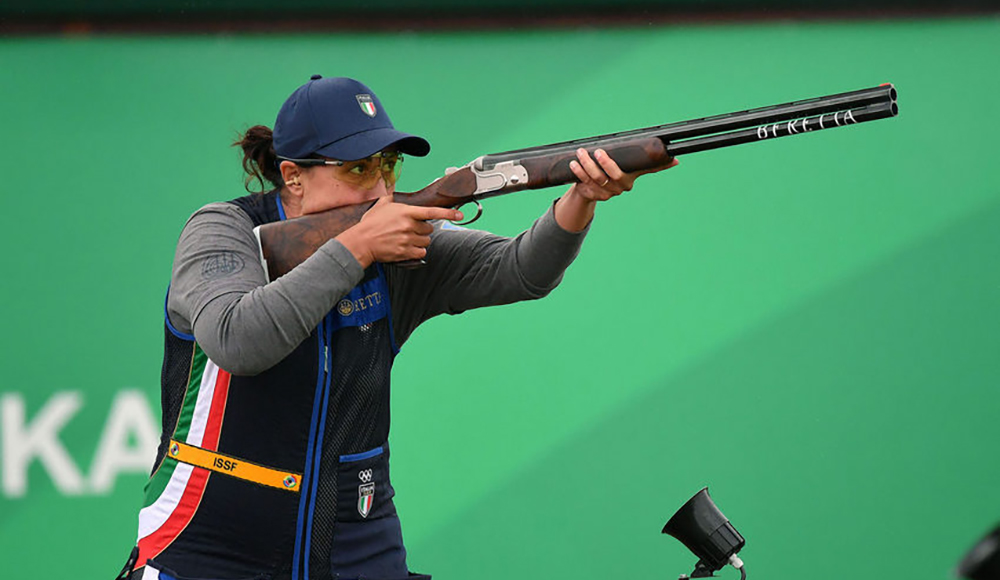
Diana Bacosi gave a perfect performance at the World Championship Shotgun, which takes place in Osijek. The Italian won the Skeet Women Final securing the gold medal and a Paris 2024 Olympic quota place. The Rio 2016 Olympic gold medallist, who also took silver at Tokyo 2020, won a second individual world title, following that of Lonato in 2019, hitting 37 of the 38 targets in the final. The competition’s final showdown was interrupted earlier than the 40 scheduled targets as the Azzurra shooter moved out of reach of Britain’s Amber Hill, the reigning European champion, who took silver with 31 targets out of 36. Bronze went to the American shooter Samantha Simonton.
Gabriele Rossetti, however, came away empty-handed. The Tuscan shooter, champion in Rio 2016 alongside Diana Bacosi, finished the men’s skeet semi-final in fourth place with 17 out of 20 targets, failing to make the cut for the final, which would also have guaranteed Italy an Olympic quota spot. The gold medal was clinched by Egyptian competitor Azmy Mehelba, who outstripped American Vincent Hancock (silver) and the Qatari Rashid Saleh Al-Athba (bronze). Elsewhere in men's skeet, the Italian team has already conquered a national quota place thanks to Luigi Lodde’s silver scooped at last month’s European Championships; today’s result for Bacosi means Italy have reached the requisites needed to be able to field a pair in the mixed event which is set to debut in Paris.
In the shooting discipline, the Italia Team’s presence at Paris 2024 had already been guaranteed in the women’s trap thanks to Silvana Stanco’s triumph last month at the European Championships.
The Azzurri currently qualified for Paris 2024 now stand at four (one man, three women) in two disciplines:
- Shotgun - 3 quota places: 1 Trap woman, 1 Skeet woman, 1 Skeet man
- Gymnastics (rhythmic) - 1 quota place: all-around individual
CONI’s Livigno CPO unveiled. Mornati: “Closing the circle, this will be our added value”
- IN PARTNERSHIP WITH THE APT (TOURIST BOARD)
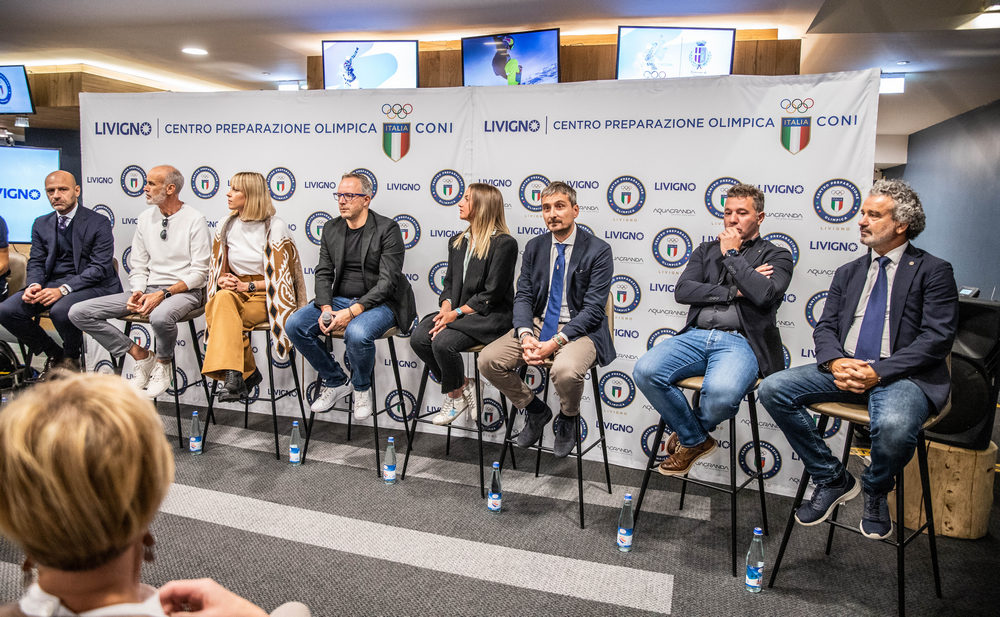
The Olympic dream passes through Livigno. The new CONI Olympic Preparation Centre (CPO), at the service of Italian sport, was unveiled today in Valtellina. The CPO, the result of the memorandum of understanding signed last June by CONI and the Livigno Tourist Promotion and Development Company, joins those of Acqua Acetosa (Rome), Formia and Tirrenia. It has a unique feature: it is the only one in Italy to allow high altitude athletic training and will thus let the top-level athletes from the Olympic Preparation Centre train in conditions of high elevation.
The presentation was attended by the Secretary General of CONI, Carlo Mornati, the Mayor of Livigno, Remo Galli, the Mayor of Bormio, Silvia Cavazzi, the President of the Livigno Tourist Promotion and Development Company, Luca Moretti, the Head of the Olympic Preparation Office, Alessio Palombi, the Head of CONI’s Institute of Sports Medicine and Science, Giampiero Pastore, IOC member and swimming champion, Federica Pellegrini, athletes from the Club Olimpico, Thomas Ceccon (Swimming), Nicolò Martinenghi (Swimming) and Michela Moioli (Snowboarding) and athletes from various disciplines in the Livigno region: Giacomo Bormolini (Telemark), Michele Bormolini (Ice rally driver), Niccolò Colturi (Snowboard Cross), Nicolò Cusini (Cross-country skiing), Jole Galli (Skicross), Giulia Molinari (Triathlon), Veronica Silvestri (Cross-country skiing). Also present were the Councillor for Sport for Livigno, Marina Claoti and Stefano Podini, curator and owner of the exhibition on Olympic torches set up in the Centre. Meanwhile, the Undersecretary responsible for Sport, the 2026 Olympics and Major Events of the Lombardy Region, Antonio Rossi, sent a video greeting.
“These new structures are at the service of citizens and athletes”, explained Mayor Galli. “We have represented the union and brotherhood of the Olympic logo. This centre is a very important achievement. Those who play sports know what respect, loyalty and teamwork mean”.
“Today we are celebrating athletics and all that it teaches”, added the Mayor of Bormio, Cavazzi. “Together we are working to prepare for Milano Cortina 2026: it's a team effort and that’s what we are. Bormio and Livigno: between us there is a healthy competition to present ourselves to the world as leaders in sport”.
“A dream has come true”, said Undersecretary Rossi. “The Centre will play a very important supporting role. Congratulations to all those who helped contribute to the Centre’s completion”.
The Centre is a great achievement for CONI. “It is a special moment that began some time ago”, remarked Mornati. “In 2013 we were talking about a CPO at high altitude. Sport is very practical: various factors have led several Federations to go to Livigno. With Livigno we’ve achieved our goal. Those who go to high altitude go looking for the best: it is a privilege to have reached this agreement with Livigno. This will add value to a splendid centre that has already become a reference point in the territory".
The CPO of Livigno was conceived out of the Centro Sportivo Aquagranda, making it one of the biggest sport and wellness facilities in Europe, already used for the gatherings and stages by several Italian national teams and even more a reference point for CONI and its National Sport Federations. Thanks to the agreement signed between CONI and the Livigno Tourist Promotion and Development Company, the sports and accommodation facilities of the Valtellina municipality will also be used for athletic meetings and training sessions at special rates and prices.
The Olympic Preparation Centre, already used for athletics, football, swimming, winter sports and triathlon, will expand its offer – starting with the construction of an Olympic swimming pool in addition to the 25-metre pool – thus meeting the needs of diverse disciplines, with two main aims in its sights: the 2024 Paris Olympic Games and the 2026 Milano Cortina Winter Games, with the snowboard and freestyle competitions scheduled to be held in Livigno.
“With Livigno we complete the offer proposed by CONI to the Federations”, explained Palombi. “Our CPOs offer the best possible conditions to train in”.
Illustrating the benefits of a high-altitude centre such as the Livigno CPO are Giampiero Pastore and Claudio Donatelli, athletic trainer for CONI and the FIGC, who offered a preview of the seminar “Training at altitude” to be presented on 26 October at the CPO in Rome.
“We will give considerable support to athletes and coaches, an all-encompassing support”, assured Pastore, who along with the institute that he manages, was behind many of the Azzurri's successes at the last Olympic Games.
“Team sports have become stamina sports”, explained Donatelli, “and working at altitude gives advantages. There is no one-size-fits-all recipe: we will produce a full, wide range of assessments capable of meeting the needs of each sport”.
An exceptional testimonial to the Valtellina resort came from Federica Pellegrini whose many successes were rooted here. “It's a happy day for Livigno and for Italian sport”, she said. "Sport has found a fundamental home for all seasons. Good luck to everyone”.
Moreover, Michela Moioli and the other Azzurri of the Italia Team have a bond with the CPO and this valley. “Livigno is my second home”, she confessed. “Here you can find peace. And here we will play at home at the Olympics: we trust in the great work that has been done and what will be done in Livigno”.
Currently in retreat at the Olympic Preparation Centre training camp are many of the Azzurri swimmers. “I have been coming to Livigno for 2-3 years”, recalled Ceccon, “for the first time I’m going to do 3 weeks: the benefits are subjective, but I really feel its advantages. The addition of the 50-metre pool is invaluable. It’s a great centre, very comfortable, where the conditions are ideal”. Sentiments shared by Martinenghi: “Walking through the Livigno centre you can breathe a familiar air. I really like coming here. It is very useful to recharge ahead of any important events. Plus it brings good luck”.
Someone who has only recently discovered the Centre is the coach of Under-21 football, Paolo Nicolato, who was satisfied with what he found. “Here are all the features you need to prepare for team sports competitions", said the coach. “Everything we need is here. It is a modern centre”.
This is also due to the investments made by the Tourist Board and the Municipality of Livigno. “These have been tough years but we have managed to make this an “easy” yet well-defined Centre”, declared Moretti. “Today is a starting point: this is the home to athletes and future Olympians. We are a top-class resource and we have to show it”.
(Photo APT Livigno)
The Trofeo CONI 2022 ends with Lazio triumphing in Valdichiana Senese
- SEVENTH EDITION
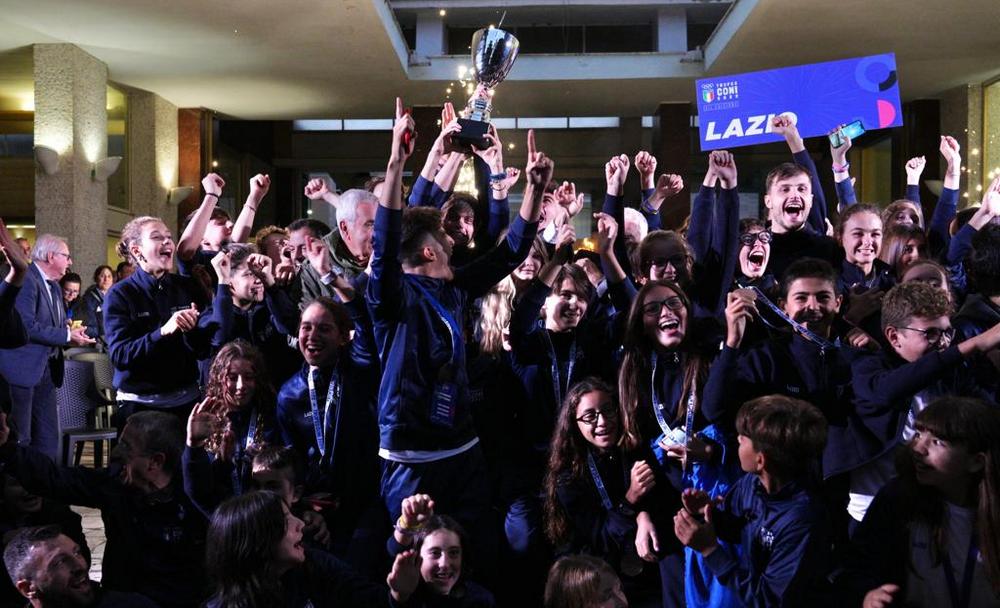
Lazio has won the Trofeo CONI 2022. The most important Italian multidisciplinary event dedicated to Under-14s, taking place again after a three-year hiatus due to the pandemic and hosted this year by Valdichiana Senese, saw the Regional Committee led by President Riccardo Viola outclass (with 112 points) the other 23 regional teams present (including those of the Italian communities of Canada and Switzerland), on a podium flanked by runners-up Lombardy (108 points) and Veneto in third (107).
The winner of the seventh edition of the Trophy was proclaimed by the President of the Organising Committee and CONI Tuscany, Simone Cardullo, and the head of CONI Territory and Promotion, Cecilia D’Angelo, during the closing ceremony held this afternoon at the Parco Acqua Santa in Chianciano Terme.Top of the event’s roll of honour was Lazio, winners in the first edition in 2014, thus drawing level at the top with Piedmont (2015, 2018) and Veneto (2016, 2019), both two-time edition winners. Lombardy (2017), meanwhile, remains on one.
As mentioned, the Lazio Committee regional team claimed the win, but celebrating were all the 3,100-plus athletes in the 10-14 years age group, together with an entourage of over 800 technical staff and companions who travelled to Tuscany to compete in the 41 disciplines of the 35 National Sports Federations and 6 Associated Sports Disciplines. “I wish to thank all the municipalities that have allowed us to organise this event in this splendid location”, stated Cardullo. “Tonight we have all the young people present and that’s the most important thing. I would like to thank the CONI President, Giovanni Malagò, for having chosen us to host the event. I hope you are able to live your dreams and grow in a humane, healthy way”.
“As a municipality we have put our faith in sport. The idea of hosting this Trophy dates back to 2018, but the pandemic set us back,” highlighted Andrea Marchetti, the mayor of Chianciano Terme, a location which had also hosted the opening ceremony. “But I have to say that a day such as this, with this show and these young people, will remain in my heart.” Speaking on behalf of CONI Nazionale, was the director of the Department of Territory and Promotion, D’Angelo: “It was tricky to organise, but I must say, successfully done. First of all, I wish to thank all the regional presidents who gave the young people the right push. I would like to thank all the National Sports Federations and Associated Sports Disciplines who oversaw the competitions and, above all, I would like to thank the boys and girls, as well as the coaches who guided you towards winning some medals, but, more importantly, towards having some fun. This is CONI working locally.”
This brings to a close a three-day sports event that for the first time has taken place over a widespread local area such as the one overseen by the Union of Municipalities of the Valdichiana Senese, the event’s institutional partners, along with the Region of Tuscany. The 2022 edition – whose ambassador has been foil champion Alice Volpi – is also the first to be broadcast live on two channels of Italia Team TV, CONI’s OTT platform. As the cauldron goes out, fireworks light up the sky of the spa town amid the celebrations of the young athletes, with thoughts already turning to December, when Trentino is set to host the event’s first winter edition: a double version of the CONI Trophy, a bit like a future Olympic Games, allowing even more young people to live their dream.
(Photo Luca Pagliaricci and Roberto Di Tondo - CONI)
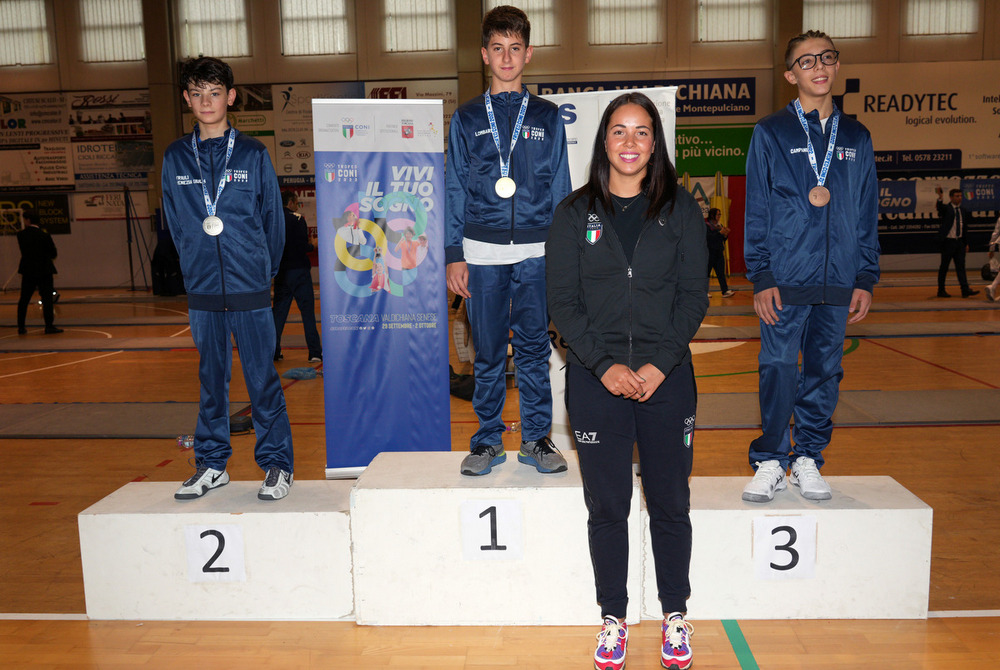
Opening day of competition at the Trofeo CONI 2022. Alice Volpi “voice” of Italia Team TV at the foil finals
- IN VALDICHIANA SENESE
Day one of competition at the Trofeo CONI 2022 got underway in Valdichiana Senese with the first thrills for the 3,000 plus Under-14 athletes who had travelled to Tuscany to live out their dreams and face competitors of the same age from 23 regional teams (including those of the Italian communities of Canada and Switzerland). The CONI event, organised this year by the Tuscan Regional Committee in partnership with the Region of Tuscany and the Union of Municipalities of the Valdichiana Senese, sees the young champions competing in 41 different disciplines.
For the first time, the event – now in its seventh edition – dedicated to Italy’s most promising Under-14s, is being broadcast live on Italia Team TV, the Italian National Olympic Committee’s OTT platform. Commenting on the final of men's foil, from the PalaFuccelli in Chiusi, was the ambassador for the Trofeo CONI 2022, Alice Volpi. Italia Team’s multiple medal-winning Azzurra in fencing then awarded the winners from her discipline, wishing that they will one day be able to live “the Olympic dream”. The national foil fencer then posed for photos and autographs with her young protégés.
The Trofeo CONI not only offers youngsters the chance to experience an exciting multidisciplinary event, it is also a breeding ground for champions, especially as far as fencing goes. Indeed, at the first edition held in 2014 in Caserta, a very young Davide Di Veroli – world silver medallist in the team épée at Cairo 2022 – took part and triumphed. From the Trofeo CONI he went on to live the Olympic dream: first as flag-bearer and gold medal winner at the Youth Olympic Games in Buenos Aires 2018 and then as a member of the Italia Team at Tokyo 2020.
Also present in the PalaFuccelli stands, witnessing the high-level event, was another international fencing legend, Giovanna Trillini.
(Photo: Luca Pagliaricci - CONI. Photo gallery: Luca Pagliaricci, Roberto Di Tondo - CONI)
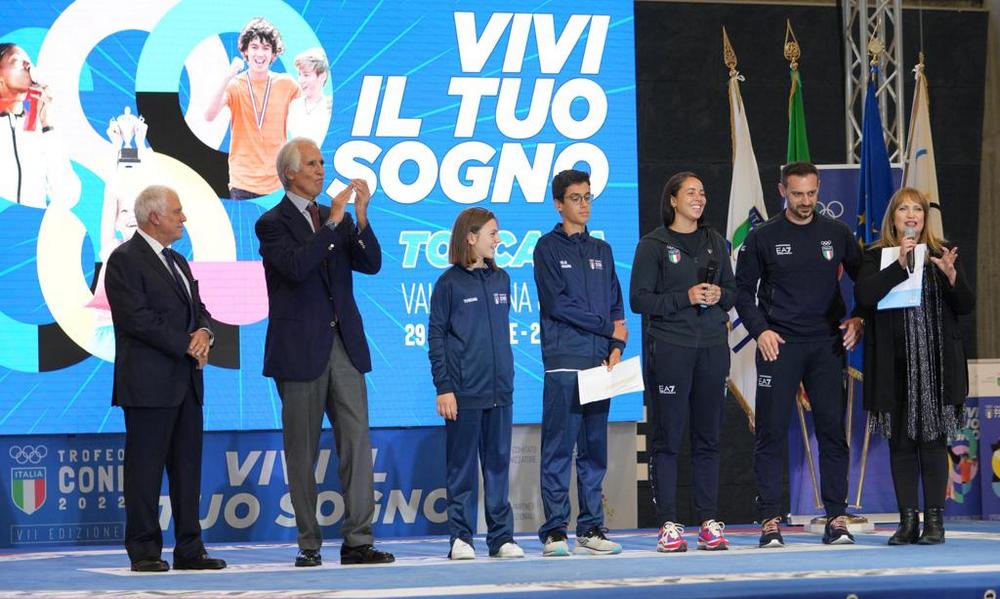
The curtain rises on the Trofeo CONI 2022. Malagò: “Symbolically important”. Bach to youngsters: “I hope to see you all at the Olympics”
- IN VALDICHIANA SENESE
Not even the bad weather could dampen the opening of the seventh edition of the Trofeo CONI. The Sports Hall at Chianciano Terme, home to the opening ceremony of Italy’s top Under-14s sports event – relocated from the “Mario Maccari” Municipal Stadium due to adverse weather conditions – sprang to life with the opening of the 2022 edition of the CONI event, bringing over 3,100 athletes, in the 10-14 age group, to Tuscany and over 800 coaches and their entourages, representing 23 regional teams (including those from the Italian communities of Canada and Switzerland) who paraded in the Sports Hall in Chianciano, recommencing a story interrupted in 2020 due to the Covid-19 pandemic.
In the stands were the CONI President, Giovanni Malagò, the President of the Organising Committee and the head of CONI Tuscany, Simone Cardullo, the President of the Region of Tuscany, Eugenio Giani, the President of the Union of Municipalities of Valdichiana Senese, Giacomo Grazi, and the Mayors of the Union, institutional partners of the event, starting with Andrea Marchetti, the Mayor of Chianciano Terme – also the venue hosting the closing ceremony on Saturday, October 1 – and the Mayor of Montepulciano, Michele Angiolini. In the gallery were also numerous representatives of Italian sport, including the CONI Vice President, Claudia Giordani and members of the CONI Board and National Council, Federal Presidents and Regional Committees. The anthem was sung by the tenor and former rugby player, Denis Dallan.
The event’s motto “Live your Dream” epitomises the allure of the five rings – sentiments expressed also in the video message from IOC President Thomas Bach, who greeted the young champions. “Dear Olympic friends, the best of luck for your participation in the Trofeo CONI”, declared the German Olympian. “I wish you the best and I hope you will enjoy these days of sport to the fullest with friends from all over Italy and I’d like to thank CONI for going ahead with this great initiative in the true Olympic spirit. Have fun and I hope that one day we will see you as athletes at the Olympic Games. Ciao!”.
“I am very pleased to be here after a two-year absence in which Covid hampered us so much”, said President Malagò, “I wish to thank the President of the Tuscany Region, the President of CONI Tuscany and all the mayors of the Union. Today is something symbolically important. A history that they have tried to take away from us. The IOC President’s message expressed his desire to see you fulfil your dreams and become part of the Olympic family. This is the spirit you should adopt over these two days, while also having fun. The country loves us very much, CONI is Italy and sport unites us. To the young people I say, ‘Have fun!’”.
“Thank you President for having faith in Tuscany”, said the Regional President, Cardullo. “This event, besides being part of the preparatory path for future champions, is a special moment of growth and coming together. We are very sorry that we could not use the stadium because we would have liked to let all the youngsters savour the atmosphere. We hope to be able to do so for the closing ceremony”.
“We are honoured to have the Trofeo CONI in Tuscany”, emphasised President Giani, “It is the prologue to what Malagò has wanted since his election: to resume the Youth Games. I remember that the gold medal-winning athletes at the Olympics made winning the Youth Games their first aim. We have got to get back to that. Tuscany has a strong sporting tradition; it is one of the values of our community. Seeing so many young people here is a source of great pride and satisfaction. Sport is a key factor in the upbringing of young people, combining identity and life perspective in physical activity. Sport holds out hope to younger generations".
“It is really thrilling to enter this building packed with so many athletes and companions”, stated Mayor Angiolini. “A warm welcome to everyone to our area, which you will be able to appreciate for all that makes it unique. Sport and wellness is a winning combination, accompanying Valdichiana Senese through its post-Covid recovery".
“Valdichiana Senese is a widespread municipality. We hope you feel at ease here”, added the President of the Union of Municipalities of Valdichiana Senese, Grazi. “We offer you our local area, from its cuisine to its art, and we hope you can come back here to visit”.
“Welcome to everyone”, was the greeting from Mayor Marchetti. “As Valdichiana we are collectively living our dream. We hope to be able to live up to expectations”,
Also on stage was the Trophy’s ambassador, Alice Volpi, Olympic and World Championship medallist in foil, who will be in Chiusi tomorrow to commentate on the competitions in her discipline for Italia Team TV, as well as Carlo Molfetta, Olympic taekwondo champion. The two Olympians accompanied two young athletes for the classic Olympic oath. Also present on stage was the former Italian cricketer, Kelum Perera, representing the CONI National Technical Commission.
“It's really a pleasure to be among so many sportsmen and women. I’m in my Tuscany and I couldn’t miss out on it”, declared the Italian fencer. “It's really nice to see all these young people together having fun and getting to know each other. It’s a good glimpse into the future, I wish you all the best of luck”.
“These youngsters are beginning to understand what the sacrifice of sport means”, highlighted Molfetta. “I hope they never give up in their sporting careers”.
“I tell young people that sport helps them with their place in the world and I tell them to never give up”, added Perera. “On the other hand I tell the coaches to guide these youngsters whilst not forgetting sport’s values and ethics”. Malagò and Cardullo then officially declared the 2022 Trophy open, with the flame carried by an athlete from twirling who lit the Olympic cauldron.
Page 51 of 146