Italy looks down on everyone: first on the medals table for the 5th consecutive time. 159 podiums, better than Tarragona 2018
- ORAN 2022
Italy dominates the medals table at Oran 2022. For the fifth time in a row since Almeria 2005, the Italian team climbs the top step of the medals table at the Mediterranean Games, confirming its position in the edition that will close tomorrow in Algeria.
In Oran, the Italian team collected 159 medals (48 golds, 50 silvers and 61 bronzes), improving by three podiums the result of Tarragona 2018, but above all winning three golds more than Turkey, second in the medals table of the 3-ring event hosted by the Algerian city. Women-led Italy brought home 25 of the 48 victories (52.08%).
But confirming Italy's leadership among Mediterranean countries are the numbers: out of 19 editions held, the Italian team has excelled 14 times. And in four years, it will try to make the most of the field factor in Taranto 2026. Because the Mediterranean Sea is Mare Nostrum.
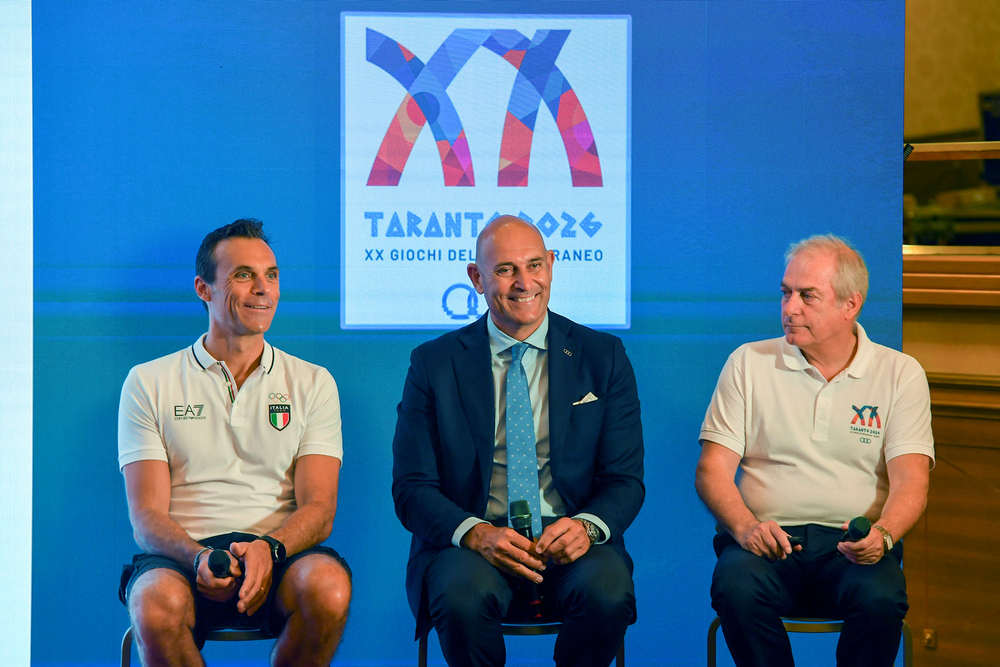
Taranto 2026 is presented at Casa Italia Oran 2022, "it will be one of the best"
- MEDITERRANEAN GAMES
Taranto 2026 is increasingly becoming a reality. The 20th edition of the Mediterranean Games, which will return to Italy in four years' time, was presented at Casa Italia in Oran, receiving the baton from the Algerian city currently hosting the 3-ring multidisciplinary event.
“It is an honour to host you here at Casa Italia, our hospitality house that accompanies us at our events around the world,” said CONI Secretary General Carlo Mornati. It is a great pleasure and honour to host the 2026 Games in Taranto. I also think it is a great opportunity for the Mediterranean countries to grow this event. It will not only be a sporting event but an opportunity to visit Italy and Apulia”.
The President of the International Committee of the Mediterranean Games, Davide Tizzano, emphasised the importance of the event. 'We have a great challenge ahead of us,' he said, 'and as soon as these Games in Oran are over, we will start working on the new ones. We are optimistic for Taranto and the population and the city are enthusiastic about hosting them. It is a challenge to fix the facilities in this region, but everything will be ready. We want it to be one of the best editions of the Mediterranean Games. I would like to thank Mattia Giorno, who is here representing the Municipality of Taranto, and Carlo Mornati, because we are working closely with CONI. In the same year, Italy will host the Olympic Games in Milan Cortina and the Mediterranean Games, and the country demonstrated its ability to stage such events. In three weeks' time we will start working actively on Taranto 2026'.
For the fourth time in history, Italy returns to organise the event, which will again be hosted in Apulia after 29 years (Bari 1997).
'I am grateful for CONI's hospitality and the help they have given us for the organisation,' said Elio Sannicandro, General Manager of the Taranto 2026 Organising Committee. I thank the International Committee and its President, Davide Tizzano. We are proud to show what we are preparing for this edition of the Games. We want to help rebuild the future of Taranto and the most important thing is that we are working together: the city of Taranto, the Region of Apulia, CONI and the government, and I hope that this organisation will be very important for the whole country and restore peace between the Mediterranean countries. The new swimming pool will be very important, and will be a legacy for the city, as will the redevelopment of the nautical area. The candidacy is also part of the strategic plan for the transformation of the entire area, with the Italian government committed to the de-carbonisation of the steel mill. A steel mill that will undergo a major transformation towards hydrogen in the coming years. But the socio-economic transition process is broader: Taranto has enormous potential, it is a very ancient city with an important culture. The Mediterranean Games will help us narrate this transformation. I am sure that it will be an example not just for Italy and we want it to be a link with all the Mediterranean countries”.
Representing the Municipality of Taranto was the Councillor for Public Works, Mattia Giorno. “I am very happy to be here talking to you all and I am thrilled to pass on the greetings of the Mayor of Taranto,” he remarked. We have a big responsibility but the city will be ready to host the event. We have been working for two years, it will not only be a sports competition, we also want to use it to promote an idea of a sustainable future in peace. We are working hard, I thank the government, CONI and the Puglia Region. We look forward to seeing you in Taranto, even before 2026. Our city has a special bond with the Olympic Games and the Mediterranean Games, it is part of Taranto's history. Our mayor will meet the mayor of Milan because we want a strong collaboration between the Winter Games in Milan Cortina and the Mediterranean Games”. (photo Pagliaricci CONI)
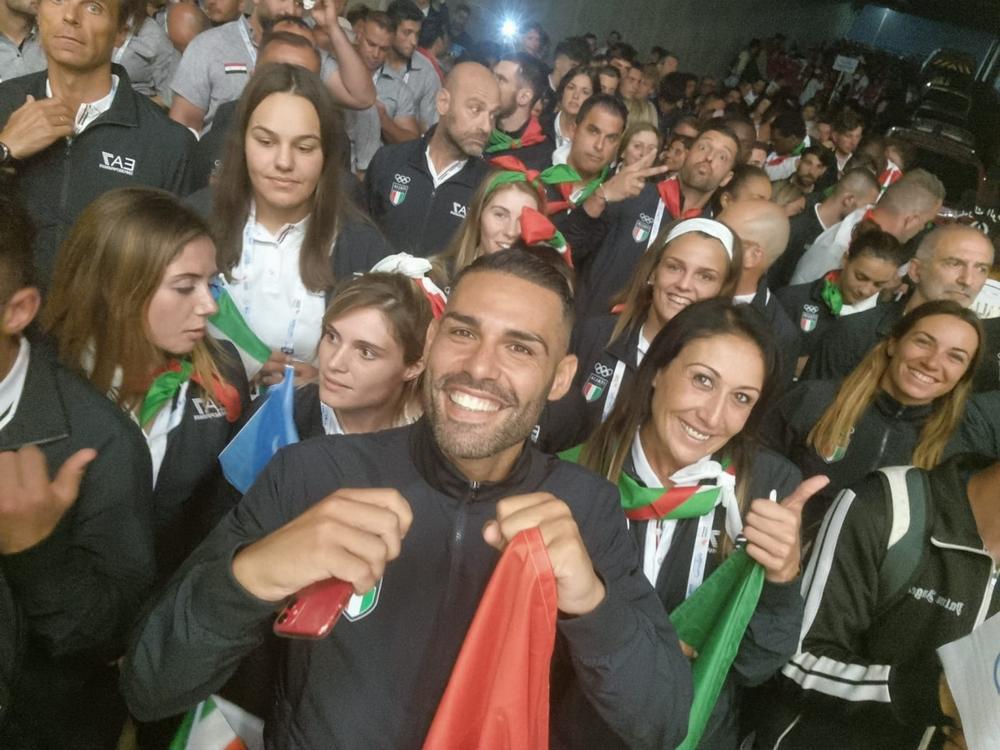
Curtain rises on Oran 2022, Team Italy parades behind flag bearers Bacosi and Busà
- MEDITERRANEAN GAMES
The curtain rises on Oran 2022. The opening ceremony was held this evening at the Olympic Stadium in Oran, officially opening the 19th edition of the Mediterranean Games that will be hosted by Algeria until 6 July.
Leading the parade of athletes from the 26 participating nations was Greece, with Algeria being last to enter the stadium.
The delegation of Team Italy (the largest at the Games with its 369 athletes, competing in 24 disciplines), entered the field fifth, after Spain and before Portugal, led by two flag-bearers (the double flag-bearer makes its debut at this event, as it did at the 2020 Tokyo Olympics) Diana Bacosi, Olympic gold medallist in the shooting at Rio 2016, and Luigi Busà, Olympic champion in karate at Tokyo 2020. Behind them were some 130 athletes and officials, including CONI Secretary General Carlo Mornati, who arrived in Algeria today, and Head of Mission Giampiero Pastore, representing 12 sports. The atmosphere in the stands was red-hot, with the Algerian public cheering for their team, although they did not hold back in their cheers and applause for the athletes of Team Italy, the most celebrated foreign delegation, with an entire stadium chanting: “Italy! Italy!”.
In the stands, Italy was supported by the Minister of the Interior, Luciana Lamorgese, representing the President of the Republic, Sergio Mattarella, and the Undersecretary responsible for Sport, Valentina Vezzali. But there is also a bit of Italy in the Presidency of the Confederation of the Mediterranean Games, headed by Davide Tizzano, and in the Taranto 2026 delegation that will take the baton from Oran for the 3-ring event.
Numerous political authorities were present, invited by the Algerian Head of State, Abdelmadjid Tebboune.
After 47 years, the Mediterranean Games return to Algerian soil, from which they have been missing since the 1975 edition in Algiers, and this evening's ceremony celebrated - with a symphony orchestra, 200 choristers and 300 dancers - the landscapes and the sea that unite distant lands and the culture of the North African country, between tradition and modernity, a country that, today more than ever, plays a leading role in the international geopolitical chessboard.
The Italian team is ready to compete in 24 sports, with the aim of once again confirming its leadership in the event and in the medals table. From tomorrow, the Azzurri will be hunting for medals in artistic gymnastics and karate. The Oran Games are officially open.
The opening ceremony and the main competitions live on the CONI website: a first!
- MEDITERRANEAN GAMES
For the first time in history, it is possible to follow a multi-sports international event live on the CONI website. The groundbreaking innovation kicks off this evening, starting at 22.00 Italian time, in Oran, Algeria, during the Opening Ceremony of the Mediterranean Games. Fans and sportspeople can watch through the Team Italy OTT platform at https://tv.italiateam.sport/
In order to make this event, in which 369 Italian athletes are taking part, more widely known, CONI has decided to open up its official Team Italy channel, which until now has always been linked to the performance of the Italian team, to the live broadcasting of the pre and post-competition events.
This time, however, in addition to the opening ceremony, it will be possible to follow the main competitions day after day via the feed that will be provided by the Organising Committee.
The live broadcasts will be made available on the CONI website as well as on the dedicated Italy Team website orano2022.coni.it Highlights will also be provided by the Algerian director of the Mediterranean Games at the end of the day.
Happy viewing to all!
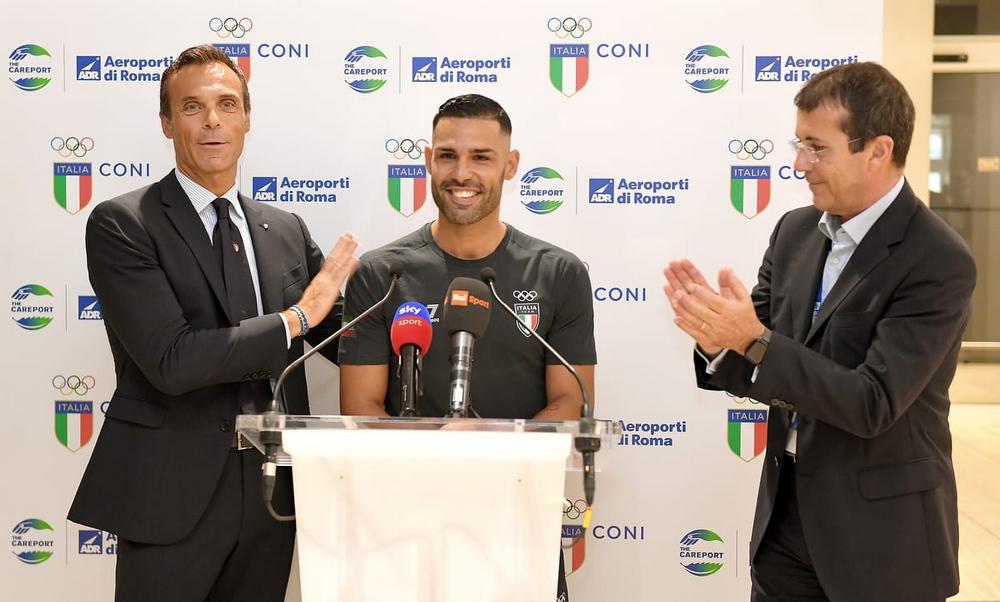
Agreement between Aeroporti di Roma and CONI to facilitate Italian athletes’ travel
- PRESENTED IN FIUMICINO
A collaboration agreement on facilitating airport travel for athletes involved in events and competitions was signed between Aeroporti di Roma and the Italian National Olympic Committee.
With this partnership, all procedures will be sped up with the aim of optimising airport processes and guaranteeing an excellent customer experience for athletes and their staff. The CONI will communicate in advance to ADR the nominative lists of the teams together with all the operational details of the flights in order to be able to organise this process appropriately, thus speeding up the airport procedures. Events will also be planned and organised at the airport to illustrate the sporting events which the athletes will take part in or have already participated in, so as to make the sports culture known and valued to travelling passengers and operators also in the airport, making it an increasingly inclusive meeting place.
Veronica Pamio, Vice President External Relations and Sustainability of ADR, stated "Aeroporti di Roma, always sensitive to cultural and social issues, has enthusiastically decided to be at CONI's side to promote sports initiatives and events at Fiumicino and Ciampino airports. This partnership is an important step on the path of enhancing the value of culture and sport, as well as a further confirmation of ADR's commitment to combine excellence and social sustainability, and to ensure that Fiumicino's role as the gateway to Rome and the country is increasingly future-proofed”.
CONI Secretary General Carlo Mornati commented "I would like to thank ADR for the attention and sensitivity shown towards our world. In fact, this agreement allows all airport procedures to be streamlined and sped up, enabling CONI to put its athletes and officials, departing for the various international competitions, in the best possible conditions from the moment they enter the airport. This agreement also helps to spread a healthy sports culture through the our champions’ stories, in what is increasingly becoming a meeting place and the most important gateway to our country. This also a unique way for our flag-bearers to promote Italy throughout the world”.
Fiumicino airport excels in the quality of passenger services, technological innovation and infrastructure functionality. For several years, in fact, 'Leonardo da Vinci' has been among the best airports in the western world, always offering a service at the highest level in terms of quality, sustainability and operational excellence. Even during the pandemic, one of the most difficult and challenging periods for the air transport sector, travellers were able to appreciate the efforts of Aeroporti di Roma in always guaranteeing a top level of service. (photo Ferraro CONI)
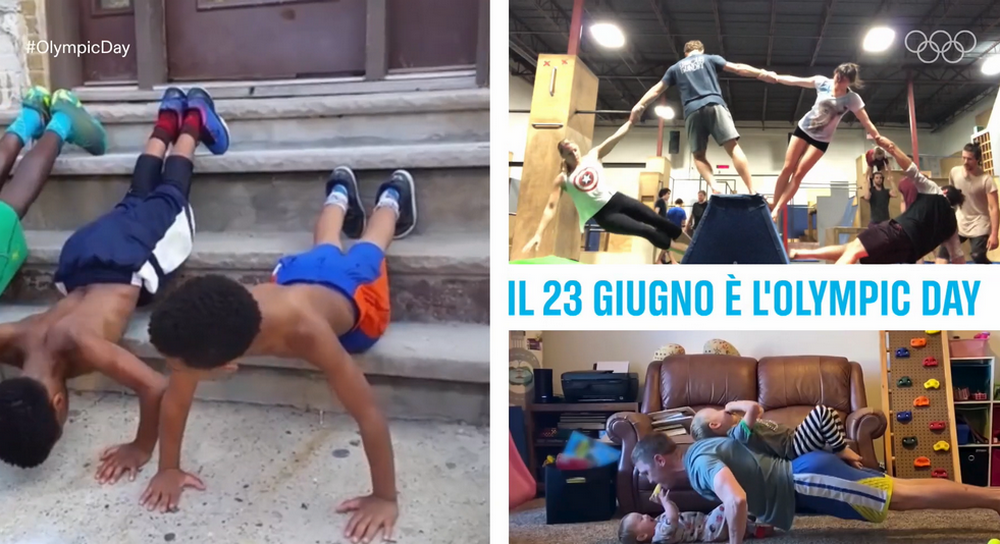
Tomorrow is Olympic Day. Athletes and sportsmen around the world 'take action' for peace
- ALSO CONI AND TEAM ITALY
The world of Sport is preparing to celebrate Olympic Day. In keeping with tradition, the International Olympic Committee foundation, established in 1894, will be celebrated worldwide tomorrow.
On this festive day for the five-ringed world, the IOC introduced this year's “Together for a better world” campaign, shining a light on issues such as sustainability, inclusion, solidarity and peace, with the aim of involving people in building a better world through sport.
Each year, the campaign focuses on a different theme that serves as a unifying global thread. 2022 celebrates the power of sport in bringing people together in peace, a call for everyone to take action and move together for world peace. (the IOC video)
CONI is also taking part in Olympic Day, with the involvement of the CONI National Athletes' Commission and Team Italy champions, who through the Committee's social channels (with the hashtags #OlympicDay and #MoveForPeace), will 'challenge' the Italian fans and athletes, inviting them to join the movement and actively advocate for peace. United as one. With the unique power of sport.
The 'Azzurri' chosen for Oran 2022, 6 Olympians among 370 athletes
- TEAM ITALY
Oran 2022 under the banner of Team Italy. The CONI Council, meeting in Perugia, decided on the tricolour team for the 19th Mediterranean Games, which will be held from 25 June to 6 July in Algeria.
The mission will consist of 370 Azzurri, including 215 men and 155 women, engaged in 24 sports.
The most represented region is Lombardy (53 athletes), followed by Veneto (41) and Emilia Romagna and Lazio (both with 32 athletes), while there are 18 foreign-born Azzurri.
Olympians Diana Bacosi (shooting) and Luigi Busà (karate) will be the flag bearers for Team Italy, but four other Olympic champions will also be present in Algeria: Mauro Nespoli (archery), Gabriele Rossetti and Jessica Rossi (shooting) and Matteo Tagliariol (fencing).
Giampiero Pastore is the Head of the Mission for the Team Italy.
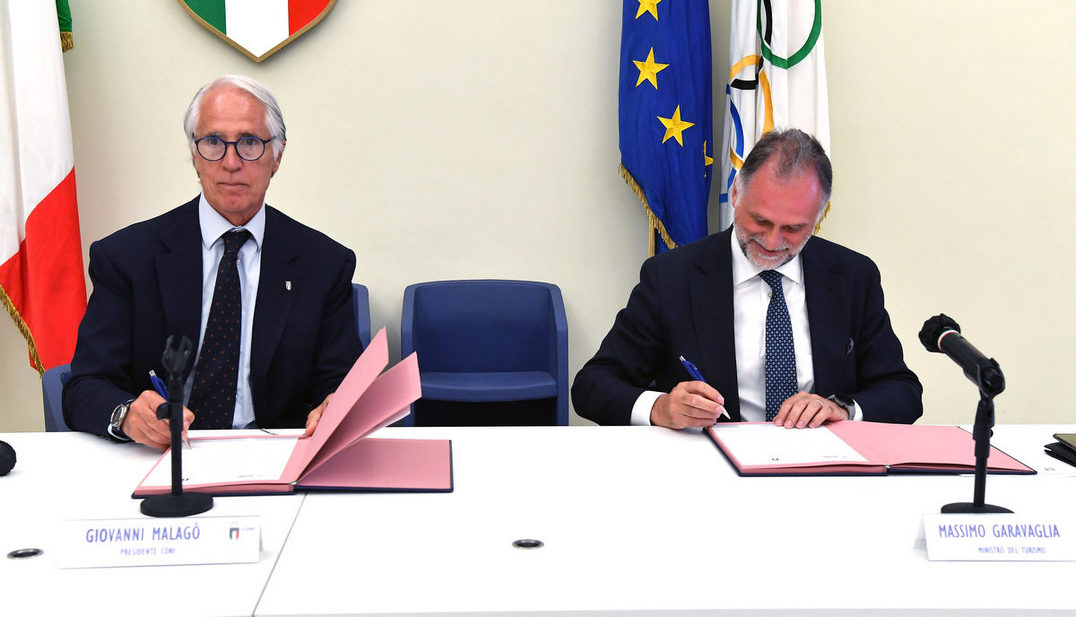
Memorandum of Understanding signed in order to collaborate on the relaunch of Italian tourism with major sporting events
- CONI - MINISTRY OF TOURISM
Sport can help boost tourism in Italy. With this aim, a memorandum of understanding between the Italian National Olympic Committee and the Ministry of Tourism was signed today at CONI. The agreement was signed in the Salone d'Onore by CONI President Giovanni Malagò and Minister Massimo Garavaglia, in the presence of CONI Secretary General Carlo Mornati, CONI Vice-President Silvia Salis, the Minister's Councillor for Sports Tourism Manuela Di Centa, ENIT Managing Director Roberta Garibaldi, as well as numerous presidents of national sports federations and representatives of sports and military organisations.
At the opening, President Malagò stated "I am very happy about this agreement. We have many things to do and so many ideas to develop together with the Ministry of Tourism. Sport and tourism are linked, and it is no coincidence that in several municipalities, for example in Rome, one person is responsible for both delegations. This agreement has an important value for the role of Minister Garavaglia, whom I thank, and for what this synergy and our link with the industrial and tourism system means'.
Minister Garavaglia was also satisfied: "With this agreement, we want to do concrete things, i.e. increase GDP and jobs. The combination of sport and tourism is powerful. Think of the Olympics as the most watched event in the world: Milan-Cortina 2026 is a huge opportunity, so we have to get organised. This is what the agreement is all about: finding rapid forms of organisation. But sport is also widespread in practice, it’s not just about the big events: that is why we go beyond that, it has great potential”.
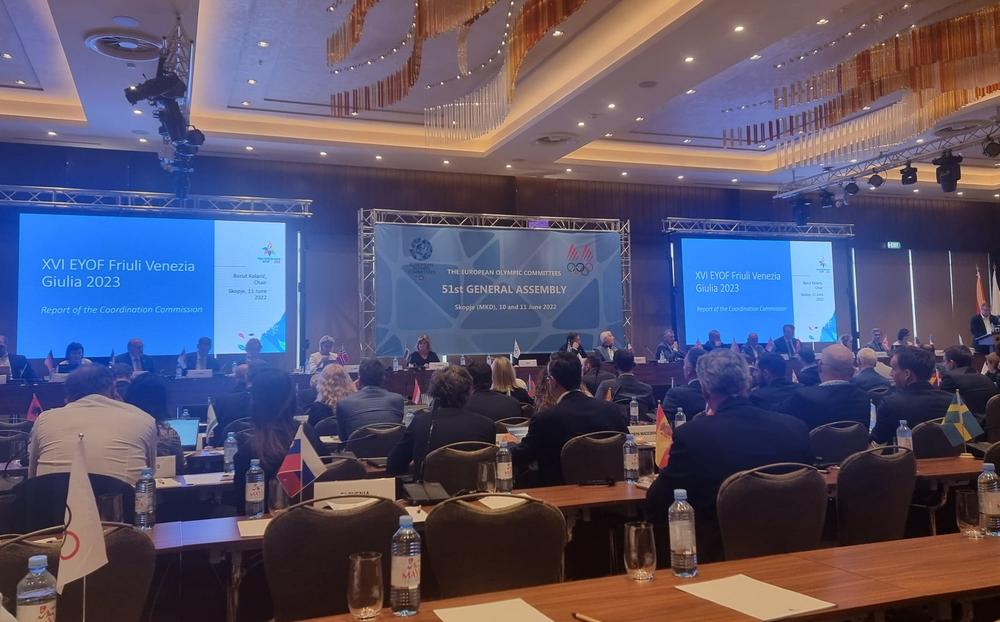
51st EOC General Assembly comes to a close, next meeting to be held in Turkey in 2023
- IN SKOPJE
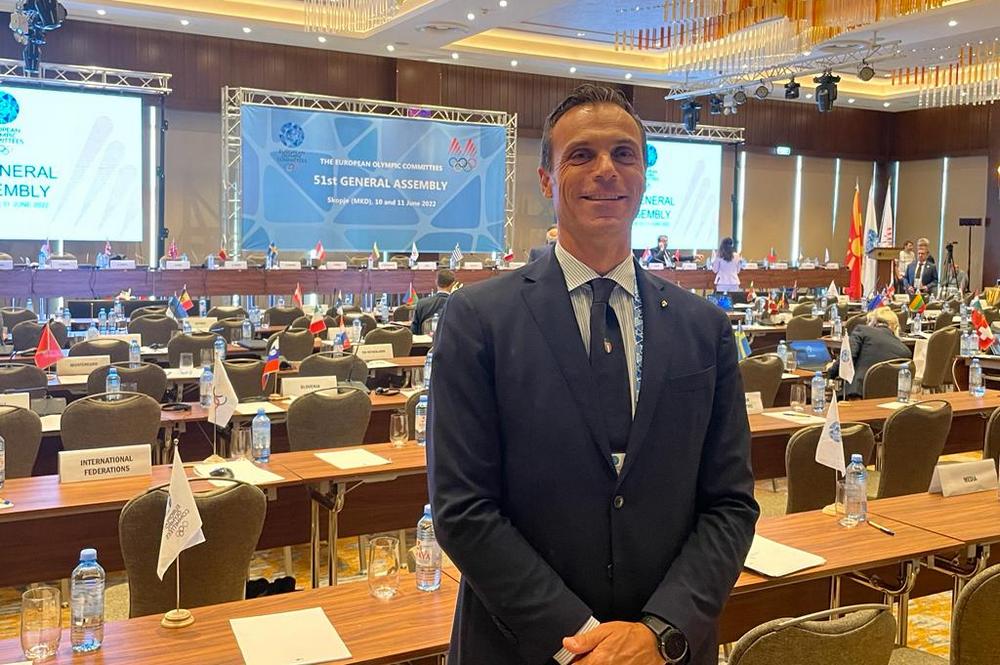
The 51st General Assembly of the European Olympic Committees closed in Skopje. On the second day in the capital of North Macedonia, it is the EYOFs, the European Youth Festivals, that occupy the attention of the representatives of the various European Olympic Committees. Leading the CONI delegation was the General Secretary Carlo Mornati and the Head of Olympic Preparation, Alessio Palombi.
But there is also a bit of Italy on the speakers' stage with the organising committee of Friuli Venezia Giulia 2023, the venue for the 16th winter edition of the EYOF. The event, which will have its opening ceremony in Trieste and the closing ceremony in Udine, has 14 sports on the programme, with some competitions crossing over into Austria (hockey) and Slovenia (jumping and Nordic combined).
First, however, the young athletes from 48 European committees will meet in Slovakia this summer to compete in the 10 sports at the 16th Summer Festival, hosted in Banska Bystrica from 24 to 30 July. Slovenia will then take the baton, organising the next edition in Maribor in 2023. Once the work is over, the delegates of the European Olympic Committees will meet again in October 2023 in Istanbul, Turkey, for the 52nd EOC General Assembly.
51st General Assembly of European Olympic Committees kicks off, Secretary Mornati leads CONI delegation to Skopje
- IN NORTHERN MACEDONIA
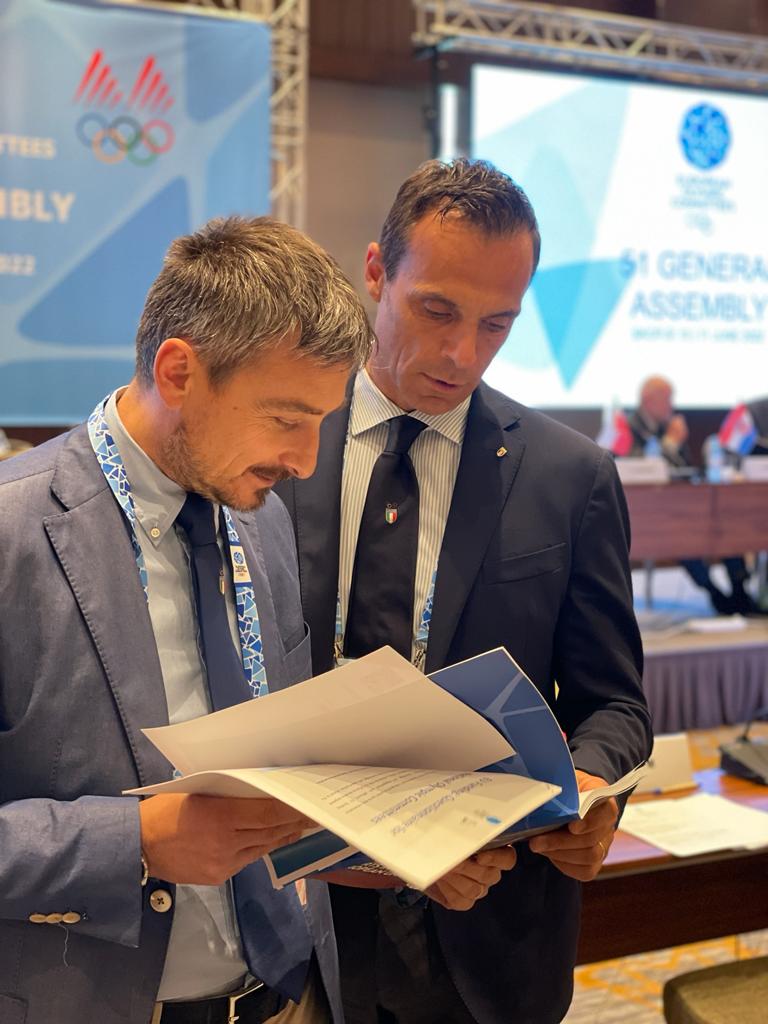
The 51st General Assembly of the European Olympic Committees (EOC) opened this morning in Skopje. Also taking part in the Session, scheduled until tomorrow in the capital of North Macedonia, is the Italian delegation led by CONI Secretary General, Carlo Mornati, and the Head of Olympic Preparation, Alessio Palombi.
Doing the honours was the President of the North Macedonian Olympic Committee, Daniel Dimeski, and, representing the government, Deputy Prime Minister Artan Grubi.
Numerous representatives of the five-ringed movement were present, starting with IOC President Thomas Bach who, in his speech, warned of the arrival of a 'new world order'. "It is imperative that we remain united on our positions, principles and values". The world sports number one then expressed his hope and also mentioned the forthcoming Olympic Games, including Milan Cortina 2026, which will provide "an innovative approach in the organisation of the Winter Games".
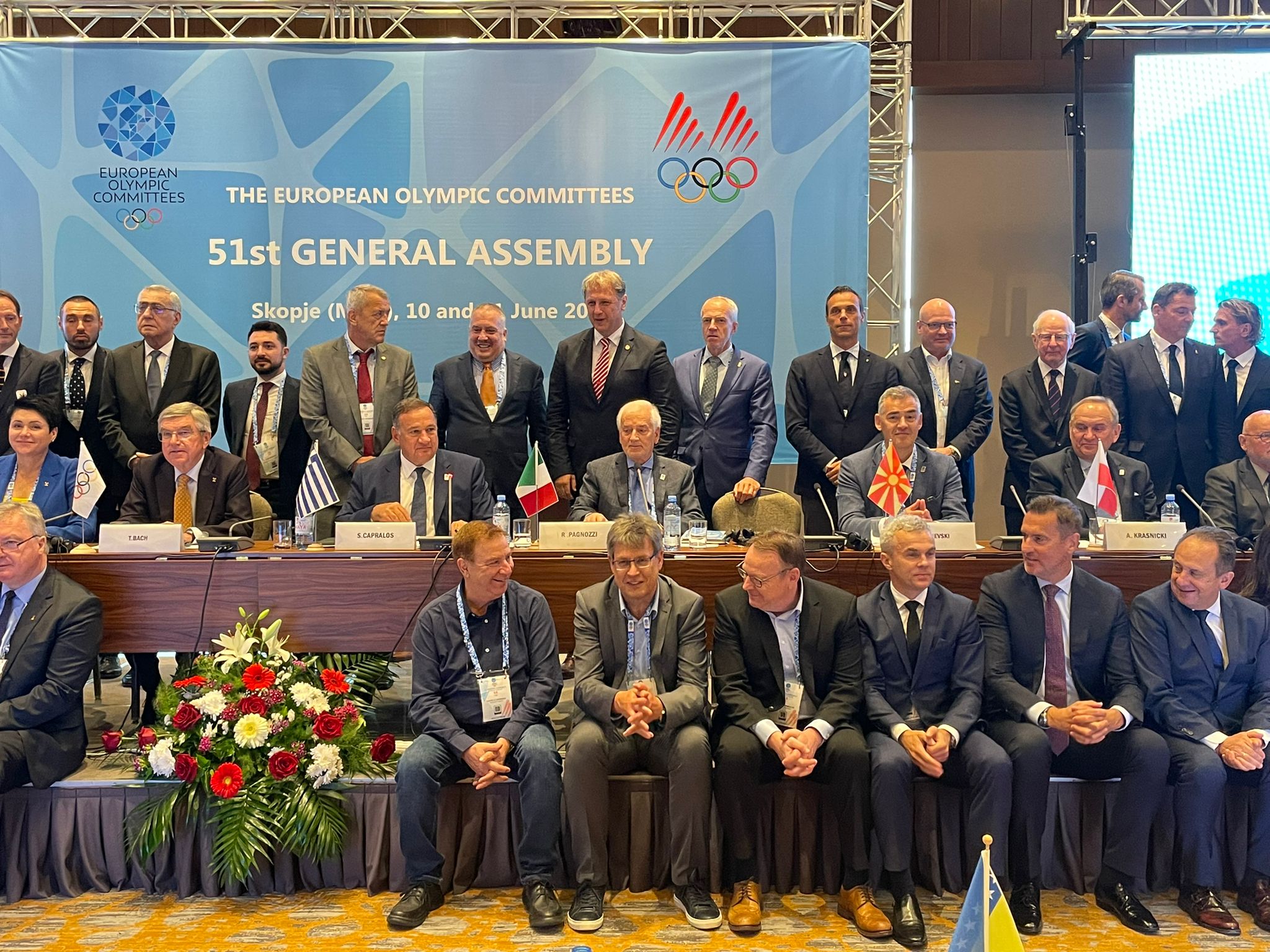
EOC President and IOC member Spyros Capralos, on the other hand, emphasised that sport should be used as 'an instrument of peace and not of discrimination. As envisaged by our founding fathers'.
 IOC member and Ukrainian Committee President Sergej Bubka also spoke in the morning about the solidarity programme for his country's athletes promoted by the International Committee. The pole vaulting champion also thanked the European Olympic Committees for their important support, mentioning Italy and recalling how CONI and its Federations host over 400 athletes from 20 different sports. "We can only be strong if we are united" the Olympian said movingly to the applause of the hall at the Double Tree Hilton Hotel where the event is being held.
At the opening of the Assembly, IOC member, EOC Executive and ANOC Secretary General Gunilla Lindberg was awarded the Order of Merit, the highest award of the European Olympic Committees instituted in 1995.
The Assembly then heard annual reports from President Capralos, General Secretary Raffaele Pagnozzi and Treasurer Peter Mennel.
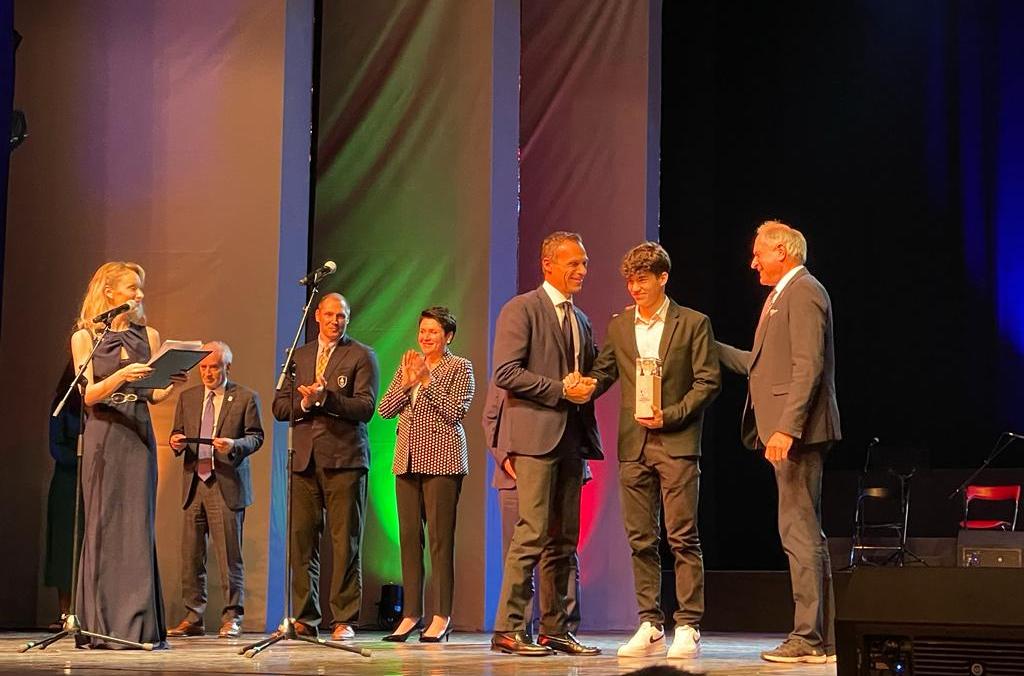
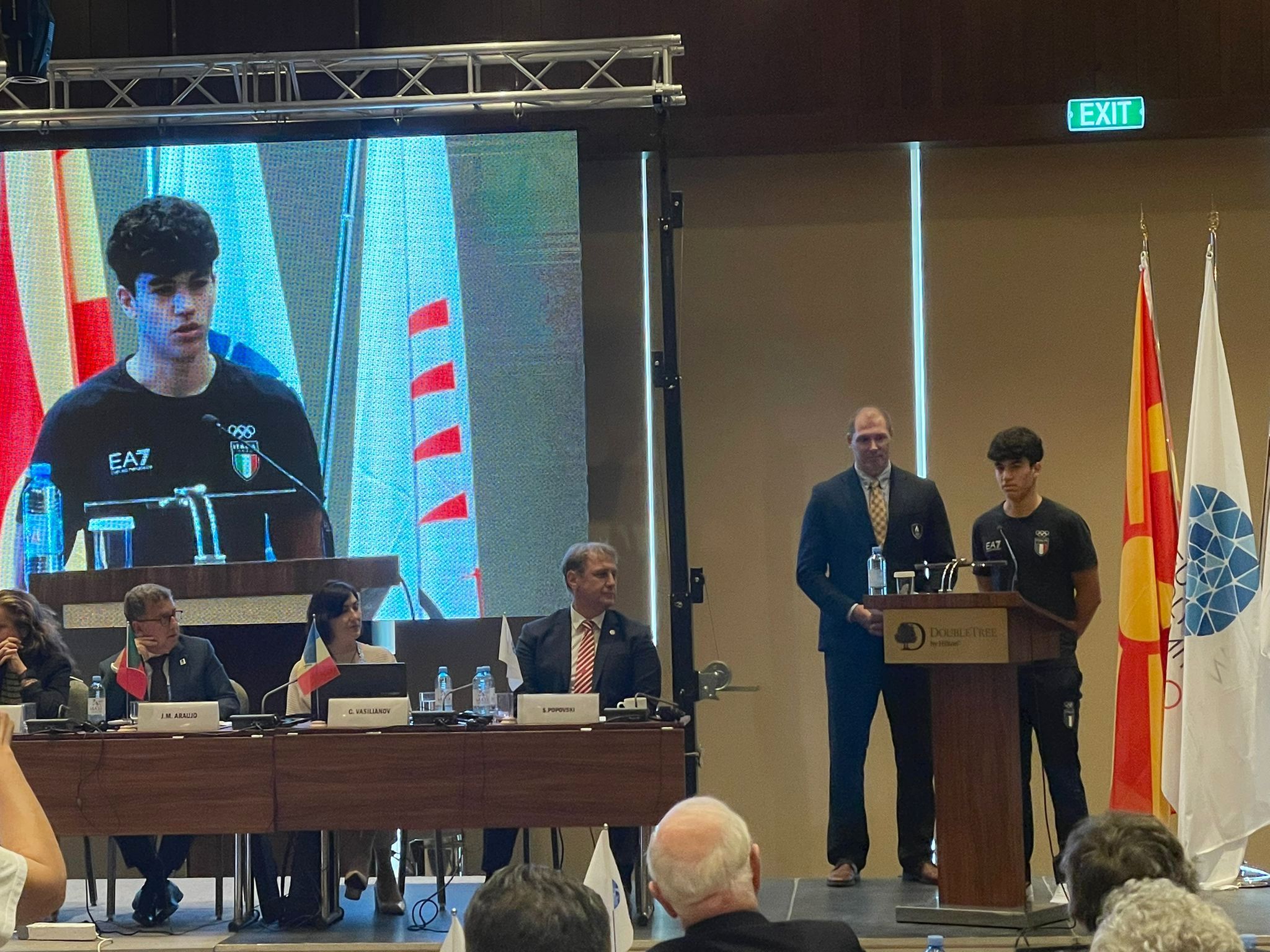 The first day also saw the presentation of the five finalists - including Italy's Lorenzo Previtali - of the seventh winter edition of the 'Piotr Nurowski 2022' Prize, awarded to the best young European athlete. The nomination of the Italian short track athlete comes after a memorable season that saw him excel with gold in the 1,000m and three silver medals in the 1500m, 500m and mixed relay at the Winter EYOF Vuokatti 2022. But there is also the gold won with the mixed relay at the Junior World Championships in Lorenzo's trophy cabinet. In the evening, during the Gala held at the National Opera Ballet, the outcome of the vote was revealed, with the Italian athlete coming in fifth place.
 During the session, Bali was indicated as the venue for the ANOC World Beach Games in 2023, and reports from the Organising Committees of the European Games in Krakow and Malopolska 2023, the Olympic Games in Paris 2024 and Milan Cortina 2026 were presented, with Olympic gold medallist Diana Bianchedi and Anna Riccardi speaking in connection from Italy.
Page 54 of 146