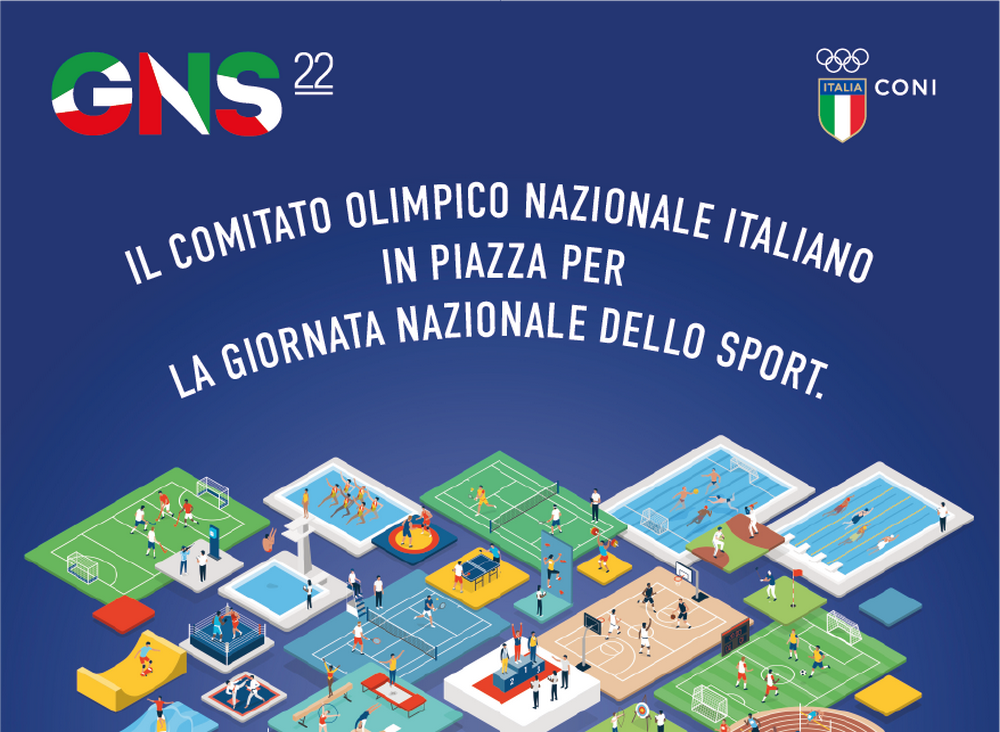
Italian squares come alive as CONI celebrates National Sports Day
- ALL REGIONS INVOLVED
A party open to all being held throughout the country. Today, the Italian National Olympic Committee celebrates the National Day of Sport, an event that takes place every year for those who love and practice sport and for the promotion of all sporting disciplines involved, with events and demonstrations in many Italian municipalities.
Under the direction of CONI, in coordination with the sports bodies and affiliated sports associations and together with the local authorities, the territories engage in initiatives, events and parades aimed at enhancing the function of sport as a fundamental factor for the growth and enrichment of the individual, for improving the quality of life and for empowering and strengthening civil society.
And there are so many Italian squares that are coming alive with sport today, telling their stories in real time on CONI's social media (see photos on the Facebook page) through the hashtag #GNS22 (Here the detailed programme Region by Region). A celebration that embraces the country, with sport as the protagonist.
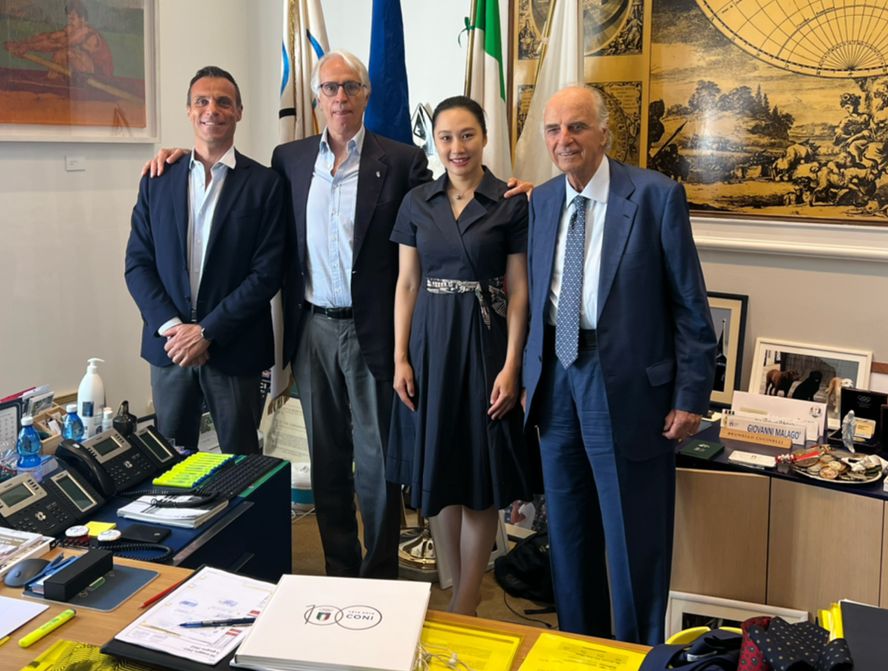
President Malagò meets IOC member and speed skating Olympian Hong Zhang
- CONI
CONI President, Giovanni Malagò, together with honorary IOC member, Mario Pescante, and Secretary General, Carlo Mornati, received IOC member, member of the Athletes' Commission, and member of the board of the WADA FOUNDATION, Chinese Olympic Committee and speed skating Olympian Hong Zhang today at the Foro Italico.
During the meeting, in addition to general topics, they talked about Beijing 2022, the general moment experienced by the movement and the challenges that await it in the coming years, with an eye on the next Olympic and Paralympic Winter Games in Milan Cortina 2026. Zhang won five-ring gold at Sochi 2014 and has been an IOC member since 2018.
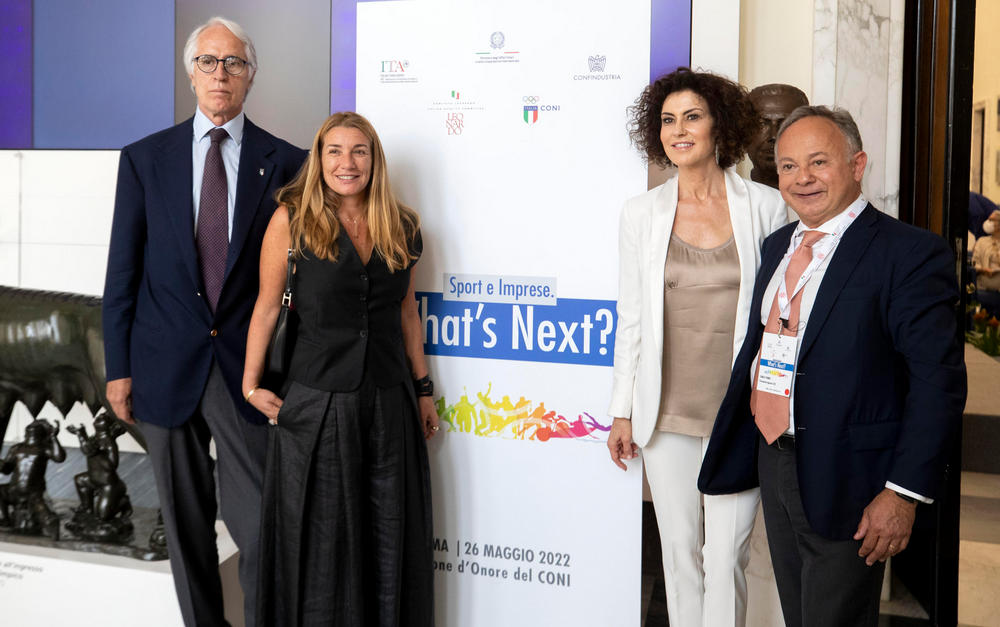
CONI hosted the Leonardo Committee’s Annual Forum, “sport is an important driver of economic growth for the country”
- THE 19TH EDITION
After the long setback caused by the pandemic, the availability of new financial resources with the PNRR and the organisation of major events in Italy, such as the Milan-Cortina 2026 Winter Olympics, can bring sport and its role as a driving force of recovery back to centre stage. The 2022 edition of the Leonardo Committee Forum is dedicated to the role and potential of the sports sector and its relations with the country's various production sectors. This is the event that annually brings together representatives from institutions and the business community to take stock of the development prospects for Made in Italy companies.
The Forum, organised in cooperation with ICE Agenzia, Confindustria and CONI at the headquarters of the National Olympic Committee in Rome, was attended by Leonardo Committee President Luisa Todini, ICE Agenzia President Carlo Ferro, Confindustria Vice President Barbara Beltrame Giacomello, and CONI President Giovanni Malagò. The Minister of Foreign Affairs and International Cooperation, Luigi Di Maio, closed the proceedings.
Other speakers included Nerio Alessandri (Technogym), Lavinia Biagiotti (Biagiotti Group), Maria Criscuolo (Confindustria Sport and Major Events Technical Committee), Antonio Marano (Milan-Cortina 2026 Foundation) and Maurizio Stroppiana (Mondo).
Professor Stefano Manzocchi, Research Vice-Chancellor of Luiss University, presented the 'Sport and Enterprise: a winning partnership' study, carried out for the Leonardo Committee by the University named after Guido Carli, with an analysis of the tangible and intangible benefits that the sports sector generates for the national economy and an assessment of the economic impact of a major event such as the next Winter Olympics in Milan - Cortina 2026.
Like very few other institutions, CONI remembers and weaves the history of our country,' said Malagò as he greeted the speakers. I am proud to host the Leonardo Committee, which represents the excellence of the country's businesses, and we are happy to be part of this.
'The entire sports industry accounts for 1.5% of GDP with 26,000 companies and over 200,000 employees working in the various sectors: this is the added value index, the strong point of Italian exports,' said Luisa Todini, President of the Leonardo Committee. 'Made in Italy expresses true excellence in the production of sports goods with companies that have established themselves on foreign markets thanks to a very high level of quality, design and technology. The resumption of major sporting events, celebrated with the many victories of our extraordinary athletes, is a tangible sign of a country that is stepping up and winning. Sport and its industry enhance and improve communities and territories by creating a driver of economic and social wellbeing with a focus on the development of digital technologies and environmental protection and sustainability. Today we are at our second appointment with CONI, aided by a comprehensive guide drawn up by Luiss with the aim of drawing up a balance sheet but, above all, to indicate the pathways to be worked on in order to make the best use of and coordinate the PNRR resources. Sport and Business together to boost our economy and make us feel good'.
"2021 was the year of sport restarting after the pandemic, a year of rebirth that saw the success of Italian athletes around the world. Sport is a sector that represents a fundamental piece of civil, social and economic recovery,' said Barbara Beltrame Giacomello, Vice President for Internationalisation of Confindustria. "What has not been in the spotlight is that the sport is always supported by a very dynamic industry, capable of generating growth and exporting the Italian model abroad, through products that are symbols of Made in Italy. Our sports items are characterised by excellence in terms of design, attention to detail, quality of materials and workmanship. Quality, therefore, is the key to standing out in an increasingly competitive environment and is what defends our goods against tough competition from our competitors'.
The Minister of Foreign Affairs and International Cooperation, Luigi Di Maio, said "The Ministry of Foreign Affairs has been following the dynamics of the sports sector within the framework of the national economy with increasing attention, especially since it took over responsibility for foreign trade and placed innovation, digitalisation and export quality at the core of its strategy to support the internationalisation of Italian companies. This is why, together with ICE, we wanted to capitalise on the major international sporting events, such as the Imola Grand Prix, Serie A football and the Giro d'Italia, and use them as platforms to promote our country and Italian excellence. Targeted, coordinated and systematic promotion of Made in Italy is a key factor for the positioning of companies on foreign markets: Italian sport, by bringing together different production chains, makes a fundamental contribution to the achievement of this goal”.
Luiss Research Vice-Chancellor Stefano Manzocchi commented "Our research shows how sport, in addition to being a strategic industrial sector for the national economy (with more than 15 thousand companies in the sports facilities and activities management sector, a direct turnover of more than €4 billion and almost 40 thousand workers employed), is a driving force for the production and export of sports articles and equipment, which have recorded significant results in recent years. Therefore, sport and business is a winning partnership. Sport plays a very important social role, generating significant intangible positive effects for the national economy, such as improving the psychophysical well-being of the population and social cohesion, reducing health expenditure, promoting the territory and tourism, and contributing in many ways to the achievement of the UN 2030 Agenda's sustainable development goals”.
The report shows how, over the last decade, the average number of Italians practising sport continuously has increased (from 22.8 per cent in 2010 to 27.1 per cent in 2020) but still remains below the EU average. However, the share of 'sporty' Italian citizens is still characterised by a persistent gender gap, with higher sports participation rates for males in almost all age groups.
Another important aspect that emerges from the study is the role that sport has always played in urban regeneration in our country and the significant contribution made to the tourism industry through sports tourism. In 2020, when global revenues from international tourism fell by 64% due to the pandemic, the sports tourism market showed greater resilience, while the number of Italians practising sport on holiday almost doubled, from 18% in summer 2019 to 32% in 2020, with important economic spin-offs for the territories.
It is also emphasised that sport is one of the sectors that has been able to more readily grasp the opportunities offered by the digital economy and the acceleration imparted by the health crisis, through the adoption of digital tools to simplify legal and regulatory obligations, make organisational activities more efficient, manage access to sports facilities, schedule competitions and training sessions, and with the spread of new hybrid or 'phygital' sports event formats. At the same time, the health emergency has brought to light pre-existing criticalities in the sector and highlighted the need for an organic reform of the sector, creating adequate institutional infrastructures and a clear and coordinated policy plan to facilitate the sector's restart and development.
In light of its social and economic importance, the PNRR has in fact earmarked €1 billion for the sports sector to finance two investment lines for the period 2021-26, which concern the upgrading of sports infrastructure in schools (€300 million) and the creation of sports facilities and equipped parks (€700 million).
The economic impact of a major sports event: the case of Milan - Cortina 2026
The Luiss report also includes a simulation exercise aimed at assessing the economic impact of a major sporting event, such as the Milan - Cortina 2026 Winter Olympics, through the analysis of the multiplier effects activated by the organisation and holding of the event itself. The main hypothesis is that the event will lead to an increase in demand for the sports sector, which is assumed to correspond with a conventional value of €1 billion. The exercise suggests that the 2026 Winter Olympics will generate a total increase of €1,142 million in resources within the sports sector; the sectors directly and indirectly related to the sports sector will benefit from increased resources of €1,026 million. To summarise, an increase in demand of €1 billion in the sector generates as a direct, indirect and induced effect an impact on the entire economy of €2,901 million, equivalent to a multiplicative activation factor of about 2.9.
The organisation of the Winter Olympics will also have an impact on employment brought about by the increase in demand and thus production for companies supplying the sports sector. The estimate made suggests that for an increased demand for goods and services of €1 billion in the sector, almost 13,000 new labour units can be generated in the country system (of which more than 9,000 are within the sector and almost 4,000 are in the main related economic sectors). Similarly, the increased production activity of the sports sector also has an impact on companies downstream in its supply chain in terms of increased added value.
The impact analysis shows that for every euro of added value created in the sports sector, approximately €0.46 will be indirectly generated downstream in the supply chain. Finally, the increase in added value and employment corresponds to an increase in the level of income, estimated at around €320 million, with €225 million within the sector. (photo ANSA)
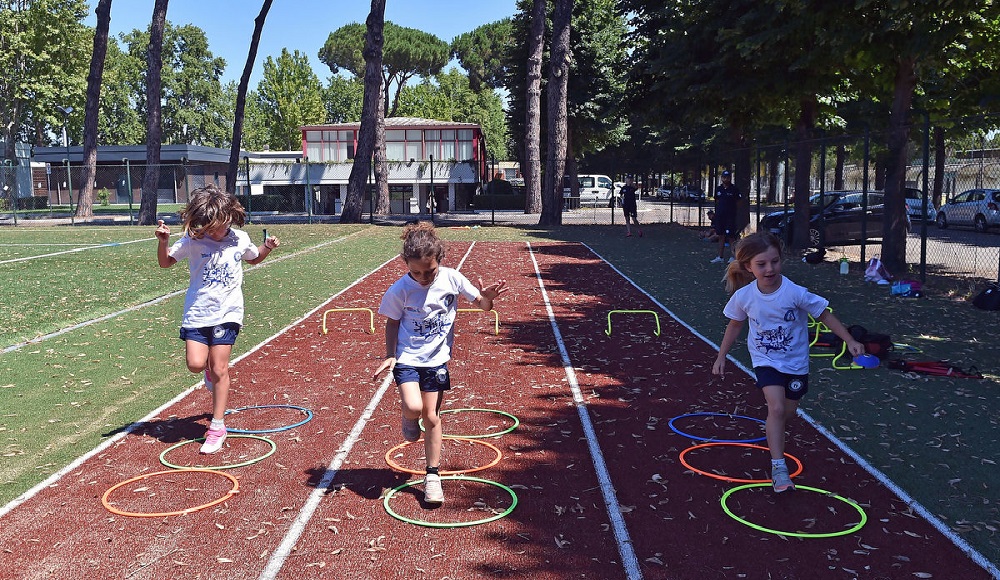
From Play to the Games: CONI Educamps, the multidisciplinary summer sports centres, are back
- SPORT FOR YOUNG PEOPLE
The national training and information meeting, organised by the CONI Territorial Directorate, was held today via video conference. It was attended by the Presidents of the CONI Regional Committees, the Scientific Directors of the CONI Regional Sports Schools and the national and regional teacher-trainers - with a total audience of over 200 participants - who will have the important role at territorial level of training and informing the technicians and operators of the participating Amateur Sports Associations and Societies about the restart of the CONI Educamp project.
An initiative with national connotations whose training proposal has the intention of establishing unified involvement through projects that can also be replicated in a coherent and coordinated manner throughout the territory with authoritative and measurable results.
The meeting was opened by CONI Vice-President Claudia Giordani, who emphasised the importance of the educational projects promoted by the Italian National Olympic Committee aimed at introducing and guiding young people from the ages of 5 to 14 into sport. The goal is to foster proper training while respecting individual growth phases and potential. The indispensable role of the territorial organisation in achieving these goals and promoting the pillars of Olympism throughout the country was also emphasised.
The Director of the Institute of Sport Science Giampiero Pastore spoke at the event, presenting CONI's TEM (Test Efficienza Motoria: Motor Efficiency Test) project, a well-established element within the youth sports projects promoted by the organisation.
In addition to the organisational and technical issues on the launch of the CONI Educamp project, the agenda included the proposal of a special programme for the inclusion of vulnerable children with a particular focus on the reception of refugee children from Ukraine to help them through sport and play to learn the language, thus favouring the integration process, and the presence of the Italian Sports Medical Federation with a contribution on sport, nutrition and prevention.
The CONI Educamp project is the result of a path that is constantly being strengthened and updated to meet the new challenges facing the sports world. A revitalising opportunity for youth activity that, through play and fun, leads to the discovery of talent.
At the moment, 470 active sports associations in all regions have shown interest, and this number is set to grow further in the coming days. The weekly programme, which can be consulted via the dedicated website (www.educamp.coni.it), provides the opportunity to experience innovative training methods and strategies through interdisciplinary activities that may vary according to location.
The Italian National Olympic Committee promotes and enhances youth sports activities for the 5-14 age group, through a multidisciplinary sports education programme that accompanies young people throughout the year, with the 'CONI Centre - Orientation and Initiation to Sport' project in the winter season (September - June) and the CONI Educamps in the summer season. The aim of this course is to broaden the pool of participants, to increase their motor skills, and to support them in their search for and identification of their talents, which in the future could spill over into high-level activity. In order to achieve this goal, CONI relies on the involvement of the Sports Organisations and the Sports Associations and Societies affiliated with them.
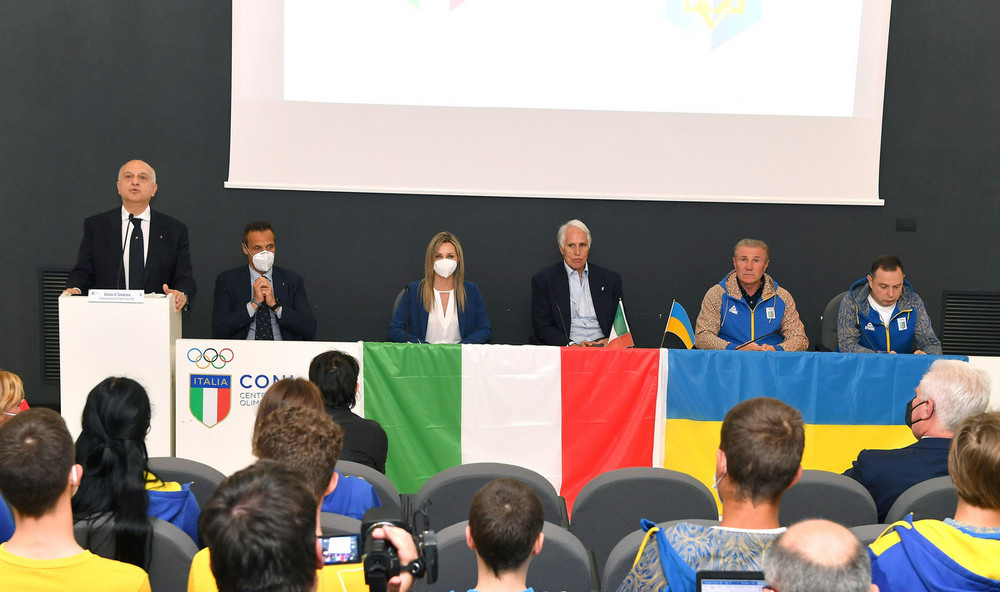
Bubka and Ukrainian Sports Minister meet with compatriots at Onesti. Proud Malagò: 'We are the first country to support the athletes in Kiev'
- 20 FEDERATIONS INVOLVED
The Italian sporting world rallies around Ukraine and its athletes. Since the start of the Russian invasion, CONI and the National Sports Federations have come out to help and support Ukrainian athletes, opening their federal centres and the Acqua Acetosa Olympic Preparation Centre to them. And it was precisely at the 'Giulio Onesti' that the world sports legend, IOC member and President of the Ukrainian National Olympic Committee, Sergej Bubka, and the Ukrainian Minister of Youth and Sports, Vadym Guttsait, Olympic fencing champion in Barcelona 1992 in the team sabre event, paid a visit.
They were welcomed by the CONI President and IOC member, Giovanni Malagò, the Undersecretary to the Prime Minister's Office with responsibility for Sport, Valentina Vezzali, the CONI Secretary General, Carlo Mornati, with honorary IOC members Franco Carraro, Mario Pescante and Manuela Di Centa, and the Federal Presidents Giuseppe Abbagnale (rowing), Paolo Azzi (fencing) and Angelo Cito (taekwondo).
Today's visit follows the Italy-Ukraine sports-institutional meeting that took place yesterday at the Foro Italico and was intended to underline the bond between the two countries and thank the Italian sports movement that, through the involvement of 20 National Sports Federations (here is the complete list), allows Italy to be the first country in the world for the number of Ukrainian athletes hosted.
'Here, you will always find what you need, and we are happy that this is happening,' President Malagò told the rowing, taekwondo and fencing athletes. Always consider the Olympic preparation centre as your second home, although we don't want it to be forever as we know how much you want to return to your country. President Bubka said some words to me that will remain in my mind for the rest of my life. It is impossible to predict the future. I hope the war will end soon. I am certainly very proud that Italy is the first country in the world to support the activities of Ukrainian athletes. In this meeting, we did not discuss the past or the present, but the future'.
'Sport is also solidarity, and its values speak a universal language, capable of overcoming all differences. We are here to remember in the best possible way how strong our desire to help Ukraine is,' he added. CONI and twenty federations are engaged in this important project to support athletes. I am truly honoured to be the President of the National Olympic Committee at this time because this is more important than any victory than any gold medal. We interpret the concept of Olympic solidarity in the best possible way'.
A commitment supported by the Italian Government. 'Last night, I spoke with Prime Minister Mario Draghi,' Malagò revealed, 'he too was proud and honoured by what Italy and the world of sport are doing for Ukraine. And representing the Government was Undersecretary Vezzali. 'Sport is also solidarity,' said the fencing Olympian. It is a source of pride to be able to say that the Department of Sport has published a notice to allocate EUR 1.5 million to support sports bodies engaged in this humanitarian emergency. We are offering athletes the opportunity to continue training and participate in the next big events: sport is doing its part. It is showing how inclusive it can be.'
In his speech, Bubka did not hold back his emotion. 'I cannot explain how difficult it is to talk. My heart is broken,' began the pole vault champion, who runs the IOC task force set up to help Ukrainian athletes. I am doing everything I can to bring peace and save my people. Without Italy, we would have no future. I have never in my life encountered such solidarity. My gratitude goes out to the Italian people. We are here because the world of sports is united and united, and we want to express our gratitude to our Italian friends and people, not only to the family of sports, because Italy is next to Ukraine. Without your support, we could not win.'
'These are difficult times for our country,' added Ukraine's Minister of Youth and Sports, Vadym Guttsait, 'In these moments, we can understand who is close to our friends and us. And I want to say a big thank you to Italy, the Government, to CONI, and to all the federal presidents helping us.' Italy and Ukraine together, also thanks to sport. (Photo Mezzelani GMT Sport)
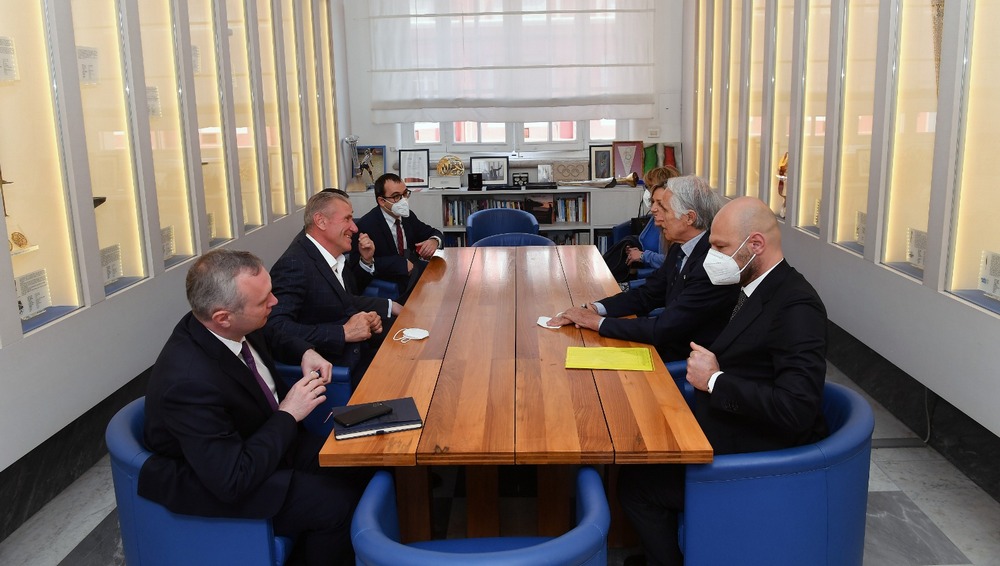
Malagò and Vezzali meet Bubka and Ukrainian Sports Minister at CONI
- AT THE ITALIC FORUM
Italy-Ukraine sports-institutional meeting this morning at the Foro Italico. The President of the Italian National Olympic Committee, Giovanni Malagò, together with the Undersecretary of State with responsibility for Sport, Valentina Vezzali, welcomed the President of the Ukrainian Olympic Committee and fellow IOC member, Sergej Bubka, accompanied by the Minister of Youth and Sport of Ukraine, Vadym Guttsait (Olympic fencing champion in Barcelona 1992 in team sabre). The meeting was also attended by the Ukrainian Ambassador to Italy, Yaroslav Melnyk and Embassy Counsellor Yaroslav Moshkola. (photo Mezzelani GMT Sport)
Tomorrow at 12.30 p.m., President Malagò and President Bubka will be at the Olympic Preparation Centre 'Giulio Onesti' at Acqua Acetosa, welcomed by CONI Secretary General Carlo Mornati to meet a group of Ukrainian Taekwondo, Rowing and Fencing athletes. They are training in Italy, thanks to the solidarity intervention of the Italian Federations. A total of 20 national sports federations hosted the Ukrainian athletes to prepare for the upcoming international events.
Also, tomorrow, at two p.m., a meeting with the press is scheduled in the Aula Magna of the 'Giulio Onesti', in the presence of the Ukrainian delegation and the athletes.
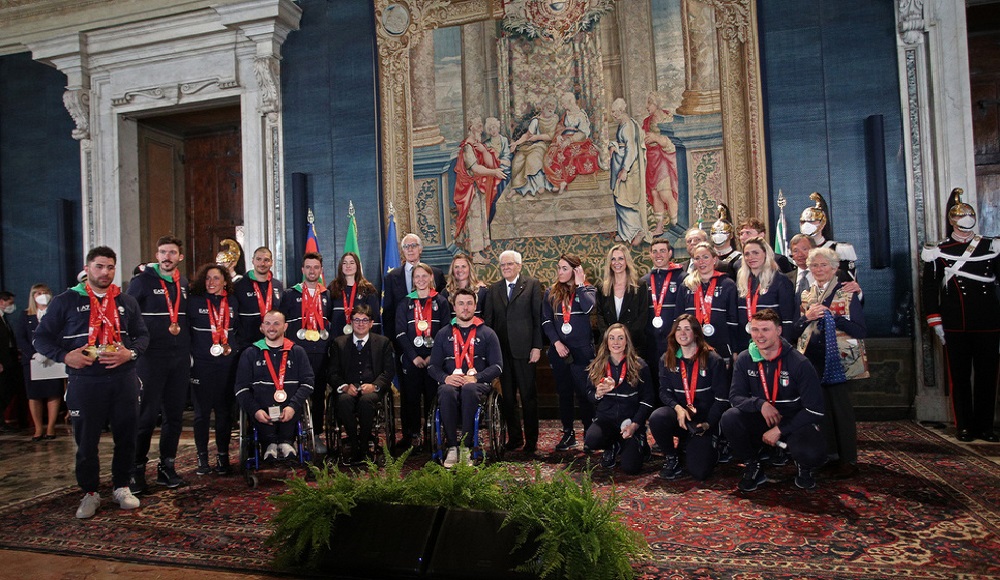
The Beijing 2022 medallists at the Quirinale for the return of the Tricolour. Mattarella: 'You have honoured the flag.'
- CONI
Italian sports gathered at the Quirinale for the classic ceremony to hand back the Tricolour. Beijing 2022 is, in fact, the second Winter Olympics ever in terms of the number of medals. Before the President of the Republic, the Italian team presents itself with the pride of having represented the country at its best.
'Mr President, once again, you give us the honour of being here in the home of the Italians,' said CONI President Giovanni Malagò. But before celebrating the achievements in Beijing, I cannot help but make a point: we had parted on 23 December in a festive mood, but with an affectionate embarrassment because it would be the last time with you. Today we are very happy to say 'well-found president'. Athletes are used to cheering, but they cheered for her in this case. I think it is the right thought for everything he has done for us over the years'.
Indeed, the link between the Head of State and the world of sports is strong. The President demonstrated this in his speech to the Olympic and Paralympic medallists in Beijing 2022.
'It is a great pleasure to welcome you and thank you for these results,' he told them. We meet again unpredictably here at the Quirinale for the handing back of the flag. You have honoured it with your commitment and your results. Every morning I just look at the overall number of the medal table because it is that number that gives the idea of the vitality of the movement. While mentioning the successes of the 'Azzurri', the President then thanked the individual athletes. Starting with Arianna Fontana, the blue medallist at the Games 'who won the most medals and went down in history', passing through Stefania Constantini and Amos Mosaner's curling gold, 'in a speciality that is not widely practised and that I am passionate about', to the four medals of Paralympic athlete Giacomo Bertagnolli, which the Head of State described as 'an extraordinary result for the Paralympic world'.
The President's thoughts turned to Sofia Goggia, who had received the Tricolour from him on 23 December but who, due to an injury that put her Olympic participation at risk, had to give up her role as flag-bearer in favour of Michela Moioli, already designated for the closing ceremony. 'We hoped that 20 days after the accident, a high-level performance would be possible, but it was incredible what she did,' Mattarella pointed out. It is a silver that is worth as much as gold, to which is added the downhill world cup'. Speaking of Federica Brignone, the Head of State reiterated that 'the combination of Super G World Cup and Olympic medal is really important'.
With its 17 Olympic and seven Paralympic medals, Beijing 2022 was truly a record edition for Italy. 'It was the second most medal-winning Winter Games ever. We are a multidisciplinary country,' Malagò recalled, thanking the FISI and FISG federations. Between the Tokyo and Beijing Olympics, we are the third country worldwide for medals won in different disciplines. We are behind only the United States and Russia'.
'For all the events that have happened since that 23 December, the Paralympics seem to have taken place in another historical context,' said CIP President Luca Pancalli. The Russian-Ukrainian conflict also entered the Paralympics, casting a heavy and sombre shadow over what was supposed to be a sports festival under the banner of the universal peace dialogue. Nevertheless, the results of all the delegations, including Italy, were all the more valuable given the difficulties in which they competed. In the first few days, there was a very tense atmosphere. First, the International Paralympic Committee tried to save our people, then the Russian and Belarusian athletes who had arrived, by distinguishing them from the rulers. Unfortunately, the pressure was mounting, and the risk of a boycott forced us to exclude the Russian and Belarusian athletes. It remains a wound for the entire international committee. The athletes have decided to honour the sport with passion and loyalty, which is why their achievements should be even more appreciated. Our team, with many rookies, won seven medals, two more than Pyeongchang, but everyone honoured the Italian national team, even those who did not make the podium.
'Sport, despite the pandemic, has never stopped and has moved Italians at a time when the country needed positive messages,' acknowledged the Undersecretary in charge of Sport, Valentina Vezzali. It confirmed its value during the Beijing Winter Games with great passion by demonstrating heart, commitment and professionalism. For this, I would like to thank each member of the Olympic and Paralympic delegations. Picking up the baton in Beijing for the 2026 Games was a great emotion.'
Speaking on behalf of the Italia Team is flag-bearer Moioli: 'It is a great honour to hand back the flag that was our companion in China. And it is indeed a great honour to have been the standard bearer who flew our flag under the skies of Beijing. It was an intense Olympics full of pitfalls. Still, one that we faced with great commitment, determination and resilience, and in the difficult moments, the support and affection of Italy, which came from the other side of the world, helped. The appointment now is at our Olympics, the Olympics of all Italians, which I have dreamed of facing since I was a child'.
The attention of the sports world shifts to Milan-Cortina 2026. 'More than ever, commitment and responsibility are felt today,' said Malagò. It requires us to do well. We will have the eyes of the world on us. It is wonderful for male and female athletes to imagine they will be stars in 2026. Definitely, it brings us an extra load of commitment to do well to prove it to the whole country. 'Every year, there are new motivations, and Milan-Cortina is among them,' Bertagnolli added.
'Italy will be host and protagonist,' assured Mattarella, who in his speech recalled the conflict in Ukraine: 'Russia's aggression is exactly the opposite of the Olympic meaning of peace, friendship, democracy and cooperation. I would like to thank the athletes who preserved the spirit despite the war-torn and clouded atmosphere. Recover reasonableness. Italy will continue to pursue political and economic initiatives, helping those resisting for their independence and making constant appeals for peace. To call for peace is to call for Olympic and Paralympic values'. (photo Luca Pagliaricci and Ferdinando Mezzelani)
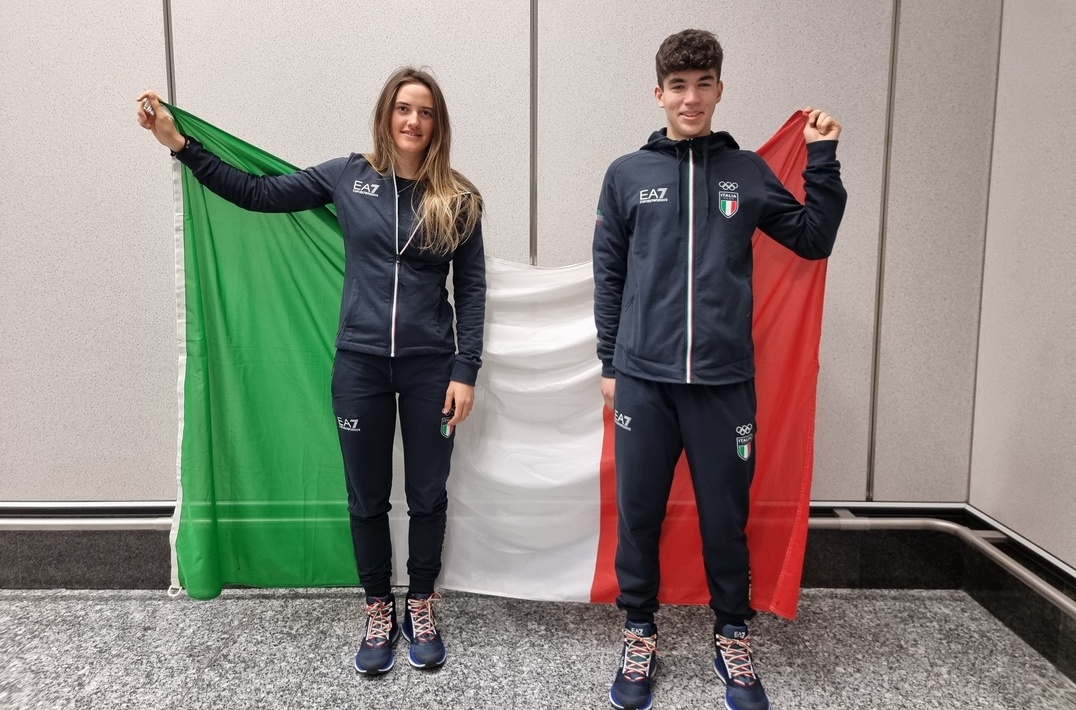
Tomorrow the European Youth Olympic Festival starts in Finland. Two flag-bearers at the Opening Ceremony
- WINTER EYOF
The Italian delegation that will take part in the 15th edition of the 2022 Winter European Youth Olympic Festival (EYOF), a multidisciplinary competition of the European Olympic Committees (EOC), which sees athletes aged between 14 and 18 years from all over Europe compete against each other, left this morning from Malpensa for Finland.
More than 1,000 athletes of 44 different nationalities are expected in Vuokatti. There will be 39 Italians competing (19 girls and 20 boys), who will compete in eight of the nine disciplines that characterise this European Youth Olympic Festival: Alpine Skiing, Biathlon, Cross-Country Skiing, Figure Skating, Nordic Combined, Short Track, Ski Jumping and Snowboarding.
For the first time at the EYOF, as was the case at the Olympic Games in Tokyo and Beijing, the national committees were allowed to nominate two standard-bearers, one girl and one boy. For Italy, the choice fell to Nadine Laurent (Cross-Country Skiing) and Lorenzo Previtali (Short Track). Laurent, from Valle d'Aosta and a member of the Fiamme Oro, was the lead player in the European Cup this season with two successes and is the Italian junior champion in the 10km.
Previtali, born in 2005, recently won the junior rainbow relay title on the Daznica ice in a team with Alessandro Loreggia, also present in Vuokatti, Davide Oss Champer and Pietro Castellazzi.
Tomorrow at eight p.m. Finnish time, seven p.m. in Italy, the opening ceremony will take place while the first races are scheduled for Monday. Vuokatti, the organising city, together with Lathi, is hosting the event for the second time, having organised in 2001 what was then called EYOD, European Youth Olympic Days, and will be the venue for the competitions in alpine skiing, biathlon, cross-country skiing, figure skating, short track and snowboarding. The city of Kajaani will host the ice hockey events, while ski jumping and Nordic combined will be held in Lahti.
This is the complete list of those called up, divided by federation:
ITALIAN WINTER SPORTS FEDERATION (FISI)
Biathlon
Fabiana Carpella, Davide Compagnoni, Nadege Gontel, Alex Perisutti, Mattia Piller Hoffer, Christoph Pircher, Denise Planker, Sara Scattolo.
Nordic Combined
Iacopo Bortolas, Luca Libener, Greta Pinzani, Stefano Radovan, Annika Sieff.
Ski Jumping
Asia Marcato, Martina Zanitzer
Alpine skiing
Maria Sole Antonini, Andrea Bertoldini, Emilia Mondinelli, Stefano Pizzato, Ambra Pomarè, Federico Romele, Edoardo Saracco, Beatrice Sola.
Cross country skiing
Iris De Martin Pinter, Elisa Gallo, Davide Ghio, Lucia Isonni, Nadine Laurent, Hannes Oberhofer, Alex Serafini, Andrea Zorzi.
Snowboard
Edoardo Giovannelli, Ian Matteoli.
ITALIAN ICE SPORTS FEDERATION (FISG)
Figure skating
Ginevra Lavinia Negrello, Raffaele Francesco Zich
Short Track
Margherita Betti, Alessandro Loreggia, Lorenzo Previtali, Viola Simonini.
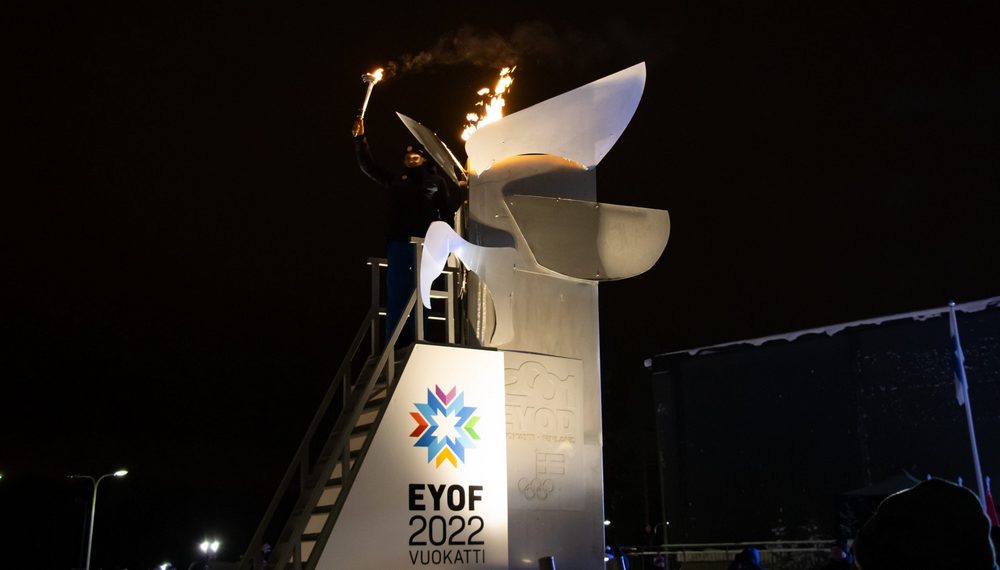
The Italian team for Vuokatti 2022 chosen, Italia Team in Finland with 39 athletes
- EYOF
The blue team that will participate in the 15th Winter EYOFs, scheduled from 20 to 25 February in Finland, has been finalised, with the competitions split between the resort of Vuokatti and the city of Lahti.
There will be 39 athletes (20 males and 19 females) between the ages of 15 and 19 representing Italy, competing against over 800 peers from 44 nations.The 'Azzurri' will compete in eight of the nine disciplines that will characterise this European Youth Olympic Festival: Alpine Skiing, Biathlon, Cross-Country Skiing, Figure Skating, Nordic Combined, Short Track, Ski Jumping and Snowboarding (with Italy not only represented in Ice Hockey).
Compared to the Sarajevo and East Sarajevo 2019 editions, where the 'Azzurri' won 1 gold, 3 silver and 1 bronze medal, Curling is not on the competition programme, while the Nordic Combined and Ski Jumping, disciplines that will be based in Lahti, make their debut.
Despite their young age, there are many Italians who have already gained international experience: among them is Annika Sieff, the first Italian to conquer a World Cup podium in the Nordic combined and a recent junior world champion who also boasts a silver and bronze medal in her lineup, as well as an Olympic bronze medal in the Nordic relay at the Lausanne 2020 YOG.
Also presenting themselves in Voukatti as reigning world youth champions, with their respective relays, are Fabiana Carpella and Sara Scattolo (Biathlon) and Alessandro Loreggia and Lorenzo Previtali (Short Track). At the same time, the fresh medallists include Christoph Pircher (1 world bronze jr.), Stefano Radovan (1 world silver jr., 1 world bronze YOG) and Iacopo Bortolas (1 silver and 1 world bronze) also competing at the Beijing 2022 Olympic Games.
Also mentioned are Edoardo Saracco, Olympic bronze medallist in the Slalom at Lausanne 2020, and Margherita Betti, sister of senior national speed skating athlete Francesco and Chiara, winner of the silver medal in the 1,000 m Short Track at the previous Winter EYOFs. (photo EYOF2022 Vuokatti)
This is the complete list of those called up, divided by federation:
ITALIAN WINTER SPORTS FEDERATION (FISI)
Biathlon
Fabiana Carpella, Davide Compagnoni, Nadege Gontel, Alex Perisutti, Mattia Piller Hoffer, Christoph Pircher, Denise Planker, Sara Scattolo.
Nordic Combined
Iacopo Bortolas, Luca Libener, Greta Pinzani, Stefano Radovan, Annika Sieff.
Ski Jumping
Asia Marcato, Martina Zanitzer
Alpine skiing
Maria Sole Antonini, Andrea Bertoldini, Emilia Mondinelli, Stefano Pizzato, Ambra Pomarè, Federico Romele, Edoardo Saracco, Beatrice Sola.
Cross country skiing
Iris De Martin Pinter, Elisa Gallo, Davide Ghio, Lucia Isonni, Nadine Laurent, Hannes Oberhofer, Alex Serafini, Andrea Zorzi.
Snowboard
Edoardo Giovannelli, Ian Matteoli.
ITALIAN ICE SPORTS FEDERATION (FISG)
Figure skating
Ginevra Lavinia Negrello, Raffaele Francesco Zich
Short Track
Margherita Betti, Alessandro Loreggia, Lorenzo Previtali, Viola Simonini.
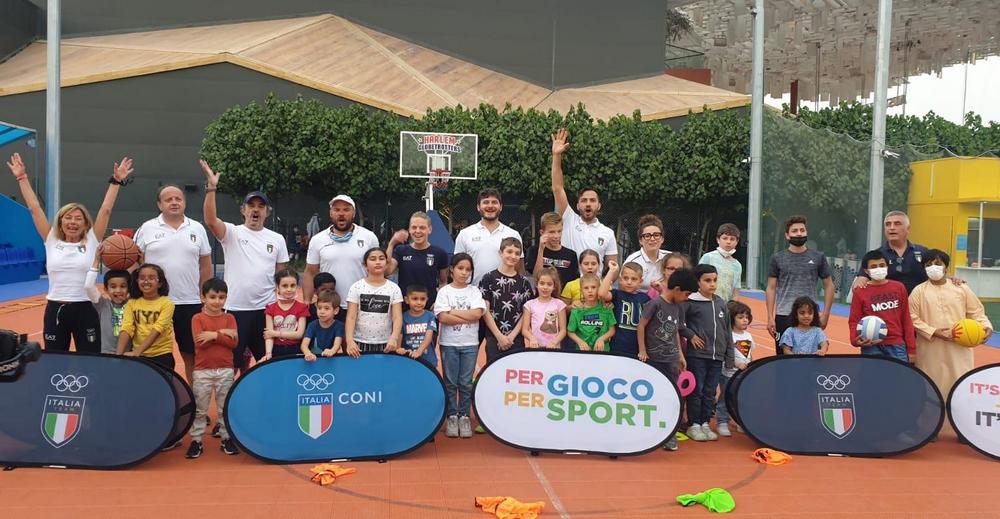
CONI greets Dubai 2020, Arianna Fontana closes series at Expo
- ITALIAN EXCELLENCIES
CONI greets the Dubai 2020 Expo with multiple Olympic short track champion Arianna Fontana and youth national team coaches in gymnastics, canoeing, taekwondo, basketball and tambourine ball).
The blue medallist in the history of the Games was the last of the sporting excellences that Italy showcased in the four events scheduled in the Italian Pavilion at the World Expo hosted in the United Arab Emirates.
Under the CONI flag, in addition to Ms Fontana, there were the medallists of the Italia Team at Tokyo 2020, who animated the debates of the Italian Dialogues, and the technicians of numerous sports federations who put on a practical demonstration of CONI's sports orientation and initiation projects: the CONI Centres, Educamp and the CONI Trophy.
Children from all over the world and present at Expo were thus able to experience the multidisciplinary proposal, offered in the form of a game that Italian sport, with CONI, has brought to international attention.
With the claim 'From the game to the Games,' the 'Azzurri', exceptional ambassadors of our country, were the leading players, together with the children, of Italian excellence in sport. From the established champions to the promising youngsters: a project on which CONI works, with its territorial organisation and all the sports bodies, from the earliest years of children's lives, to follow them in their growth, to help them discover their talent and to ensure that sport accompanies them in their lives and, perhaps, leads some of them to one day stand on the Olympic podium.
Page 55 of 146