Casa Italia renews its tradition of two tricolour locations at the Winter Olympic Games
- IN BEIJING AND YANQING
CONI renews the tradition of Casa Italia at the Olympic Games. The first Tricolour Hospitality House was conceived in Los Angeles in 1984: a long history for a continuously evolving project. Today it is a product and brand recognised at Olympic and international level, capable of narrating all our excellences, from sport to Made in Italy.
A true media hub aims to amplify Olympic content during the Games exponentially.
The two venues in Beijing will cover the two main clusters of Yanqing. In addition, Beijing will host media and athletes in compliance with anti-COVID-19 regulations and the playbooks defined by the Games Organising Committee.
Casa Italia in Yanqing will be housed in the Beijing Marriott Hotel Yanqing - Yard No 92, Xincheng Street; Casa Italia in Beijing, on the other hand, will be located in the St. Regis Hotel - Beijing - 21 Jianguomenwai Dajie, Chaoyang, Beijing China 100020
The concept is inspired by the journey in its real and imaginary meaning, as a metaphor for the path that humans accomplish outside and inside themselves to achieve ever new goals..
Through Millium, the ancient travelling unit of measurement corresponding to a thousand steps in Roman and medieval times, Casa Italia in Beijing 2022 wants to be for the Italia Team an experience that connects the other, with the elsewhere, with a better version of themselves.
All exploration is a deeply human need, but only a few manage to have the ambition and courage to devote their lives to pushing the boundaries of the known and facing their own limits.
The two Casa Italia venues will welcome the Italian Olympic Mission and celebrate the athletes who will represent Italy during the Winter Olympic Games, also in compliance with the commitments made with partners, once again writing the history of Italian sport.
Italia Team complete, seven alpine skiers selected to compete in Beijing 2022
- WINTER OLYMPIC GAMES
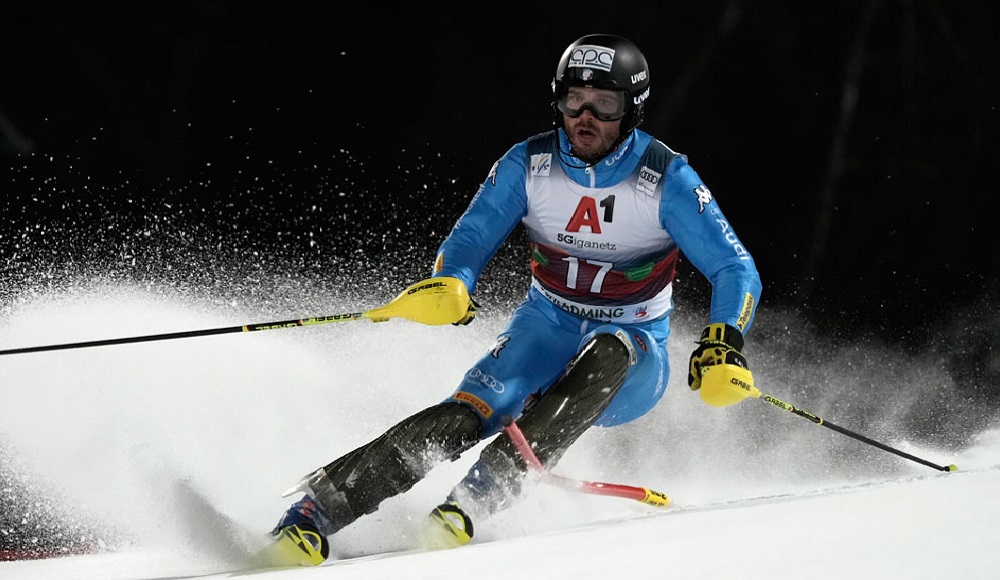
The Italia Team for Beijing 2022 is complete. At the end of the men's slalom held tonight in Schladming, the names of the men's Alpine ski team that will occupy the seven slots allocated to Italy were chosen.
Competing on the Chinese slopes of Yanqing will be Luca De Aliprandini, Christof Innerhofer, Matteo Marsaglia, Dominik Paris, Giuliano Razzoli, Tommaso Sala and Alex Vinatzer. In the women's category, Marta Bassino, Federica Brignone, Elena Curtoni, Nadia Delago, Nicol Delago, Lara Della Mea, Sofia Goggia, Anita Gulli and Francesca Marsaglia had already been selected. The Alpine skiing team consists of 16 of the 118 'Azzurri' in the Italia Team competing at the Beijing 2022 Olympic Winter Games. (photo FISI)
This is the list of members with the federations they belong to:
Italian Winter Sports Federation (FISI) - 86 athletes (51 men, 35 women)
BIATHLON (10)
Men (5): Didier Bionaz, Thomas Bormolini, Tommaso Giacomel, Lukas Hofer, Dominik Windisch.
Women (5): Michela Carrara, Samuela Comola, Federica Sanfilippo, Lisa Vittozzi, Dorothea Wierer.
BOB (9)
Men (8): Patrick Baumgartner, Lorenzo Bilotti, Eric Fantazzini, Robert Mircea, Josè Delmas Obou, Alex Pagnini, Mattia Variola, Alex Verginer.
Women (1): Giada Andreutti.
NORDIC COMBINED (4)
Men: Iacopo Bortolas, Raffaele Buzzi, Alessandro Pittin, Samuel Costa.
FREESTYLE (5)
Men (2): Simone Deromedis, Leonardo Donaggio.
Women (3): Silvia Bertagna, Lucrezia Fantelli, Jole Galli.
KI JUMPING (2)
Men (1): Giovanni Bresadola.
Women (1): Jessica Malsiner.
ALPINE SKIING (16)
Men (7): Luca De Aliprandini, Christof Innerhofer, Matteo Marsaglia, Dominik Paris, Giuliano Razzoli, Tommaso Sala, Alex Vinatzer
Women (9): Marta Bassino, Federica Brignone, Elena Curtoni, Nadia Delago, Nicol Delago, Lara Della Mea, Sofia Goggia, Anita Gulli, Francesca Marsaglia.
CROSS COUNTRY (12)
Men (6): Francesco De Fabiani, Davide Graz, Federico Pellegrino, Maicol Rastelli, Giandomenico Salvadori, Paolo Ventura.
Women (6): Anna Comarella, Martina Di Centa, Caterina Ganz, Greta Laurent, Cristina Pittin, Lucia Scardoni.
SKELETON (3)
Men (2): Amedeo Bagnis, Mattia Gaspari.
Women (1): Valentina Margaglio.
LUGE (8)
Men (5): Leon Felderer, Dominik Fischnaller, Kevin Fischnaller, Simon Kainzwaldner, Emanuel Rieder.
Women (3): Verena Hofer, Andrea Voetter, Nina Zoeggeler.
SNOWBOARD (17)
Men (11): Daniele Bagozza, Edwin Coratti, Mirko Felicetti, Filippo Ferrari, Roland Fischnaller, Lorenzo Gennero, Emiliano Lauzi, Tommaso Leoni, Lorenzo Sommariva, Omar Visintin, Louis Philip Vito III.
Women (6): Sofia Belingheri, Caterina Carpano, Lucia Dalmasso, Francesca Gallina, Michela Moioli, Nadya Ochner.
Italian Ice Sports Federation (FISG) - 32 athletes (21 men, 11 women)
CURLING (6)
Men (5): Sebastiano Arman, Mattia Giovanella, Simone Gonin, Amos Mosaner, Joel Thierry Retornaz.
Women (1): Stefania Constantini.
FIGURE SKATING (9)
Men (5): Filippo Ambrosini, Marco Fabbri, Daniel Grassl, Matteo Guarise, Matteo Rizzo.
Women (4): Nicole Della Monica, Rebecca Ghilardi, Charlene Guignard, Lara Naki Gutmann.
SPEED SKATING (7)
Men (6): David Bosa, Davide Ghiotto, Andrea Giovannini, Michele Malfatti, Jeffrey Rosanelli, Alessio Trentini.
Women (1): Francesca Lollobrigida.
SHORT TRACK (10)
Men (5): Andrea Cassinelli, Yuri Confortola, Tommaso Dotti, Pietro Sighel, Luca Spechenhauser.
Women (5): Arianna Fontana, Cynthia Mascitto, Arianna Sighel, Arianna Valcepina, Martina Valcepina.
Michela Moioli, Italy's flag-bearer at Beijing 2022
- WINTER OLYMPIC GAMES
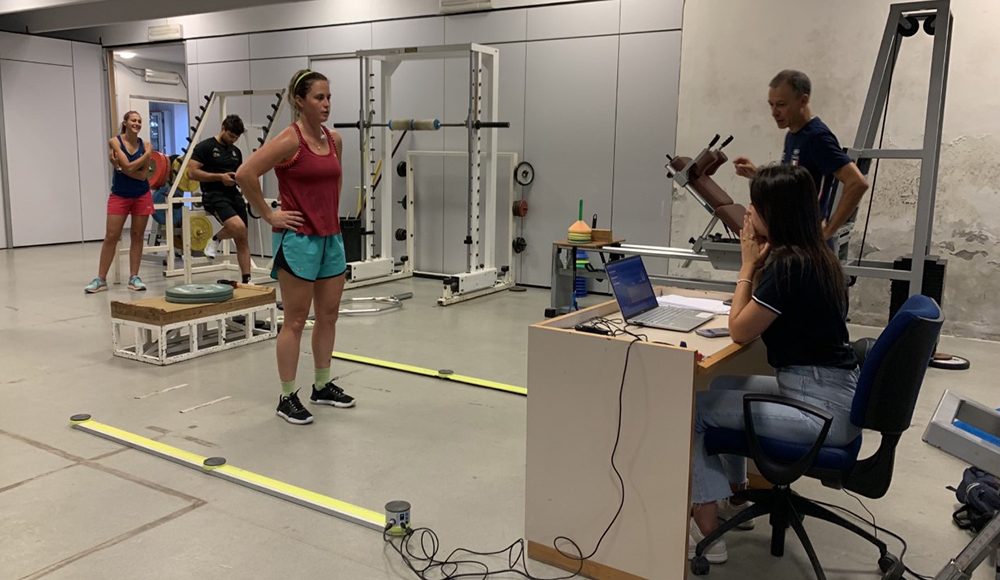
Michela Moioli will be Italy's flag-bearer at the Beijing 2022 Olympic Winter Games, scheduled from 4 to 20 February. CONI President Giovanni Malagò decided this after speaking with Sofia Goggia and the President of the Italian Winter Sports Federation, Flavio Roda, following the rehabilitation course planned for the Olympic downhill champion after her injury last Sunday in Cortina d'Ampezzo.
Afterwards, President Malagò informed the President of the Republic, Sergio Mattarella, who had presented the Tricolour to Sofia Goggia on 23 December, of the change of standard bearer. The selection of Michela Moioli was appreciated by the Head of State, who invited Malagò to send a message wishing her a speedy recovery through him 'I'm rooting for her,' Mattarella said, and Malagò immediately relayed this to Sofia Goggia. Furthermore, she drew further motivation from the President of the Republic's words to try to recover in time for the downhill race on 15 February.
CONI reserves the right to appoint a flag-bearer for the closing ceremony scheduled for 20 February in the coming weeks.
Italia Team for Beijing 2022, 118 Italian athletes competing in China
- WINTER OLYMPIC GAMES
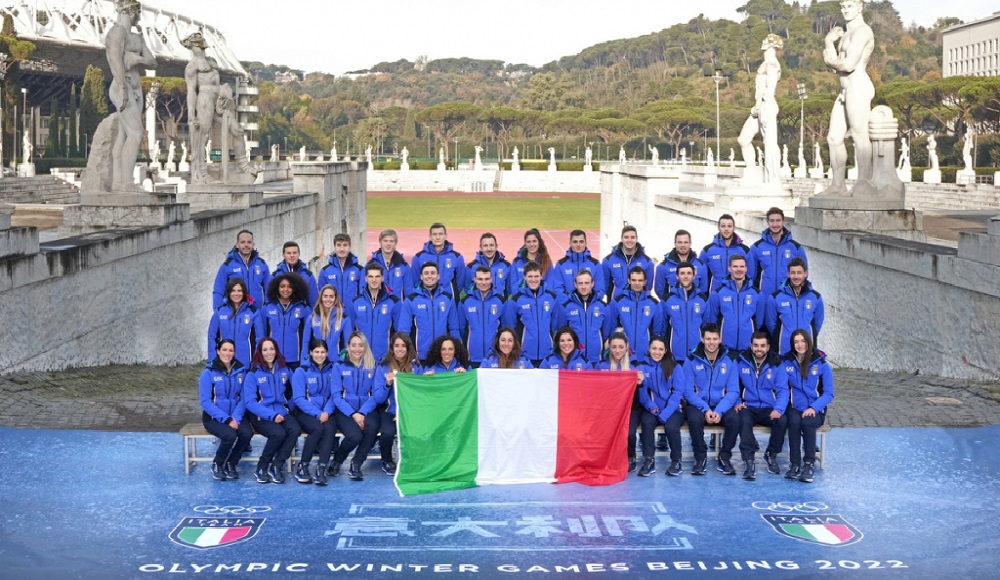
There are 118 athletes on the Italia Team committed to the Beijing 2022 Olympic Winter Games. In the five-ring event, which kicks off on 4 February, there will be 46 women's national team members (39% of the entire expedition) and 72 men's national team members competing in 14 disciplines scheduled until 20 February. In similar numbers to PyeongChang 2018, Italy was represented by 122 athletes (48 women and 74 men) in Korea.
For China, only the men's Alpine skiing names remain to be finalised, and whose seven slots will be announced tomorrow at the end of the men's night slalom in Schladming. (photo Ferraro CONI)
This is the list of members with the federations they belong to:
Italian Winter Sports Federation (FISI) - 86 athletes (51 men, 35 women)
BIATHLON (10)
Men (5): Didier Bionaz, Thomas Bormolini, Tommaso Giacomel, Lukas Hofer, Dominik Windisch.
Women (5): Michela Carrara, Samuela Comola, Federica Sanfilippo, Lisa Vittozzi, Dorothea Wierer.
BOB (9)
Men (8): Patrick Baumgartner, Lorenzo Bilotti, Eric Fantazzini, Robert Mircea, Josè Delmas Obou, Alex Pagnini, Mattia Variola, Alex Verginer.
Women (1): Giada Andreutti.
NORDIC COMBINED (4)
Men: Iacopo Bortolas, Raffaele Buzzi, Alessandro Pittin, Samuel Costa.
FREESTYLE (5)
Men (2): Simone Deromedis, Leonardo Donaggio.
Women (3): Silvia Bertagna, Lucrezia Fantelli, Jole Galli.
KI JUMPING (2)
Men (1): Giovanni Bresadola.
Women (1): Jessica Malsiner.
ALPINE SKIING (16)
Men (7): -
Women (9): Marta Bassino, Federica Brignone, Elena Curtoni, Nadia Delago, Nicol Delago, Lara Della Mea, Sofia Goggia, Anita Gulli, Francesca Marsaglia.
CROSS COUNTRY (12)
Men (6): Francesco De Fabiani, Davide Graz, Federico Pellegrino, Maicol Rastelli, Giandomenico Salvadori, Paolo Ventura.
Women (6): Anna Comarella, Martina Di Centa, Caterina Ganz, Greta Laurent, Cristina Pittin, Lucia Scardoni.
SKELETON (3)
Men (2): Amedeo Bagnis, Mattia Gaspari.
Women (1): Valentina Margaglio.
LUGE (8)
Men (5): Leon Felderer, Dominik Fischnaller, Kevin Fischnaller, Simon Kainzwaldner, Emanuel Rieder.
Women (3): Verena Hofer, Andrea Voetter, Nina Zoeggeler.
SNOWBOARD (17)
Men (11): Daniele Bagozza, Edwin Coratti, Mirko Felicetti, Filippo Ferrari, Roland Fischnaller, Lorenzo Gennero, Emiliano Lauzi, Tommaso Leoni, Lorenzo Sommariva, Omar Visintin, Louis Philip Vito III.
Women (6): Sofia Belingheri, Caterina Carpano, Lucia Dalmasso, Francesca Gallina, Michela Moioli, Nadya Ochner.
Italian Ice Sports Federation (FISG) - 32 athletes (21 men, 11 women)
CURLING (6)
Men (5): Sebastiano Arman, Mattia Giovanella, Simone Gonin, Amos Mosaner, Joel Thierry Retornaz.
Women (1): Stefania Constantini.
FIGURE SKATING (9)
Men (5): Filippo Ambrosini, Marco Fabbri, Daniel Grassl, Matteo Guarise, Matteo Rizzo.
Women (4): Nicole Della Monica, Rebecca Ghilardi, Charlene Guignard, Lara Naki Gutmann.
SPEED SKATING (7)
Men (6): David Bosa, Davide Ghiotto, Andrea Giovannini, Michele Malfatti, Jeffrey Rosanelli, Alessio Trentini.
Women (1): Francesca Lollobrigida.
SHORT TRACK (10)
Men (5): Andrea Cassinelli, Yuri Confortola, Tommaso Dotti, Pietro Sighel, Luca Spechenhauser.
Women (5): Arianna Fontana, Cynthia Mascitto, Arianna Sighel, Arianna Valcepina, Martina Valcepina.
Agreement with the Politecnico di Milano to develop activities related to sports facilities
- CONI
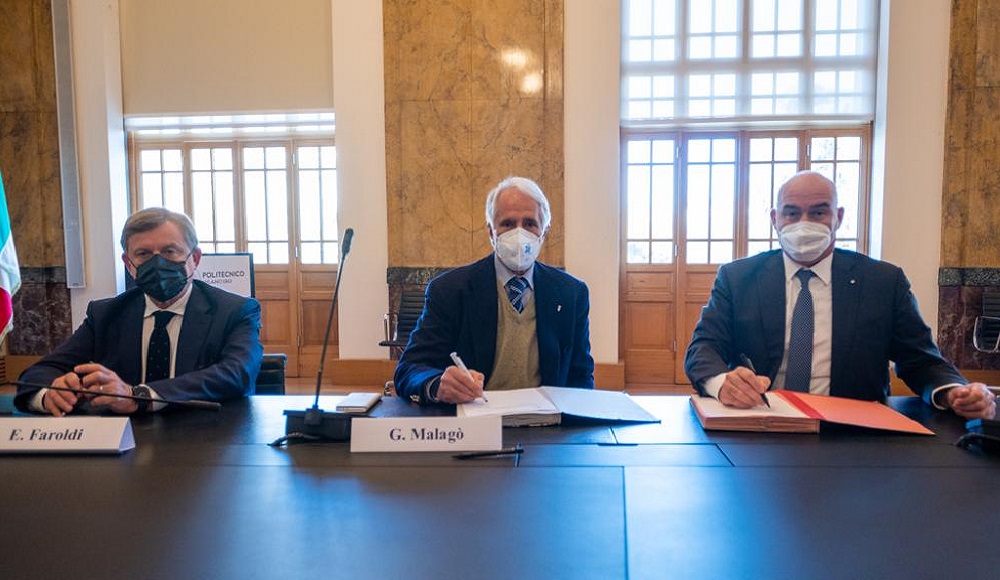
The Politecnico di Milano and CONI (Italian National Olympic Committee) have signed a framework agreement to train students and graduates and perform research activities in sports facilities. In particular, the collaboration promotes training initiatives and learning paths that enable students and graduates to expand their knowledge of the construction and management of sports infrastructures, including through laboratory exercises, projects and degree dissertations.
Thanks to the agreement, it will also be possible to research technological innovation in the sector. In addition, courses will be provided for the professional updating of CONI operators. The agreement's signing event was attended by Giovanni Malagò, President of CONI, Ferruccio Resta, Rector of the Politecnico, Emilio Faroldi, Scientific Coordinator of the agreement for the Politecnico, and Francesco Calvetti, Rector's Delegate for Sports Activities.
Mattarella presents Malagò with the honour of Cavaliere di Gran Croce. "An honour that I share with Italian sport as a whole"
- CONI
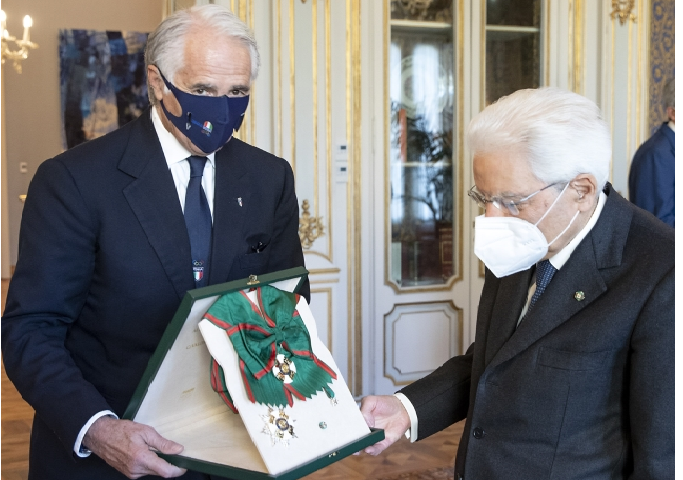
CONI President, Giovanni Malagò, became a Cavaliere di Gran Croce (Knight of the Grand Cross). The highest honour conferred by the Presidency of the Republic was awarded to the number one Italian sportsman by the Head of State - Sergio Mattarella - at Quirinal Palace, before the ceremony for the handing over of the tricolour flag to Sofia Goggia and Giacomo Bertagnolli in view of the Beijing 2022 Games. A similar accolade was awarded to the President of the Italian Paralympic Committee, Luca Pancalli. This was another example of President Mattarella's extraordinary closeness to Italian sport, at the end of an unforgettable year for the entire movement. Malagò emphasised his “great pride to have been awarded the highest honour of the Presidency of the Republic, an honour that I share with my beloved world. I am proud of sport and proud to be Italian”. (Photo of Quirinal Palace)
The Italian flag is presented to Sofia Goggia and Giacomo Bertagnolli. Heartfelt greetings to Mattarella. “A golden year for sport: an optimistic outcome for Italy”
- BEIJING 2022
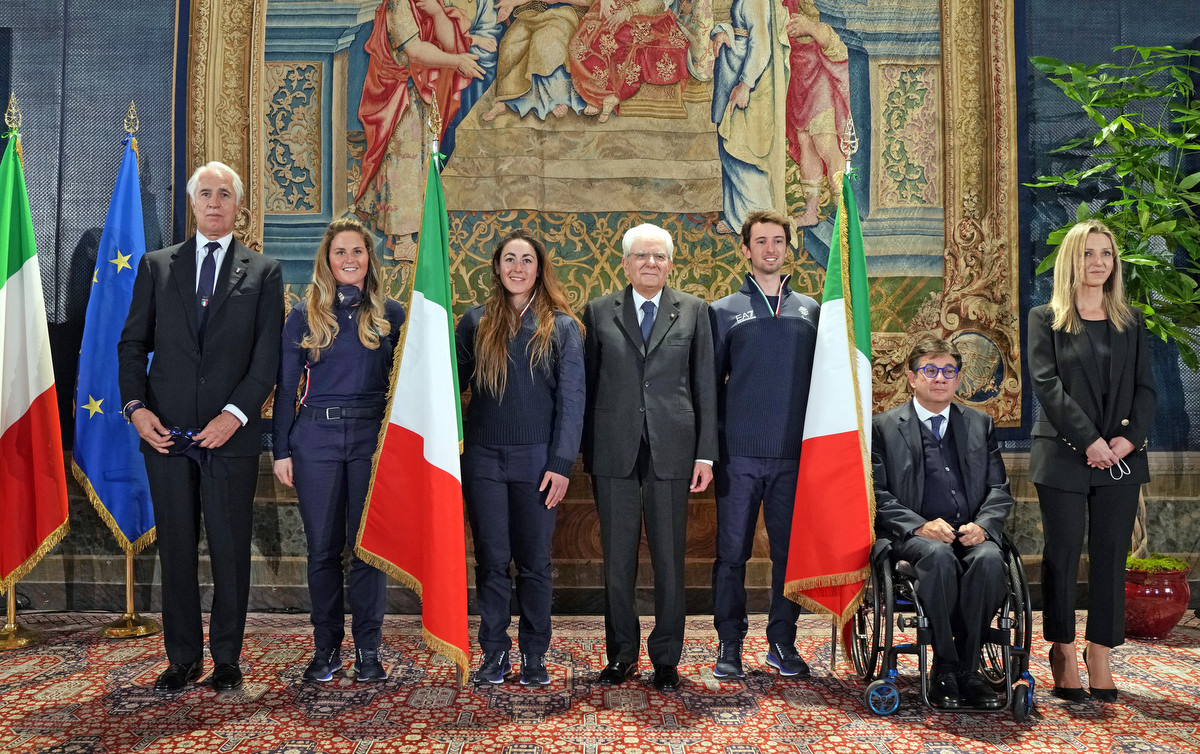
Words that convey pride and emotion. The pride of an unforgettable year, the joy of a shared experience that embraces the values of the country and projects them towards the most important sporting event. These are the sentiments interpreted from the thoughts of President Sergio Mattarella, which were collected by those who honour the movement and its challenges. The ceremony held at Quirinal Palace for the handing over of the Italian flag, in view of the impending Beijing 2022 Olympic and Paralympic Games to take place in February and March, encapsulated a mood reflected in the visibly moved faces of all those involved, expressing all that is behind the successes of a record-breaking 2021 during which so many obstacles and difficulties were overcome. The Head of State presented the flag to Sofia Goggia and Giacomo Bertagnolli, the flag bearers who will lead the Azzurri teams in China. The institutional setting was coloured by the elegant informality that envelopes sport and the ideals that inspire it. Speeches that go straight to the heart and leave a lasting impression. CONI President, Giovanni Malagò, and IPC President, Luca Pancalli, in the presence of the Undersecretary for Sport, Valentina Vezzali, testified to the immense gratitude of the sector they represent to the country's highest institution, in a hall packed with athletes, coaches and managers.
The ceremony was opened with a message from President Malagò. “Thank you, President, for welcoming us once again today and for always showing your friendly and knowledgeable support for Italian sport. In these past seven years you have always been there for us, listened to us and supported us. On 23 June, I said that we would return to see the stars again, with a quotation relating to the memory of Dante in the year of the 700th anniversary of his death. And indeed on 23 September we brought back the flag with a record-breaking number of successes. As chance would have it, it is 23 December that marks this new, symbolically unique moment. The team prepared itself well despite the challenges posed by the pandemic. I would like to thank Fisi and Fisg, Presidents Roda and Gios, and the coaches: we are well placed to win medals in many disciplines. Sofia Goggia will be our flag bearer, a conscious choice because she won a gold medal, as did Arianna Fontana in PyeonghChang. Meanwhile, Michela Moioli will be the standard bearer at the closing ceremony which is particularly important this year given the handover of the flag from Beijing to Milan Cortina. It has been an incredible year: the numbers speak for themselves. Objectively speaking, it has been the best year ever, the likes of which may never be seen again. But this will be our aim, our challenge for the future. You have been our beacon, our guide, Mr President. I want to say thank you on behalf of these athletes. From our world”.
President Pancalli also said some words in tribute to the Head of State, celebrating the achievements of the Paralympic world. “The excitement of the Tokyo successes has not yet worn off. But this ceremony marks the beginning of a new challenge. We will rise to it with ambition and optimism. We are among the very best in the Paralympic movement and the absences imposed by the pandemic mean we must celebrate this event in a special way. However, this moment is unique, not least because of the way you are approaching your seventh year in office. It is a time when we have courageously pursued our challenges and you have always been there for us. We have learned to become empathetic, which has helped us win. In recent years, we have become a public body, amended the dictionary with the rightful addition of the word ‘Paralympic’, and achieved outstanding results. Today we are not just taking up a challenge, we are making a commitment to continue to believe in our cultural revolution. In the New Year, Paralympic athletes will also be eligible to join the military corps, another great achievement. I can assure you that we will continue to make progress, because our passion will never wane. We are also grateful for what you have done in defence of the country's institutions and our world”.
Undersecretary Vezzali extended the Government's greetings to the Olympic and Paralympic delegations and thanked the Head of State. “On behalf of the government, I express my gratitude for the support you have shown to Italian sport in recent years. The feelings of excitement from Tokyo are still fresh in our memories, but we are now casting our gaze in the direction of Beijing. The greatest gift is in the strength of these athletes who are a source of inspiration and an example to us all. I am convinced that the most important prize is inspiring young people, getting them involved in sport, particularly with a view to the Milano Cortina 2026 Games. The government is committed to promoting the practice of sport and triggering a true cultural revolution for sport by means of a renewed relationship with schools and sports facilities to which one billion euros of NRRP funds will be allocated. But nothing can ever be more effective than the smile of an athlete who, from the top of an Olympic or Paralympic podium, sees their sacrifices and dedication to sport rewarded. It is an important and exciting task. We will be at your side supporting you and cheering you on. Make us proud to be Italian all over again”.
The President of the Republic, Sergio Mattarella, addressed the entire movement, greeting the delegations present with the affection that has always made him the movement's number one supporter. "We have met with some of you on other occasions and also in the Milano Cortina presentation videos. In Beijing you will be surrounded by the affection of the Italians. It will be a fascinating adventure and I hope that you seize this extraordinary opportunity with both hands. You have many different goals, but the most important one is to confront new horizons and challenge your limitations. Congratulations and good luck. Outstanding sporting performance is a symbol of our country and is essential because it brings young people closer to sport, providing an arsenal of future champions. I would also like to mention the merits of Paralympic sport. In recent years it has grown rapidly thanks to the leaders of the movement who have contributed to its success. You truly represent the country, Olympians and Paralympians. The golden year of Italian sport, which will no doubt continue in the year that is about to begin, was a welcome expression of hope and optimism for Italy. You have disproved an unfounded stereotype, that of an undisciplined nation. We are a creative country whose inventiveness helped us overcome the difficulties posed by the pandemic. You have represented all of us in this. I will not tell you that we expect a lot of medals, rather, I hope that you will honour our flag and I am sure that you will. And you will have all of our support”.
Finally, the two standard bearers expressed their personal joy. Giacomo Bertagnolli: "I would like to thank the President. I am wearing the tricolour to represent our movement. This flag represents my colleagues. We will give our all to bring home the results, especially because we want to have the opportunity to tell our stories, which many people are unaware of”.
Sofia Goggia delivered a first-class speech, with a linguistic command that reflects her competitiveness. She moved quickly - as she does on the track - but this time straight into people's hearts. "President, I like to think that this role is not just about Olympic gold medals. I remember receiving the phone call after my injury just before the World Championships in Cortina. I was urged to look beyond, to dig deep within to find the strength to overcome my obstacles. When I received the phone call from President Malagò, I was proud but also a little nervous. Being a flag-bearer is not just about waving the tricolour. It's about ensuring that ethics and sporting values are respected. I’m thrilled, and I promise that we will give our all and honour the role I so proudly hold”.
At the event held today at Quirinal Palace in view of the upcoming 2022 Winter Olympics in Beijing, the Italian athletes in attendance wore EA7 Emporio Armani signed uniforms. EA7 Emporio Armani, official outfitter of the Olympic Games, will sign the modular wardrobes for leisure and formal occasions of the Italian Olympic and Paralympic teams. The kit provided to each athlete is a modular wardrobe of specially created garments and accessories. Among these is the ski suit with jacket in the new royal blue colour, featuring the iconic 'Italia' gold lettering on the back with an iridescent effect that reveals the three colours of the Italian flag.
Below is the list of Olympic athletes who have confirmed their attendance: Martina Valcepina, Arianna Valcepina, Yuri Confortola, Pietro Sighel, Andrea Cassinelli, Luca Spechenhauser, Tommaso Dotti and Arianna Sighel (Short Track); Michele Malfatti, David Bosa, Andrea Giovannini, Francesca Lollobrigida (Speed Skating); Filippo Ambrosini, Rebecca Ghilardi, Matteo Rizzo, Daniel Grassl, Charlene Guignard, Marco Fabbri, Nicole Della Monica, Matteo Guarise, Lara Naki Gutmann (Figure Skating); Amos Mosaner, Sebastiano Arman, Simone Gonin, Mattia Giovanella, Joel Retornaz (Curling); Sofia Goggia, Federica Brignone, Marta Bassino, Nadia Delago, Nicol Delago, Luca De Aliprandini (Alpine Skiing); Federico Pellegrino, Francesco De Fabiani (Cross-country Skiing); Michela Moioli, Aaron March (Snowboarding); Alessandro Pittin (Nordic Combined); Valentina Margaglio (Skeleton); Silvia Bertagna (Freestyle); Dominik Fischnaller, Kevin Fischnaller, Patrick Rastner and Ludwig Rieder (Luge).
The athletes below will compete in the Paralympics: Giacomo Bertagnolli (Alpine Skiing Athlete); Andrea Ravelli (Bertagnolli’s Guide Athlete); Giuseppe Romele, Christian Toninelli (Nordic Skiing - FISIP). Jacopo Luchini and Riccardo Cardani (Snowboarding - FISIP); Matteo Remotti Marnini, Francesco Torella, Nils Larch, Cristoph De Paoli, Gianluigi Rosa, Santino Stillitano, Julian Kasslatter, Andrea Macrì and Gabriele Araudo (Para Ice Hockey).
Bach meets Draghi remotely: “congratulations on the best sporting results ever”
- BEIJING 2022 AND MILANO CORTINA 2026 AMONG THE TOPICS DISCUSSED
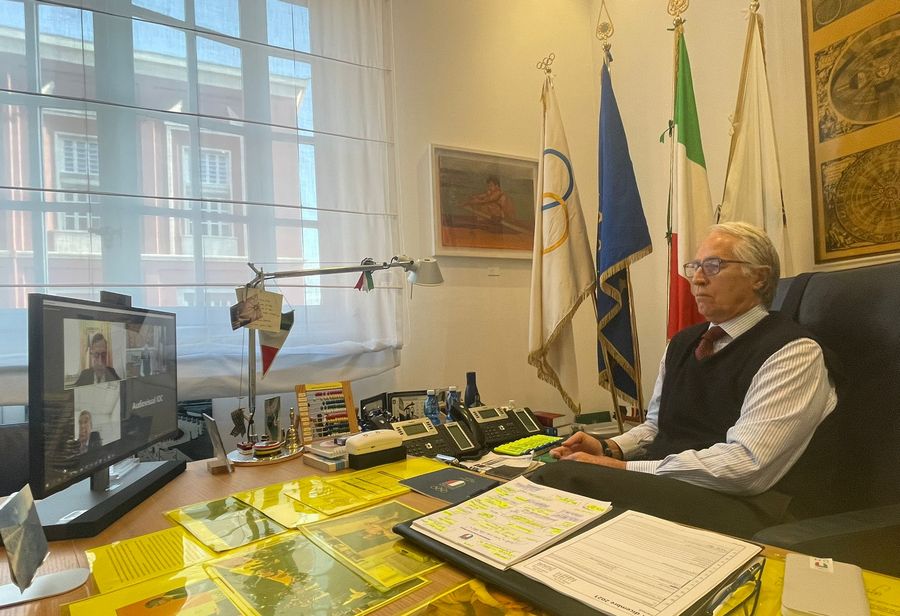
A friendly meeting ended with the promise to meet in person soon. The summit between the President of the International Olympic Committee, Thomas Bach, and the Prime Minister, Mario Draghi, took place this morning. It should have been held yesterday morning on the sidelines of the Collari d’Oro Ceremony, but was postponed to today after Bach's trip was unexpectedly cancelled due to technical problems with the plane that should have taken him to Rome. CONI President and IOC member, Giovanni Malagò, also joined the meeting from the Foro Italico sports complex.
Bach began by congratulating Draghi on the achievements of Italian athletes in 2021, “the best ever in history”, and on the success of the G20. Several core themes were discussed at the meeting: from the Beijing 2022 Winter Olympics to the Milano Cortina 2026 Winter Games, or “the Winter Games of a new era”, as Bach hopes.
Prime Minister Draghi reiterated that the government is “fully committed to making the Milano Cortina 2026 Games a success” and, praising the leadership of President Malagò, said he was open to further action, should it be necessary.
At the end of the meeting, the participants exchanged their best wishes for the coming festivities and expressed their hopes to meet again soon.
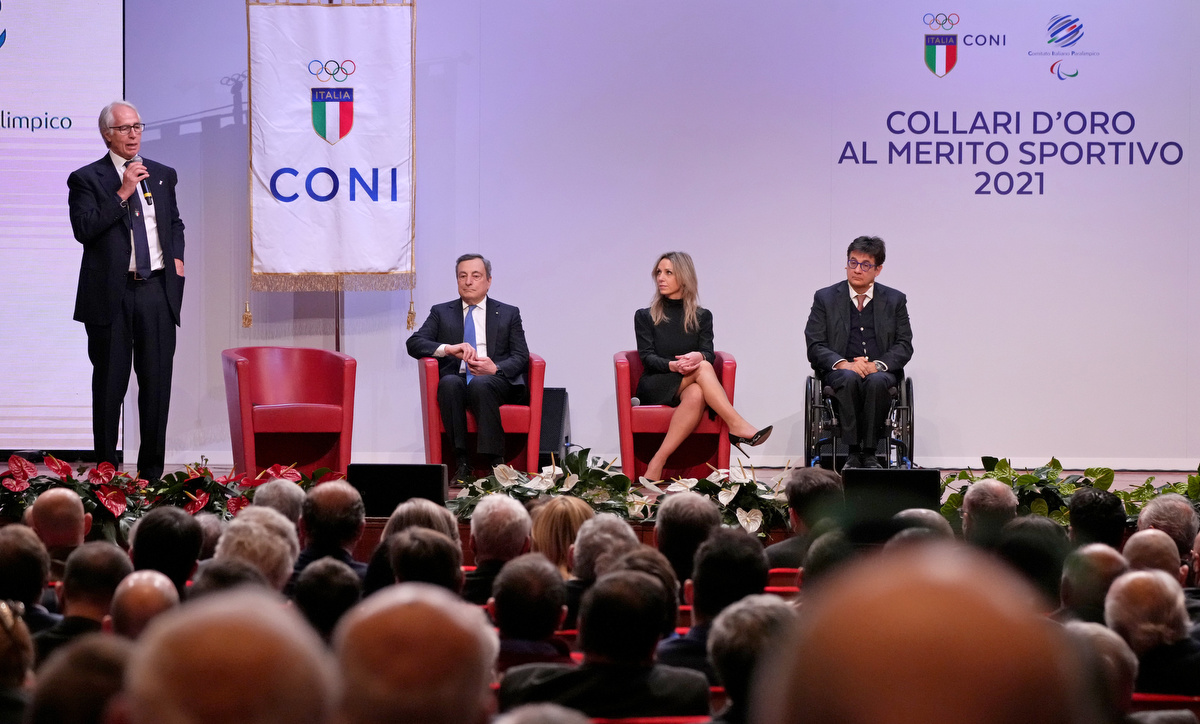
The Collari d'Oro for 2021, a magical year for Italian sport, were awarded. Prime Minister Draghi was also present: you continue to amaze us. Malagò: a historic season, second in the world only to the USA
- CONI
An unforgettable year. Just like the outstanding results achieved and the emotions it stirred up. Countless and vivid. As far as Italian sport is concerned, 2021 has secured its place in the history books, and for all the right reasons: never have so many Olympic medals been won, 40 to be exact, which is a testament to the most momentous Olympic mission ever. Indeed, Italians earned their place on 69 Paralympic podiums, the outcome of a journey that - including World and European Championships - has seen the tricolour flag flying in all its splendour at the helm of the international movement.
The celebration of 12 brilliant months was held at the Parco della Musica auditorium, where coaches, Olympic athletes, managers and clubs paraded in the customary Collari d’Oro ceremony, the most prestigious honour in Italian sport.
This occasion of togetherness and unity, under the banner of victory and excellence, reflected the numerous elements that contribute to the success of a technical school that has always been a point of reference throughout the world.
The ceremony was honoured by the attendance of the President of the Council, Mario Draghi, who gave some closing remarks. CONI President, Giovanni Malagò; the Undersecretary for Sport, Valentina Vezzali; and the President of the Italian Paralympic Committee, Luca Pancalli, were also present on stage.
Attendees included the Secretary General, Carlo Mornati; the Secretary General of the Italian Paralympic Committee, Juri Stara; and federal presidents, coaches, and leaders of the movement, to name but a few.
Prime Minister Draghi's speech was sincere and heartfelt and he gave an ovation to the sporting stars who have given us so much to be proud of this year. "I have been playing sport since childhood, I have also done it competitively and it has left an indelible mark on me. It educates your for life. It is a pleasure to celebrate the successes of this fantastic 2021 and I once again would like to extend my congratulations to all athletes and coaches. Triumphs alone will never be enough, but we must be able to appreciate the victories when they come. I think of all the achievements, the 40 Olympic and 69 Paralympic medals, accompanied by the tricolour flag. You will forever be an important part our history and you have helped carry our country forwards. Your supporters will never forget this. We are grateful to you and we are grateful to all the coaches and your loved ones. You deserve recognition for your talent and the world you are a part of, from the Olympics to neighbourhood gyms. As acknowledged by Federica Pellegrini and Valentino Rossi, who have announced their retirement and to whom I express my gratitude, victory management is important. Victories allow us to understand who we are, to gain awareness, including of the future. They allow us to plan with confidence and awareness because we must
also think about what the future will look like for Italian sport in five or ten years’ time. They allow us to maintain a long-term perspective and remain united around a common vision. There are many events on the horizon, starting with the 2026 Winter Olympics
in Milan and Cortina. I am sure you will approach them with the same high standard. As Gino Bartali once said, “some medals are pinned to your soul, not to your jacket”. I am sure that the values of sport will continue to inspire you. Thanks to you all.”
CONI President, Giovanni Malagò, presented the overall figures for the 2021 successes at world level. The sheer calibre of the results achieved and the collaborative efforts made by all parties to create a sense of belonging attested to the pride felt by the entire movement. "I am happy about this extraordinary year and grateful for all those present, starting with President Mario Draghi, who I would like to thank for attending. We are proud of our successes at the Olympic Games and the World and European Championships. This season we are second in the world only to the USA. This historic achievement is all down to you: athletes, coaches, managers and federations. Being second on the planet says it all. I would also like to give my best regards to Goggia and Moioli who, in 44 days, will be flag bearers in Beijing. We want to continue our successes, starting with the Winter Games”.
IPC President, Luca Pancalli, expressed similar sentiments of gratitude. "Thank you to Prime Minister Mario Draghi for attending this celebration of our athletes, the most valuable asset we have. We are two sides of the same coin. And thanks also to all the volunteers and people who have passionately made this movement something to be proud of. I would like to thank the Federations, Military Corps and all the organisations. Sport is about much more than medals. It is a cultural revolution, a tool to change the country for the better”.
Undersecretary of State for Sport, Valentina Vezzali, expressed her happiness - both personal and governmental - for an amazing year. "It is a special day. I am honoured by the presence of Prime Minister Mario Draghi. Thank you to all the Federations that keep more than 110,000 associations going and then send athletes to the Games. Sport is both the base and the summit, which is why it is essential that it goes hand in hand with education. I am sure that President Draghi will take this into account”.
Prime Minister Draghi, who was also presented with a miniature rod from Gianmarco Tamberi, also commented on the inclusion of sport in the constitution. "Sport is such an important factor that it should be included in the constitution. When we think about what is most important to our life’s education we consider including it in the constitution. The same applies to the environment: an area that was not really taken into account when the Constitution was written”.
The best way to bring the curtain down on a festive day and a whirlwind 2021. (Photo CONI Ferraro-Pagliaricci)
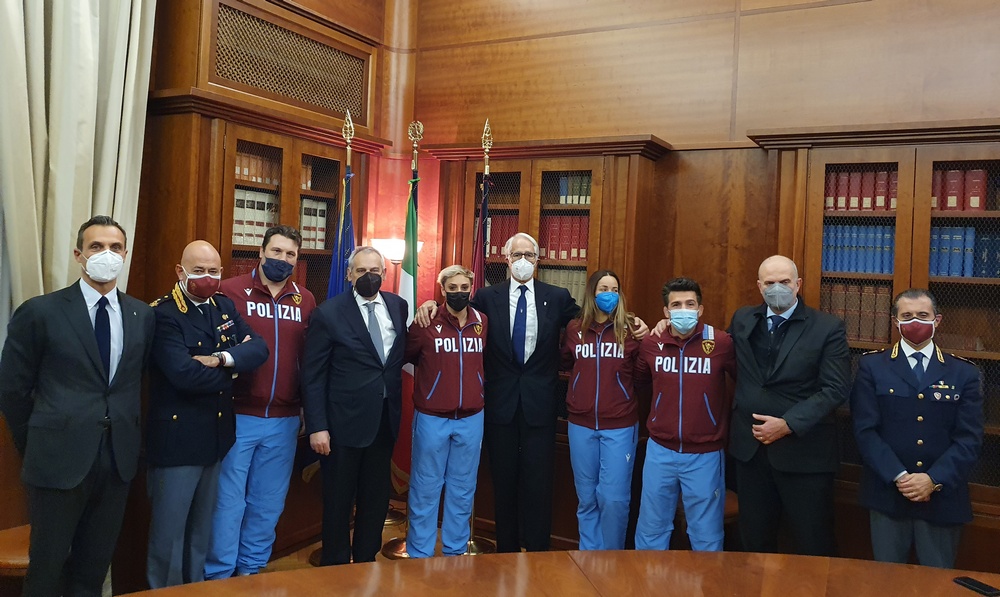
CONI-the State Police, Malagò and Giannini sign new memorandum of understanding
- AT THE VIMINALE
The memorandum of understanding between the Italian National Olympic Committee and the State Police was renewed today at the Viminale in order to strengthen the already existing sports cooperation by improving and expanding its content.
The agreement was signed by CONI President, Giovanni Malagò, and the Chief of Police, Lamberto Giannini. The collaboration will involve working together on the activities promoted within the respective institutional areas and, in particular, cooperating to prepare specific programmes aimed at the realisation of projects in the four-year Olympic period. Joint efforts will also be made to set up training plans for the technical and managerial executives of the Fiamme Ore, in order to honour the mutual commitment to improving the organisation of major national and international sporting events.
The meeting was attended by Roberto Cammarelle, boxing Olympian; Giuseppe Maddaloni, judo Olympian; Alice Volpi, bronze medallist in team foil at Tokyo 2020; and Silvia Semeraro, individual silver medallist and team bronze medallist at the recent World Karate Championships. Among those present were the CONI Secretary General, Carlo Mornati; Director of the State Police Sports Groups Department, Francesco Montini; the Central Director for General Affairs and Staff Policies, Prefect Giuseppe Scandone; the Deputy Director of the State Police Sports Groups Department and President of the Feder pugilato, Flavio D'Ambrosi; the Head of the Institute of Sports Science, Giampiero Pastore; and the Administrative Manager of CONI Olympic Preparation, Alessio Palombi.
Page 57 of 146