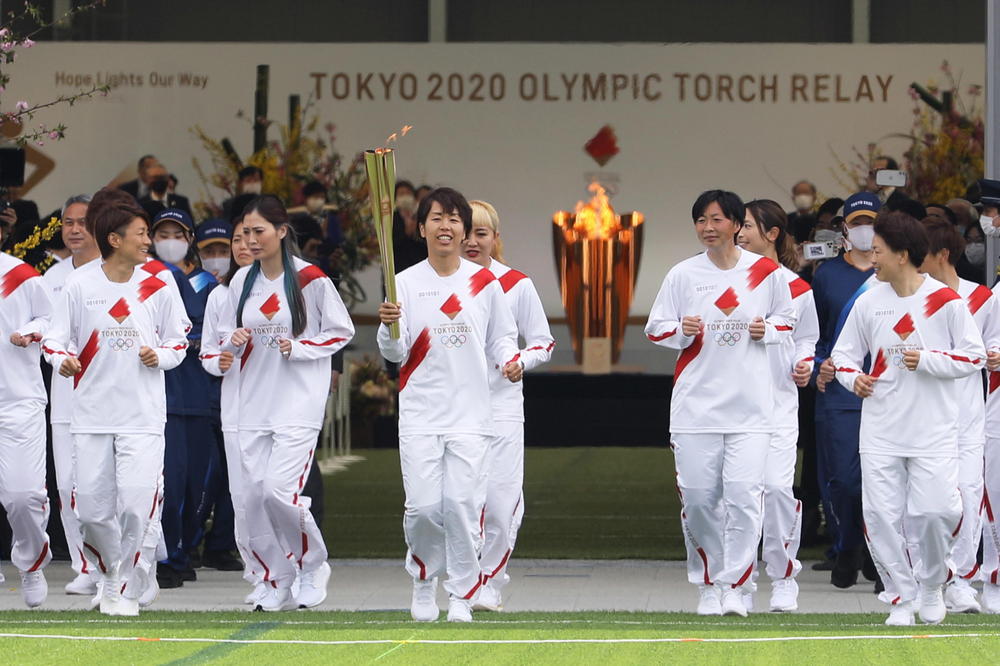
Flame in full bloom on first day of Olympic Torch Relay
With the arrival of spring comes the promise of new life.
And after the hardships of winter – both real and metaphorical – the Grand Start of the Olympic Torch Relay on Thursday 25 March was awash in flowers and welcome bloom as the residents of Japan called out to the world, a year later than expected due to a postponement caused by the COVID-19 pandemic, a message of warmth and opening.
The ceremony marked the start of the Olympic Torch Relay that leads the way up to the Opening Ceremony (on 23 July 2021) of this summer’s Olympic Games. The event was smaller than originally planned, but it met the moment with a subtle flourish. A spirit of sharing was alive on a hazy morning in Fukushima as it will be, surely, over the course of the next 121 days while the torch, lit by the rays of the sun at the Temple of Hera in Greece, makes its way, deliberately and purposefully, toward the cauldron of the Tokyo Olympic Stadium. There it will preside from its perch over the 2020 Tokyo Olympic Games.
Fukushima Prefecture was the perfect venue for the torch to begin its four-month journey to Tokyo. The area was devastated by the Great East Japan Earthquake of March 2011 and the effects of the ensuing tsunami and nuclear disaster are still felt there to this day. The city, though, has become a symbol of hardship and resilience. Of tragedy and triumph.
“I feel like it’s all finally underway,” enthused HASHIMOTO Seiko, President of the Tokyo 2020 Organising Committee. “It so happens these Games were postponed and as a result, overlapped with the 10-year anniversary of the earthquake. I couldn’t be more grateful if we got through the 121 days in one piece".
Iwashimizu and 14 other members of the Nadeshiko team, the most revered sports heroes in recent Japanese history, arrived in front of the stage in white tracksuits, red sashes streaked across the front. They were ready to inspire the nation again as they had ten before when, via a penalty shootout, they triumphed over the mighty and twice-world champion USA in the Women’s World Cup Final.
Iwashimizu – who also won a silver medal at the London 2012 Olympics – took the flame first and off the women went with their coach SASAKI Norio – at a slow pace suited the early awakenings of springtime. She was followed by her teammates, in diametric formation out onto the fields of the J-Village and then onto the quiet streets surrounding the center. They smiled and laughed. This is, after all, not a sombre event but one that marks the opening of something joyful.
“It’s unfortunate the players overseas and Sawa [Homare – captain of the 2011 world champions and that year’s FIFA Women’s Player of the Year] could not be here but we ran for them today as well,” said coach Sasaki. “The J-Village is sacred to the Nadeshiko and I couldn’t be happier the relay is starting here. I’m convinced these Games will inspire and help liven Japan. I realise the entire country is under enormous pressure but we want to do our part to help.”
And as the Olympics belong, in ways many and real, to all, the torch was passed, first to 16-year-old football goalkeeper OWADA Asato, a high school student in Fukushima who smiled broadly when receiving the flame.
And then it went on to other Japanese torchbearers, picked from over half a million applicants. The Flame moved its way slowly, methodically passing between hands toward the cauldron in the Olympic Stadium.
In the days to come, the flame will pass through 10,000 hands in a relay whose theme is, aptly given the times and pandemic and hardship all over the world, ‘Hope Lights our Way.’ First it will arrive in Tochigi on Sunday and then Gunma on 30 March. It will move through 47 Prefectures and 859 municipalities, bringing the hope of new life and springtime in the glow of this most ancient flame – one peculiarly resistant to extinguishing.
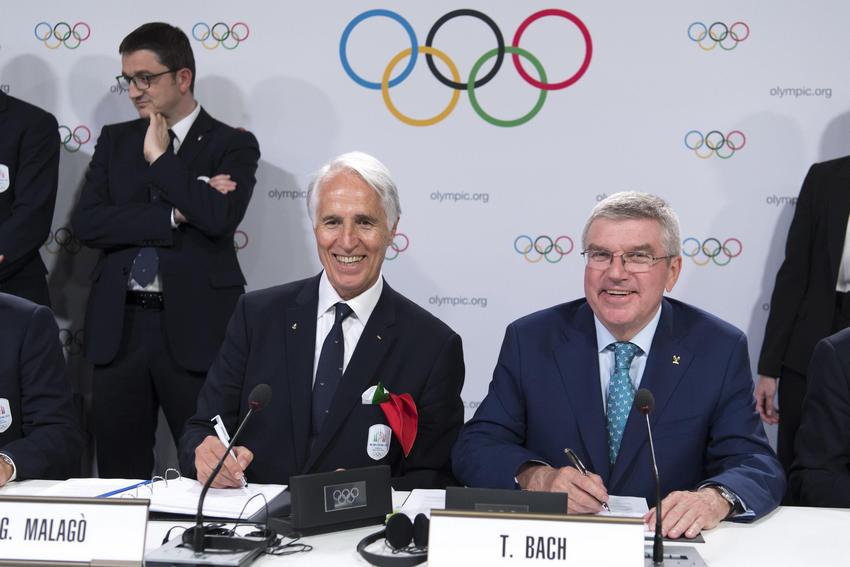
Thomas Bach re-elected as IOC President for second term
- AT THE 137th IOC SESSION
Olympic champion Thomas Bach has been re-elected for an additional four-year term as President of the International Olympic Committee (IOC). At the 137th IOC Session held virtually today, the 67-year-old German received 93 yes and 1 no votes from the 94 valid votes.
Thomas Bach, who won gold in with the German foil fencing team at the Olympic Games Montreal 1976, was elected as IOC President at the IOC Session in 2013 in Buenos Aires for a first eight-year term. This term will finish on the closing day of the Olympic Games Tokyo 2020 on 8 August this year, as decided by the IOC Executive Board. His second term as IOC President will start immediately after, and will conclude in 2025.
“Thank you very much from the bottom of my heart for this overwhelming vote of confidence and trust. For me, this is even more overwhelming considering the many reforms and the many difficult decisions we had to take, which affected all of us,” said President Bach after the election. “You know that this touches me deeply. It also makes me humble. When you elected me for the first time as your President in 2013 in Buenos Aires, I said that I wanted to lead the IOC according to my campaign motto ‘Unity in diversity’ and be a President for all of you and for all our stakeholders. This commitment is also true for my second and last term. My door, my ears and my heart remain open for each and every one of you. I hope that I can count on your continued dedication, support and friendship also during these four more years.”
As an athlete, Thomas Bach was a world-class fencer, winning the Olympic gold medal, but also two gold medals with the German foil fencing team at the World Championships in Montreal in 1976 and in Buenos Aires in 1977. He was a founding member of the IOC Athletes’ Commission in 1981, on which he remained until 1988. In 1991, he became an IOC Member and sat on the IOC Executive Board between 1996 and 2013. He served as IOC Vice-President from 2000 to 2004, 2006 to 2010 and from 2010 until his election as IOC President in September 2013.
During his first period in office as IOC President, he initiated the Olympic Agenda 2020 reforms for the future of the IOC and the Olympic Movement that were adopted at the IOC Session in Monaco in 2014. Just before his election today, the IOC Session approved the Closing Report of Olympic Agenda 2020 unanimously. Olympic Agenda 2020 has profoundly changed the Olympic Games, the IOC and Olympic Movement.
The IOC Executive Board has already proposed the successor to Olympic Agenda 2020 – Olympic Agenda 2020+5 – which will be discussed by the IOC Session on Friday this week. It consists of 15 recommendations inspired by five key trends, designed to pave the way to build on these solid foundations and carry Olympic Agenda forward into the future.
In his acceptance speech addressing the IOC Members, President Bach said: “In the meantime, you know me well enough that I would also like to look forward and continue to achieve ambitious goals with you also in the post-coronavirus world. We learned during this coronavirus crisis, the hard way, that we can live up to our Olympic slogan ‘faster, higher, stronger’, in sport and in life, only if we are working together in solidarity. Therefore, I would today like to inspire a discussion – a discussion with you and everybody interested in the Olympic community – on whether we should not complement this slogan by adding, after a hyphen, the word ‘together’: ‘Faster, higher, stronger – together’. This could be – from my point of view – a strong commitment to our core value of solidarity, and an appropriate and a humble adaptation to the challenges of this new world.”
During his presidency, Thomas Bach received the prestigious Seoul Peace Prize, in October last year – a prize which he said belonged to the entire IOC and the whole of the Olympic Movement. Without the support of so many around the globe, the achievements for peace through sport could never have been accomplished, he stressed. In 2019, he was awarded the Cem - Papandreou Peace Award in Athens. This award is given to individuals and groups who have made “an outstanding contribution to peace”.
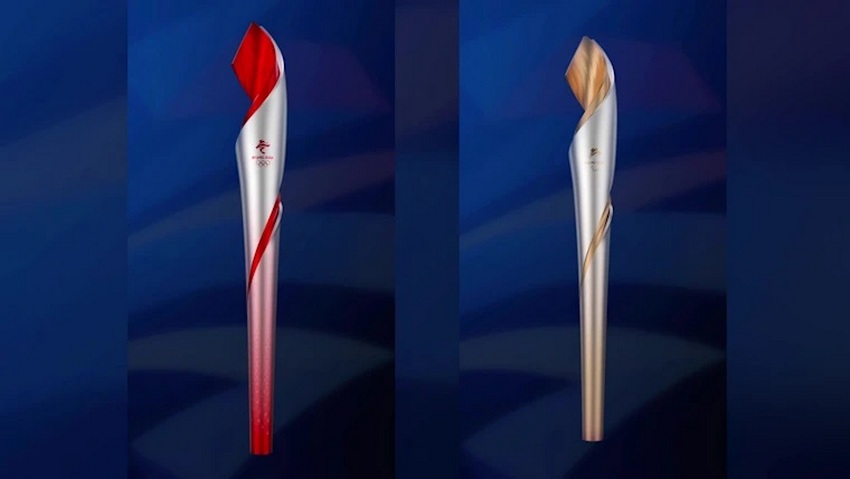
Unveiling of the Beijing 2022 Torch, Bach invites the world to China. Malagò: see you in Beijing
- ONE YEAR TO THE GAMES
One year before the Beijing 2022 Olympic Winter Games, the Olympic Torch that will light up the Asian edition has been unveiled. The torch was revealed during an event organised one year before the start of the Olympics to be held in China from 4th to 20th February 2022. It depicts an inner red ribbon intertwined with a silver one on the outer edge. The designers explained that it metaphorically represents fire and ice and will bring “light and warmth to the winter sports stage”.
To mark the occasion, IOC President Thomas Bach, in a video recorded at the Olympic House in Lausanne, formally invited the world’s National Olympic Committees and their winter sports athletes to participate in the Chinese Games. Bach symbolically signed and forwarded the invitation to eight NOCs, including the Chinese Olympic Committee and CONI, as the committee that will host the Games with Milano Cortina 2026. The other six NOCs were the Hellenic Olympic Committee, which is located in the country of origin of the Olympic Games, and the NOCs of the future host cities of the Olympic Games: the Japanese Olympic Committee for Tokyo 2020; the French Olympic Committee for Paris 2024; the United States Olympic Committee for LA28. The Australian Olympic Committee and the Nigerian Olympic Committee were also invited, both of which sent the largest delegations, from Oceania and Africa respectively, to the last Olympic Winter Games. All eight NOCs accepted the invitation via a video message. “On behalf of the Italian National Olympic Committee,” - the words of President Malagò, - “I thank the IOC for this invitation that we are pleased to accept. We will see you at Beijing.”
“A year from now, Beijing will make history by becoming the first city ever to host both the summer and winter editions,” Bach emphasised. “These games will unite the Chinese people with the world. Having seen how China is overcoming the coronavirus pandemic, we are very confident that they will ensure safe and secure Olympic Games in full cooperation with the IOC. Every time I have visited China, I have been so impressed by the enthusiasm and support for the Beijing 2022 Olympic Winter Games. As such, we can already say with great confidence: China is ready.”
From today until Saturday 20th February, the Olympic Channel will present a selection of the most beautiful moments and the most impressive performances from the sports legends who have made their mark on the history of the Olympic Winter Games. Representing Italy will be Olympic short track champion Arianna Fontana.
In 2022, the best athletes will gather in China to compete and win the 109 gold medals on offer. The competitions will take place in three different clusters: one in Beijing, one in Yanqing to the north-west of the capital, and one in Zhangjiakou, about 200km from Beijing but only an hour away by high-speed train.
There will be 15 disciplines on the programme for seven sports: biathlon, bob-sleigh and skeleton, curling, ice hockey, luge, skating (including figure skating, short track and speed skating) and skiing (alpine, cross-country, freestyle, Nordic combined, ski jumping and snowboarding).
Compared to PyeongChang 2018, there will be 7 more gold medals to be awarded in the new events planned for bob-sleigh, short track, freestyle skiing, ski jumping and snowboarding. Among the new events is the women’s monobob, which enters the Olympic programme at senior level after its success at the 2016 Lillehammer and 2020 Lausanne Winter Youth Olympic Games. Also debuting are men’s and women’s freestyle skiing, men’s and women’s big air freestyle, mixed team freestyle aerials, mixed team ski jumping, mixed team snowboard cross relay and mixed short track relay.
The Beijing Olympics will be the closest Winter Games to gender parity in the history of the Olympics, with the portion of women rising from the 41% seen in PyeongChang to over 45%.
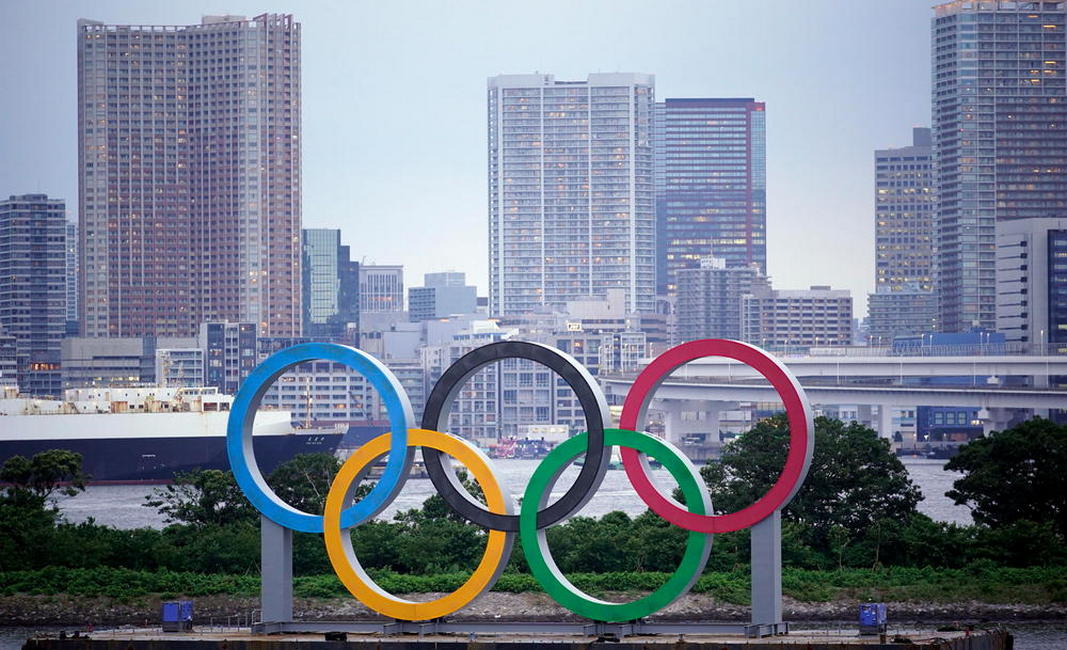
First Playbook published outlining measures to deliver safe and successful Olympic Games
- TOKYO 2020
The International Olympic Committee (IOC), the International Paralympic Committee (IPC) and the Tokyo 2020 Organising Committee (Tokyo 2020) today published the first Playbook, a resource which outlines the personal responsibilities key stakeholders must take to play their role in ensuring safe and successful Olympic and Paralympic Games this summer.
The series of Playbooks provide a framework of basic principles that each key stakeholder group will follow before they travel to Japan, when entering Japan, during their time at the Games and when leaving the Games. They will provide direction and set parameters that will enable people and organisations to advance their planning at this stage. A preview of the Playbook for athletes was already given in a call with the Global Network of Athletes’ Commissions on Monday.
The first of this series of Playbooks is, for logistical reasons, aimed at International Federations and Technical Officials. Playbooks for the athletes, media and broadcasters will be published in the coming days. Accompanying the publication of each Playbook will be a series of briefings from the IOC, IPC and Tokyo 2020 with the stakeholders in question.
These Playbooks are the official, centralised source of information for the Olympic and Paralympic Games stakeholders, and the first versions will be updated with more detail over the coming months, as the global situation relating to COVID-19 becomes clearer ahead of the Games.
The Playbooks are the basis of our game plan to ensure that all Olympic and Paralympic Games participants and the people of Japan stay safe and healthy this summer. They have been developed jointly by Tokyo 2020, the IOC and the IPC. They are based on the extensive work of the All Partners Task Force, which also includes the World Health Organization, the Government of Japan, the Tokyo Metropolitan Government, independent experts and organisations from across the world, and the interim report published by the Three-Party Council in December 2020. In addition, they also draw upon the lessons learned from the successful measures being implemented in other sectors, including the successful resumption of thousands of international sports events across the world. Each stakeholder group will have to follow specific guidelines tailored to their individual operational needs. However, in this first edition, stakeholders will find many of the standard and commonly accepted key health countermeasures currently being implemented around the globe relating to personal hygiene, testing and tracing.
The Playbooks also outline a typical journey for each stakeholder group, beginning with measures starting 14 days before arriving in Japan, testing before departure and upon arrival in the country, and the use of smartphone applications to report health and support contact tracing during Games time. Measures will also be in place to identify, isolate and treat any potential positive cases.
In the Athletes and Team Officials Playbook, for example, this stakeholder group will learn more about their time in the Olympic and Paralympic Village. There they will be subjected to strict control measures to ensure their safety. This will include limiting the amount of time athletes and support staff stay in the Village, restrictions on socialising outside the Village, their movement between official Games venues, and a COVID-19 screening system that will see athletes and support staff screened during the Games.
The measures outlined in the first version of the Playbooks will be gradually built on over the coming weeks, as and when circumstances change and subsequent decisions are made. Information will continue to be shared and updates to the Playbooks are expected by April and June, providing more details that will allow people to progress to the next stage of planning.
Speaking about the publication of the Playbooks, IOC Olympic Games Executive Director Christophe Dubi said: “The health and safety of everyone at the Olympic and Paralympic Games Tokyo 2020 are our top priority. We each have our part to play. That’s why these Playbooks have been created – with the rules that will make each and every one of us a sound, safe and active contributor to the Games. We know these Olympic Games will be different in a number of ways. For all Games participants, there will be some conditions and constraints that will require flexibility and understanding. We are providing the main directions at this stage, but naturally don’t have all the final details yet; an update will be published in the spring and may change as necessary even closer to the Games. We will make sure all the information needed is shared as quickly as possible to ensure we are fully prepared to protect all those coming to and residing in Japan during the Tokyo 2020 Games.” He continued: “By committing to following the Playbooks we will be stronger together. In return, the Olympic and Paralympic Games Tokyo 2020 will be remembered as a historic moment for humanity, the Olympic Movement and all those contributing to their success.”
Craig Spence, the IPC’s Chief Brand and Communications Officer, said: “To ensure safe and successful Games this summer, every single stakeholder involved in, or attending the Games has a key role to play. Central to this are the Playbooks that form an integral part of a new and robust masterplan developed over the last 12 months to protect every Games stakeholder and, importantly, the people of Japan during Tokyo 2020.
“Since March 2020’s postponement we know much more about COVID-19, while the thousands of international sports events that have taken place safely over the last year have given us valuable learning experiences. Combining this new knowledge with existing know-how has enabled us to develop these Playbooks, which will be updated with greater detail ahead of the Games.”
Tokyo 2020 Games Delivery Officer Nakamura Hidemasa commented: “The COVID-19 pandemic has impacted the daily lives of people around the world, and the Olympic and Paralympic Games need to adapt accordingly. Safety and security have become everyone’s top priority, and this summer's Games will be no different. Accordingly, Tokyo 2020, the IOC and the IPC have jointly published individual Playbooks for each stakeholder outlining the rules that need to be followed by all Games participants. The Playbooks were created from the perspective of the participants themselves, based on the interim summary that was published at the Coordination Meeting for COVID-19 Countermeasures last December. They include not only the specific measures that need to be taken, but also details of the rules that need to be observed and the appointment of a single person to oversee COVID-19 countermeasures in each stakeholder group to ensure effectiveness. The purpose of this first edition is to communicate ‘what we know at this time’ to a large number of people in an easy-to-understand manner. The Playbooks will be updated to the second edition this spring as the situation changes.
“Through careful communication we would like to ensure that everyone involved in the Games around the world is aware of our plans. We hope thereby to assure them that, if each and every one of them follows the rules when participating in the Games, they can be held in a safe and secure manner. We hope that daily life can return to normal as soon as possible, and we would like to express our gratitude to the medical professionals, essential workers and everyone else who is working hard to ensure this. In the meantime, we will continue our preparations for ensuring safe and secure Games in the spirit of safety will be the number-one priority for the Olympic and Paralympic Games.”
IOC Statement
- TOKYO 2020
Some news reports circulating today are claiming that the Government of Japan has privately concluded that the Tokyo Olympics will have to be cancelled because of the coronavirus. This is categorically untrue.
At an IOC Executive Board meeting in July last year, it was agreed that the Opening Ceremony of the Olympic Games Tokyo 2020 would be held on July 23 this year, and the programme and venues for the Games were rescheduled accordingly. All parties involved are working together to prepare for a successful Games this summer.
We will be implementing all possible countermeasures against COVID-19 and will continue to work closely with the IOC, the Tokyo 2020 Organising Committee and the Tokyo Metropolitan Government in our preparations for holding a safe and secure Games this summer.
Together with its Japanese partners and friends, the IOC is fully concentrated on and committed to the successful delivery of the Olympic and Paralympic Games Tokyo 2020 this year.
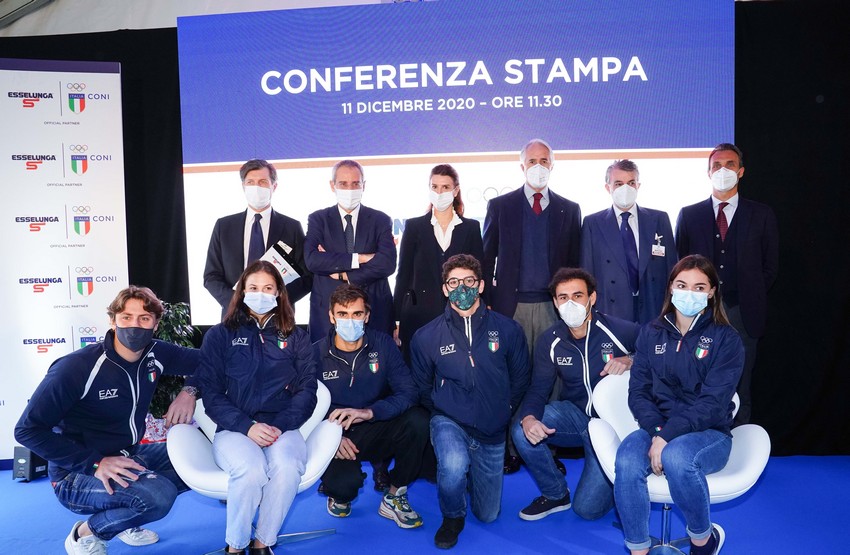
CONI and Esselunga partner up for the Tokyo Olympic Games
Today, Esselunga and the Italian National Olympic Committee presented, in Milan, at the Viale Famagosta store, the agreement that sees the leading Italian company in large-scale distribution become the official partner of the Italy Team and official supplier of Casa Italia at the XXXII Olympics, which will take place from 23 July to 8 August 2021 in Tokyo.
The partnership was described during a press conference attended by Sami Kahale, CEO of Esselunga, Giovanni Malagò, President of CONI and six athletes of the Italy Team: Marco Fichera and Enrico Garozzo for fencing, Giorgia Villa and Ludovico Edalli for gymnastics, Arianna Castiglioni and Nicolò Martinenghi for swimming. Also present were the Executive Chairman of Esselunga, Marina Caprotti, the Board Member, Francesco Moncada, the Secretary General of CONI, Carlo Mornati and the Chief Marketing & Customer Officer of Esselunga, Roberto Selva, and the Marketing Director of CONI, Diego Nepi.
For the first time, Esselunga has chosen to support a major sporting event with which it shares the values of Italianness, a healthy and balanced lifestyle, excellence and quality.
Sami Kahale, CEO of Esselunga: “We are really proud to support the Italy Team in the challenge of the Olympics, which we are sure will represent a great moment of recovery for our country. Sport, in all its disciplines, celebrates commitment, the spirit of sacrifice and healthy competition, which take on an even more important role in this historical period and which may stimulate a restart. “This synergy”, concludes the CEO of Esselunga, “is very important for us as an Italian company that focuses on customers, who, together with us, will cheer on our athletes”.
Giovanni Malagò, President of CONI: “This is the first time that CONI has combined its brand with large-scale distribution. Today, we’re doing this with a leading company in this sector, which believes in sport and Olympic values but, above all, which represents the Italian spirit, just as we represent it with our athletes and our athletes from the Italy Team. We are pleased that Esselunga has believed in Coni and we are sure that, together, we will create a great journey that will, during the Tokyo Games, exceed the expectations of Italian sport and of the partners who have trusted in us, such as Esselunga”.
With the support of the Italy Team, Esselunga adds another piece to its commitment to customers, the community and the territory, which are some of the pillars of its sustainability strategy. Sports have always evoked attention towards good and proper nutrition that Esselunga, a food company as well as a retailer, promotes both in its range to its customers and in its design of special initiatives. On the shelves of Esselunga’s stores, customers can, in fact, find a wide choice of branded products ranging, for example, from the Equipoise Line, designed to meet specific nutritional needs, to the CheJoy line for children, to help support a balanced diet and which is also fun, at the same time.
Esselunga is also engaged in research to improve the nutritional properties of the products it makes directly, by reformulating its recipes, reviewing its portions and paying the utmost attention to quality. Its food education initiatives include the Super foodies project, the superheroes inspired by the world of fruit, vegetables and healthy diet, created to increase awareness of what we eat, especially amongst children, but also amongst parents, through play. Esselunga’s partnership with CONI confirms its willingness to support the Italian spirit, a commitment that takes the form of encouraging the growth of the local economy by promoting the supply of Made in Italy products, enhancing local interests and regional productions.
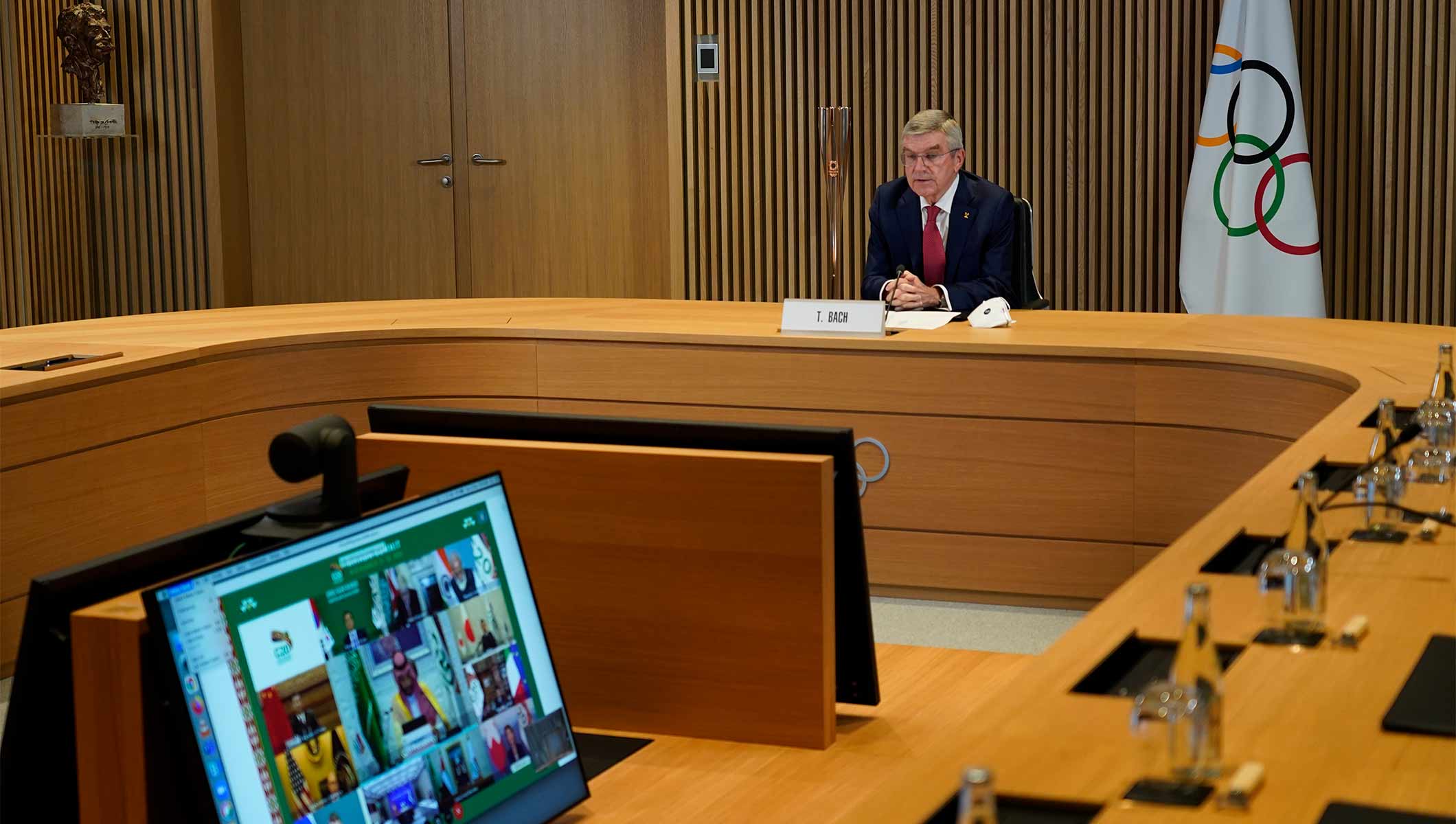
World leaders at G20 Summit express support for Tokyo 2020 and Beijing 2022
- VIRTUAL SUMMIT HOSTED BY SAUDI ARABIA
The world’s leaders assembled at the virtual G20 Leaders’ Summit, hosted by the G20 presidency of the Kingdom of Saudi Arabia, have expressed their strong support for the Olympic and Paralympic Games Tokyo 2020 and the Olympic Winter Games Beijing 2022. The final declaration of the Summit said: “As a symbol of humanity's resilience and global unity in overcoming COVID19, we commend Japan's determination to host the Olympic and Paralympic Games Tokyo 2020 next year. (…) We look forward to the Beijing Winter Olympics in 2022".
International Olympic Committee (IOC) President Thomas Bach joined the virtual Summit for an address to the leaders, upon invitation by the Saudi G20 presidency.
“Sport can save lives. During this coronavirus crisis, we all have seen how important sport is for physical and mental health,” the IOC President said in his speech. “The World Health Organization has acknowledged this by signing a cooperation agreement with the IOC. Following this agreement, the UN, the WHO and the IOC launched a co-branded campaign called ‘Healthy Together’, rolling out projects internationally. Furthermore, we are preparing to contribute to a worldwide pro-vaccination campaign".
IOC President Bach also stressed the importance of solidarity in the post-coronavirus world: “We have learned one important lesson from this crisis: we need more solidarity. More solidarity within societies and more solidarity among societies. We will soon celebrate this demonstration of solidarity at the postponed Olympic and Paralympic Games Tokyo 2020. These Olympic Games, with the participation of all 206 National Olympic Committees and the IOC Refugee Olympic Team, will send a strong message of solidarity, resilience and unity of humankind in all our diversity. In this context, I am very grateful to Prime Minister Suga for sharing our determination".
The IOC President asked the G20 participants to support the political neutrality of the Olympic Games and the IOC: “Therefore, I humbly appeal to you to support our political neutrality, allowing us to make the Olympic and Paralympic Games this great symbol of global solidarity without any discrimination".
Earlier, Japanese Prime Minister Suga Yoshihide had said: “I am determined to hold the Tokyo Olympic and Paralympic Games as a symbol that humankind has overcome the virus. I heard that the IOC President Thomas Bach, who I met the other day, has the same determination. We will continue to make our utmost efforts to realise safe and secure Games". Support for the IOC and the Olympic Games was also expressed by Dr Tedros Adhanom Ghebreyesus, Director General of the World Health Organization (WHO): “Finally, I would like to welcome Prime Minister Suga, and assure him that WHO is working with the International Olympic Committee to make next year’s Tokyo Olympics a success, and a symbol of hope for the world".
You will find the full address by the IOC President here.
Today’s speech was the second by IOC President Bach at a G20 Summit, after he addressed the world’s leaders in June 2019 at the G20 Summit in Osaka (Japan).
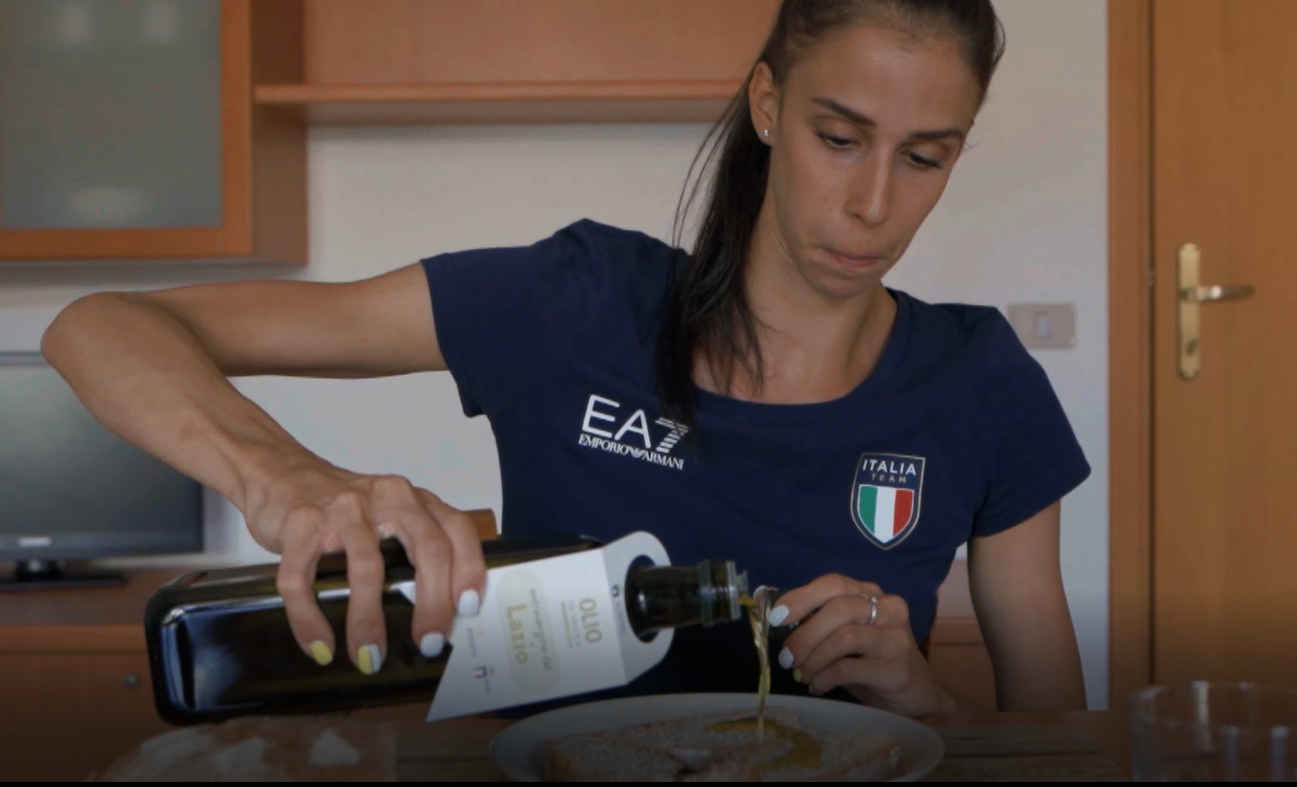
Italia Team acts as ambassador for quality Italian extra virgin olive oil for Tokyo 2020
- PARTNERSHIP CONI–ISMEA–MIPAAF
Thanks to the CONI-Ismea-Mipaaf partnership, the world of sport is also taking to the field to promote one of the symbolic products of the Mediterranean diet. The initiative is part of the institutional communication campaign “Olio su tavola - I capolavori dell'extravergine” (“Oil at the table - The masterpieces of extra virgin olive oil”), promoted by the Ministry of Agricultural, Food and Forestry Policies and carried out by Ismea.
Six Olympic athletes have been chosen to act as ambassadors of the extra virgin olive oil from their territory: Tuscan fencer Alice Volpi, twice world gold medallist; Abruzzo beach volleyball champion Paolo Nicolai, silver medallist in Rio 2016; European boxing champion Irma Testa from Campania; Ligurian water poloist Stefano Luongo, who took gold at the 2019 World Cup in South Korea; Apulian Vito Dell'Aquila, bronze medallist at the Taekwondo World Cup in South Korea in 2017; and Roman Martina Centofanti, three-time world gold medallist in rhythmic gymnastics in Lazio.
The young athletes are the key players of six promotional videos, which will be distributed from November on Coni and Ismea social media. The initiative is part of the institutional communication campaign “Olio su tavola - I capolavori dell'extravergine” (“Oil at the table - The masterpieces of extra virgin olive oil”) promoted by the Ministry of Agricultural, Food and Forestry Policies and carried out by Ismea.
The aim of the Campaign is to contribute to the development of a culture linked to extra virgin olive oil, which encourages more attentive and conscious buying behaviour and promotes greater knowledge of the high-quality and varied immense regional deposit, as proven by the presence of over 500 cultivars and as many as 48 PDO and PGI oils.
Launched in 2019, the communication campaign is involved on several fronts, from the web series to online events, guided local tastings and media campaigns in the press, online, on the radio and on TV.
Thanks to the contribution of the Italian National Olympic Committee (CONI), extra virgin olive oil has a twofold value: not only is it a fundamental ally for our well-being and an emblem - together with sport - of a healthy and conscious lifestyle, but it is also a source of real national pride, much like the athletes representing the Italian Team for Tokyo 2020. The images of the institutional video in which sportsmen, olive growers and oil millers are symbolically united in a metaphor that evokes the restart and reintroduction of Italy in a difficult period, such as the present, speak for themselves.
“We give thanks to the world of sport,” said Minister Teresa Bellanova, “and to the champions who have chosen to be ambassadors and witnesses of an example of our quintessential excellence: extra virgin olive oil. We thank them, because their excellence, their faces and their voices here as elsewhere can make a difference in consumer choices, in speaking to the new generations, and in transparent and correct information. Italy boasts over 500 cultivars, an unrivalled heritage of biodiversity that we must be able to fully put to good use. knowing full well that appreciation of our production and protecting the landscape go hand in hand. By closing the CAP negotiations in recent weeks, we have achieved important results in this area, too. We have tools that allow us to traverse an important path of revitalisation and modernisation. This requires maximum consultation and the active participation of all actors in the supply chain. The alliance with consumers is strategic, which I hope will guarantee these exceptional ambassadors and this information campaign with the right attention and success they deserve”.
“The Italia Team represents the excellence of Italian sport,” commented CONI President, Giovanni Malagò, “and our athletes are key representatives and ambassadors of our country on international stages, starting from the greatly-anticipated and coveted Tokyo 2020. They are not only champions who excel with regard to their results, but they are also true tributes of ‘made in Italy’ worldwide. Extra virgin olive oil is also a symbol of Italian excellence and is the basis of the diet of our Olympic athletes. It is therefore natural for CONI and the Italia Team to team up with the Ministry of Agriculture, Food and Forestry and Ismea in this campaign that promotes our masterpieces. Sport and proper lifestyle also take the field together to challenge sedentarism and the diseases it causes. Behind every success there is fatigue, sacrifice and self-sacrifice: a mutual commitment for our champions and our olive growers, who are working hard to keep Italy at the top of the world”.
“Extra virgin olive oil is one of the symbolic products of our diet; suffice it to say that Italy is the world's leading consumer, as well as being the second largest player in terms of production and exports,” stressed Raffaele Borriello, Director General of ISMEA. And yet, unlike wine, which over the last 30 years has built up a dense fabric of values around it, oil is still often perceived today as an undifferentiated commodity, for which it is above all the pricing that guides purchasing decisions. Recent Ismea surveys tell us, however, that in the last 10 years something has changed in the consumer's perception and experience of extra virgin olive oil, and the communication campaign we are carrying out aims to amplify this change so that oil finds the value it deserves, and the consumer is able to make informed choices”.
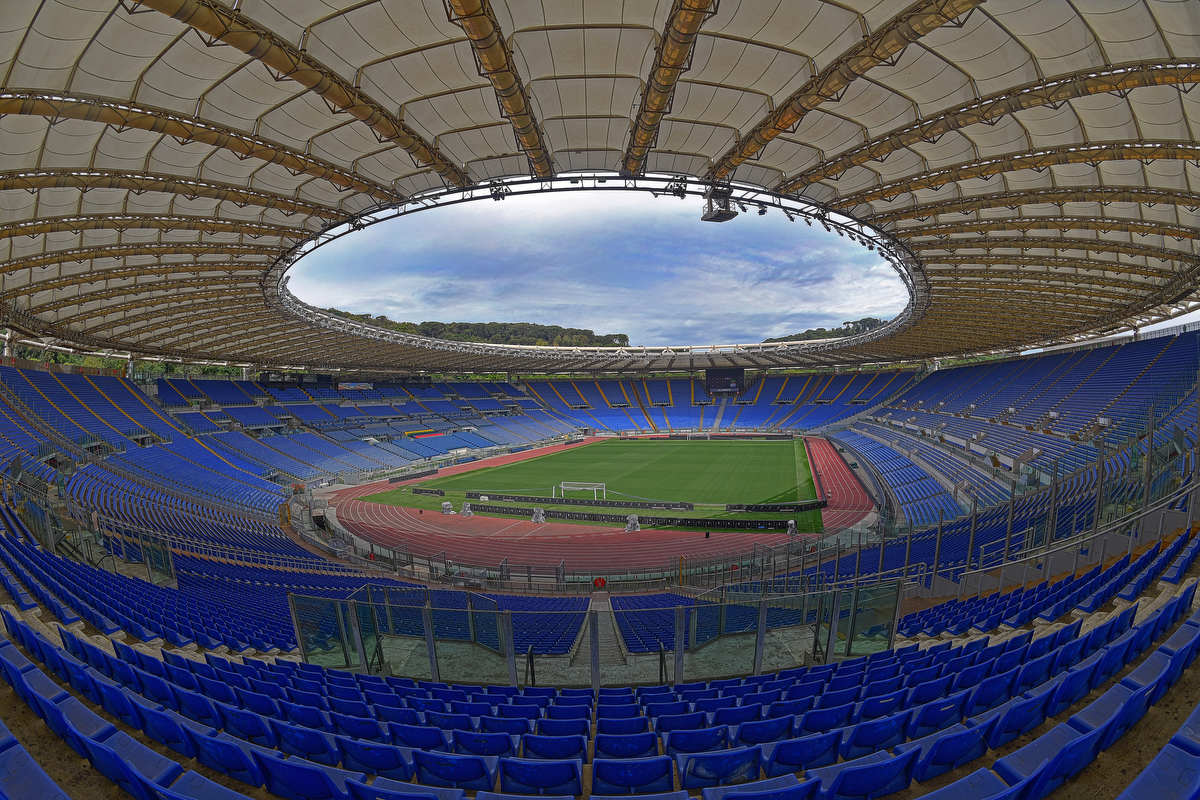
2024 European Championships awarded to Rome
- ATHLETICS
A triumph for Italy and for all Italian sport. The European Athletics has awarded the 2024 European Championships to Rome. The Capital will therefore once again host the greatest continental athletics event in the world, fifty years after the 1974 edition. It will also be the third time hosting for Italy, ninety years after the inaugural event in Turin in 1934. Rome's candidacy prevailed over that of the Polish Katowice, the other city in the running for review. The result in favour of the Capital, which was preferred by fourteen members (out of sixteen) of the EA Council, is clear. “Italy has already demonstrated its ability to host excellent championships for all age groups, and I am sure that the athletes and fans can't wait to visit Rome in 2024,” said interim president of European Athletics, Dobromir Karamarinov.
The satisfaction of the Italian Promoting Committee is enormous, with FIDAL leading a teamwork that has been made possible thanks to the support of the Government, the Lazio Region, the Municipality of Rome, CONI, Sport and Health, and many other bodies and associations. The sixteen members of the EA Council’s decision came at the end of the bidding event, which took place by video-conference. The option was granted to propose a clip that told and promoted the beauties of the Capital and the solidity of the Rome 2024 project, underlined by the initial speech of FIDAL President Alfio Giomi. The presentation - which lasted around forty minutes, with final questions on security, TV, option 2028, ticketing and the stadium - was given by the Councillor for Sport of the Municipality of Rome, Daniele Frongia, representing Mayor Virginia Raggi, by member of the Council of World Athletics, Anna Riccardi, by the head of the FIDAL International Area, Roberta Russo, and by the head of the FIDAL Communication Area, Marco Sicari. To support the candidacy, speeches were also given by Mayor Raggi, by the President of CONI, Giovanni Malagò, by the President of Sport and Health, Vito Cozzoli, and by the Councillor for Tourism and Equal Opportunities of the Lazio Region, Giovanna Pugliese.
Therefore, after fifty years, Rome will once again be at the centre of European athletics, in the edition to be held after the Paris 2024 Games: the Olympics welcomed the event for the first time in 1974 in a review that was illuminated by the unforgettable Pietro Mennea’s sprint to gold in the 200 metres, who was also able to win silver medals in the 100 and 4x100. The edition is also remembered for the first podium between the European Championships, World Championships and Olympics for Sara Simeoni, who took bronze in the high jump, as well as Giuseppe Cindolo’s bronze in the 10,000 meters.
And it is symbolic that the assignment took place sixty years after the Capital Games. The Olympic Stadium will be in the heart of Europeans, but they will also embrace some of the most evocative corners of the city and their eternal charm: the shot put will take place among the exceptional scenery of the Colosseum and the Arch of Constantine, while the racewalking will unfold down the avenue of the Baths of Caracalla and the half marathon along the Half Marathon Via Pacis, starting and ending in Via della Conciliazione, in the shadow of St. Peter's Basilica. (Photo Mezzelani GMT Sport)
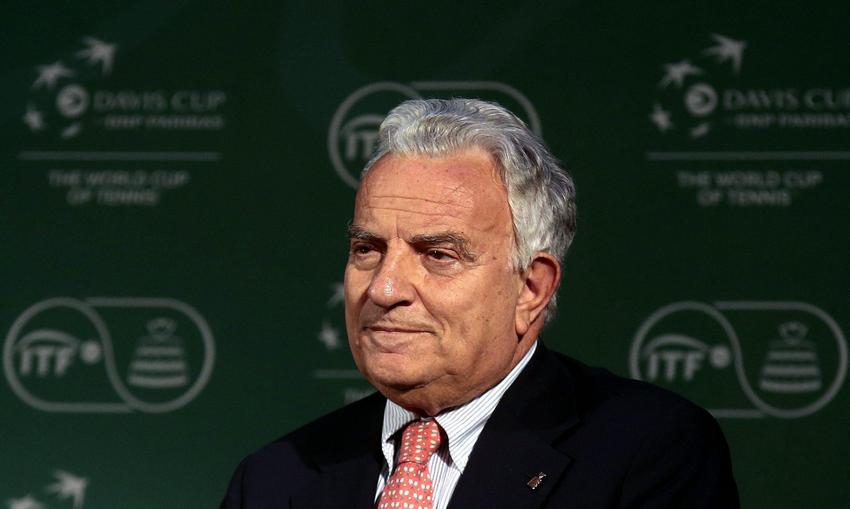
Francesco Ricci Bitti confirmed for the third time as the head of ASOIF
- SUMMER OLYMPIC SPORTS
Francesco Ricci Bitti has been confirmed for the third time as the head of ASOIF, the association that brings together the international federations of summer Olympic sports.
The 78-year-old Italian executive, Honorary President of the International Tennis Federation and member of the National Council of CONI, was unanimously re-elected (he was the sole candidate) for his third and final term by the ASOIF General Assembly, which met today by video-conference.
Last week Ivo Ferriani, President of the International Bobsleigh and Skeleton Federation and also a member of the CONI Council, was elected to the presidency of the AIOWF, the association representing the international federations of winter Olympic sports. For Italy and CONI, this is a prestigious double placement at the top of world sport.
Page 62 of 146