Malagò presents the candidature project at Bocconi University: Sport in Italy is the best investment
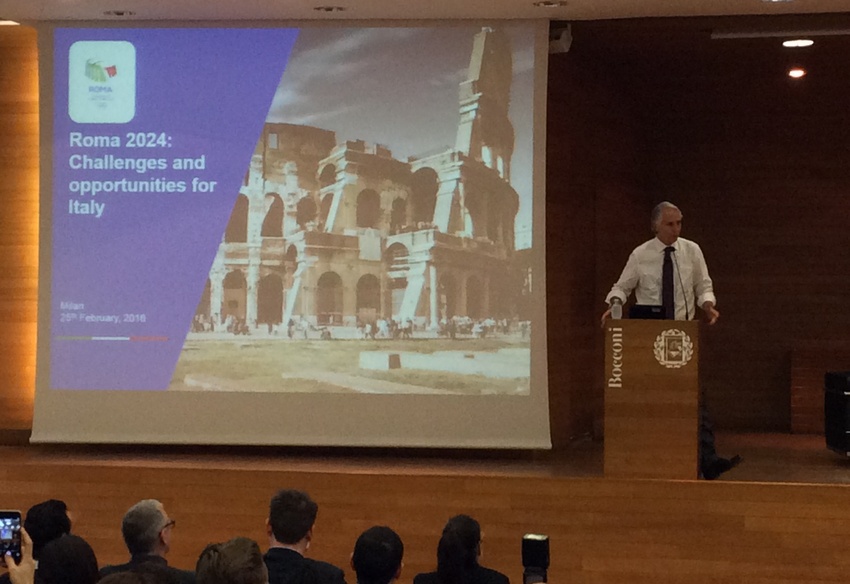 "Sport in Italy is the best investment; it is a peak of excellence". CONI president Giovanni Malagò, in occasion of the convention "Rome 2024, planning for sustainability and legacies", which took place at "Luigi Bocconi" Commercial University in Milan, reiterated the importance of the Capital's candidature to host the Olympic Games in 2024, also from the economic point of view, in terms of legacy for the country.
A strong candidature presented today at the event promoted by Bocconi Sport Campus, and enriched by the prestige that is associated with the Italian Olympic Committee abroad. "A recent research ascertained that CONI is the most prestigious Olympic committee in the world - highlighted the President talking to the attendees at the University's Aula Magna -. This is thanks to its history and of the medals gained by our athletes. The uniqueness of Italy is that we do not have a Ministry of Sport: in our country, CONI is the institution that represents sport and this is a responsibility because it is our duty to promote the movement and its values. My colleagues see us as a model both from a management perspective and because of the enormous number of athletes, 11 million, and of clubs that affiliate to the various federations".
The presentation of the candidature project saw the intervention, amongst others, of the head of relationships with athletes on behalf of the Committee for the Promotion of Rome 2024, Fiona May, swimming champion Massimiliano Rosolino and race walking champion Eleonora Giorgi.
Malagò, on the margin of the convention, then made some clarifications regarding the venue, which, were the Olympic Games to be assigned to Rome, could host the final of the final game for the Olympic football tournament. "If Roma's new stadium is going to be built, it could host the final, otherwise we would opt for other solutions - he explained -. All dossiers, both our one and the one of our competitors, plan for something that has not been built. We have been clear, honest and transparent regarding Roma's stadium: were it to be complete, Rome could host the final of the Olympic football tournament, given the fact that at that time there will also be the Ceremony for the closing of the Olympics. One can easily do everything at the Olympic Stadium, which has been done at different Olympic competitions - he added -, but if it were not complete, at that point we will evaluate the location of the final, which could take place in Rome or in Milan or Naples, which currently are the two designated cities for hosting the semi-finals, but it is a decision that has yet to be made".
Composition of Evaluation Commissions for the Olympic Games 2024. Fredericks was named President
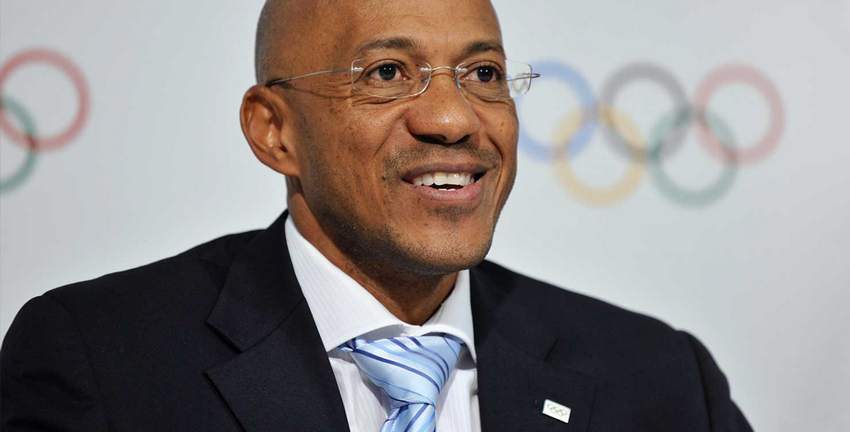 International Olympic Committee (IOC) President Thomas Bach today announced the composition of the the Evaluation Commission for the Games of the XXXIII Olympiad. IOC Members Frank Fredericks (photo IOC) was named Chair of the Commission.
Frank Fredericks, Olympic medallist and former Chair of the IOC Athletes’ Commission, was previously a member of the Evaluation Commission for the Games of the XXX Olympiad and the Evaluation Commission for the Games of the XXXII Olympiad.
President Bach said: “Olympic Agenda 2020, with regard to the organisation of the Olympic Games, puts a special focus on sustainability and the athletes’ experience. This is where Frank Fredericks, as a four-time Olympic silver medallist in sprint and former Chair of the IOC Athletes’ Commission, has great expertise”.
The Candidate Cities for the Olympic Games 2024 are Los Angeles (USA), Rome (Italy), Budapest (Hungary) and Paris (France).
The bob Ferrari tester of Pyeongchang track
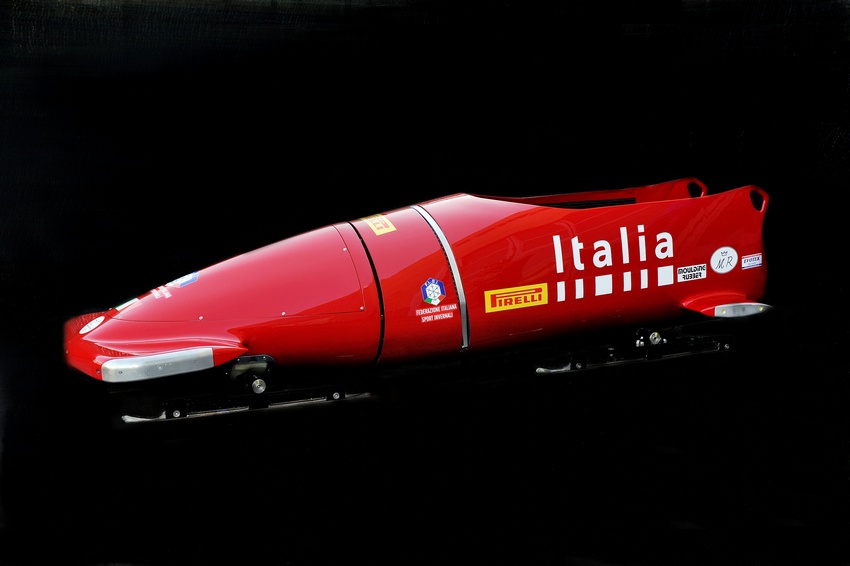 The bobsled made by Ferrari for the Italian national team has been selected to help test out the new Olympic run at Pyeongchang, which will host the Winter Olympic Games in 2018. The bobsled was delivered this morning to driver Patrick Baumgartner who’ll be putting it through its paces at the Alpensia Sliding Centre in Korea between February 29 and March 9. He will be joined by brakemen Marco Rosa, Rocco Caruso and Alessandro Fierro, as well as by sporting director Roberto D’Amico.
The international federation specifically requested Fisi (the Italian Winter Sports Federation) to provide one of its teams and Baumgartner, who has just turned 21, was selected as driver. He has showed incredible prowess with the Ferrari-built bobsled, winning the gold medal at the Innsbruck 2012 Youth Olympic Games. The Italian team will be joined by athletes from Latvia and Russia.
Coni (the Italian Olympic Committee), Fisi and Ferrari have been collaborating for many years in various different sports and the Italian national team’s bobsled has been made in Maranello since the 2010 Vancouver Olympics. Development work on the version for Pyeongchang has only just begun, however. After the tests on the Olympic run, it will return to Ferrari where it will be further honed over the next 12 months. The sled will make its competition debut in the first event of the 2017/18 season, the high point of which will be the Korean Olympics, of course.
The Committee submitted the first part of its Candidature File to the IOC
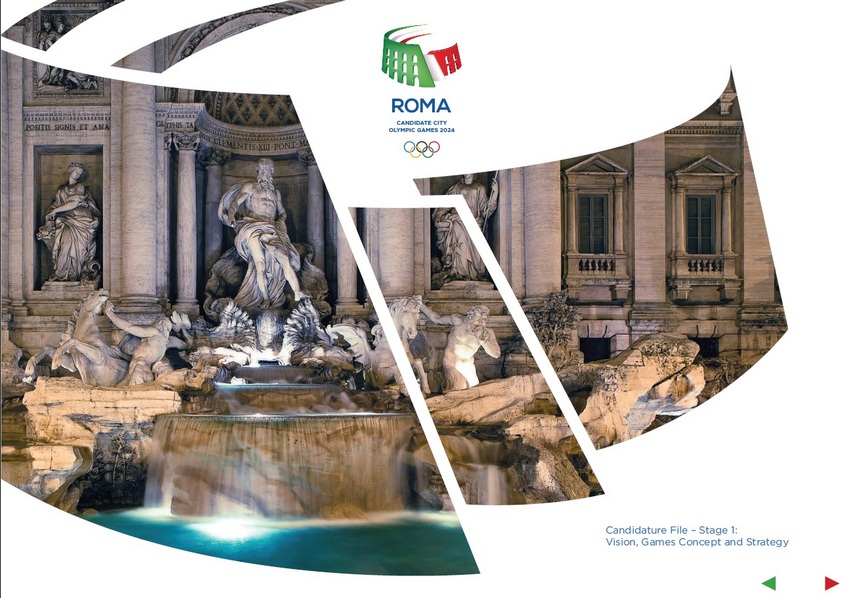 Candidature File from Rome to host the 2024 Olympic Games was delivered yesterday to the International Olympic Committee (IOC).
In this part of Candidature Process, the Rome 2024 Committee has explained the vision and the games concept, the legacy, the general infrastructure and capacity analysis, the financing analysis (download here).
Presentation of the Olympic bid application. "This will be the biggest celebration of sports”
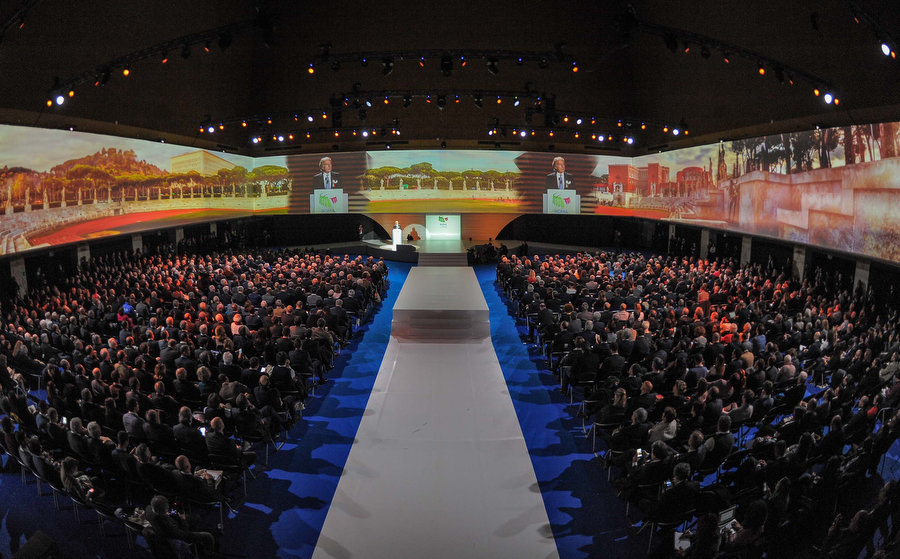 A journey through time, and through the beauty of its millennia, brings us to the indelible images of the 1960 Olympic Games. With a show that is warmly enshrined in our memories, and brings our dream of those five circles even closer, the Rome 2024 Organizing Committee revealed the details of the Italian capital's candidature for hosting the Olympics and the Paralympics. This was presented to the International Olympic Committee at Lausanne only today.
Heading the 1,000-plus guests present at the Palazzo dei Congressi dell'Eur was the actor Sergio Castellitto who, in his speech, stressed Rome’s uniqueness with "a city that has been reborn a thousand times, but still remains itself." Firstly however, the president of the Italian National Olympic Committee (CONI) read the welcoming message (click here for complete text) that the President of the Republic of Italy, Sergio Mattarella, had addressed to him and to the president of the organising committee, Luca Montezemolo: "Just as the 1960 Olympics signalled an important step in the economic and social development of Italy - writes the head of state - my hope is that the 2024 Olympics will become the crossroads of new growth, marked by quality and sustainability."
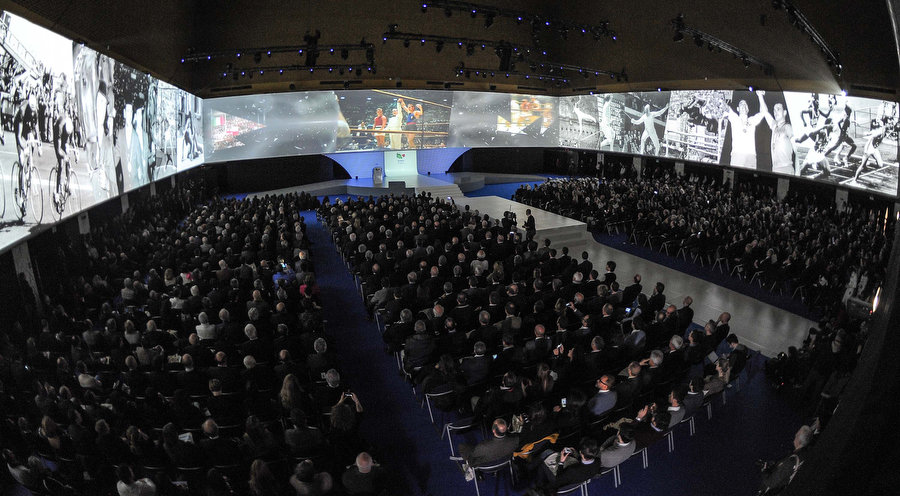 This was a message that the file was intended to convey in the best way possible. The candidacy of "Rome, a city of hospitality", was based on four pillars: maximum transparency, a "low cost" approach, sharing and participation, and an improvement for the city (click here for full prospectus). Montezemolo was to illustrate the vision of the candidature, also announcing the costs of the Olympic project. The budget is to start at 2.1 billion euros, required to build or permanently modernize the permanent sites located in the city of Rome (70% of this is already available): the Olympic Village, the Cycling Arena and le Vele at Tor Vergata, the IBC and Main Press Centre at Saxa Rubra, the nature reserve at the Nuova Fiera de Roma, the Stadio Flaminio (download slides of Montezemolo’s presentation here).
The Chairman of the Committee explained that “The budget for the temporary sites will be 3.2 billion euros, and will include the organizational and managing costs. However, to this amount we must add revenue. In the case we win the competition for the Olympic bid, we would have a billion euros from the IOC. Considering the revenue from expected grants, sponsorship, tickets and licensing, we are aiming to equalize the cost of the temporary sites." In figures, according to a study by the University of Rome Tor Vergata (available here), conducted by Professor Beniamino Quintieri, the economic impact of the Games will produce a GDP growth of +0.4%, the creation of 177 thousand jobs, and an economic benefit of 2.9 billion euro.
In the auditorium were the representatives of the Government, the heads of the civil and military authorities, the federal presidents, and the all-time Italian national sports champions. On the stage you could just breathe in the magical air that linked, inextricably, the past, present and future. Here the Olympic fencing champion and general co-ordinator of Rome 2024, Diana Bianchedi, "challenged" her daughter Giulia with the foil, and Fiona May, an athletics champion also in charge of athletes’ relations, was presented together with her daughter Larissa. Then came the Rome 1960 Gold medal winner (for boxing), Nino Benvenuti, and the winner of Athens 2004 (for the marathon), Stefano Baldini. “We want to create the biggest celebration of sports ever organised”, added Montezemolo, “we want to remove any element that does not place sport at the centre of the project: sport, ethics, competition, passion. Sport is the greatest tool for uniting the world.”
The Vice President of the Italian Paralympics Organising Committee, Luca Pancalli (See slides), recollected that Rome 1960 was “also the home of the first Paralympics”. With regards to the file for candidacy, he made an assurance that "We have set ourselves some fixed objectives”. Among these, think about a sustainable transport connecting all the sites, so that even after the games this can be enjoyed by the whole community. Secondly is the regeneration of, in particular, the peripheral areas. The third objective sees the recovery of the existing sites, and the building of temporary sites to avoid the so called “cathedrals in the desert”.
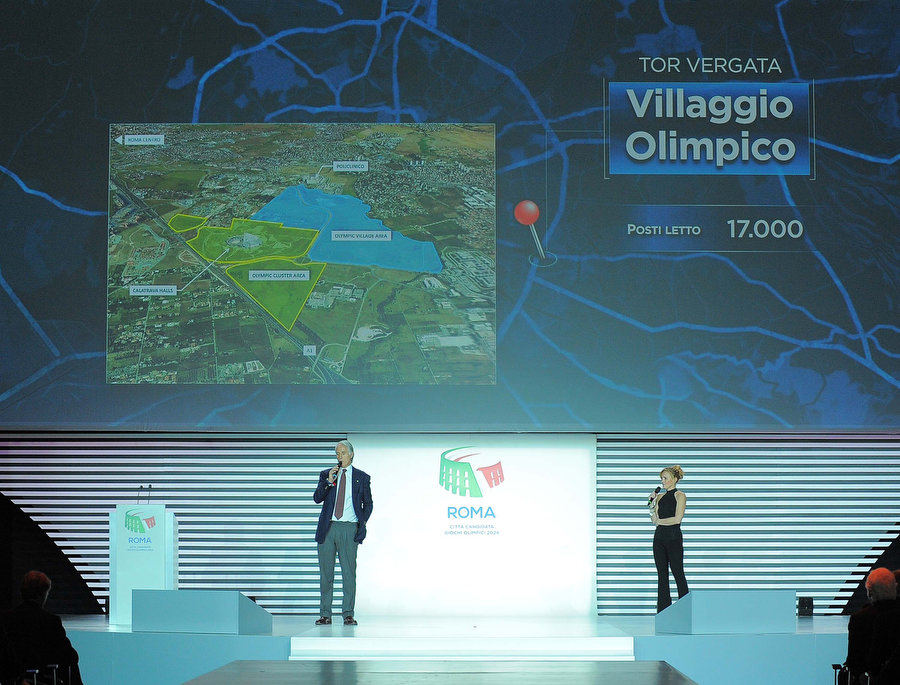 On the other hand it was Malagò and Bianchedi who described the venues and the cluster that would host the various disciplines. In the words of the President (click here to see the slides of the speech) "In addition to Rome there are 10 cities involved with the football tournaments. The choices made for the games, and the choice of Cagliari for sailing, will involve the whole of Italy as these cities are connected to each other by plane or high speed train. A strong feature of Cagliari is that it is next to a large oasis. The environmental component is central to the candidature of Rome, and of the country as a whole. I thank you, just stay close and help us to do these things with passion.”
The music from the Oscar winning Ennio Morricone will be the soundtrack of the Olympic dream of Rome on the occasion of the IOC in September 2017. "I am that will accompany the presentation in Lima for the final challenge." The show at Palazzo dei Congressi was brought to a close by the images of another Oscar prize winner, film director Paolo Sorrentino, taken from the film “The Great Beauty”, together with the performances of soprano Olivia Salvadori and of Castellitto: Rome demonstrated to have all the credentials to aim for victory, both through the arts and through sport.
Mattarella to Malagò and Montezemolo: “Olympics are Italy’s crossroads, as in 1960”
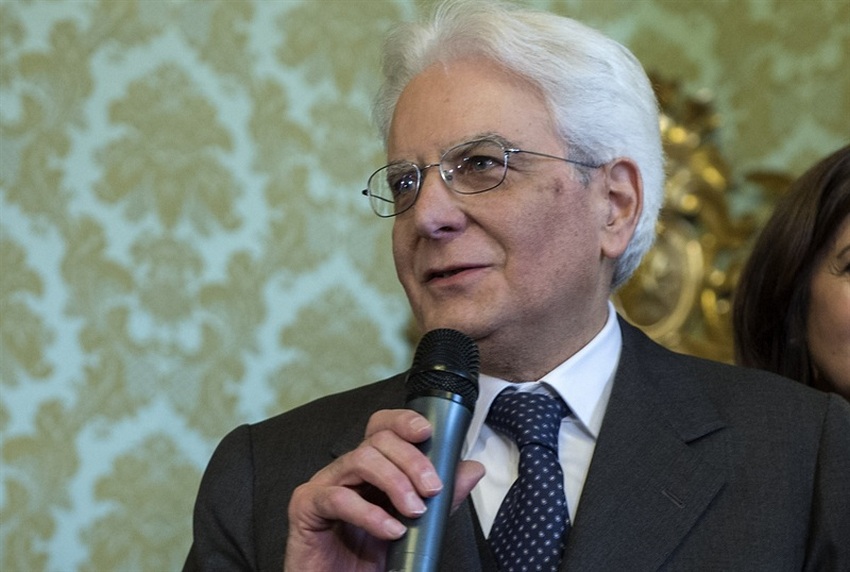 The President of Italy, Sergio Mattarella, sent a greeting to the President of CONI Giovanni Malagò and to the President of the Committee for the Promotion of Rome 2024 in occasion of the ceremony for the submission of the dossier for the Olympic and Paralympic Games candidature.
Wada recognises NADO Italy: Gallitelli signs the world code
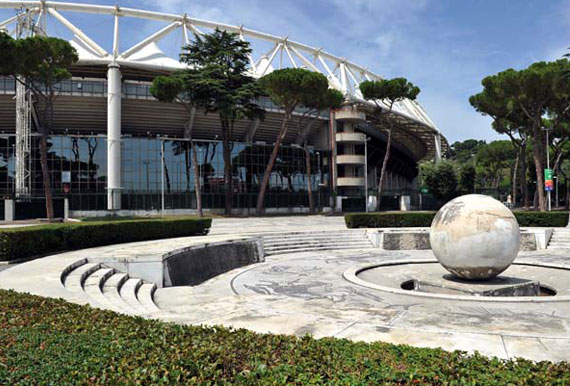 NADO Italy signs WADA's Anti-doping World Code. The document, which constitutes the act on which the World Program of the Agency, was signed Friday 12 February - in compliance with the request advanced by the International Body itself - by the head of NADO Italy, General Leonardo Gallitelli. It is an implicit and authoritative international recognition for the work undertaken by NADO Italy, consituted on 15 September 2015.
Lillehammer 2016, a “fabulous” ceremony. Italian Sensation with Schwarz
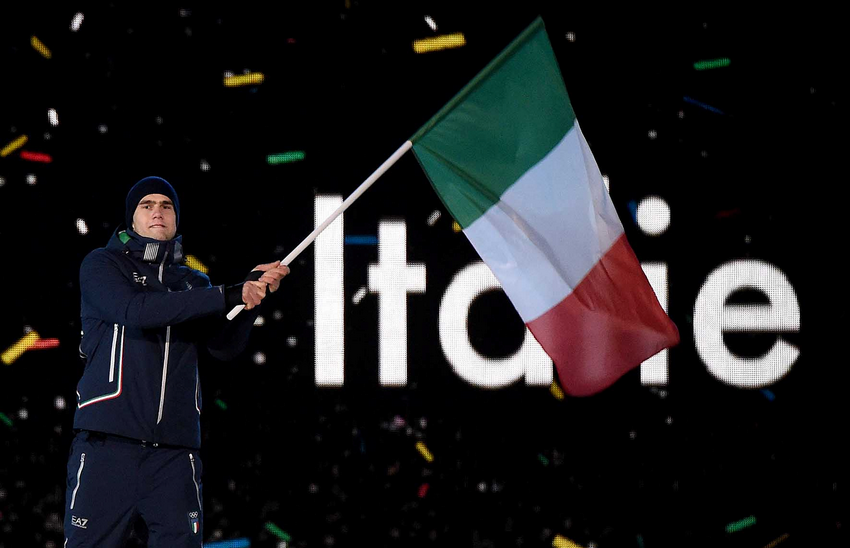 A fable on stage, history as the backdrop. "The boy who wanted the world" is the title of the evocative short story screened at the ysgardsbakken Ski Jumping Arena, one of the iconic venues that in 1994 allowed Lillehammer to write an unforgettable Olympic chapter, thanks to the XVII edition of the Winter Olympic Games. It is the thread chosen to celebrate another opening ceremony: 22 years after the flame is lit for the second act of the YOGs. Italy parades behind the beardless features of Felix Schwarz, nevertheless already (youth) world champion (in the photo Augusto Bizzi), luger and standard-bearer for the 37 Italian athletes, guided by Anna Riccardi, Head of the mission, escorted by ex luger Sandra Gasparini (Young Ambassador) and cheered by CONI President Giovanni Malagò and by the Vice Secretary General and Head of Olympic Preparations Carlo Mornati.
The amazing sight of the Norwegian cold is triggered together with the spark that lights the world, and travels lighting up the path of a boy who tried to fulfil a fantastic dream: to become a great skier, the best in the world, cultivating his talent selflessly and with spirit of sacrifice. But the competition disheartens him, does not allow him to fulfil his resolution, making him progressively lose his "sacred" fire, distancing him from the objective, until when in the stadium a legendary figure appears - taking the semblance of the champion Marit Bjorgen - with Olympic flame, which reignites the hope, kindling the sleeping passion. The torch is passed to Her Royal Highness, Ingrid Alexandra, Olympic torch bearer after the winner of the cross-country ski Olympic Games, repeating the rite of 1994, when it was her father, His Royal Highness, Haakon Magnus, to sanction the beginning of the Games. It is the fire of the five circles that pierces the darkness of the Norwegian night, gifting us with a life lesson: the metaphor of daily life, the authentic sense of sport, passion, courage and resolve are the key elements to reach the most ambitious finishing lines.
There were many protagonists in the event: King Harald and Queen Sonja, Prince Haakon, Princess Mette Marit, the apex of Norwegian royalty. The athletes’ parade, all strictly in group with no separation along national lines, preceded by the appearance of the Kringsja Twirling team (European youth champions in October), was saluted by the words of the President of the Committee for the Organisation of the Lillehammer 2016, Siri Hatlen, and by the speech of Thomas Bach, President of IOC, which preceded the opening of the Games, proclaimed by King Harald. Six champions successively handed over to the same number of Norwegian gifted sportsmen the Olympic banner, to symbolically seal the promise: Eric Alard (Bob), Yun Kim (Figure skating), Stine Lise Hattestad (Freestyle), Bjorn Daehlie, Anita Moen Bonden (Cross-Country Skiing) and Espen Bredesen (Jump) ideally handed over to the young recruits the responsibility to honour the values that animate the Olympic path. At the end many smiles and fireworks: a pyrotechnic epilogue to launch the challenge into the future. Nine days of competitions, 1000 athletes, 70 Countries: now the five circles that unite the world under the banner of sport live in Lillehammer and are called YOG.
The Committee unveils the Olympic project. Over one thousand guests on February 17th at Palazzo dei Congressi Eur
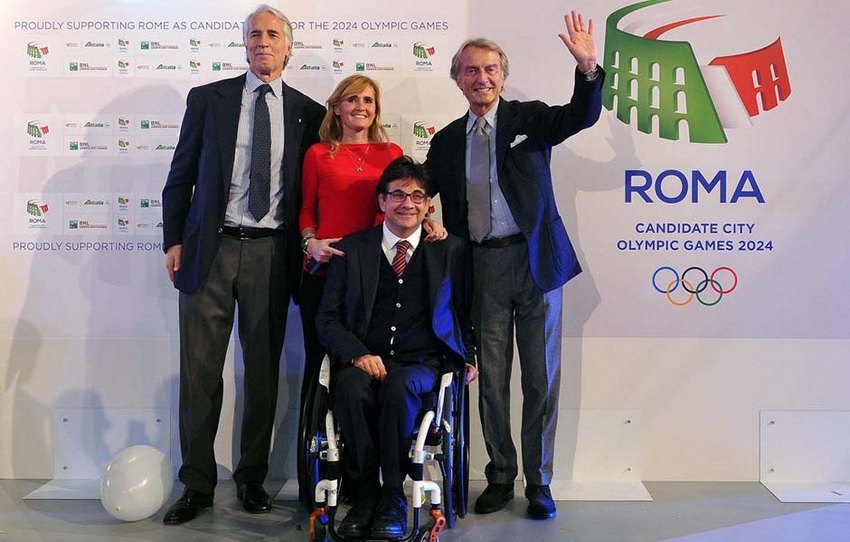 The Rome 2024 Committee, approaching to the great dream of the Olympic and Paralympic Games, mobilizes institutions, investors, municipalities, the media, companies, universities and the sport world to explain in detail the candidature project. The meeting will take place on February 17th, 10 am, at the Palazzo dei Congressi Eur with over a thousand guests expected.
The Rome 2024 Committee will present to the city the Vision of the project as well as its economic budget, the effect on employment and all the opportunities and the benefits that the Games would offer to the country. On the same morning the bid documents will also be submitted to the International Olympic Committee (IOC) in flash drivers, reducing the environmental impact to its minimum.
It is expected to be a great show, livestreamed, which will see on stage the President of the Rome 2024 Committee Luca di Montezemolo, CONI President Giovanni Malagò, the Vice President of the Bid Committee Luca Pancalli, General Coordinator Diana Bianchedi and athletes relations manager Fiona May.
The Sport School celebrates 50 years with an agreement with De Agostini. Malagò, it remains a unique reality
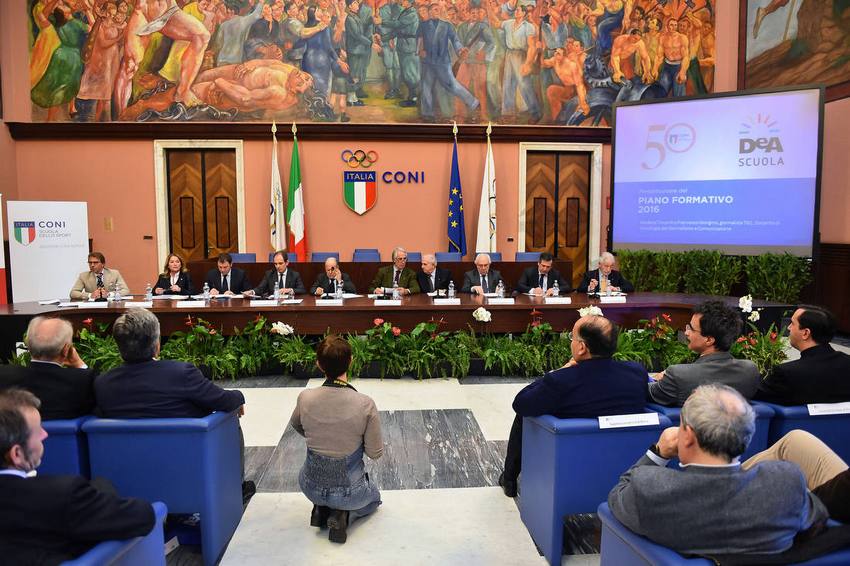 CONI’s Sport School is 50 years old and celebrates them by signing a prestigious agreement with De Agostini Scuola, one of the most important school publishing operators, involving the publication of three new volumes shared between De Agostini Scuola and CONI Sport School, aimed at Secondary School students in their first and second year and the proposal of training courses and CPD seminars for teachers, held by CONI experts and organised by De Agostini Scuola, which since 2013 is the official Training Authority recognised by the Ministry for Education, University and Research.
"Today we present a beautiful and important thing - emphasises CONI President Giovanni Malagò, with an appearance at CONI’s Salone d’Onore (photo Mezzelani GMT) -. On 05 May 1966, the National Board, in its 212nd meeting passed a resolution to authorise the birth of the Central Sport School. The sporting world owes to Giulio Onesti the creation of a successful sporting model that to this day, at a distance of years, conserves strength and originality. CONI is a unique model in the world and the Sport School, in representing the efforts of CONI towards sport culture, confirm its uniqueness". An effort that can be already seen in articles 2 and 3 of CONI's Statute, which specify the principles to "ensure that every young athletes receives an educational training that is complementary to his/her sport training". "Fifty years ago as today, the aim was and is to create highly specialised personnel, to care for technical, scientific and methodological progress in the sport context through studies, research, cultural and technical exchanges at the Italian and today mostly international level - continues Malagò -. The Sport School was born after Italy hosted the Cortina 1956 Olympic Games, in a historical period that constituted a fundamental social and economic change for our country. Today, change occurs much more rapidly and produces effects in less time compared to the past, due to the increase in scientific knowledge and to technological acceleration. Olympic sport is one of the contexts in which this trend is strongest. The challenge faced by Italian sport and of the Olympic Committee is to invest in the future through the Olympic candidature, but also with the training of coaches and directors that operate in our world to plan today the results of tomorrow".
The School, therefore, must not only keep up with the times, but must also be able to anticipate them. "2016 provides a renewed, original and novel offer - explains the President -. In some cases, it registers also a widening of the training offer by 20% compared to 2015. Compared to 2013, when I become President, the Sport School has reduced management costs and yet registered an increase in the training offer by 65% and increase income and revenues by 44%. I wish to praise CONI SERVIZI, Rossana Ciuffetti and the institute, but one must still do more". The three-year partnership with De Agostini is born with this perspective in mind. "We have launched this strategic collaboration with De Agostini, which is a point of excellence of our country, not only under the industrial profile but also for its social and cultural value - adds Malagò -. It will permit sport to enter into schools with content relating to values and education and to sport and its technical aspects. This collaboration is set to grow mainly in two areas: editorial products and the training of physical education and exercise science teachers. The competition is global, the bar is always higher both because it is required outside our country and because we are the first to want to raise it. We need rigour, work, training, method, but also innovation and creativity. Training needs a long-term plan to generate structural changes that promote ideas and visions. And we have many ideas and visions. Happy birthday Sport School" "For us, this agreement with CONI is an honour and a satisfaction - declared Gian Luca Pulvirenti, president of De Agostini Scuola - We are market leaders in exercise science but we want to grow further. Our aim is for our books to reach 50% of the school market share and together with CONI we can do important things. We chose the Olympic Committee not only because of the prestige and the medals, but because we want to promote a better sport culture and a correct lifestyle".
The three volumes open with the presentations signed by three Italian champions such as Tania Cagnotto, Federica Pellegrini and Antonio Rossi - present today at the presentation -, who instil into the youth the passion for sport and its value in everyday life. As for what concerns training and professional development, on the other hand, the agreement is enriched by three seminars that will be held by Sport School experts: "Play in physical education", "motivation and team building" and "The use of technology to evaluate motor ability". The Olympic Committee was represented this morning also by secretary general Roberto Fabbricini, who, as Master of Sport, did not hide his excitement in talking about a School that "has produced individuals that have made the history of Italian sport". The president of CONI SERVIZI Franco Chimenti reaffirmed that "sport is culture", highlighting what has been achieved by the School to this date. Alberto Miglietta, managing director of CONI SERVIZI, on the other hand, admitted that "it is an honour to bring into being the project of the new CONI: transform the Sport School in the real house of sport culture, in all its aspects".
Antonio Urso, President, coordinator of the relations and activities between the School and the Institute of Sport Medicine and Science, took the floor on behalf of the School, explaining that the aim is to "try to understand what is necessary today for coaches and for the various roles that revolve around the sporting world to be able to reach tomorrow with a quality and culture that is able to produce results". Professor Marcello Marchioni, national appointed delegate for Regional Sport Schools, focused his attention on the fact that "across the country there are 240,000 coaches, 500,000 voluntaries and other interest bearers: a network that bears CONI in high consideration and the regional schools are a point of aggregation and discussion". The training plan was then illustrated by Rossana Ciuffetti, Sport School director. "This is a special year - she explains - the Olympic year, and we also have the youth Olympic Games, we looked at the interests and we have put together a technical sport program devoted to coaches: we talk about competitive intelligence, tapering, recovery, and we have tried to bring to the School the most important figures, also from the international arena". Nevertheless, after 50 years the School still wants to grow, promoting exchanges also with universities: from the synergy with Foro Italico University, to the collaborations with Tor Vergata University, with LUMSA, with Parma University and with LUISS.
Page 94 of 146