Press release
CONI wishes to inform that the news regarding the appointment of a future General Director of the Organizing Committee for Rome 2024, appeared this morning in a certain sports daily newspaper, is totally unfounded.
CONI and the other bodies involved in said designation will – as repeatedly stated – communicate the final composition of the "team" at the beginning of next week.
Baku 2015 on track to deliver fantastic event, says EOC
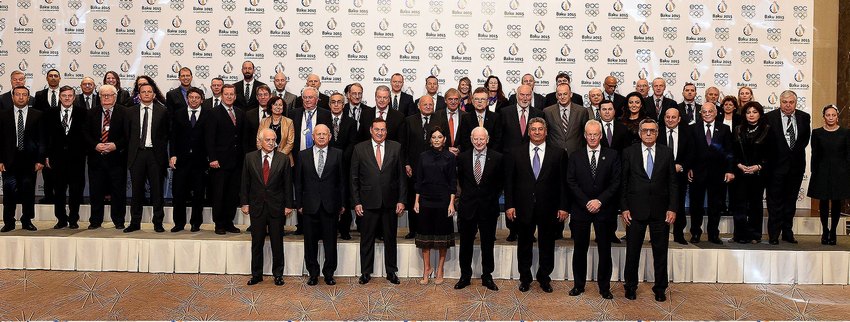 Baku 2015 European Games and the European Olympic Committees (EOC) today concluded the final visit by the EOC Coordination Commission, a high-level body of delegates charged with overseeing progress towards the inaugural European Games, to be held this summer in Azerbaijan’s capital city. Commission members received a full briefing on preparations by each Baku 2015 directorate. In addition, they took a tour along the Games Route Network and visited venues including the Baku Shooting Centre, Mountain Bike Velopark, Heydar Aliyev Arena, and a drive-by of the European Games Park.
They also attended the opening ceremony of the Baku 2015 Uniform Distribution and Accreditation Centre, where participants in the Nar Mobile-supported Flamekeeper volunteer programme will register and collect their uniforms.
Mr Azad Rahimov, Azerbaijan’s Minister of Youth and Sports and Chief Executive Officer of Baku 2015, said: “We now have a little more than four months until the Opening Ceremony. There remains much to do, but the momentum we have built will not falter for a second. “We will spare no effort in ensuring that the first European Games are an inspirational celebration of sport and friendship for the whole continent”.
EOC members praised the impressive progress which has been made since Baku was awarded the right to host the Games in December 2012. Mr Patrick Hickey, President of the European Olympic Committees, said: “This EOC visit to Baku ahead of the first European Games has confirmed that the city is fully prepared to host an unforgettable event. To have achieved so much in two years is a testament to Azerbaijan’s dedication to hosting the Games, and Europe’s athletes and sport fans will be delighted with the high standard of venues and facilities which await them. Baku 2015 will be the perfect launch-pad for the European Games”.
Mr Spyros Capralos, Chairman of the EOC Coordination Commission, added: “Baku 2015 is on track to deliver an outstanding inaugural European Games. BEGOC is entering the final phase of preparations now, and every day counts. But they have delivered on all their construction targets so far and I am very confident that Baku will be ready in good time. In addition, these Games will be innovative, which will act as a great blueprint to guide future European Games host cities. I am very much looking forward to coming back in June for the Baku 2015 Opening Ceremony". Mr Simon Clegg, Chief Operating Officer of Baku 2015, said: “With 126 days to go before the start of the European Games, we are now entering the final straight, and the visit by the EOC Coordination Commission has been an excellent opportunity to update members on our progress and take stock of what we have achieved so far. “The Games will be a historic occasion for Azerbaijan and Europe, and we intend to continue working hard to deliver on our commitment to stage a world-class event until the very last guest leaves after the Closing Ceremony”.
CONI-NAS agreement to be presented on February 9
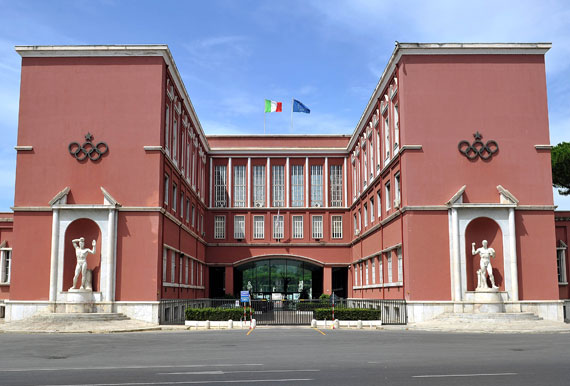 The press conference for the signing of the new anti-doping framework agreement between CONI and NAS will be held on Monday, February 9, from 11:30 in the Hall of Honors of the Foro Italico. The presentation will feature, among the others, the President of CONI, Giovanni Malagò, the Commanding General of the Carabinieri, Tullio Del Sette, the Commanding General of the NAS, Cosimo Piccinno, the Under-secretary to the Presidency of the Council of Ministers with responsibility for the Sports, Graziano Delrio and Minister of Health, Beatrice Lorenzin. All the managers of CONI-NADO anti-doping organizations have also been invited to the conference.
Integration in sport, agreement with the Ministry of Labor and Social Policies renewed
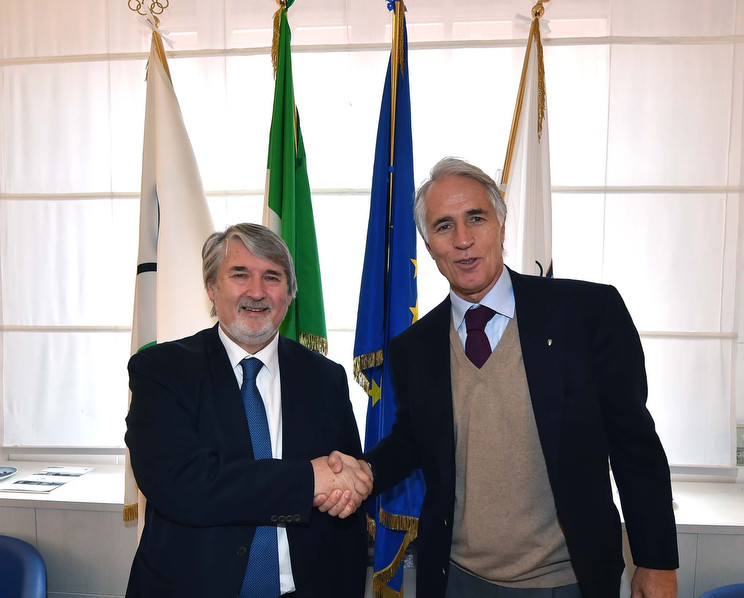 Today, in the Hall of Honor, the President of CONI, Giovanni Malagò, and the Minister of Labor and Social Policies, Giuliano Poletti, presented the renewal of the program for the promotion of integration policies through sport. The agreement was conceived in 2014, its goal being to develop a synergistic action aimed at creating activities to facilitate the integration of the foreign population into the economic, social and cultural panorama of the country, while opposing all forms of intolerance and racial discrimination. The 2015 project introduces three new areas: Sport Citizenship – which aims to combat the factors that separate young Italian citizens and people with a migratory background in the context of accessing and practicing sport -, an educational campaign aimed at schools and the spreading of "best practices".
The General Secretary of CONI, Roberto Fabbricini, the General Director for Immigration of the Ministry of Labor, Natale Forlani, the Head of Strategy and Social Responsibility of CONI, Teresa Zompetti, and Diana Bianchedi, a member of the Scientific Committee, also attended the press conference in the CONI Hall of Honor.
Malagò emphasized the Italian sporting community’s pride in the renewal of the agreement. "This project is very close to our hearts. We commit ourselves to it. The minister Poletti also agrees with our objectives. It is all about integration, through which we want to remove any obstacles to transform our dream of sport citizenship into a legislative reality. We do not want to penalize ourselves nor change the terms but we want to exploit this path, with the aid of the Ministry, to achieve extraordinary results in the social field".
Minister Poletti also stressed this concept and its importance. "Our country does not like to make evaluations, but in this case I would say that we have taken the first steps in this integration project, and we want it to grow. We must be fully aware of the fact that the health of a community is linked to the social wellbeing of each of its citizens. To do anything, you first have to remove the obstacles. That is the right way. Our commitment is to improve the agreement, by including the idea that sport is one of the keys to community building, and to create tools that develop and anticipate legislative action in this regard".
Teresa Zompetti, Head of Social Responsibility at CONI, outlined the contents of the renewed program. "To bring about a cultural change we need to develop a process based on the principles of the manifesto drawn up last year, which is itself based on the principle of sport citizenship. We would like this principle to become a proposal through the recognition of the uniqueness of our movement. To do this, we need to remove the differentiating factors among Italian and foreign young people, promote the educational campaign aimed at primary schools and gather the best practices of the various bodies on the theme of integration and sport".
Natale Forlani, General Director for Immigration of the Ministry of Labor, recalled the genesis of the project. "It is an initiative created to improve integration and also to fight racism in sport. Today, we consolidate this purpose and we raise the idea of forging a strong identity through the creation of a community: in this regard, sport can become a model. In Italy, there are about a million young foreigners, half of whom were born in our country. We can work on a formidable basis, and the kids of the second generation are perfect testimonials in that respect".
Diana Bianchedi praised the idea of sport citizenship as "the key step for more effective social integration, because in every team recognition is based on the achievement of a goal. It is a way to remove all differences." During the conference, various athletes also gave witness to this concept: Valentina Diouf (Volleyball), and 4 other representatives of athletics, José Bencosme de Leon (400m hurdles), Ivan Mach Di Palmstein (110m hurdles), Jean Jacques Nkouloukidi (Racewalking) and Kevin Ojiaku (Long jump), explained the important role of sport in "breaking down all barriers with brotherhood and loyalty." The most beautiful manifesto of integration in the name of competitive movement.
Carolina Kostner’s case, communication of the National Anti-Doping Court on the grounds of the ruling
 The Second Chamber of the National Anti-Doping Court has filed today the motivations for its judgment rendered on January 16, 2015 by which Carolina Kostner was disqualified for one year and two months. The athlete was held responsible of helping Alex Schwazer avoiding a doping test, and therefore of committing unlawful action as provided in art. 2.9 of current rules, but was also acquitted of not having denounced her then boyfriend for his meetings with Dr Michele Ferrari.
In the motivations filed today, the National Anti-Doping Court has stressed that Carolina Kostner has not undertaken any action that would associate her to any doping practice, nor covered Schwazer in his taking illegal substances. The athlete, however, was convicted of having consciously lied to the officer in charge of taking blood samples when he showed up in Oberstdorf to test Schwazer on July 30, 2012. The art. 2.9 of current NSA punishes the assistance in any violation of anti-doping norms, not only in taking any illegal substance (art. 2.1 or 2.2 of the NSA) but also in avoiding a test (art. 2.3 NSA). Furthermore, the diversity of subject in the violation does not devoid the act of its seriousness: conducting spot-checks outside a competitive context is essential for an effective contrast of doping.
At the same time, the National Anti-Doping Court considered that the behavior of Carolina Kostner was influenced by several factors, thus lessening the degree of her guilt. Among those elements, the National Anti-Doping Court has emphasized the fact that the athlete acted on a request made by the person she loved; the sudden nature of the request, which required an immediate answer; the absence of elements that would suggest that the behaviour of the athlete was predetermined; the fact that the athlete took immediate steps to ensure that Schwazer could reach the place of the test; and the fact that the athlete, while aware of her assistance in avoiding the test, did not know that Schwazer was using banned substances. These elements justified the reduction of a two-year sanction to one year and four months, based on a standard that allows the maximum reduction to a ban of one year. It is now possible for the athlete, but also for UPA and WADA, to file an appeal to TAS against the ruling of the National Anti-Doping Court.
Collio, Checcucci and Donati acquitted by National Anti-Doping Court
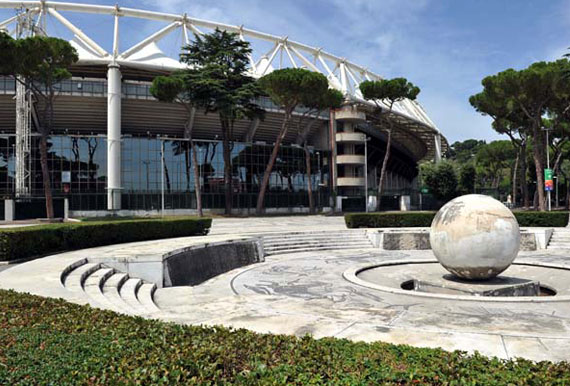
The Second Chamber of the National Anti-Doping Court met today at the Olympic Stadium in Rome to deliver judgments on the proceedings filed against Simone Collio, Maurizio Checcucci and Roberto Donati (FIDAL members) following the referrals issued by the Anti-Doping Prosecutor's Office.
The Court acquitted the three athletes according to Anti-Doping Standards for Sports in force at the time, and to the Anti-Doping Sport Code (CSA 2015), in force since January 1, 2015, where applicable as Lex mitior; for Collio and Checcucci, Art. 40.1 of CSA 2015 was also applied.
CONI-UnipolSai partnership confirmed, Young Italy Team presented
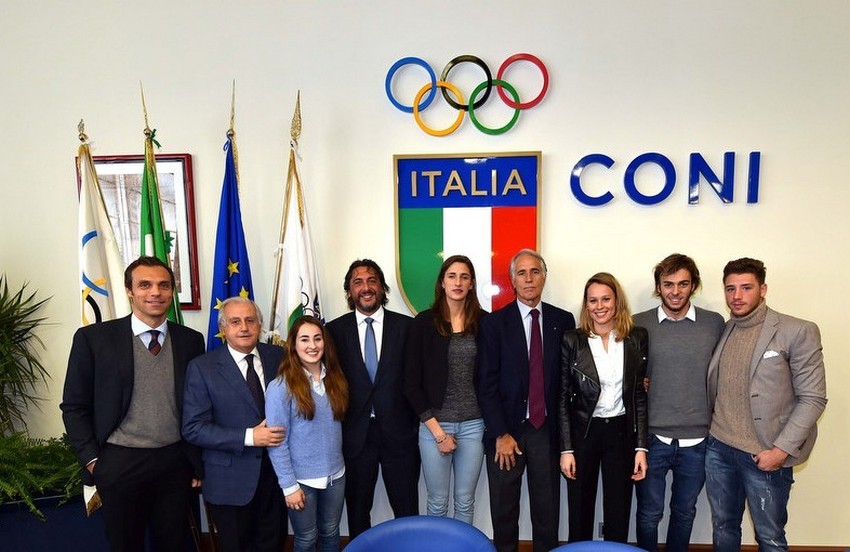 This morning, in the Board Room of the Italian Olympic Committee, The President of CONI, Giovanni Malagò, and the CEO of UnipolSai, Carlo Cimbri, presented the partnership that will bind CONI and UnipolSai until 2017.
Giovanni Malagò expressed satisfaction for this agreement on behalf of the Italian sport's world. "I am proud and honored by this union and I hope it will last forever. UnipolSai is a successful brand, a strong Italian reality that makes us endlessly proud showing sensitivity towards our world and highlighting its social importance. This agreement also has an important value in view of the forthcoming international challenges and the candidacy of Rome for 2024 Olympics".
Carlo Cimbri further expanded the motivations expressed by Malagò, illustrating the reasons that allowed the partnership with CONI to become a reality. "For us, this agreement represents a further step in association with Italian sport, after the experiences with FIN and FIDAL. This relationship was born under a lucky star: we are the largest Italian company in the insurance industry and we like to support professional sport in its broadest meaning, as a symbol of sport accessible to everyone, an extraordinary vehicle of trust and rebirth for the whole country. UnipolSai will closely cooperate with the Olympic Committee to make the dream of Rome 2024 come true".
UnipolSai Young Italy Team, a team of young athletes, standard-bearers of Italian sport's excellence and values in the world, led by Federica Pellegrini, was also presented during the event. Those values are also shared and promoted by UnipolSai in its everyday activities for the safety of millions of Italians and in its commitment towards the community and the whole country. Designed and supported by UnipolSai Assicurazioni, the UnipolSai Young Italy Team project includes an agreement with the athletes for 2015 and 2016. In addition to the "godmother" and spearhead of Italian swimming team, Federica Pellegrini, that will act as a tutor to the young members of the team, the UnipolSai Young Italy Team includes: Vincenzo Abbagnale (Rowing), Eseosa Desalu (Track & Field), Carlotta Ferlito (Artistic Gymnastics), Andrea Fondelli (Water Polo), Gregorio Paltrinieri (Swimming), Alessia Trost (Track & Field).
Federica Pellegrini gave voice to the satisfaction of the Italian athletes who attended the presentation of the agreement. "I am grateful to UnipolSai for this initiative. I proudly put my experience and my desire to win at the service of the team in view of the Olympic Games of Rio in 2016".
National Anti-Doping Court scheduled Alex Schwazer's hearing for February 12
Following the referral of the athlete Alex Schwazer by the Anti-Doping Prosecutor's Office on January 9, 2015, the President of the Second Chamber of the National Anti-Doping Court of CONI has scheduled a hearing for February 12, 2015 at 12:00 p.m. in the offices of the Olympic Stadium in Rome.
The National Anti-Doping Court disqualifies Carolina Kostner for 1 year and 4 months
The Second Chamber of the National Anti-Doping Court, at the end of the hearing held today at the Olympic Stadium in Rome, has disqualified the athlete Carolina Kostner (FISG Member) for 1 year and 4 months.
Here is the text of the disposition: "Given the referral of November 28, 2014, with which the Anti-Doping Prosecutor's Office has charged Ms Carolina Kostner for the violation of art. 2.8 and art. 3.3 of Anti-Doping Sport Law (NSA) as in force at the relevant time; Given the NSA in force at the relevant time; Given the Anti-Doping Sport Code approved by the National Board of CONI on November 18, 2014 in force since January 1, 2015 (also known as CSA 2015), where applicable as Lex mitior; The Second Chamber of the National Anti-Doping Court hereby: - Affirms the responsibility of Ms Carolina Kostner for the violation of art. 2.8 of the NSA (art. 2.9 of the CSA 2015); - As provided by art. 4.3.4 and art. 4.5.2.1, imposes on Ms Carolina Kostner a disqualification for 1 (one) year and 4 (four) months with effect from January 16, 2015 and expiring on May 16, 2016; - Acquits Ms Carolina Kostner of the violation of art. 3.3 of the applicable NSA; - Orders Ms Carolina Kostner to pay the costs of the proceedings, calculated as a forfeit sum of EUR 1.000,00 (one thousand/00); - Orders this decision to be communicated to the addressee, UPA, WADA, ISU and FIGS".
National Board announcement
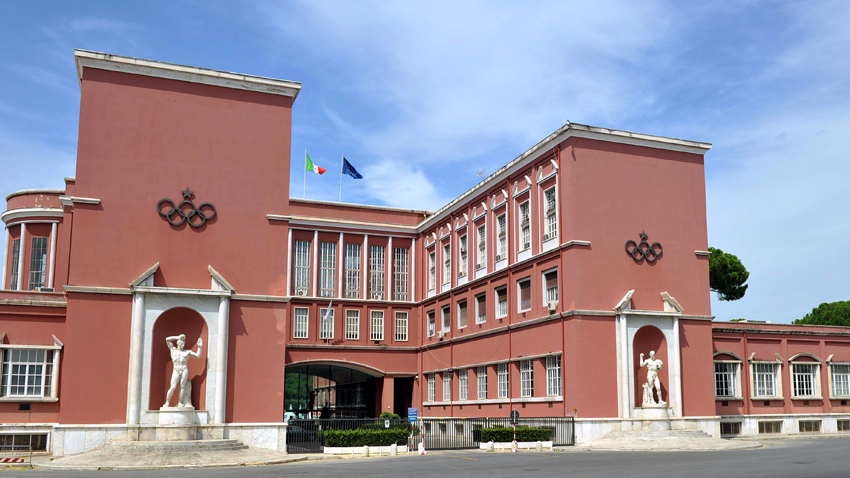 The Foro Italico hosted this morning the 1031st CONI National Board Meeting, which began its work by approving the minutes of the previous meeting, held on December 18, 2014. In its first communications, President Malagò informed the Board on the recent contacts with the Government about the candidacy of Rome for the 2024 Summer Olympics and the upcoming Organising Committee, which will have an "in-house" structure within CONI and an external Chairman whose name will be made official in the coming weeks. Malagò then proceeded to inform the Board about a number of letters sent by Pro League clubs Presidents requesting the convening of an Assembly; the President of Federcalcio, Tavecchio, gave Pro League until February 5 to convene said Assembly. The Board took note. The Board then proceeded to determine and approve the composition of the delegation that will participate in the 2015 winter edition of the European Youth Olympic Festival that will be held in Vorarlberg (Liechtenstein) from January 25 to 31; the head of this mission will be Alessio Palombi. The Italian Federation of Ice Sports (FIGS) was granted the permission to appoint the new Federal Secretary in the person of the Olympic champion Ippolito Sanfratello. Lastly, the Board expressed its satisfaction on the matter of the extension for the application of the spending control standards contained in the ISTAT list for the National Sports Federations. After reviewing a long list of other organizational and administrative issues, and having taken the relevant resolutions, the Board ended its work at 12:20.
Page 109 of 146