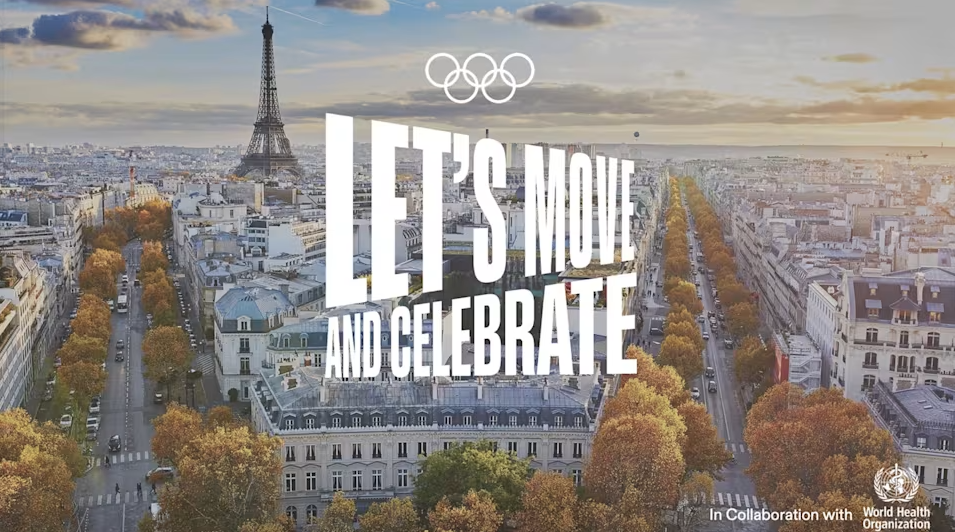
Olympic Day 2024: Let’s Move and Celebrate a summer of sport in Paris
- Olympic Day
Ahead of Olympic Day this Sunday, International Olympic Committee (IOC) President Thomas Bach has highlighted the importance of the Olympic Games Paris 2024 in inspiring the world to move. Four weeks before the Opening Ceremony, the IOC President invited the world to join the IOC’s “Let’s Move” campaign.
“Athletes from all corners of the world and backgrounds are getting ready to participate in the Olympic Games Paris 2024. The athletes will inspire and encourage people everywhere to bring more movement to their lives, making it healthier, better and more joyful. We are very thankful that we could partner up with the World Health Organization again for this very important campaign,” the IOC President said.
He continued: “This year’s Olympic Day is a very special one, taking place just ahead of Paris 2024. The celebrations will set the tone for some exceptional Olympic Games in the City of Light this summer. The athletes, the fans, the entire Olympic community – all of us – are looking forward to Paris 2024: more inclusive, more urban, more sustainable. The very first Olympic Games with full gender parity. The very first Olympic Games aligned with the reforms of Olympic Agenda from start to finish.”
Olympic Day, established in 1948, is the global celebration of sport and getting active that takes place on 23 June each year to commemorate the day the IOC was founded in 1894 by Pierre de Coubertin. With Paris 2024 taking place in Coubertin’s birthplace, this summer is a special opportunity to demonstrate, once again, the power of the Olympic Games to unite the world in peaceful competition.
“The Olympic Games always build bridges, never erect walls. They unite people in peace and solidarity. This is the beauty of sport: it inspires us to move, it brings out the best in us, it keeps us healthy, and it brings us all together – as friends and as a community, wherever we are and whichever way we choose to move,” President Bach underlined.
Let’s Move towards Paris
This year’s Olympic Day theme, Let’s Move and Celebrate, aims to ignite a collective passion for the Olympic Games Paris 2024 by encouraging people to get active and feel connected through sport.
“On this very special Olympic Day, let us celebrate the joy that only sport can give us. Together with all of you, I look forward to the Olympic Games Paris 2024 for an unforgettable celebration of the joy of sport, for a celebration of our shared humanity, for a celebration of peace. Let’s move and celebrate!”
Launched in collaboration with the World Health Organization (WHO) on Olympic Day 2023, Let’s Move is an ongoing initiative spearheaded by the IOC that invites everyone to make time for movement every day. Last year, it led more than 15 million people to embrace the joy of incorporating 30 minutes of daily physical activity into their lives.
With people more likely to maintain consistent exercise routines when activities are enjoyable and accessible, and research by WHO finding that 81 per cent of adolescents are not active enough for their health, Let’s Move and Celebrate aims to make sport feel more natural, inclusive and fun.
Along with the activities organised by National Olympic Committees (NOCs) around the world to commemorate Olympic Day 2024, the IOC is bringing sport and social media together to create a different experience. As part of Let’s Move and Celebrate, everyone is encouraged to show their support for athletes at the Games by creating, or recreating, their own iconic celebration moves, and to share these online with @Olympics and #LetsMove.
Global celebration of the modern Games
NOCs in all corners of the world, together with Olympic hosts and the wider Olympic Movement, will hold mass participation events and digital activations, providing an opportunity for everyone to move together. They will be joined by Olympians, including those getting ready to compete at Paris 2024.
In Lausanne, there will be the traditional Olympic Day run in the Olympic Capital, while in Budapest, unique activations such as Let’s Move fan booths and 30 minutes of sports activity will take place during the Olympic Qualifier Series (19 to 23 June).
Iconic landmarks across the world will also be lit up in the Olympic colours on 23 June to celebrate together.
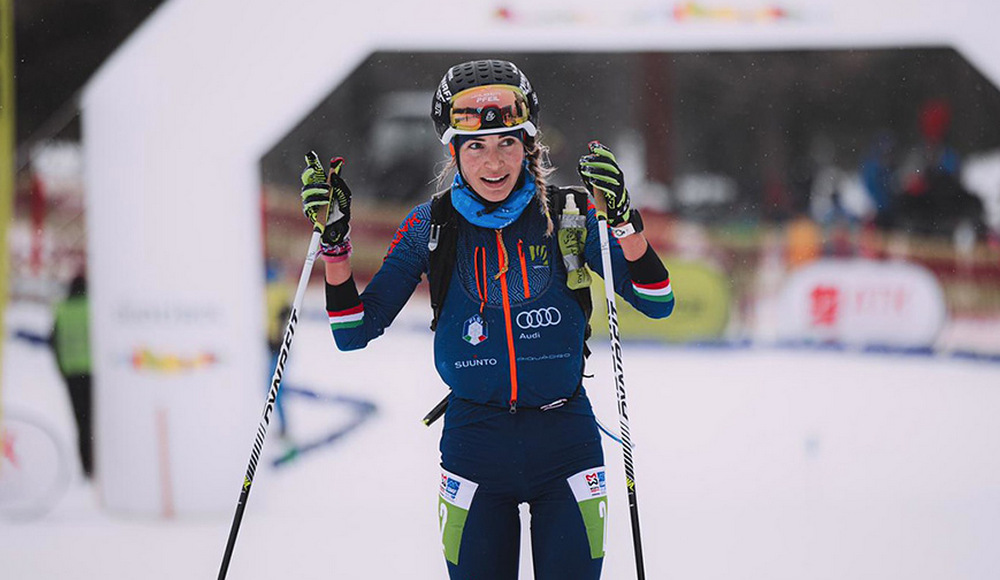
Coppa del Mondo: De Silvestro e Boscacci terzi nella staffetta mista di Cortina d'Ampezzo
- SCI ALPINISMO
C’è anche l’Italia sul podio nell’ultima gara stagionale della Coppa del Mondo di sci alpinismo.
La coppia composta da Alba De Silvestro (foto FISI) e Michele Boscacci, infatti, ha centrato il terzo posto nella staffetta mista di Cortina D’Ampezzo.
Sul circuito di Col Gallina, in una prova condizionata dalla neve battente e dal forte vento, ad aggiudicarsi il successo sono stati i francesi Emily Harrop e Thibault Anselmet (33:43.45), riusciti a tagliare il traguardo di fronte agli austriaci Johanna Hiemer e Paul Verbnjak (+8.05) e al tandem azzurro (+30.49).
Quest’ultimo, in virtù di due ultime frazioni ben condotte, ha prevalso nel duello per il podio nei confronti degli svizzeri Marianne Fattonne e Patrick Perreten (+45.28) e degli spagnoli Ana Alonso Rodriguez e Iñigo Martinez de Albornoz (+46.83).
Per De Silvestro e Boscacci si tratta del terzo podio stagionale sul massimo circuito dopo il doppio trionfo firmato rispettivamente a Boí Taüll (Spagna) e in Val Martello.
L'Italia, infine, grazie a 443 punti complessivi, ha potuto festeggiare la conquista della Coppa per Nazioni di specialità di fronte alla Francia (428 punti) e alla Spagna (412 punti). (agc)
Women's epee: National team wins World Cup event in Barcelona and flies to Olympic Games
- FENCING
There will also be a women's national epee team at the Paris 2024 Olympic Games.
The quartet composed of Rossella Fiamingo, Mara Navarria, Alberta Santuccio and Giulia Rizzi (photo Federscherma) beat, in the following order, Japan (38-20), Switzerland (37-32), China (22-21) and Korea (29-28) and won the team event of the World Cup stage hosted by Barcelona.
At this point, qualification for the Olympics is mathematically sealed. This ticket to Paris entitles Italy to participate in the speciality team competition and also to field the maximum number possible, three fencers, in the individual event.
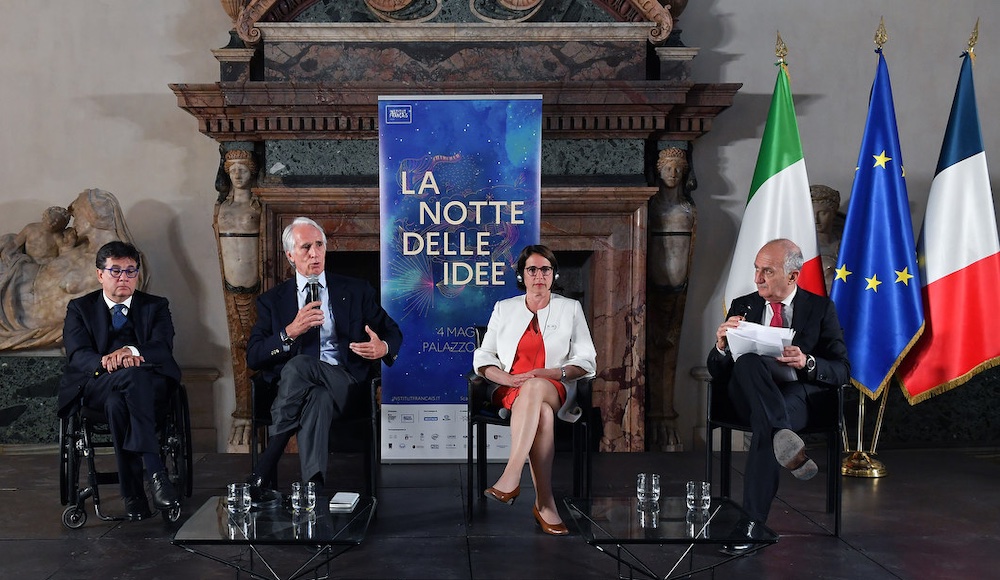
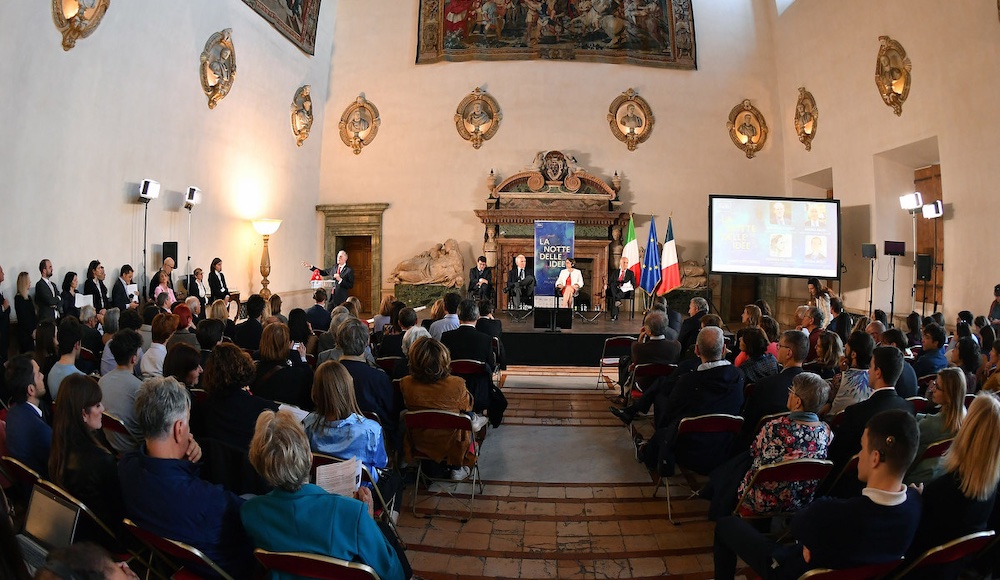
Notte delle Idee about Sport at Palazzo Farnese, Malagò: “An extraordinary liaison with Paris 2024”
- FRENCH EMBASSY
Debates, round tables, readings, projections, visits and sporting performances: all this took place this evening at Palazzo Farnese in the 2023 edition of the Notte delle Idee entitled “Sempre di più? Un mondo in transizione” with the common thread of sport and sustainability.
With just over a year to go before the 2024 Summer Olympic Games in Paris and less than three years until the 2026 Milano Cortina Winter Olympic Games, representatives from many of the institutions of the transalpine and Italian sports movements spoke at the French embassy in Rome: Olympic and Paralympic committees, organising committees of the forthcoming Games, sports federations, anti-doping agencies and protagonists from the world of e-sports.
In an ethical, social, educational and historical sphere, the themes discussed included health, geopolitics, inclusivity, innovation and literature, with the participation of leading Italian and French sportsmen and women such as Federica Pellegrini or Pascal Gentil, and athletes, parathletes, writers and researchers. The Library of the Ecole Française de Rome hosted readings of literary texts on sport proposed by university students, while in the garden and courtyard, demonstrations of Olympic and Paralympic sports (judo, taekwondo, breakdancing, wheelchair basketball, table tennis, fencing and wheelchair fencing) were offered in collaboration with various French and Italian Federations.
“I am very pleased and honoured to welcome you for this Notte delle Idee,” said Christian Masset, French Ambassador to Italy, opening the evening. “I sincerely thank CONI President Giovanni Malagò and CIP President Luca Pancalli and I bring you the greetings of Federica Pellegrini, the evening’s ambassador, who was unfortunately unable to be here due to train issues. The focus of our meeting is sport and sustainability because we are on the eve of the return of the Olympic Games to Europe with Paris 2024 and Milano Cortina 2026. This is a night of ideas, a night of sport, a night of friendship and the promise of a better future".
 “There is an extraordinary liaison between Paris 2024 and Milano Cortina 2026", declared CONI President Giovanni Malagò, in his speech at the round table “Il ritorno dei Giochi in Europa". “There is reciprocity; we have signed several protocols; there are many joint initiatives and next week we will be in Paris as there is a meeting with the European Olympic committees: we will talk a lot about the 2026 Winter Games. I believe that the combination of Paris 2024 and Milan Cortina 2026 in one year and seven months represents the maximum sports offering: we’ll be playing a wild card,” Malagò remarked, confident for the medal haul of the French edition. “Doing better than Tokyo 2020 will be difficult, because we did really well, but we will try: I am optimistic".
“Paris 2024 has great responsibilities", recalled Sophie Lorant, Director of International Relations for the Paris 2024 Olympic and Paralympic Games. “We are preparing a revolutionary Games. We want to organise a spectacular ceremony on the Seine and an Olympic Games for everyone: our aim is to leave a material and non-material legacy".
“I wholeheartedly share Sophie’s speech", said Italian Paralympic Committee President Luca Pancalli. “In the legacy of an Olympic and Paralympic event there is not only the material aspect, on the contrary the most important legacy is an intangible one: cultural and social growth, the ability to set ideas in motion. In Italy we have not only created a Paralympic movement, but we are changing the country by using sport and victories for a silent cultural revolution: by looking at our abilities and educating civil society to become enriched by differences, we will help the country to grow in a civil, cohesive and social way".
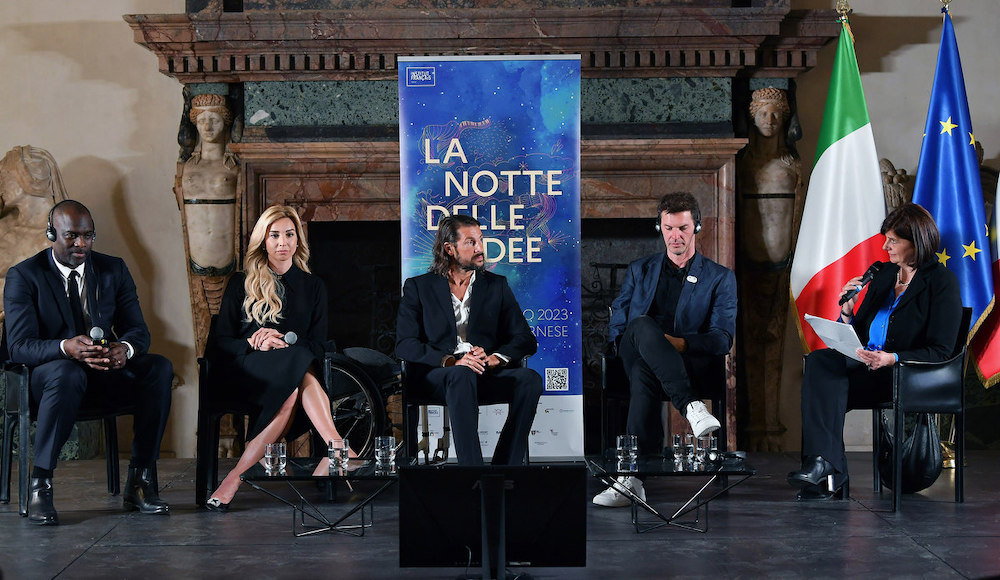
Silvia Salis, Deputy Vice President of CONI, also spoke at the Notte delle Idee, as part of the round table “Vivere i Giochi: la parola ai campioni”, which was also attended by Gilles de la Bourdonnaye, Paralympic table tennis medallist, Pascal Gentil, world taekwondo champion and Olympic medallist, and David Smétanine, medallist in Paralympic swimming. “Major sporting events are a huge opportunity", declared Salis. “Clearly, the Olympic Games have a greater organisational complexity, but they can change the face of a city. Olympics and Paralympics can upturn the sensibility and culture of the country, leaving an important legacy. I think of the missed opportunity of Rome 2024 and look instead at what is happening with Milano Cortina 2026. What do I wish for Paris 2024? My dream is that there is a great result for the Italian team, a personal dream, however, is that the war, this nightmare, is over".
(Photo: Mezzelani/GMT)
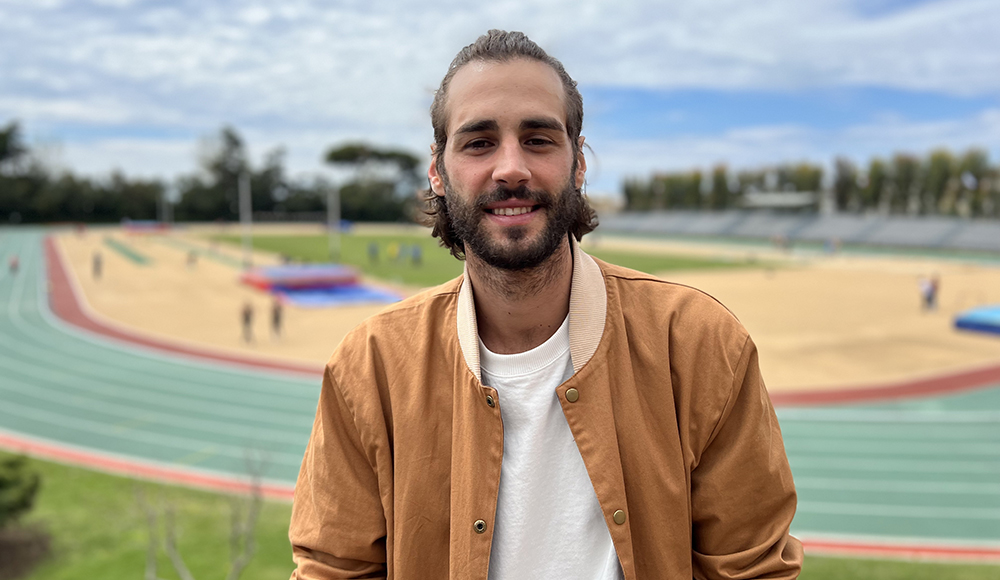
Tamberi at the Olympic Preparation Centre in Formia dreaming of a second Olympic gold medal: “Changes stimulate me. I will try to make history"
- ATHLETICS
Gianmarco Tamberi is revving up his engines ahead of a dazzling outdoor season that will culminate at the World Championships in Budapest. The reigning Olympic high jump champion is at the Olympic Preparation Centre in Formia for biomechanical tests with CONI’s Institute of Sports Medicine and Science.
The 30-year-old from Civitanova Marche underwent a 3D kinematic analysis of the high jump aimed at assessing aspects of the technique not immediately visible to the naked eye. The discipline comprises three different movements that are extremely complex and interlinked: the acceleration phase, turn and take-off. It is a sport in which it is particularly important to work on execution of the technique. The Institute has been using the 3D kinematic analysis of the high jump since before the Rio 2016 Olympic Games and, using the information gathered, has created a data archive that makes it possible to assess the athletes' evolution and development.
“I feel great. Really good", says the Tokyo 2020 gold medallist. “I went through a complicated period with a knee issue and other minor issues that I had been carrying for the last few seasons, but thanks to my team I have put it all behind me and now I am very motivated.” Next, he turns to the tests at Formia: “I do them often, at least three or four times a year. They help me a lot to understand where we are at, the times on the ground, the times in the air, the take-off angles, to see what my best jumps look like. I’m very satisfied: I started jumping again a month ago and I can already see things shaping up nicely. In many areas, things seem to be very good technically".
“Gimbo” is preparing for the outdoor competitions with his new coach Giulio Ciotti and physical trainer Michele Palloni: “I get on very well with them. We are a team in tune, very motivated. There is a lot of dialogue between us. We are aiming high. The season’s goals? All that’s missing is gold at the World Championships, that would be the icing on the cake. At the age of 30, the changes are really pushing me on. I’ve got belief. I’ve really got a lot of belief and I am working to try to win that medal. I will face very competitive opponents, I will do my best to make things hard for them".
Looking even further ahead, thoughts inevitably turn to next year’s main event, not least because Tamberi has already declared that Paris 2024 will be his last Olympics: “I can't wait to be there. I want to live out this remaining year and a half with all the energy I have, to put everything into it and not regret anything. I know I am still strong, I am not going to go to Los Angeles 2028 just to limp over the line. From the World Championships in Budapest in August to the European Championships in Rome 2024 and the Olympics I want to give everything. No jumper has ever managed to win gold twice in a row at the Olympic Games: it would be nice to go down in history".
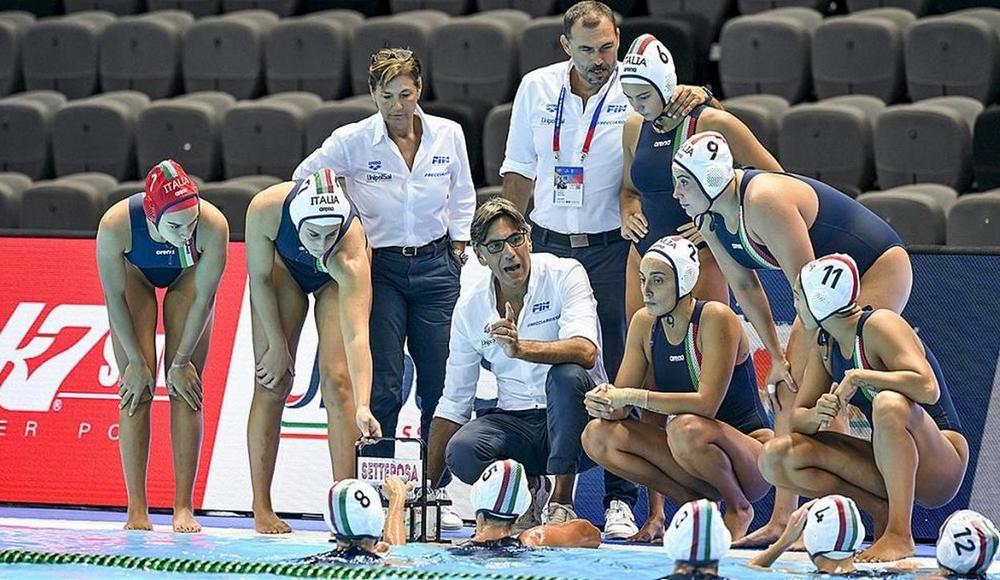
Fukuoka World Championships: the National teams rounds have been drawn. The first Olympic passes are up for grabs
- WATER POLO
The opponents of the Italian national teams at the 2023 World Water Polo Championships have been decided. The group draw was held today in Athens (Greece) for the 20th edition of the world championship event scheduled in Fukuoka (Japan) from 16 to 29 July.
Carlo Silipo’s Setterosa team was drawn in Group C, where they will face Brazil, South Africa and Greece.
Alessandro Campagna's Settebello, meanwhile, will compete in the first phase in Group B against France, Canada, and China. As the first qualifying event of the Paris 2024 Olympic Games, the World Championships will have as many as four five-ring passes up for grabs, for two finalist national teams per gender.
“We can ease ourselves into the event", declared Silipo. “In the first two days we will meet Brazil and South Africa, opponents we must respect but who are within our reach. Then another tournament will begin: beating Greece would be important to get an extra day’s rest and, above all, to avoid the United States in the quarter-finals", concluded the coach of the Setterosa.
“It is a group that is certainly within our reach", Campagna commented. “We have been lucky, even if France is a team that is currently on the rise. Then from the quarter-finals the real challenges will begin. I am convinced that all the strongest world water polo teams will want to avoid us: over the next few months we will look to improve and live up to this great event in 2023", explained the coach of the Settebello.
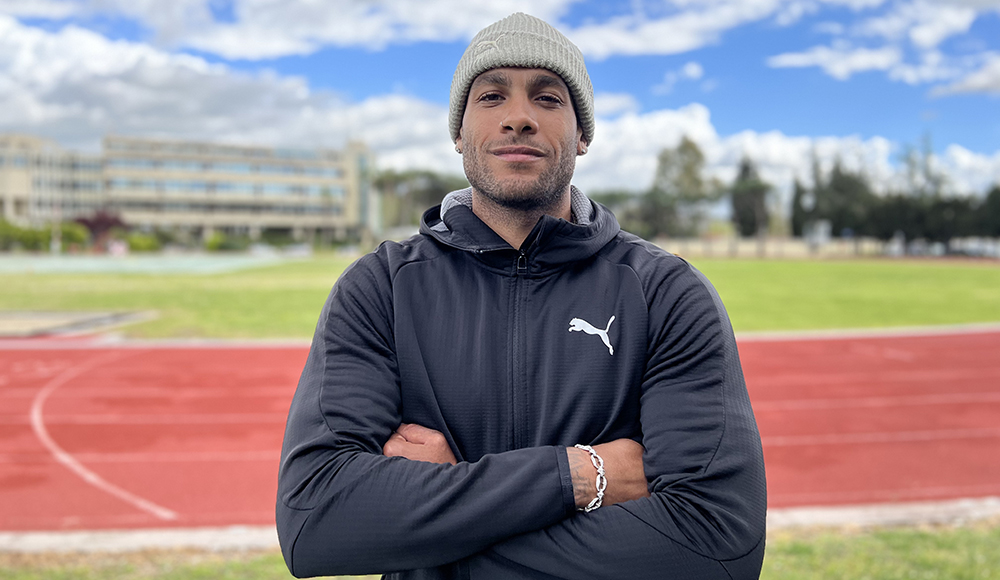
Marcell Jacobs relentless: “I want gold at the World Championships. Paris 2024? I will try to be champion again”
- ATHLETICS
An important day for Marcell Jacobs. On the athletics track at the “Salvo D’Acquisto” barracks of the Arma dei Carabinieri in Rome, the Olympic 100-metre and 4x100 relay champion underwent a number of tests using the aerodynamic shield devised by the CONI Institute of Sports Medicine and Science. Under the supervision of the Institute's technicians and coach Paolo Camossi, the Azzurro medallist underwent speed endurance tests over 150 metres, in which he was able to reach 10 metres per second. Nine months after the tests carried out in preparation for the World Championships in Eugene 2022, the Tokyo 2020 champion returned to the Tor di Quinto track to test himself with the shield developed from a 1987 project by Professor Antonio Dal Monte, former Scientific Director and Head of the Department of Physiology and Biomechanics at the Institute of Sports Science. The shield makes it possible to reach higher speeds than normal by eliminating air resistance, resulting in a more powerful, wider and faster stride. As a result, the nervous system stores this information in its motor memory, which the athlete then tends to recall, resulting in higher performance.
“We are in the preparation phase of the season", Jacobs explains. “The work we’re doing is going really well, I can't wait to compete: after all, this is what we train for. The tests with the shield are very important. They allow us to reach speeds that we wouldn’t normally reach. This way, the body and muscles get used to much higher frequencies. They are demanding tests, but at the same time fun".
Looking ahead to the next events, the sprinter says: “My main goal for the season is to do well at the World Championships in Budapest in August – it is the only medal I am missing. At the end of 2023 I will be satisfied if I have been crowned World Champion. The relay? We are a very close group. We trained together last month and we will be together again next week at the meeting. We motivate and push each other: we want to continue to achieve great results".
In closing, Jacobs had this to say about the Olympic Games: “When I think about Paris 2024 I feel a bit of weight on my shoulders. Tokyo was an opportunity to show who I was, in France I will have to continue to prove it. I will arrive as an Olympic champion and I will try to leave as an Olympic champion again".
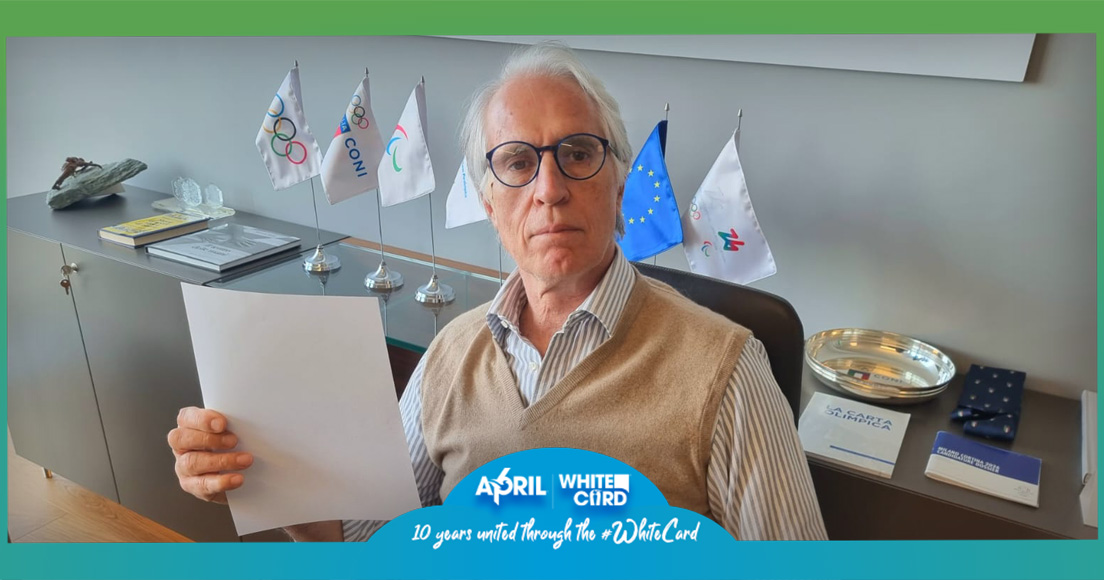
CONI raises the #WhiteCard. Azzurri support the International Day of Sport for Development and Peace
- PEACE AND SPORT
Italia Team support the International Day of Sport for Development and Peace (IDSDP).
Once again this year CONI, led by President Giovanni Malagò, joined the global digital campaign #WhiteCard, created by Peace and Sport to promote the positive values of sport. Established by the UN General Assembly in 2013 and now running for a decade, the event is held every year on 6 April – the day on which the opening ceremony of the first modern Olympic Games took place in Athens in 1896. The Day reminds the world of the importance of sport in dialogue between peoples, in social inclusion and its role in promoting peace.
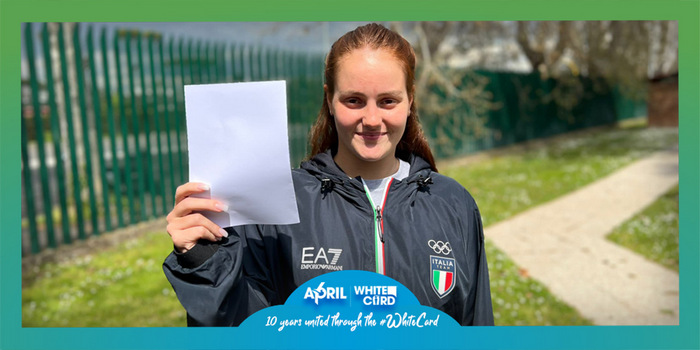
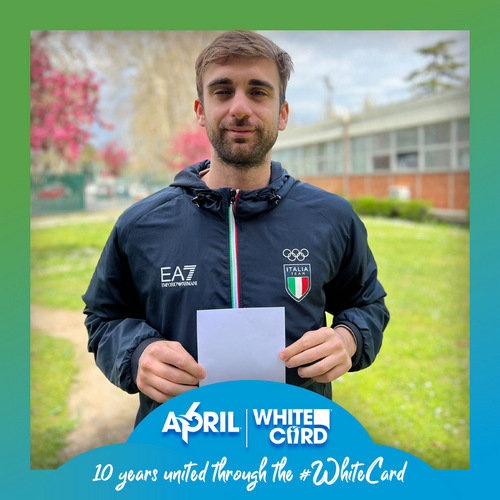 With the motto “10 anni uniti con la #WhiteCard” (10 years united with the #WhiteCard), the Azzurri of Italia Team, as well as athletes from all over the world, International Federations, Olympic Committees and numerous international organisations took part in the campaign, testimony to the recognition of sport as an instrument for peace, and a pre-requisite to building more inclusive societies.
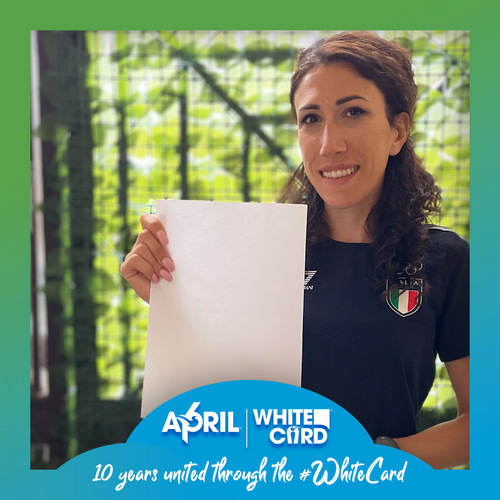 To hold a #WhiteCard, just like a referee, is indeed to display a symbol of peace and, unlike a red card, which represents the most serious offence in sport, the #WhiteCard is a gesture of inclusion and equality.
The Torch is lit at the Ara Pacis: the journey towards Krakow 2023 gets underway from Rome
- EUROPEAN GAMES
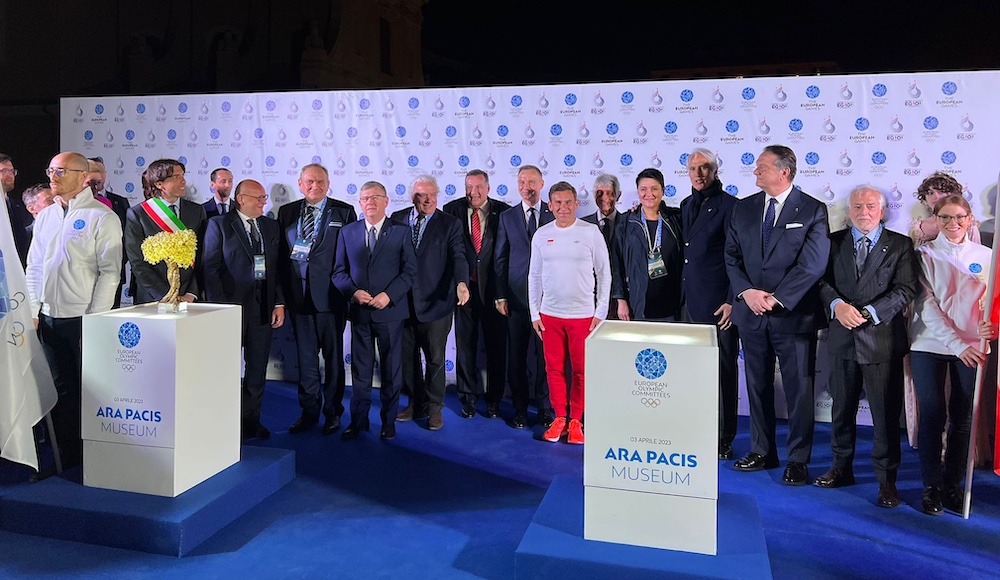
The countdown towards the European Games in Krakow (Poland), scheduled from 21 June to 2 July 2023, has officially begun in Rome at the Ara Pacis.
The third edition of the largest multi-sport event at a European level will see the participation of 7,000 athletes from 48 countries. 30 sporting disciplines will be involved, 11 of which will award Olympic passes for Paris 2024.
In the world’s oldest temple, a universal symbol of peace and fraternity, the Torch was formally delivered and ignited. It then began its journey towards the Malopolska region in the hands of Anita Wlodarczyk, multiple Polish Olympic hammer throwing champion.
The ceremony, presided over by the President of the European Olympic Committees Spyros Capralos, was also attended, among others, by CONI President Giovanni Malagò, Minister for Sport and Youth Affairs Andrea Abodi, and President of the Republic of Poland Andrzej Duda. Also present were Francesco Ricci Bitti, President of ASOIF, the association that brings together the International Olympic Summer Federations and Raffaele Pagnozzi, Secretary General of the European Olympic Committees.
“Being here today is a very proud honour", Malagò said in his opening speech at the ceremony. “It is magnificent to be able to present this ceremony in such an iconic place, in the heart of the city of Rome. This is the third edition of the Games. I remember very well when it all began. This event has grown steadily and represents something very important for the entire Olympic movement and the European continent", concluded the CONI President.
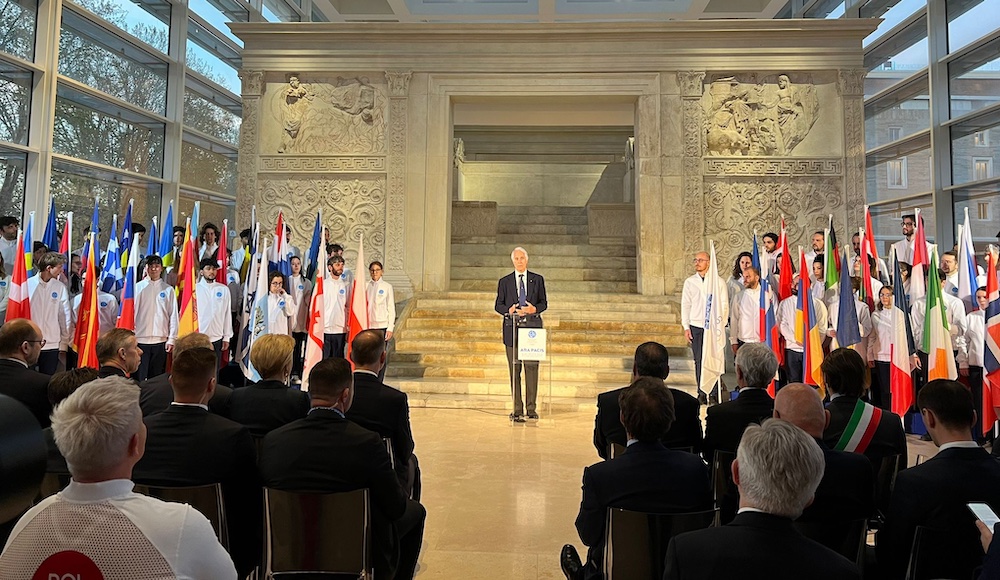 This was echoed by Andrea Abodi: “I am honoured to be able to represent the Italian government in such a significant event. Italy and Poland are guided by the same sentiments. Peace represents the main value to be achieved in a period of history such as the one we are living through. I hope that the symbols celebrated can be a good omen in this sense".
“This is a fantastic place and I am very thrilled", declared Duda. “As a representative of Poland, we are ready to receive this symbol of such great significance. I am proud and excited to hold these Games in our country. Krakow, after Baku and Minsk, will be the first city of the European Union to host these Games, the second most important event in the history of our country. I hope they will be held in an atmosphere of wholehearted sportsmanship. In the coming days I will host President Volodymyr Zelensky and we will talk about the situation in Ukraine. Our country is taking in a large number of refugees fleeing from the war. These Games will be about peace and brotherhood, but we will not pretend that everything is going well. Ukraine was invaded by Russia and Belarus supported the invasion: I am grateful to President Capralos for banning both countries from participating in the event. I thank everyone for the opportunity to host these Games. I wish all the best to all 48 delegations when the Games start", stated the Polish president.
“It is always a privilege to be able to organise such a symbolic event. For a fortnight Poland will be the heart of European sport. I thank President Duda for the great support given to this event. The Games represent an event of enormous importance for the country’s history", said Capralos.
The President of the European Olympic Committees also presented Duda with the Ulivo d’Oro of the Dea Pax, made exclusively for the EOC by sculptor and goldsmith Nicola Amato and forged from the same fire used to light the Torch.
European Championships Rome: two golds and two silvers on the last day, Italy closes with 67 medals
- SWIMMING
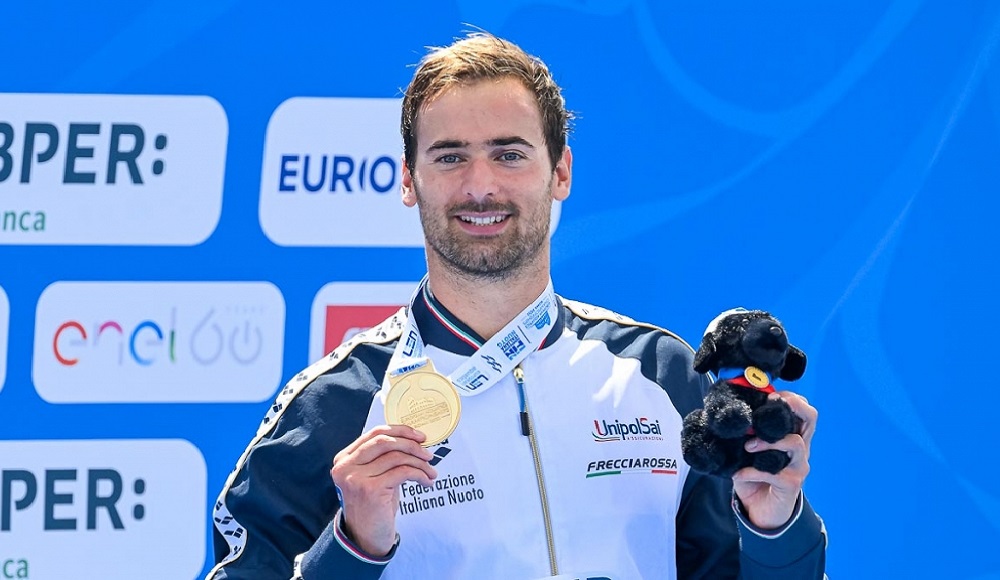
Italy closes the XXXVI edition of the European Aquatic Disciplines Championships, being held in Rome in style. At the start of the day, Domenico Acerenza triumphed in the 10 km open water race of the After the silver in the 5 km behind teammate Gregorio Paltrinieri, 'Mimmo' got rid of the competition by increasing the pace in the last few metres and with a time of 1h50'33'6 won the gold medal. Frenchmen Marc-Antoine Olivier completed the podium, silver in 1h50'37'3, and Logan Fontaine, bronze with a time of 1h50'39'1. Seventh was Gregorio Paltrinieri (1h51'12'7), thirteenth Andrea Manzi (1h56'31'7).
'It was a super tough race, ' explains Acerenza, ' in which on the last lap, we even missed the refuelling because we had not seen the boat. On the second lap, I could see someone in front, but I couldn't tell who it was. Finally, they told us they had a fifty-second lead on the third lap, so I started to push. The sea did not allow us to swim well, but it was a wonderful effort. I would like to thank my two clubs, the Fiamme Oro and Canottieri Napoli, the Federation and all those who supported me before and during the European Championships in Rome. Hearing the Mameli Anthem played is a great emotion for me. It makes one quiver‘.
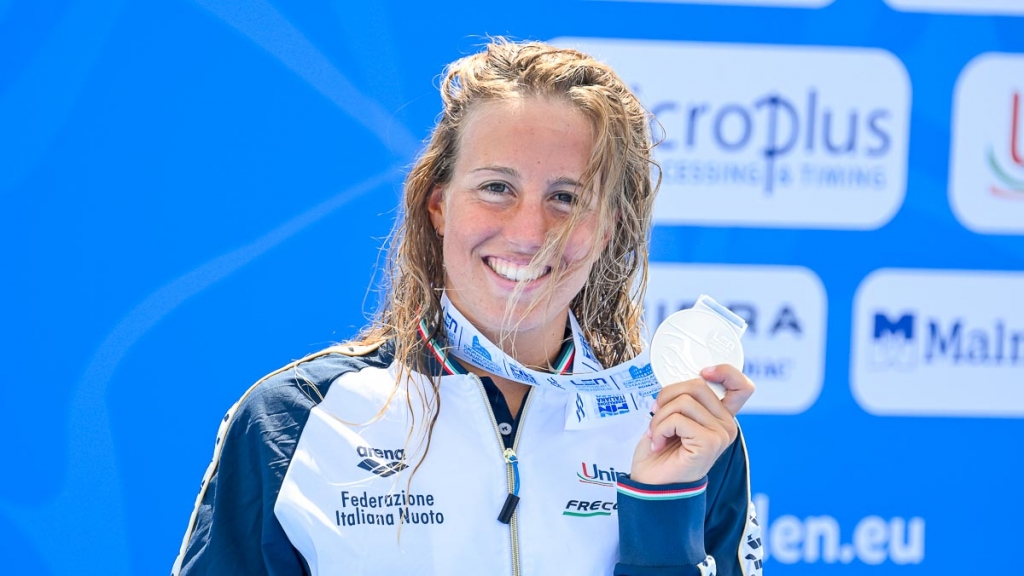
In the women's Olympic distance race, Ginevra Taddeucci won the silver medal with a time of 2h01'15'2, behind only Germany's Leonie Antonia Beck (2h01'13'4). Bronze went to Portugal's Angelica André (2h01'15'2), who beat Dutchwoman Sharon Van Rouwendaal (2h01'16'6) in a photo finish. Fifth place for Rachele Bruni (2h01'31'5), seventh for Giulia Gabbrielleschi (2h02'09'3), already bronze in the 5 km.
'With the waves, you couldn't see anything,' adds Ginevra, ' the sea rose, and swimming became more and more difficult. It was an exhausting effort. I'm so happy, I couldn’t believe it, I was just thinking it’ll get me- it won’t; in the end, I managed to resist. I tried to implement the experience of past competitions I have done, such as the Italian championships. I said to myself let's try to increase. Maybe I can keep myself in front. I knew that if I stayed at the back, then I couldn't get back up. I would say that this tactic went well. I dedicate this medal to myself, to my coach, who puts up with me so much because I am not easy to train, and to my parents, who have always accompanied me to training since I was a child and whom I wanted to repay in some way‘.
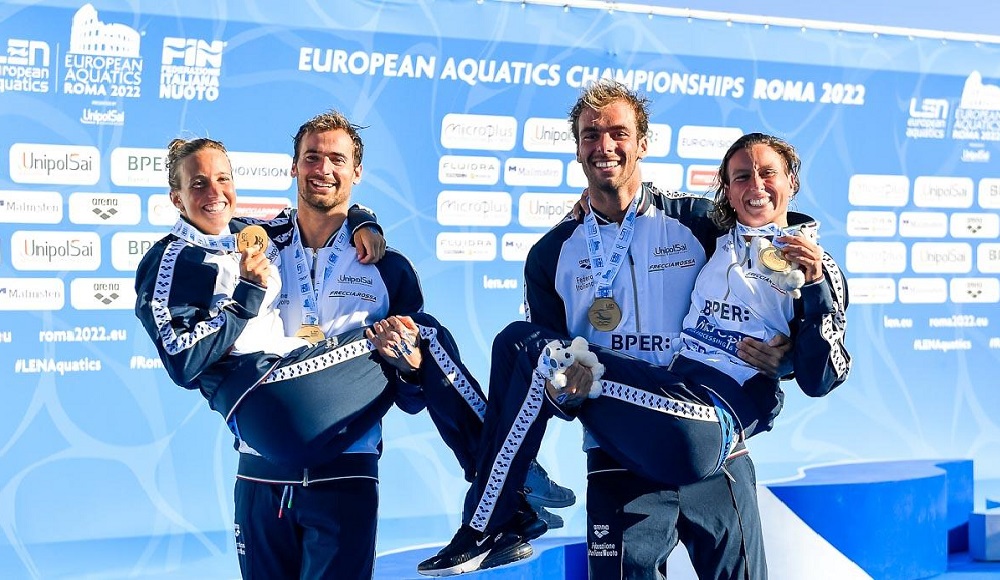
The national cross-country swimming team closed on a high note with the continental title in the 4x1250 metre Team Event. Rachele Bruni, Ginevra Taddeucci, Gregorio Paltrinieri and Domenico Acerenza took the top step of the podium with a time of 59'43'1, ahead of Hungary (59'53'9) and France (1h00'08'3).
'Very happy for this relay medal and to have won it with them. For me, it also means a new start,' says Bruni. 'What a thrill to sing the national anthem twice, almost unbelievable - Acerenza's joyCredit to everyone: Competing in such a strong, beautiful, and close-knit team is spectacular. 'Lucky day, I will always remember this 21 August. I am happy because we are a great team,' Taddeucci continued. 'We are competitive everywhere, in the sea as well as in the pool. We have very solid teams with many points. Our movement has grown, and today we represent the top. Credit to us and our coaches, our clubs and the Federation,' 'SuperGreg' concludes.
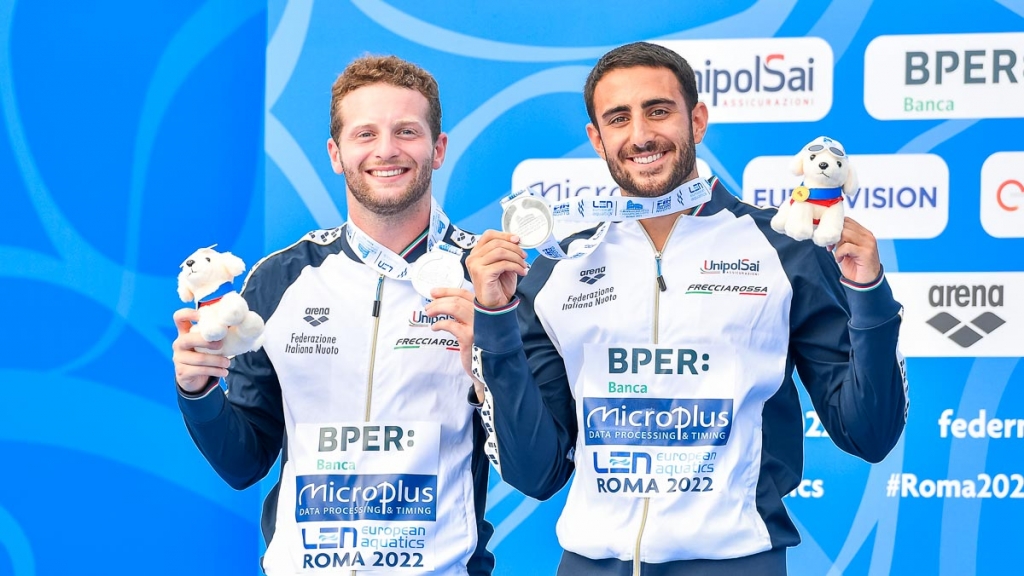
Italy also made the podium diving with Lorenzo Marsaglia and Giovanni Tocci in the synchro from the 3-metre springboard. The Italian pair won the silver medal with a score of 387.51, behind Britain's Anthony Harding and Jack Laugher (412.83). Bronze for Ukrainians Oleksandr Horshkovozov and Oleg Kolodiy (384.39).
'It was a good race,' explained Tocci, 'we knew the British were strong. We believed we would make it, and this time we are together on the podium and the same step. I believe that with a perfect performance, the English could have been beaten, but it would not have been so easy‘.'A European to be rewarded with a grade higher than ten, perhaps praise,' adds Marsaglia. They were unforgettable, exhilarating days in which we were always carried away by a warm audience‘.
On the other hand, Andreas Sargent Larsen finished at the foot of the podium in the individual competition from the 10-metre platform. A great race by the Italian, who finished in fourth place with a score of 417.20. Gold for young Ukrainian phenom Oleksii Sereda (493.55 points), ahead of Great Britain's Noah Williams (459.00) and Ben Cutmore (438.35). Ninth position for the other Italian at the start, Eduard Timbretti Gugiu, with 333.85 points. Italy, therefore, closes this continental exhibition at home in first place on the medals table with a total of 67 medals: 24 gold, 24 silver and 19 bronze medals (Photo Andrea Masini and Diego Montano/DBM)
Page 3 of 146