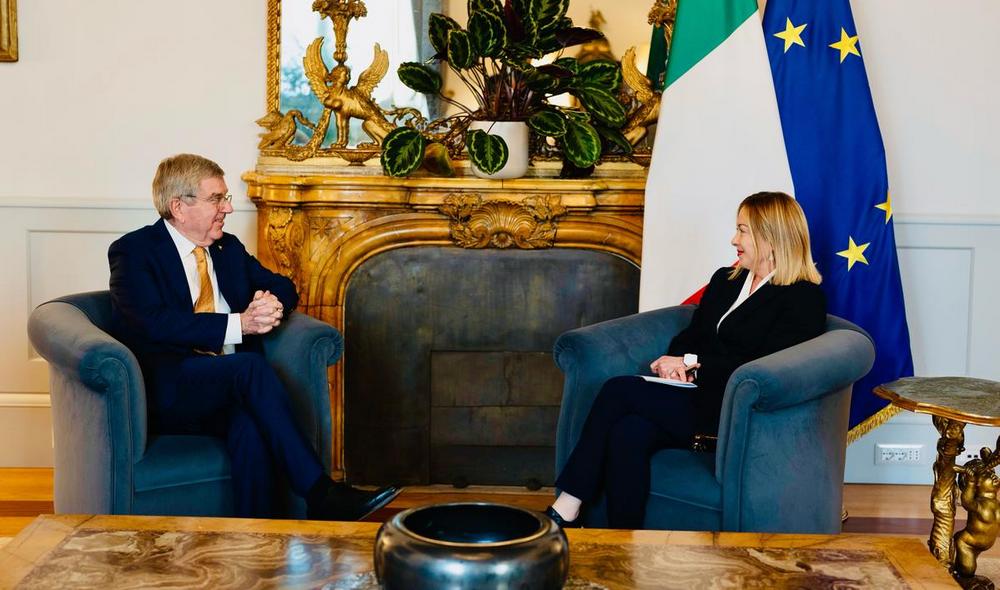
Prime Minister Meloni welcomes IOC President Bach and President Malagò
- AT PALAZZO CHIGI
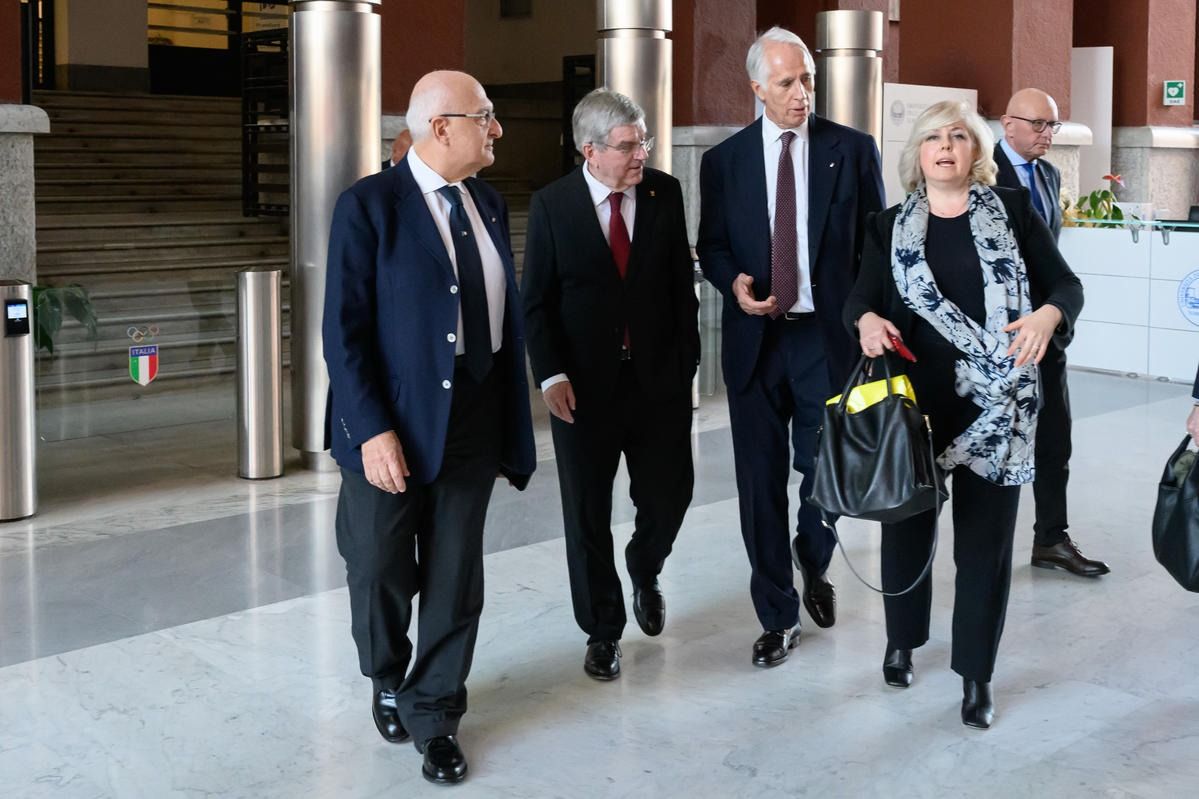
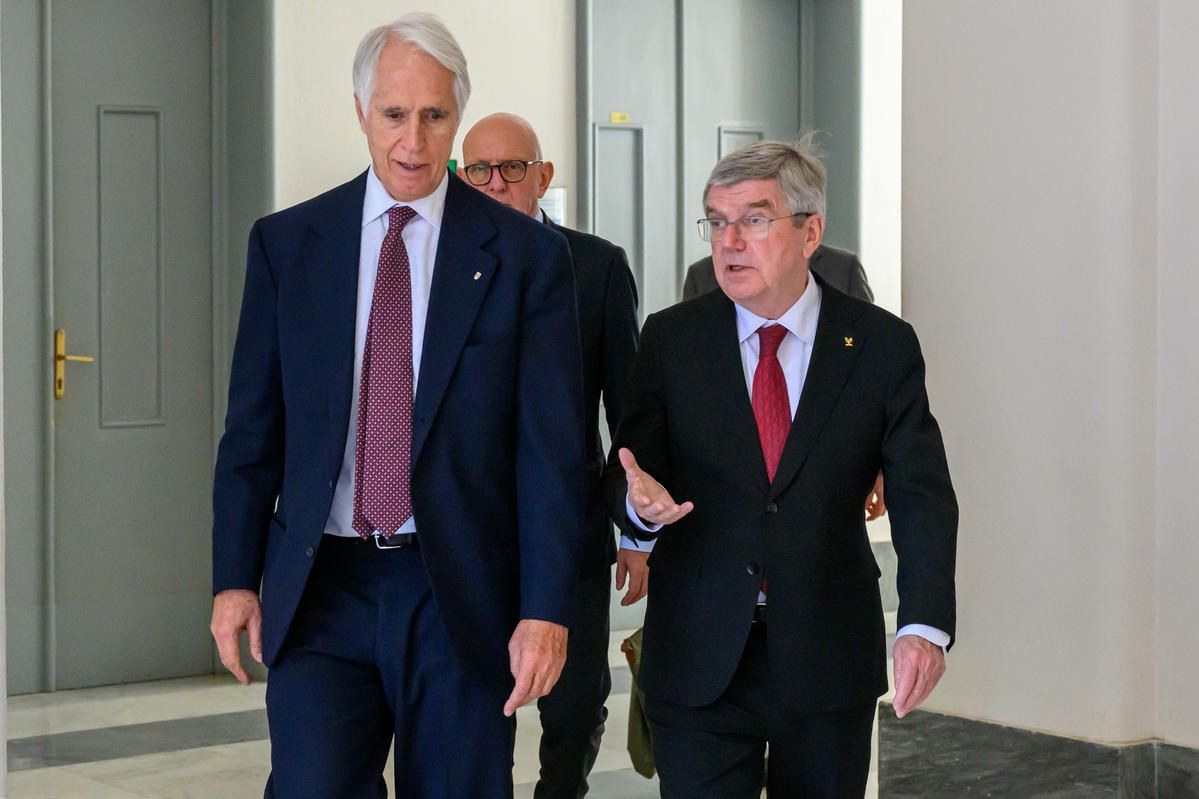
Prime Minister Giorgia Meloni today welcomed the President of the International Olympic Committee, Thomas Bach, and the President of CONI, Giovanni Malagò, to Palazzo Chigi. During the meeting (photo: Presidency of the Council), a range of topics related to the Olympic and sporting movement were discussed, with particular attention given to the upcoming Milano Cortina 2026 Winter Olympics.
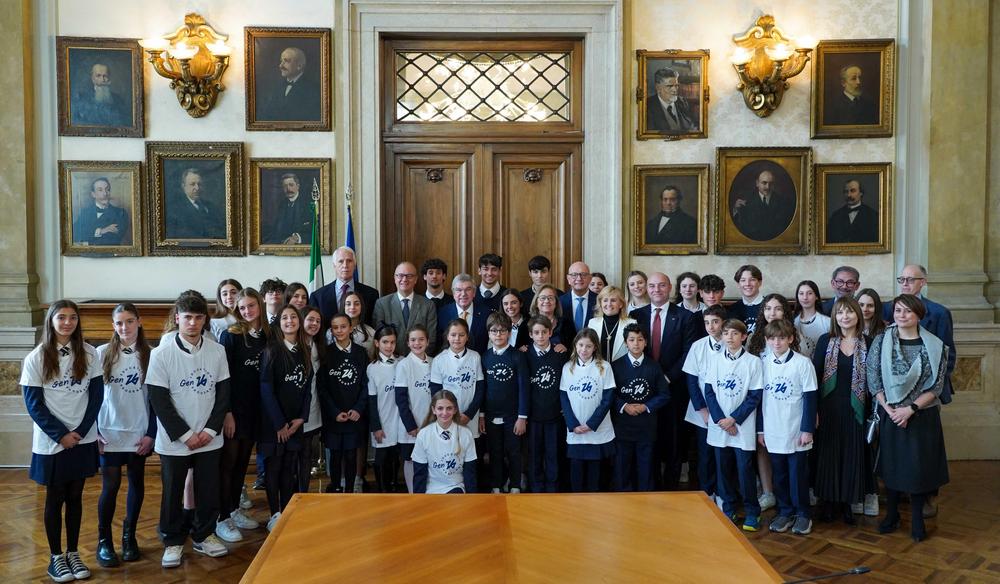
Minister Valditara meets IOC President Bach and President Malagò, “Promoting Olympic values in schools”
- AT THE MINISTRY
Today, the Minister for Education and Merit, Giuseppe Valditara, welcomed Thomas Bach, President of the International Olympic Committee (IOC), and Giovanni Malagò, President of the Italian National Olympic Committee (CONI), to the Ministry (MIM), together with a delegation of students from the Convitto Nazionale “Vittorio Emanuele II” in Rome (photo: MIM).
“During the meeting, we discussed the importance of promoting the value of sport in schools, a value which, since the very beginnings of the Olympics, has had the power to unite people. Sport teaches us to compete fairly, to respect the rules, and to value each person’s talents,” said Minister Valditara.
The Ministry for Education and Merit has launched the distribution of OVEP (Olympic Values Education Programme) toolkits, a set of educational resources made available to teachers at schools of all levels. Developed by the International Olympic Committee, the programme provides a collection of tools designed to enrich the school curriculum with themed activities, teaching strategies and materials inspired by Olympic values. The toolkit also promotes physical activity, highlighting its long-term benefits for health, social wellbeing and youth interaction, while also helping to integrate civic education teaching.
“As a Ministry and as a Government, we are committed to spreading Olympic principles and a culture of sport in schools. Practising sport means learning to respect your opponent, who is never an enemy. Sport also means commitment; it teaches us to study and helps reduce early school leaving. For these reasons, we have allocated €890 million, sourced not only from the NRRP but also from ministerial funds, to enable schools to equip themselves with gyms. And today marks the opening in Cortina of a special edition of Scuola Futura, the travelling campus created and organised by the MIM, promoting educational and digital innovation, in collaboration with CONI, the Olympic Committee and the Milano Cortina Foundation. The aim is to showcase the excellence and beauty of Italian schools, even in mountain areas” concluded the Minister.
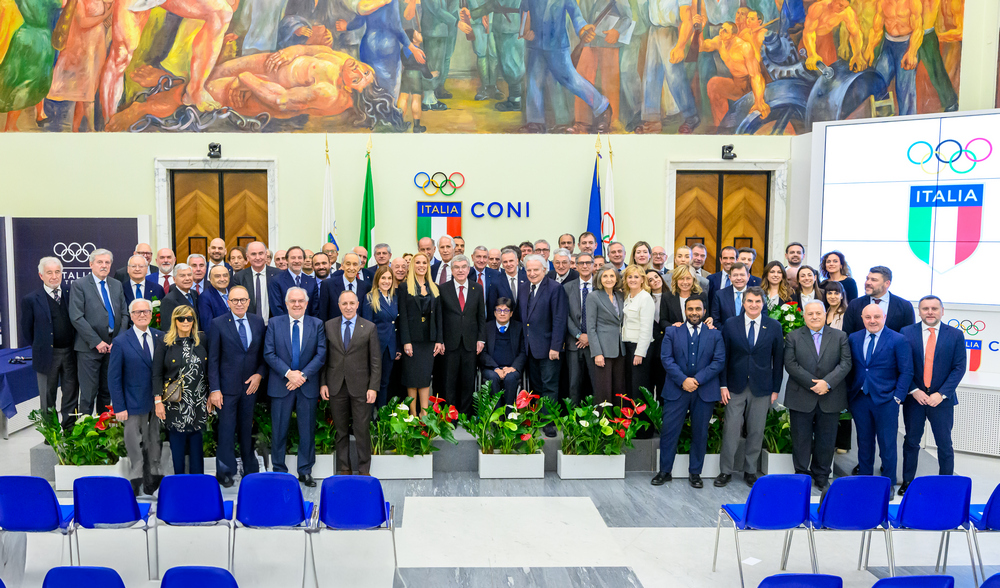
IOC President Bach meets representatives of Italian sport: “Thank you, Italia!”
- AT CONI
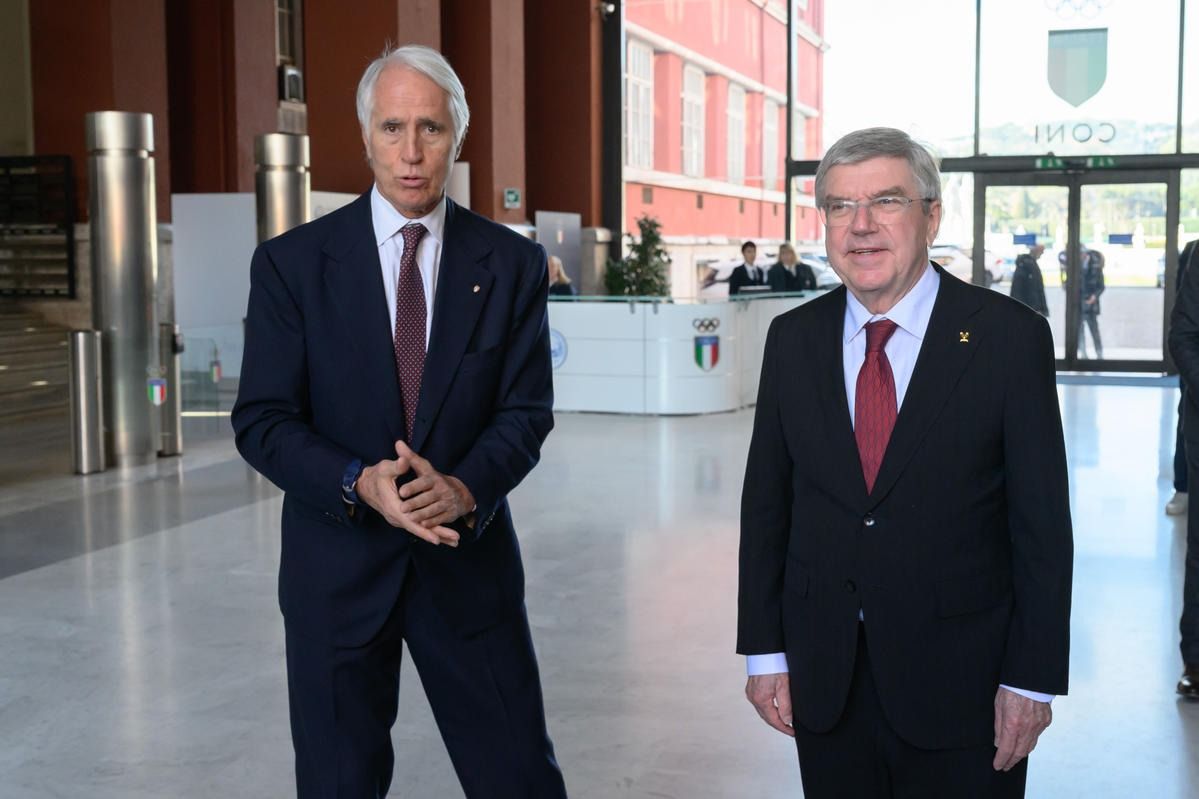
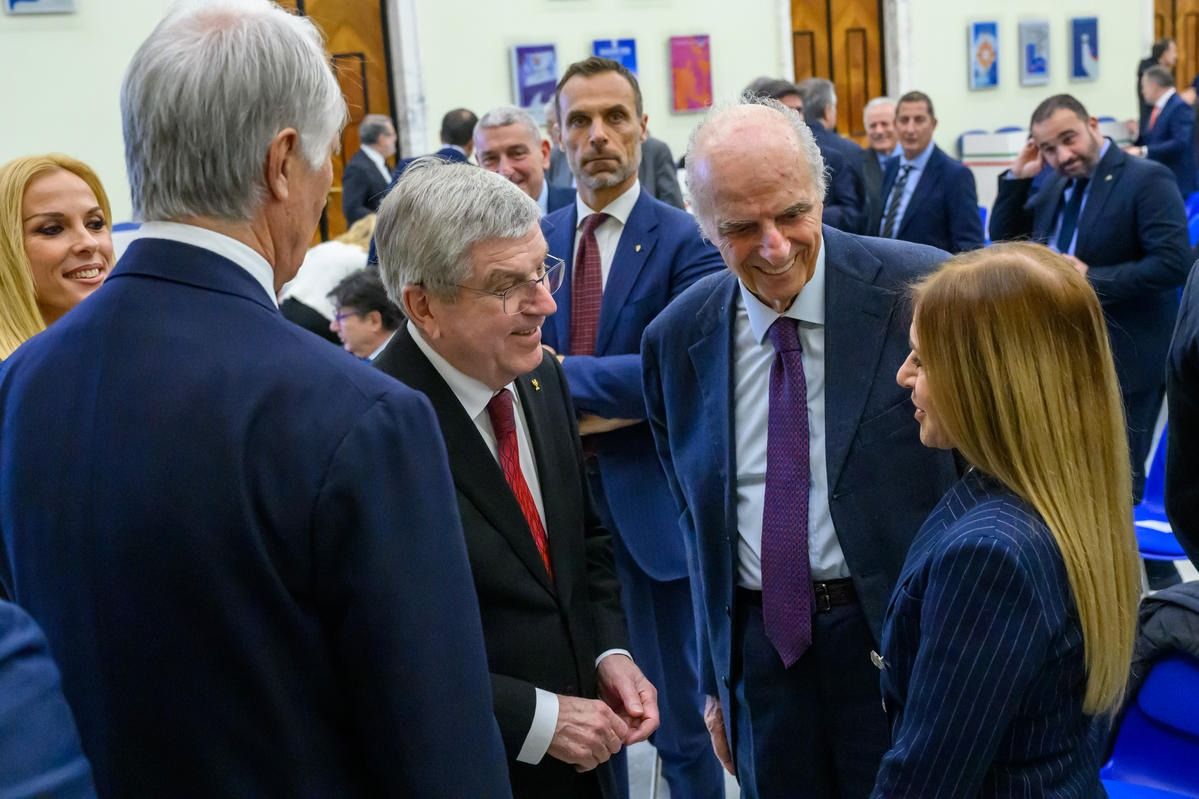
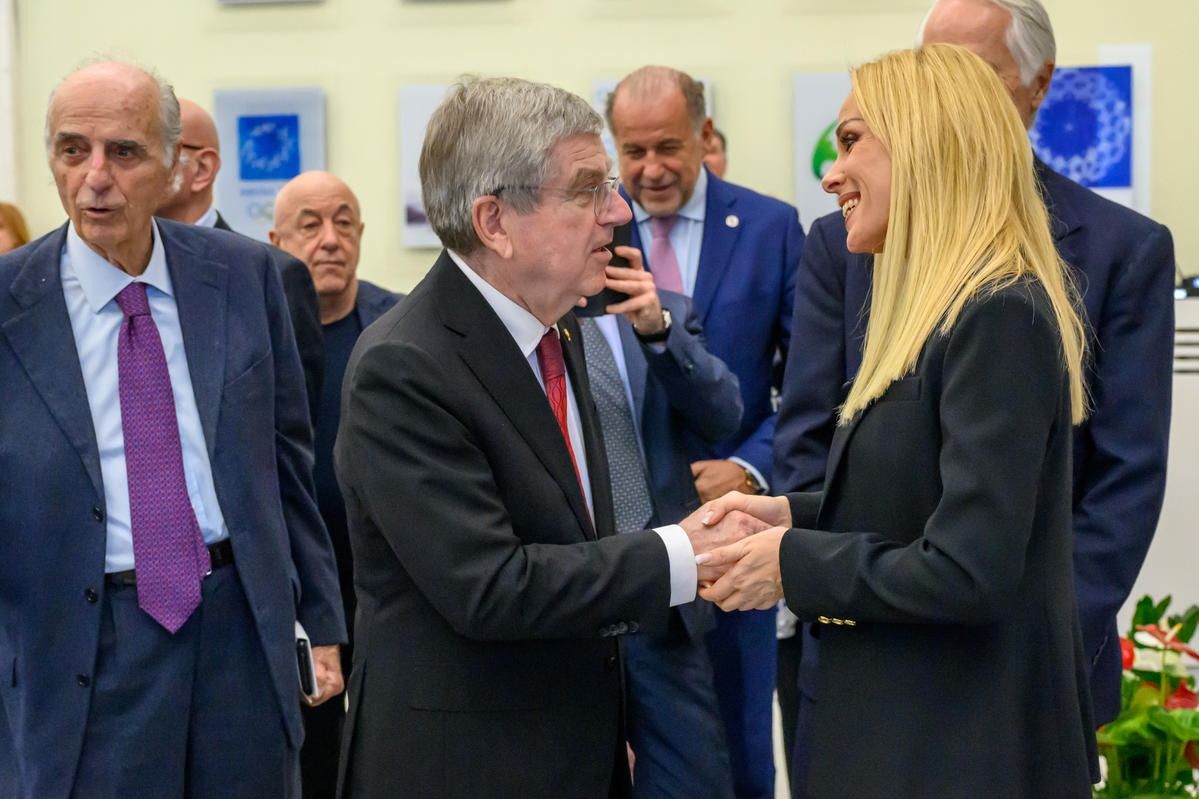
The Salone d’Onore of CONI provided the stage for the meeting between IOC President Thomas Bach and representatives of the Italian sporting world. “It is a great honour to have President Bach with us,” declared CONI President Giovanni Malagò, as he introduced the leader of the International Olympic Committee. “He will be with us until Thursday, when we will celebrate ‘One Year to Go’ to Milano Cortina 2026 in Milan”.
“The reason I am here is to say ‘Thank you, Italia’,” explained Bach. “I must thank the Olympic community and the institutions. This morning, I expressed my gratitude to President Mattarella, who has always been a great supporter of Olympic values. My affection for Italy goes back a long way, to my school days: my neighbours owned an ice cream parlour and allowed me to earn a little money by working there and learning the secrets of Italian gelato” recalled the IOC President.
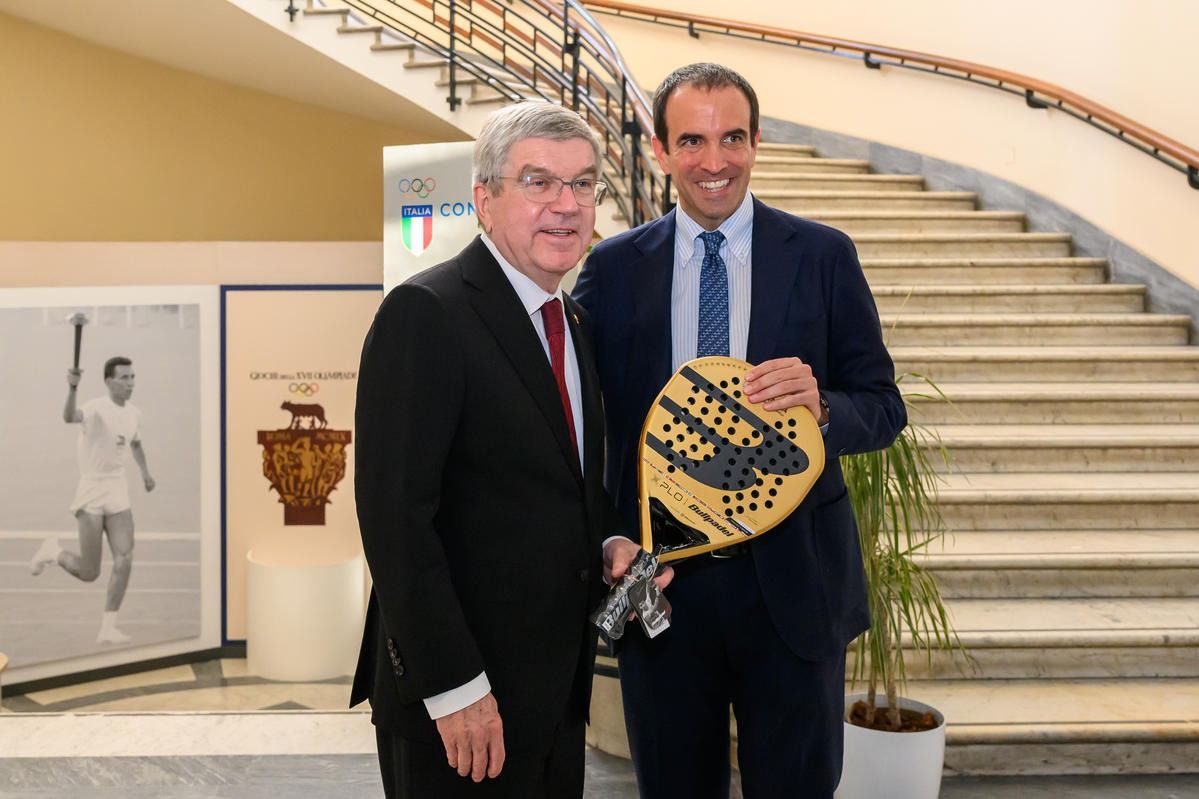
“I have spent a lot of time in Italy and there are moments I will never forget. One in particular stands out: when Mario Pescante and Franco Carraro revealed to me that they would support my candidacy for the IOC Presidency. I want to thank them both, I will never forget it,” continued Bach, also thanking former President of the Association of Summer Olympic International Federations Francesco Ricci Bitti, IOC member Ivo Ferriani, and international presidents Luciano Rossi and Sabatino Aracu. “Today, I would like to gift the Italian Olympic community the IOC President’s Trophy, also known as ‘The Sky is the Limit’,” he concluded, as he presented the sculpture to President Malagò. “Thank you, Italia. Forza Italia”.
"This is an award that CONI shares with all of you," said Malagò, addressing the representatives of the sports bodies. "I think you are all proud to be part of this family, and this recognition is the highest honour for what CONI has achieved throughout its history".
During the meeting, Malagò also awarded the Collare d’Oro, the highest sporting honour, to the Italian Sports Medicine Federation, represented by President Maurizio Casasco, “for the work carried out during Covid”. “Our country was an example to the entire world and I want to thank you in front of President Bach,” explained the CONI President.
“It is a great honour to receive the Collare d’Oro. I thank Malagò,” emphasised Casasco. “During the Covid period, we worked day and night to launch a protocol that allowed everyone to carry out physical activity safely. We did the same during the vaccination phase, with the direct involvement of our doctors. We are proud to have safeguarded public health”.
Il Presidente CIO Bach incontra al CONI lo sport italiano. Malagò premiato con "The Sky is the Limit’”
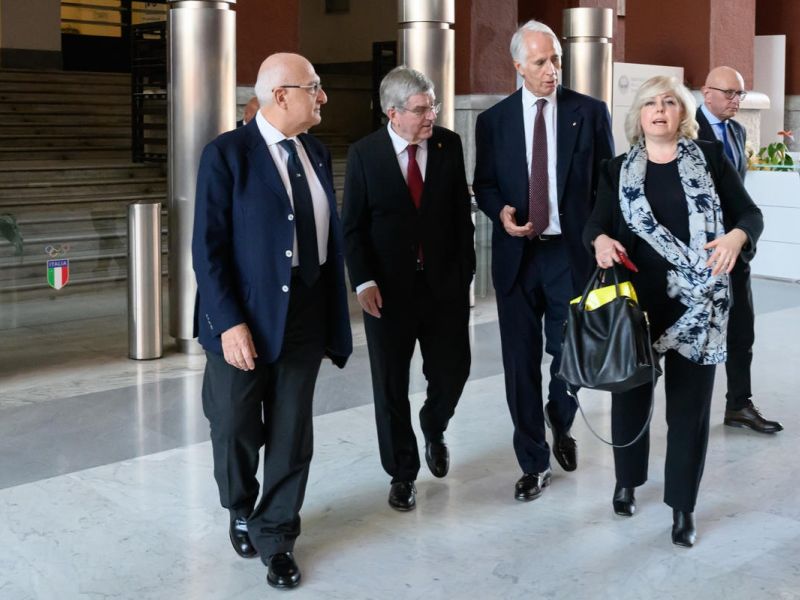
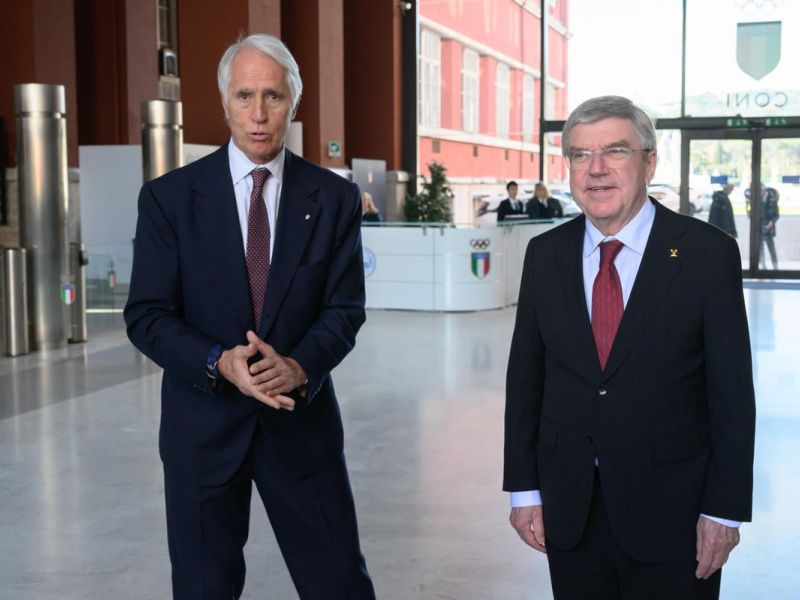
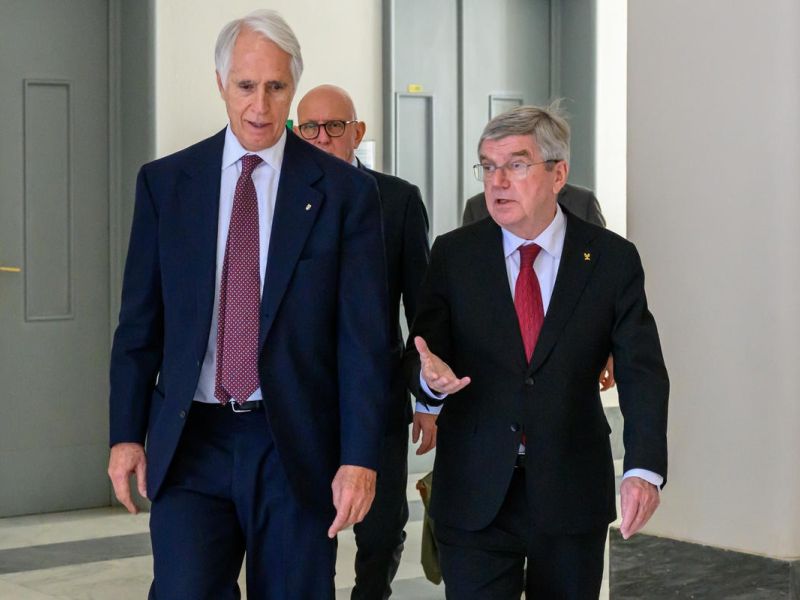
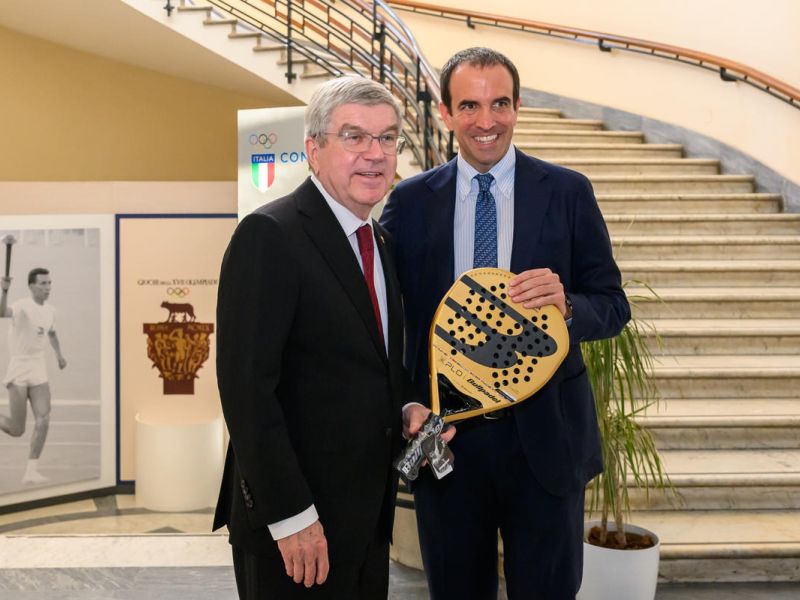
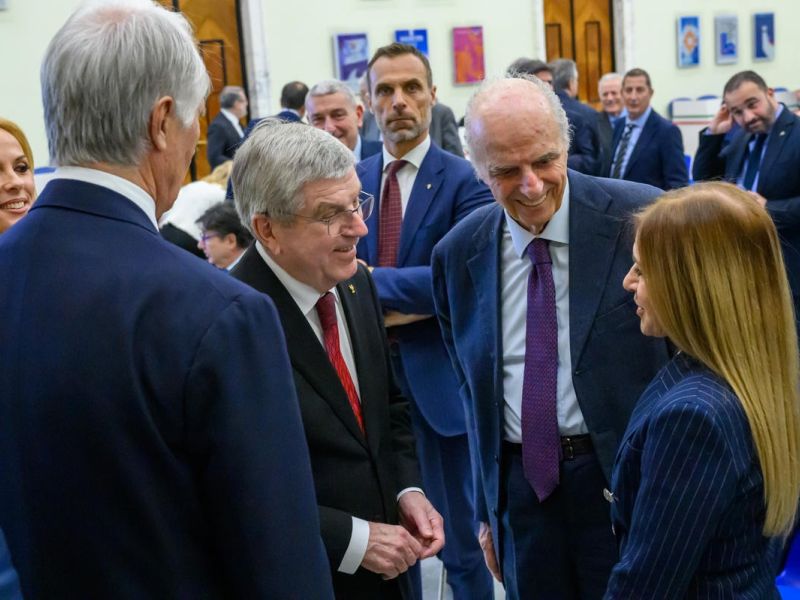
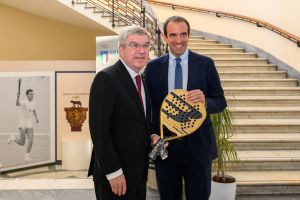
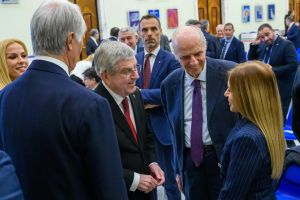
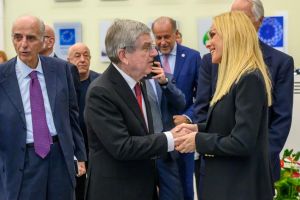
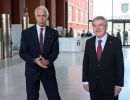
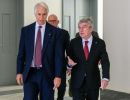
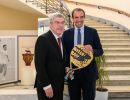
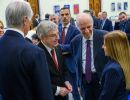
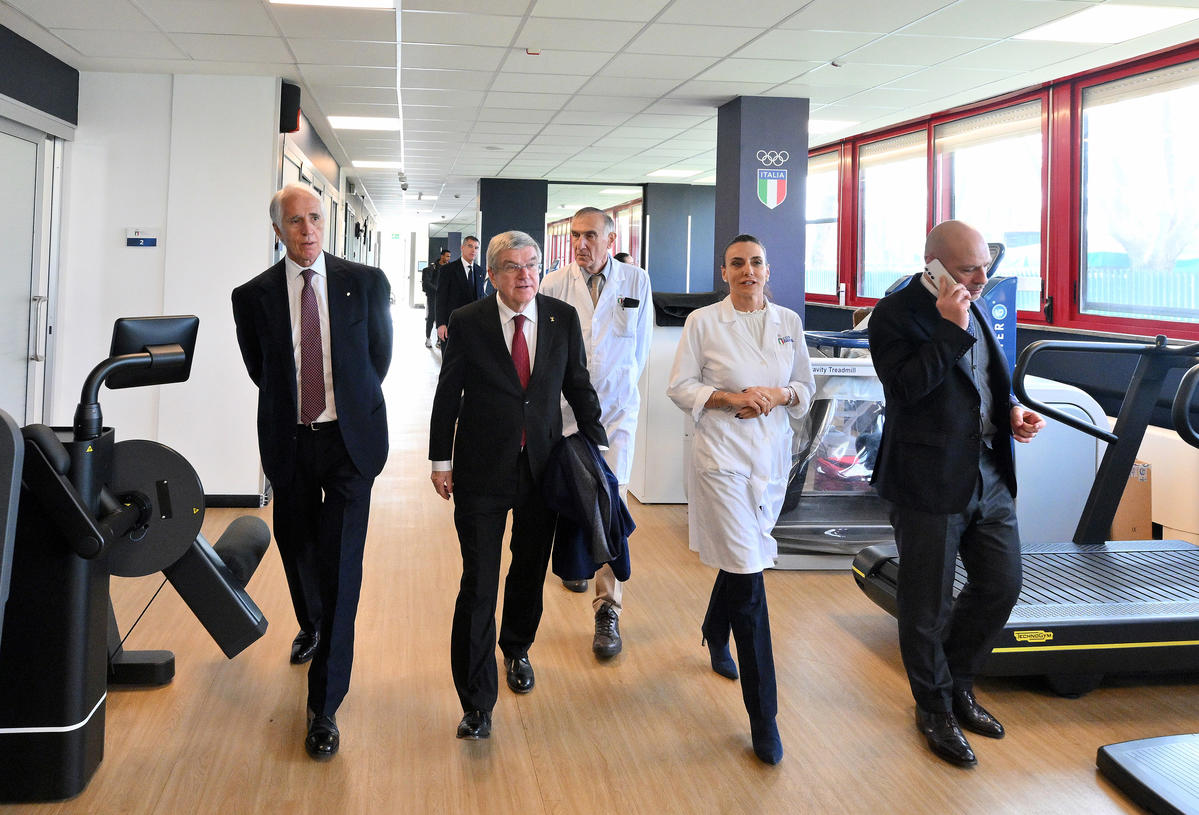
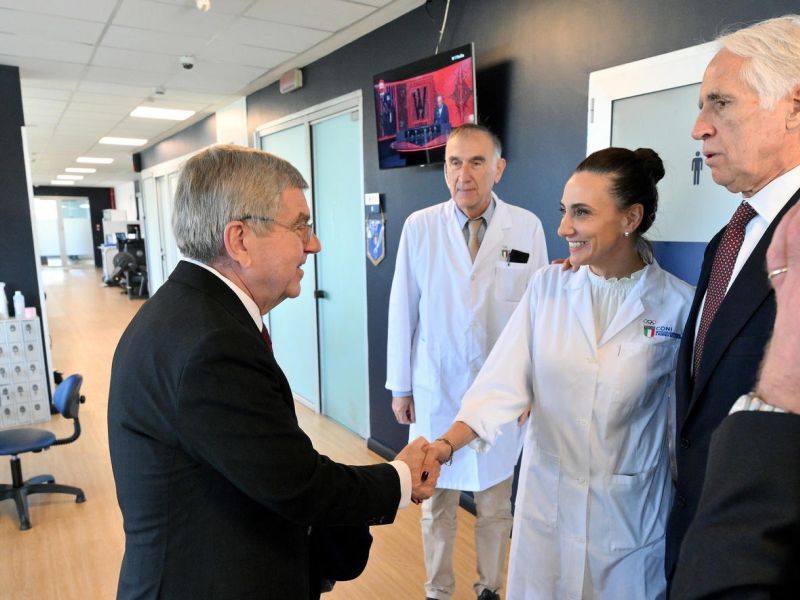
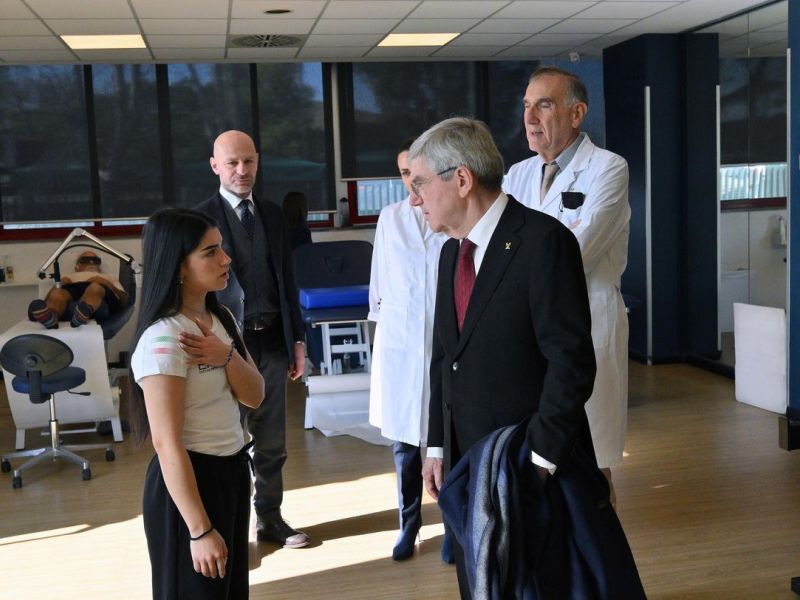
IOC President Thomas Bach visits the Giulio Onesti Olympic Preparation Centre, then meets sports leaders and Minister of the Economy Giorgetti
- CONI
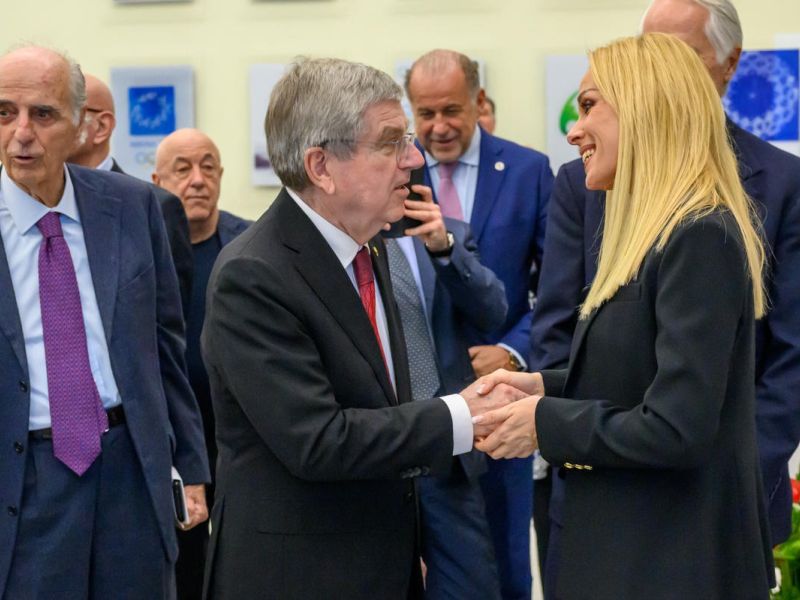
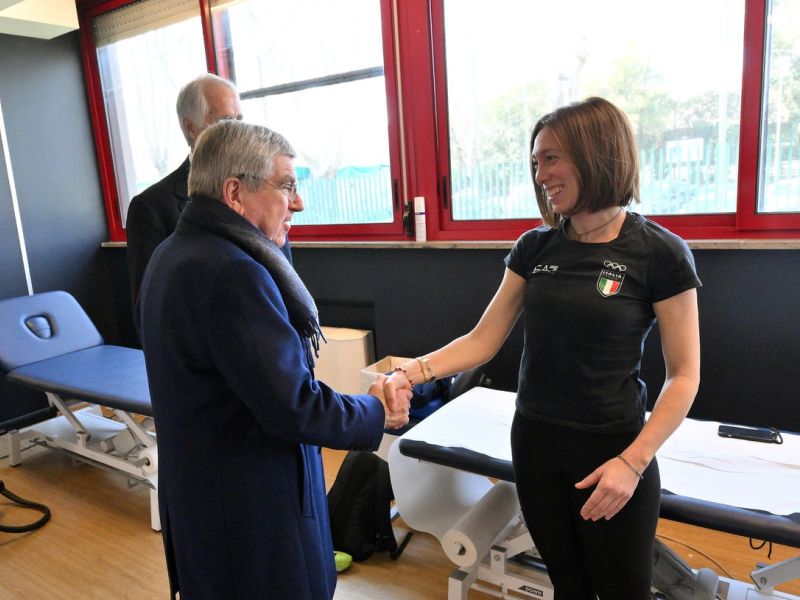
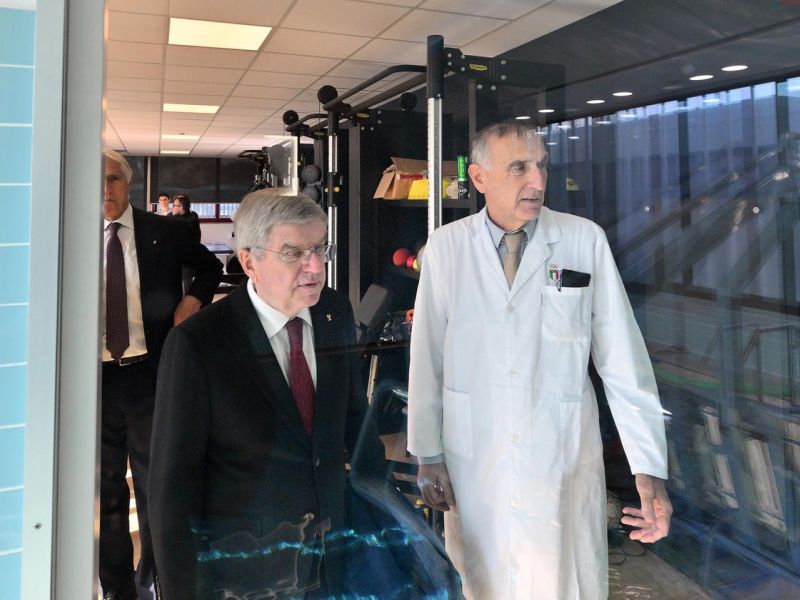
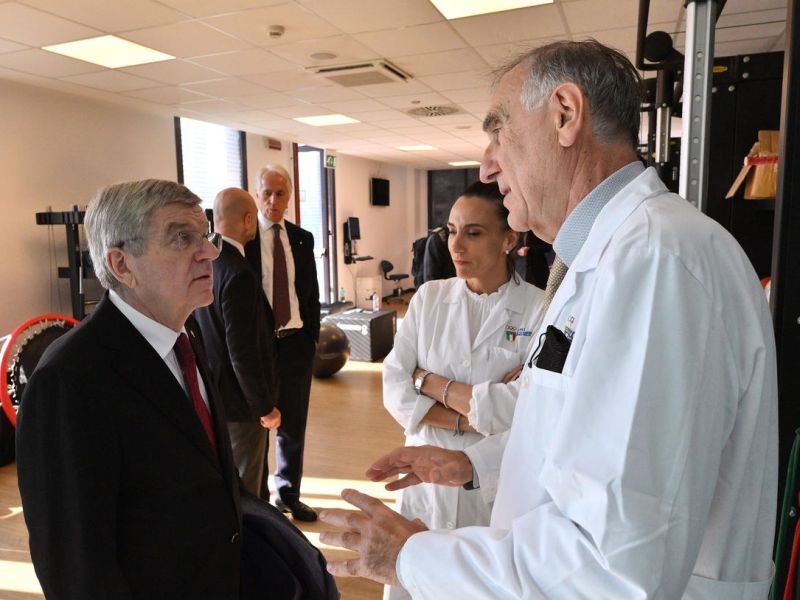
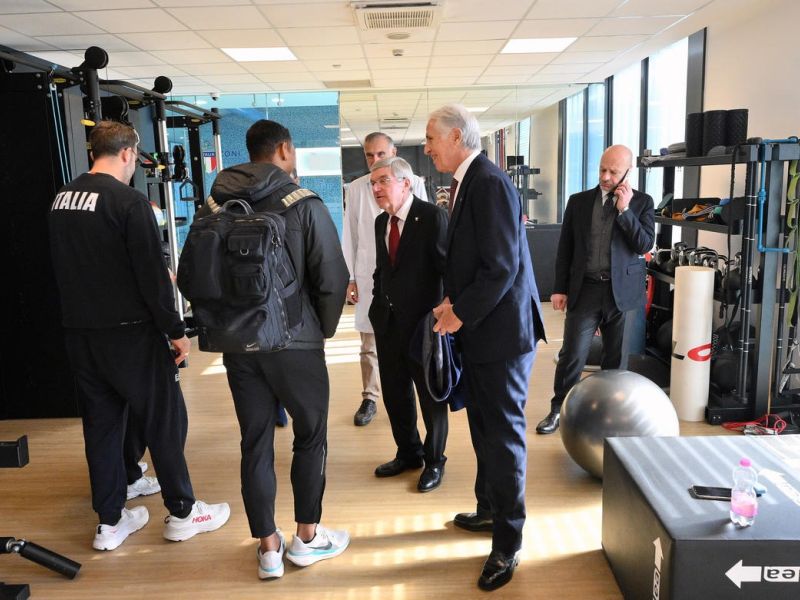
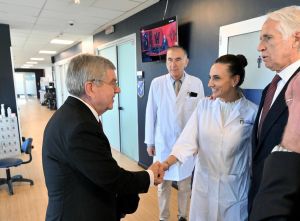
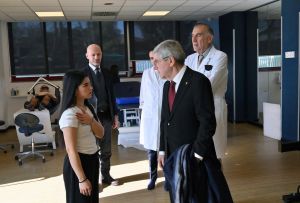
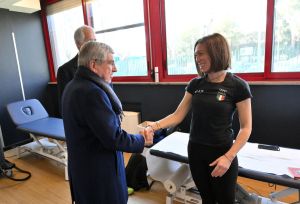
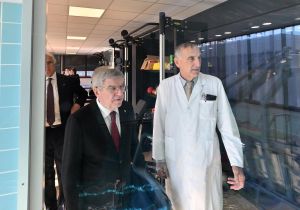
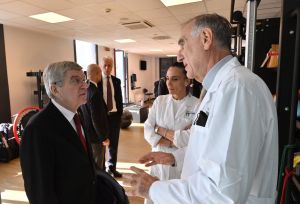
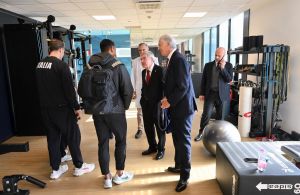
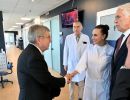
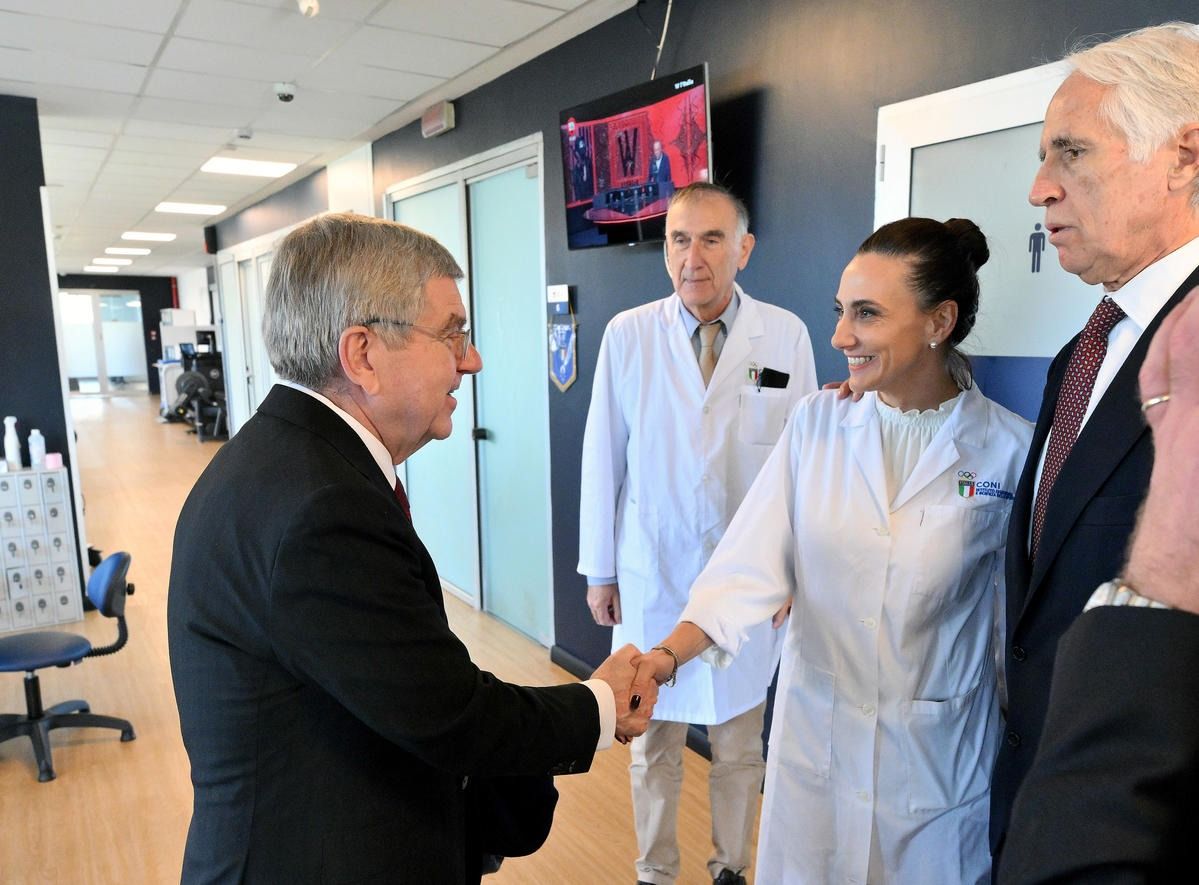
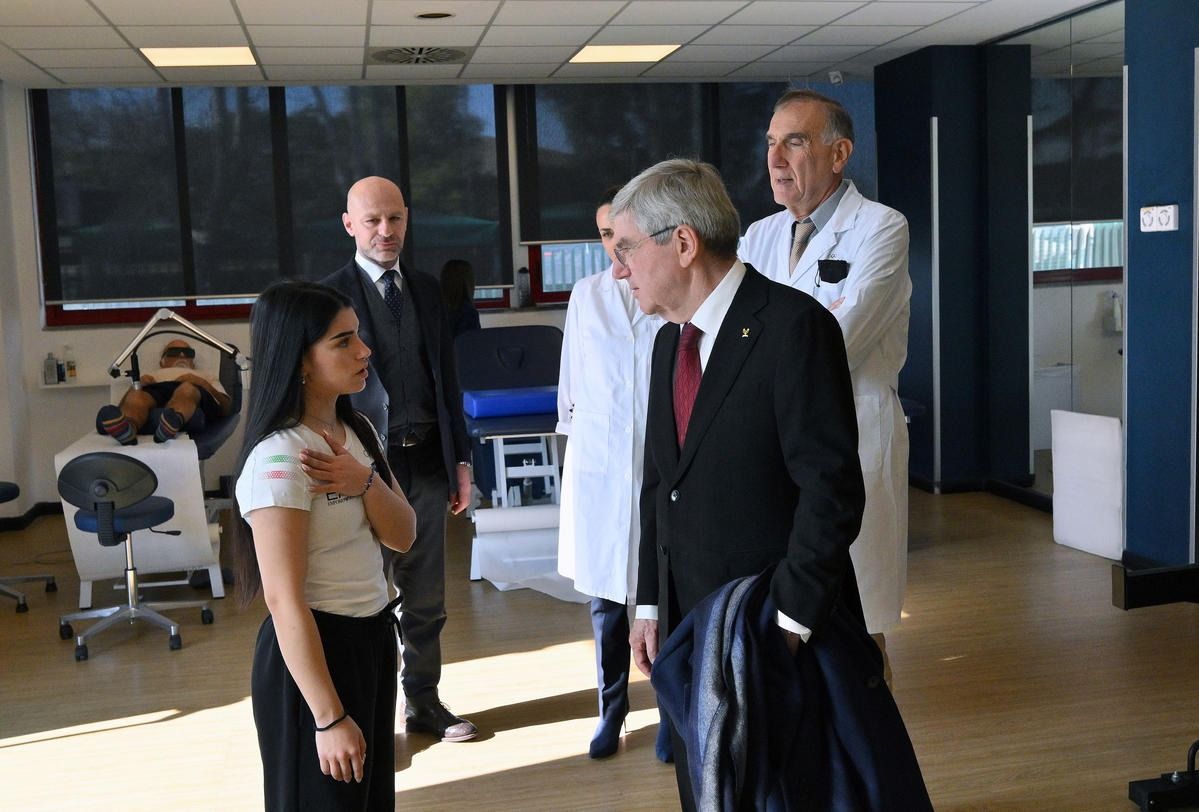
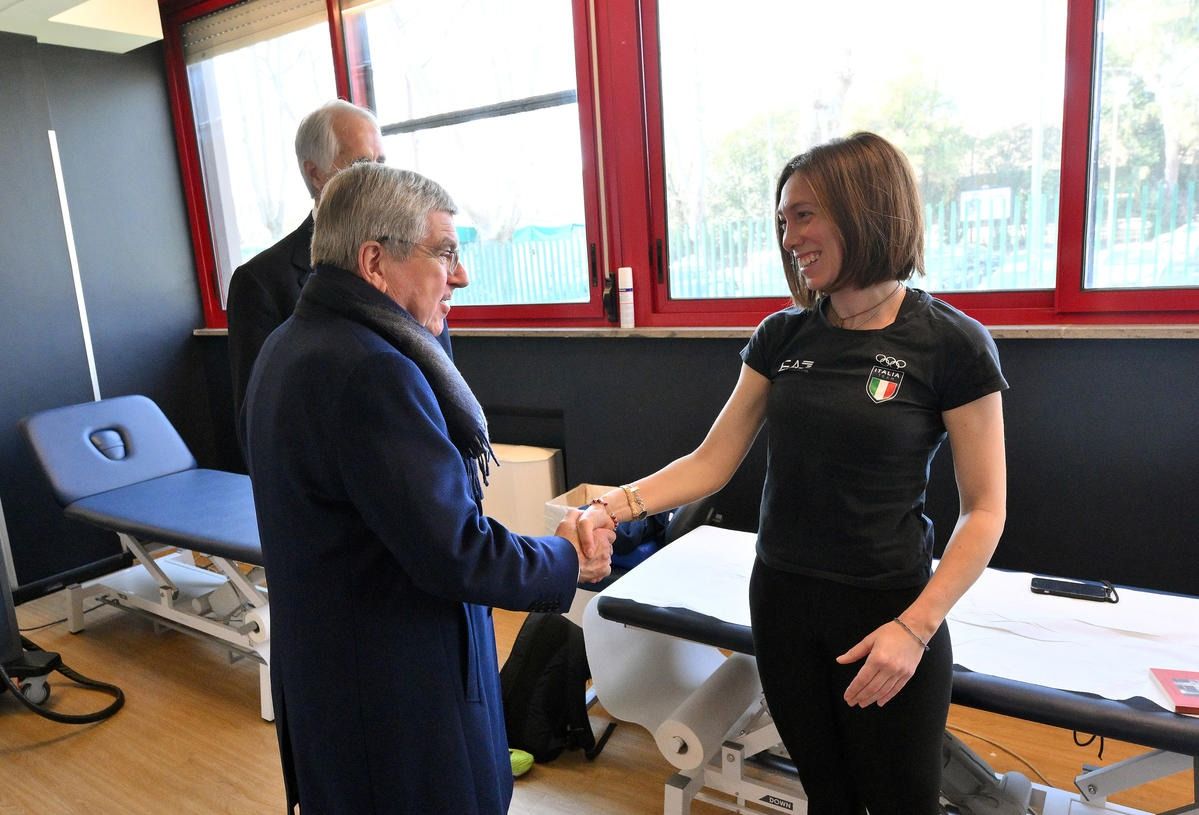
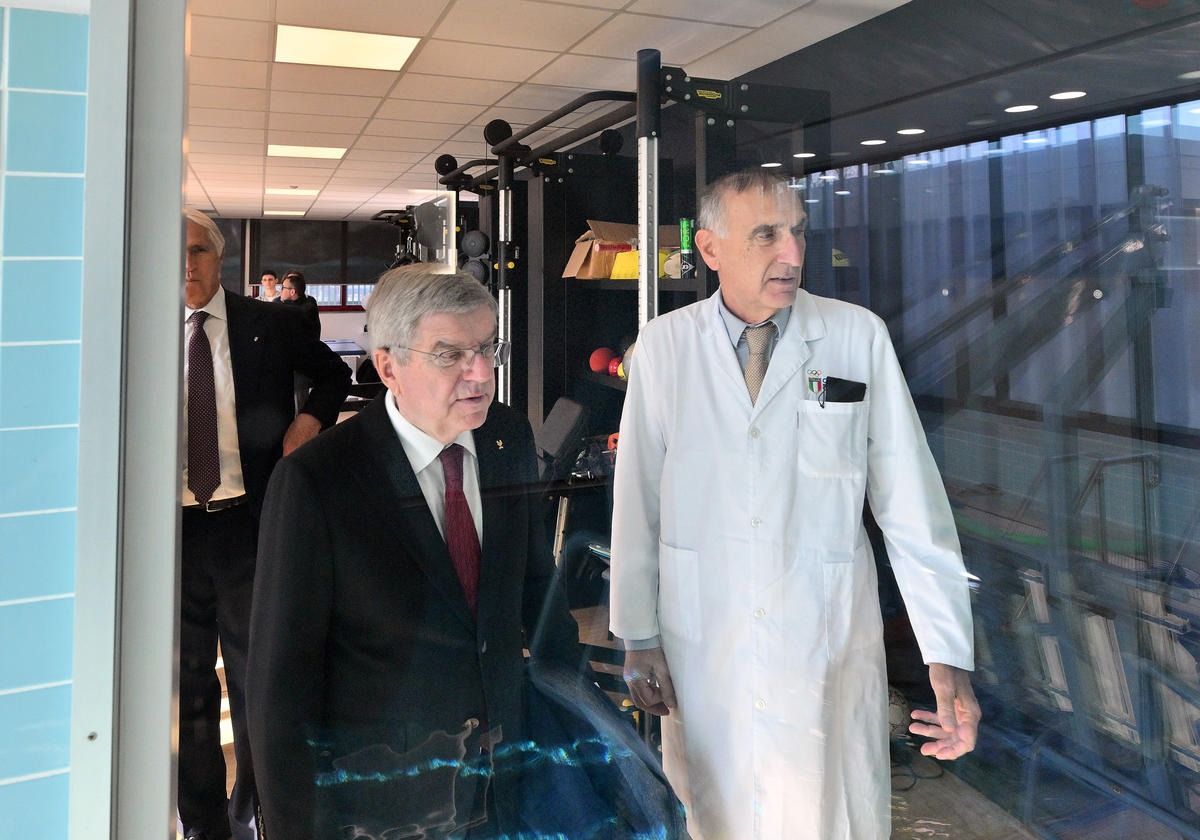
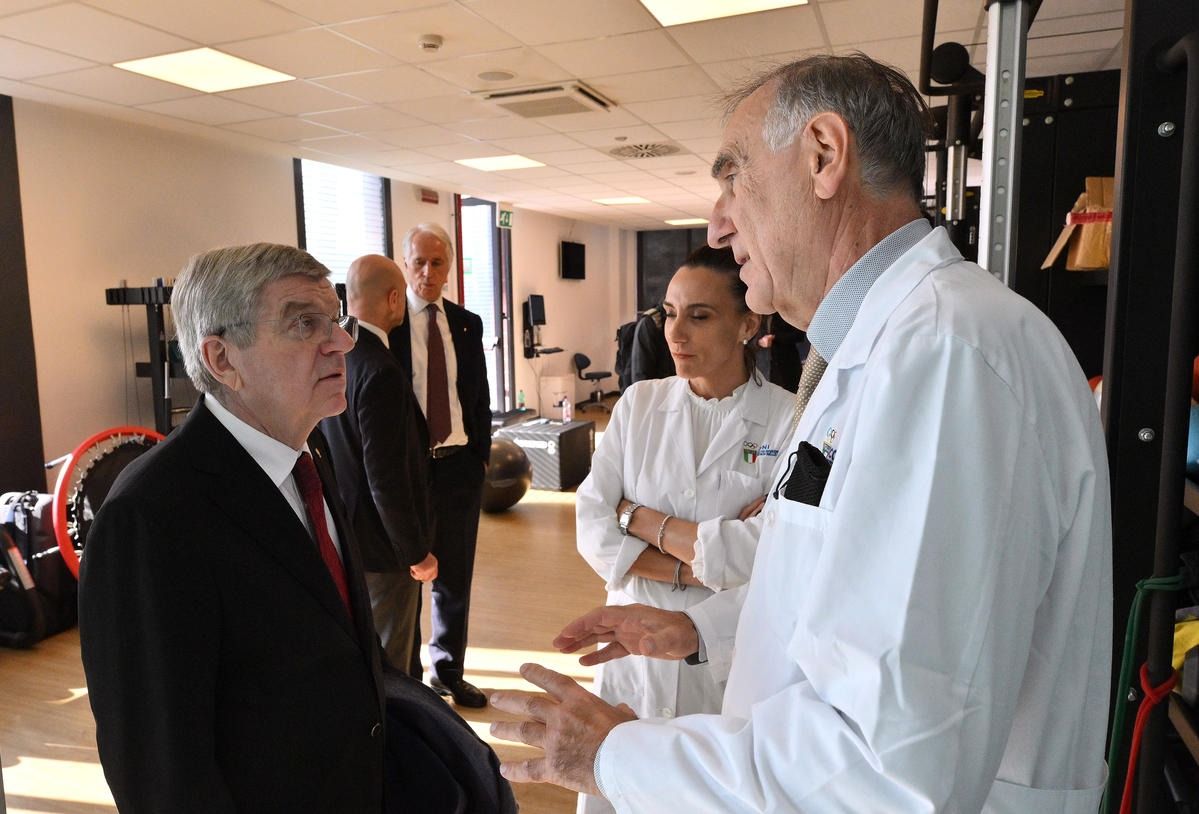
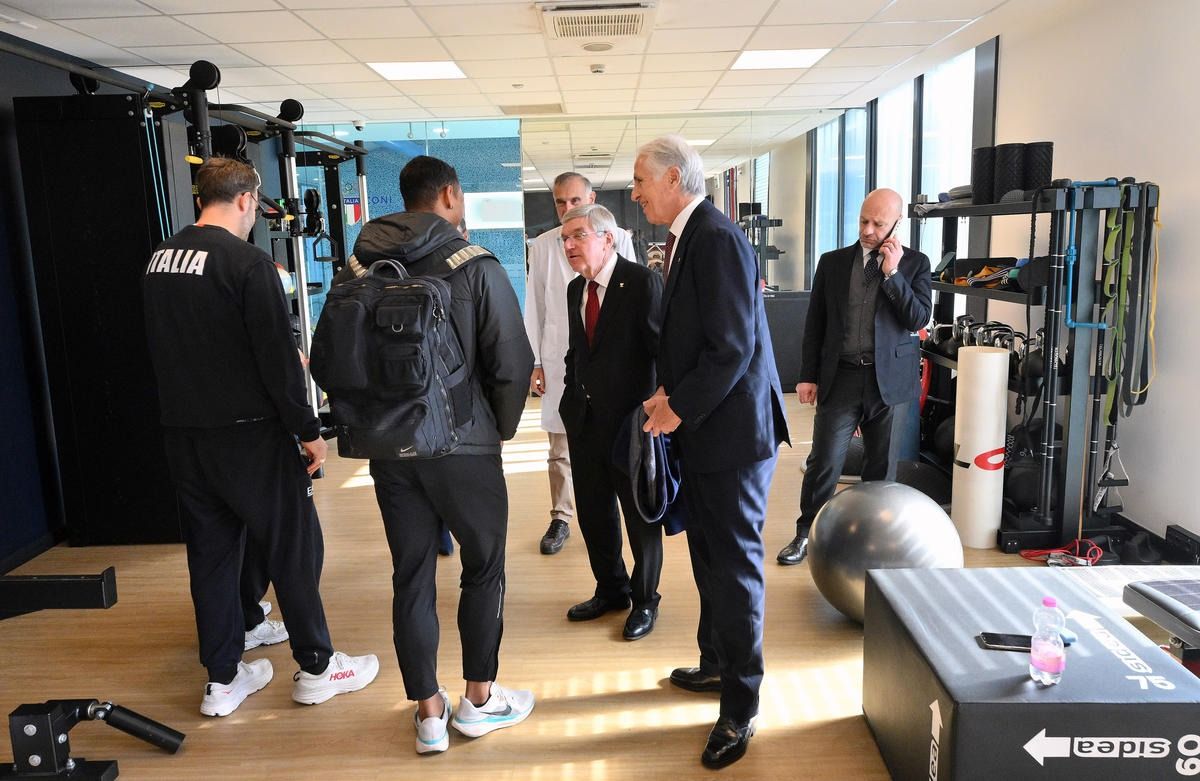
The IOC President, Thomas Bach, visited the Giulio Onesti Olympic Preparation Centre this morning. After his meeting at the Quirinal Palace with President of the Republic Sergio Mattarella, the head of the global sporting movement, accompanied by CONI President Giovanni Malagò, visited the CONI Institute of Sports Medicine and Science. Guided by Medical Director Professor Andrea Ferretti, Head of the Olympic Area Dr Maria Rosaria Squeo, and Giampiero Pastore, Head of the Institute, he expressed his appreciation for the facility, which serves as the national reference point for all Italian Olympic athletes.
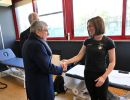
In the physio room, the IOC President greeted Italia Team athletes engaged in their respective rehabilitation programmes: Chiara Mormile (fencing), Giulia Imperio (weightlifting) and Lorenzo Simonelli (athletics). He then met Simone Alessio, the Olympic bronze medallist in taekwondo from Paris 2024.
Bach, together with Malagò, then moved on to the Sports High School of the Convitto Nazionale “Vittorio Emanuele II”, located within the Olympic Preparation Centre, where he greeted students from various classes, including Matteo Santoro, a national team diving athlete.
Later, the IOC President visited the centre’s new multi-purpose sports hall, where he met Italrugby coach Gonzalo Quesada, currently in training with the National Team ahead of the Six Nations. In the sports hall, Bach also spoke with staff from the CONI Institute of Sports Medicine and Science, wishing them good luck for Milano Cortina 2026.
In the centre’s lounge, after greeting Vito Dell’Aquila, the Olympic taekwondo champion from Tokyo 2020, Bach met with Italian executives holding senior international roles. The IOC President was welcomed on his arrival by the Minister of Economy and Finance Giancarlo Giorgetti, CONI Secretary General Carlo Mornati, and Vice-Presidents Silvia Salis and Claudia Giordani. The lunch was also attended by IOC member Ivo Ferriani, former CONI Presidents and IOC honorary members Franco Carraro and Mario Pescante, European Olympic Committees Secretary General Raffaele Pagnozzi, Milano Cortina 2026 CEO Andrea Varnier, Chief Strategy Planning Legacy Officer Diana Bianchedi, City Operations Manager Antonio Rossi, and several International Federation Presidents. Among those present were Professor Fabio Pigozzi, President of the International Federation of Sports Medicine; former President of the Association of Summer Olympic International Federations Francesco Ricci Bitti; Raffaele Chiulli, President of the Global Association of International Sports Federations; and Presidents of International Federations Sabatino Aracu (roller sports), Luigi Carraro (padel), Luciano Rossi (shooting), Marco Scolaris (sport climbing), and Massimo Sertori, Lombardy Region Councillor for Local Authorities, Mountains, Energy Resources, and Water Resource Use.
Il Presidente CIO Thomas Bach visita il CPO Onesti, poi incontro con dirigenti sportivi italiani

Thomas Bach received by President of the Republic Sergio Mattarella: Giovanni Malagò also present at the meeting
- AT THE QUIRINALE
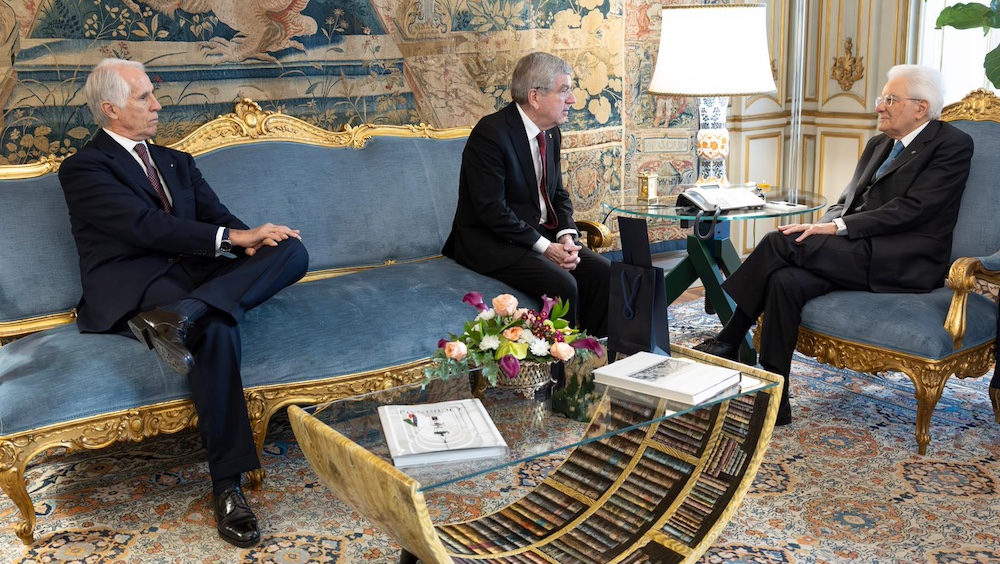
The President of the Republic, Sergio Mattarella, met this morning at the Quirinal Palace with the President of the International Olympic Committee, Thomas Bach. The private audience was also attended by the President of CONI, Giovanni Malagò.
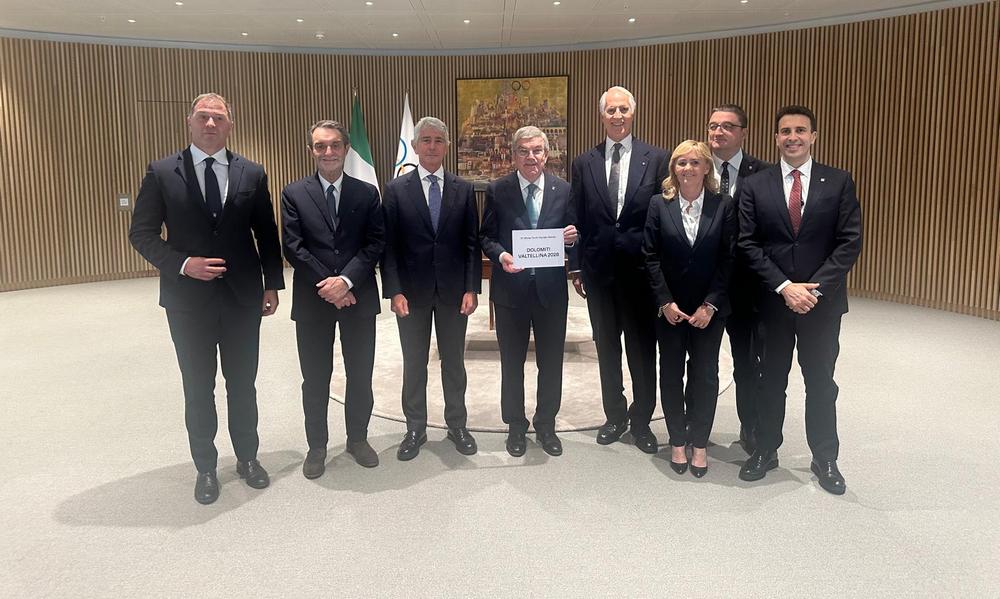
The IOC awards the Winter Youth Olympic Games 2028 to Dolomiti Valtellina. Malagò: “A historic day for Italian sport”
- FIFTH EDITION
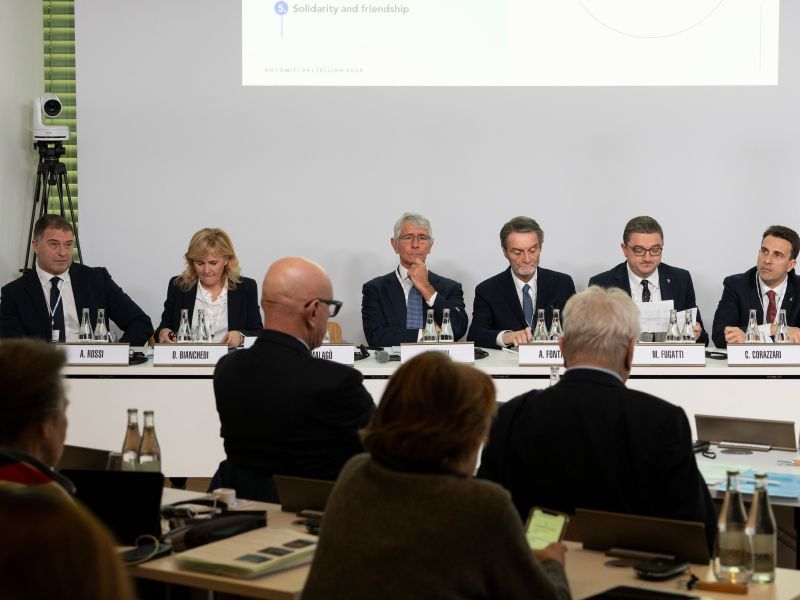
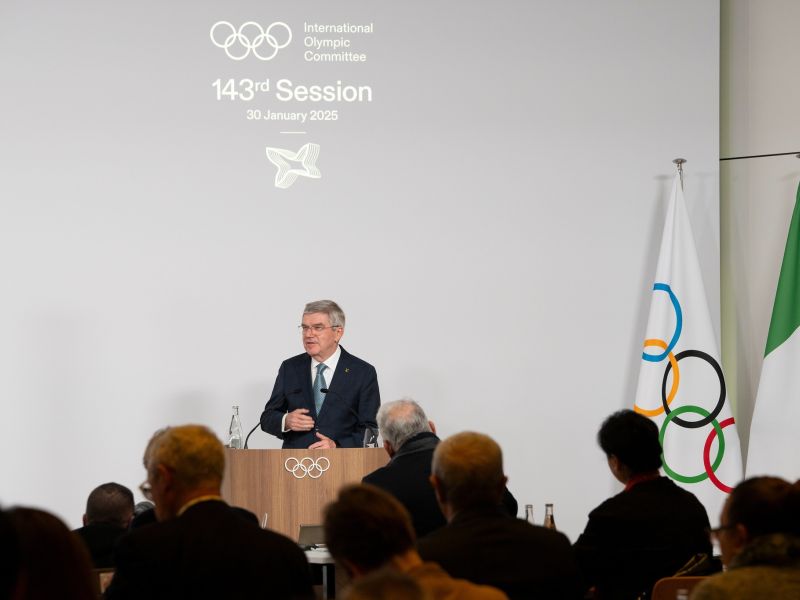
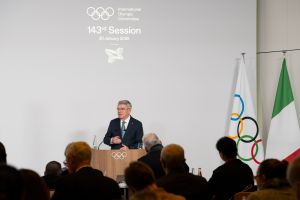
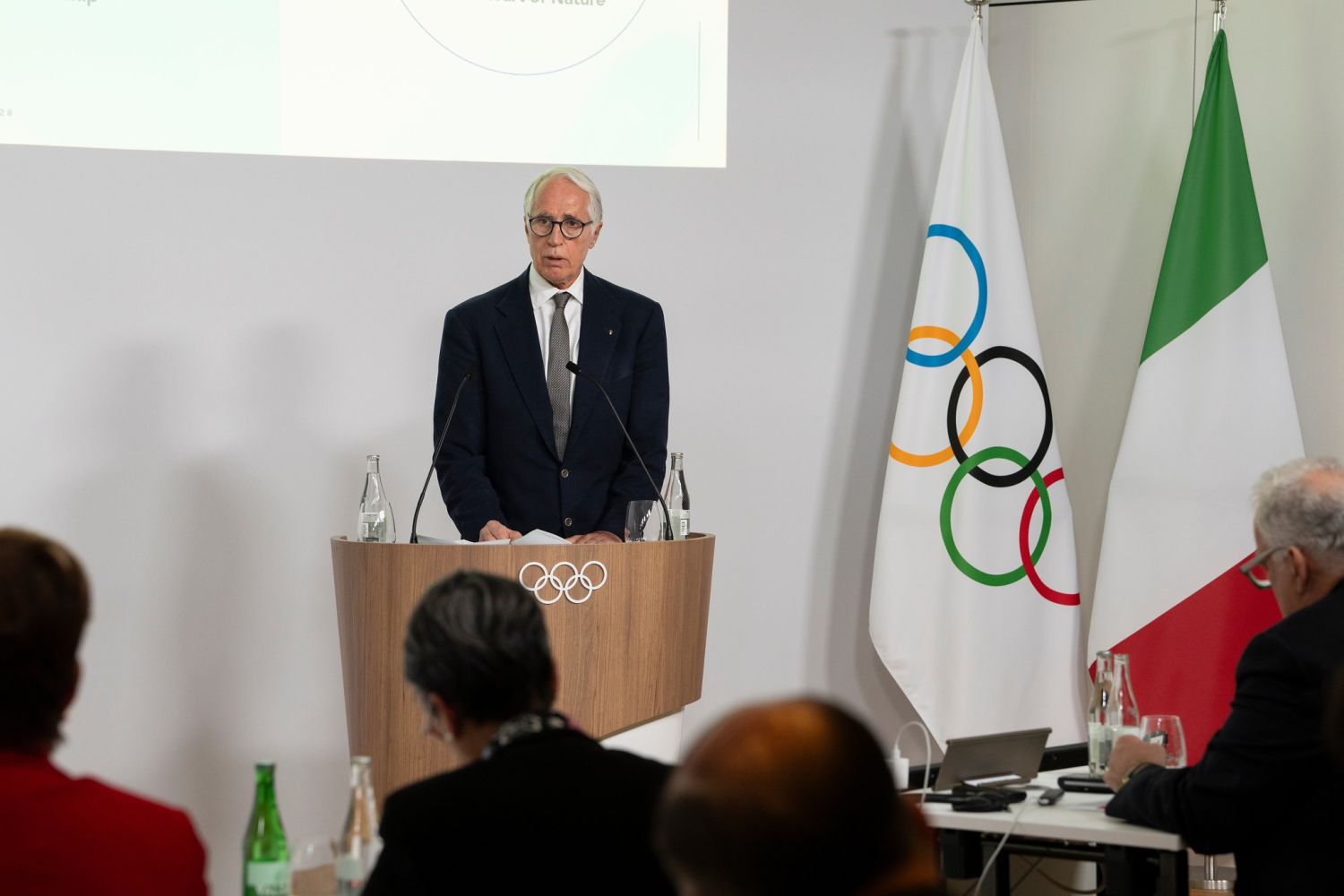
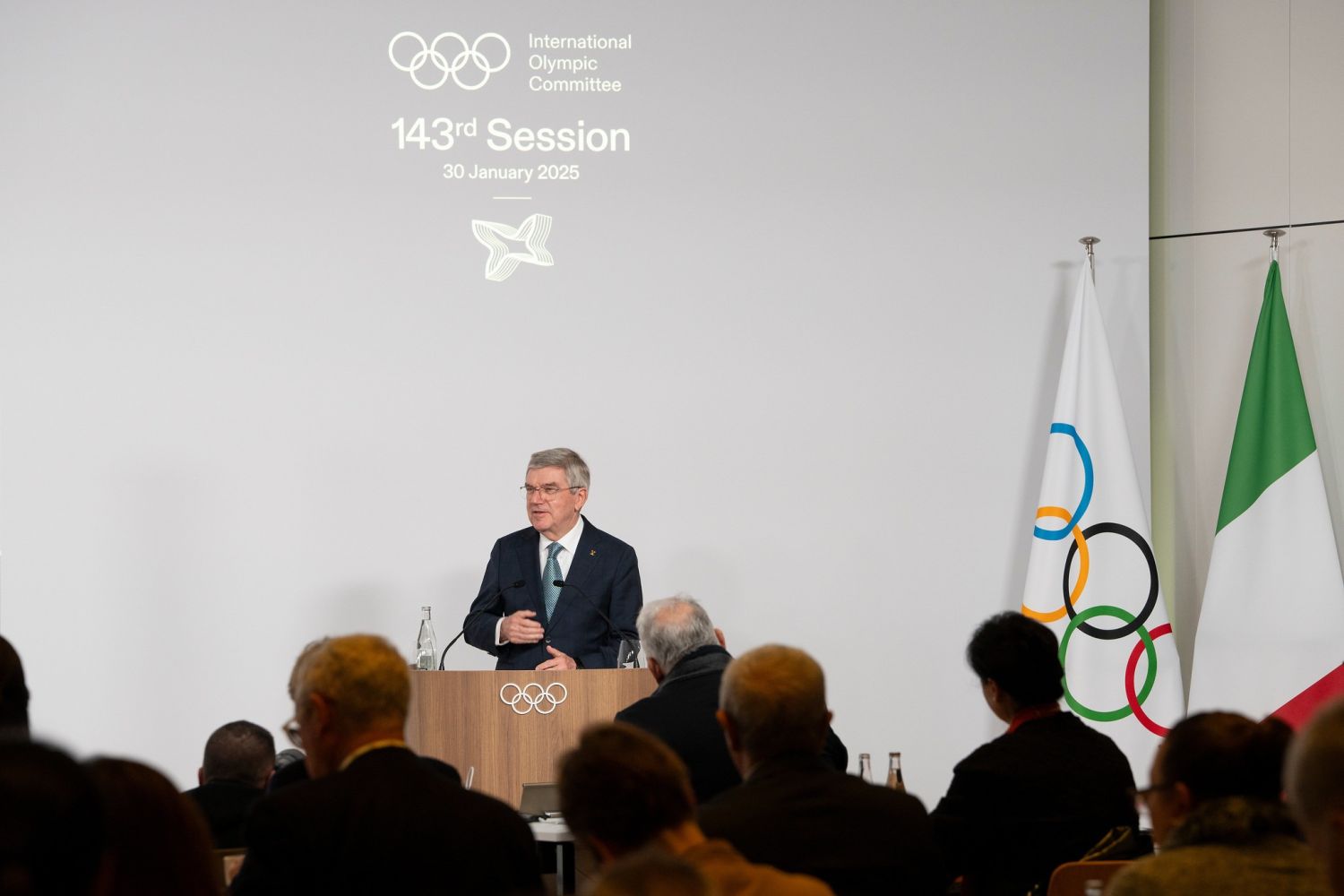
The Italian Alps are set to host the next Winter Youth Olympic Games (YOG) in 2028. The decision was made today by the members of the IOC during the 143rd session of the International Olympic Committee held in Lausanne.
Dolomiti Valtellina 2028 will be the fifth edition of the Winter YOG. The competitions will take place exclusively at existing venues across three clusters in Valtellina, Trentino and Cortina, returning to some of the iconic sports facilities that will also be used for the Milano Cortina 2026 Olympic Winter Games. The 2028 YOG will form part of the legacy of Milano Cortina 2026, reinvesting in communities with strong traditions in winter sports.
The project is led by the Italian National Olympic Committee (CONI), the regional governments of Veneto and Lombardy, and the Autonomous Province of Trento, with the support of the Government. It is in line with long-term plans to raise the profile of these regions as destinations for winter sports.
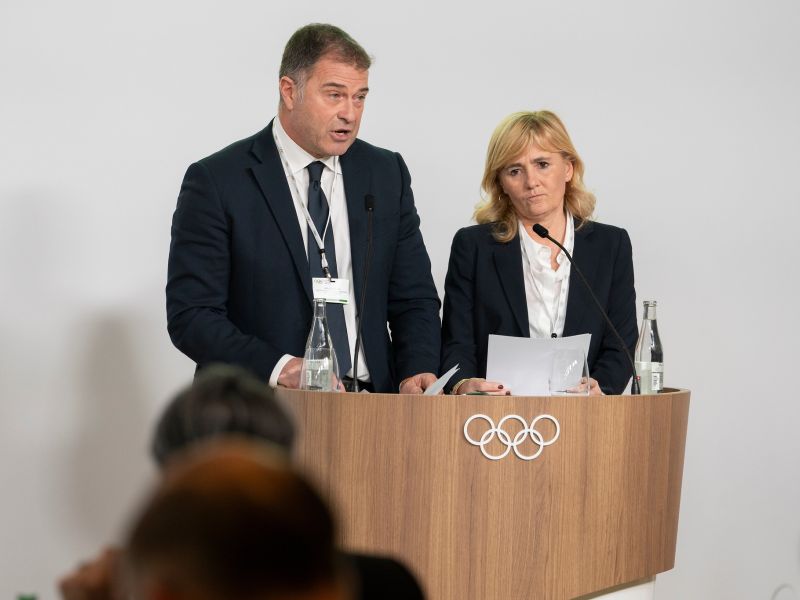
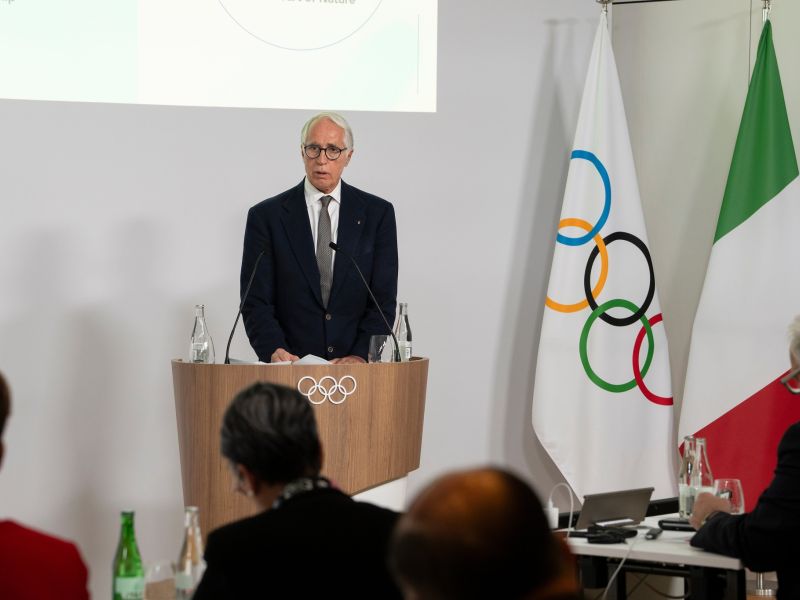
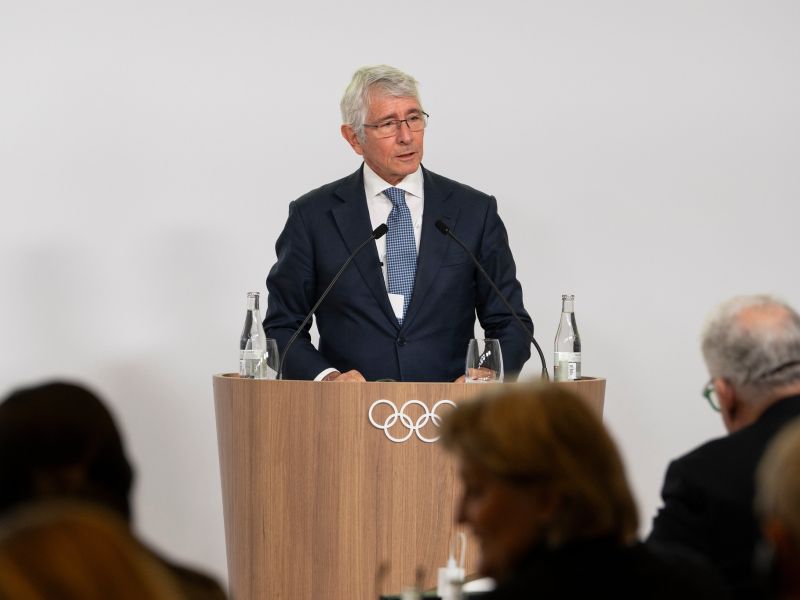
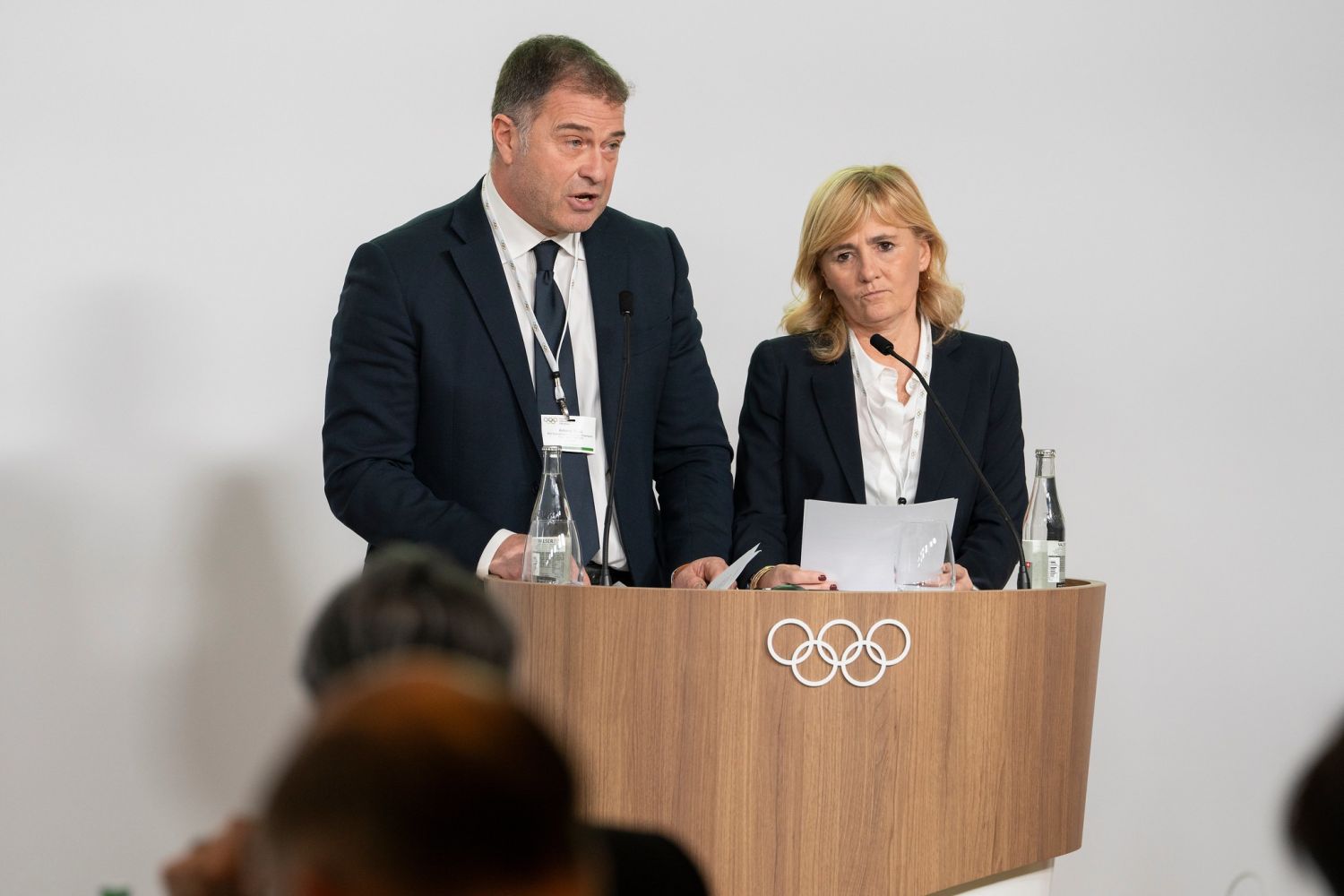
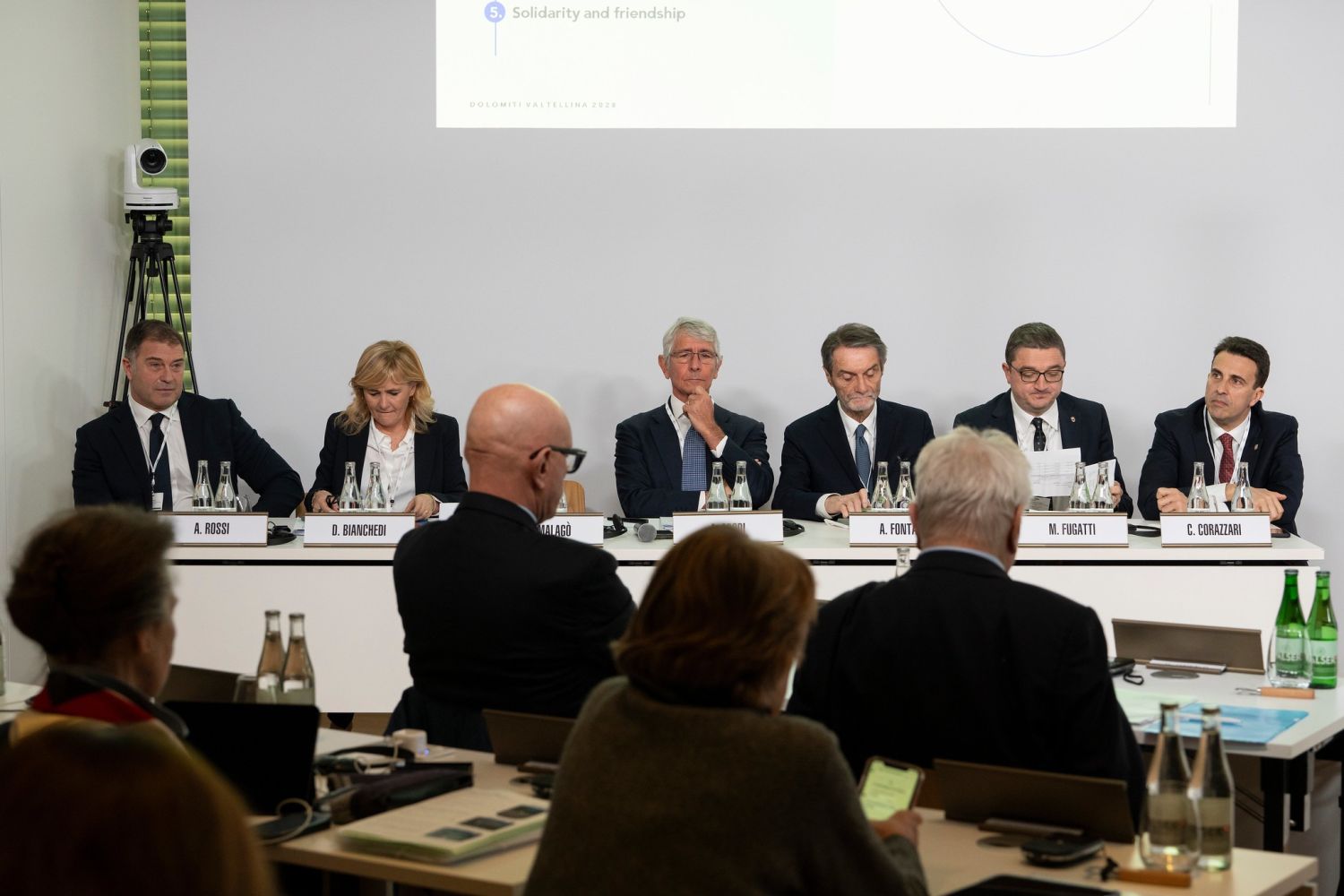
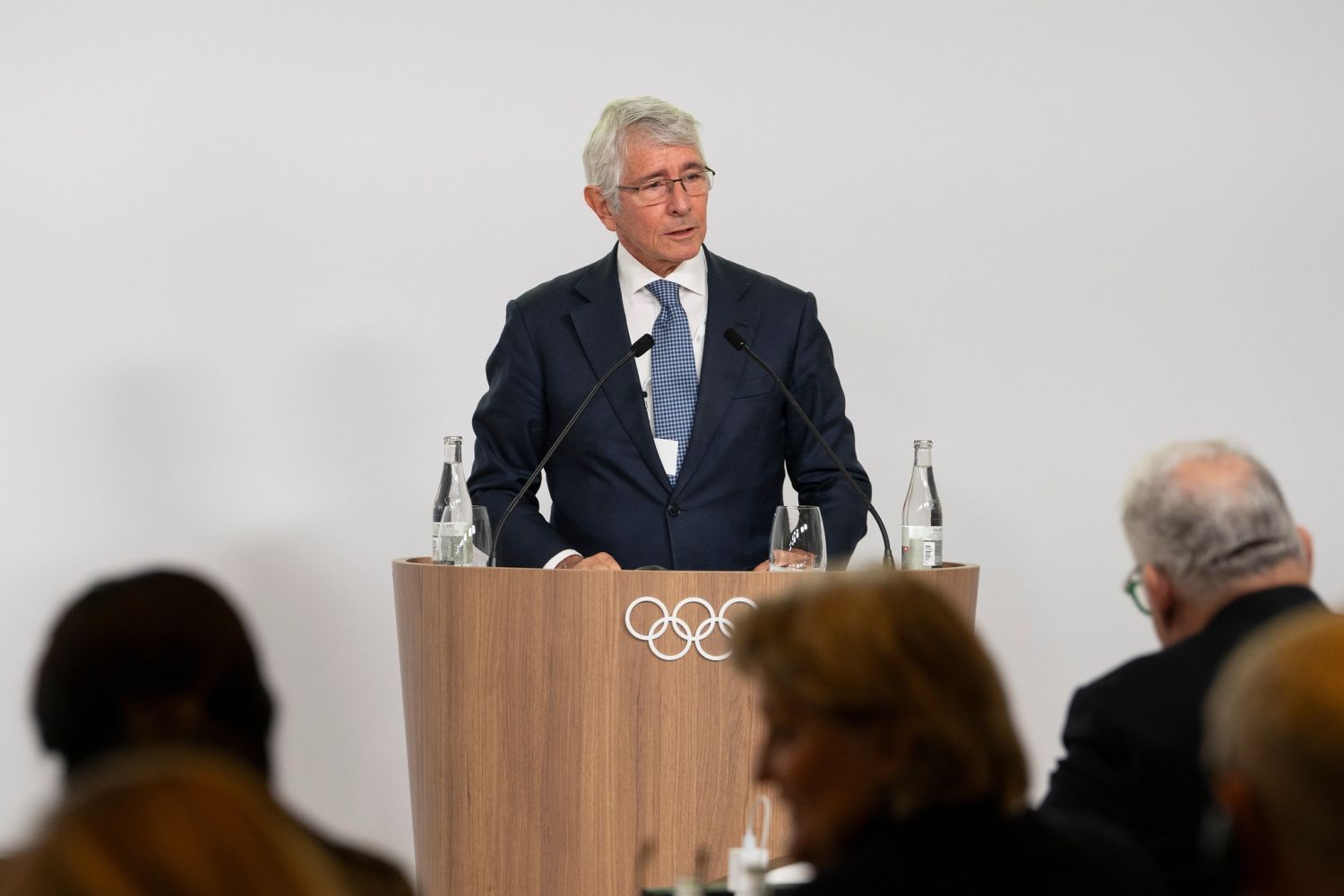
The Italian delegation at the Olympic House included Giovanni Malagò (full speech available here), President of CONI and IOC Member for Italy; Andrea Abodi, Minister for Sport and Youth; Attilio Fontana, President of the Lombardy Region; Maurizio Fugatti, President of the Autonomous Province of Trento; Cristiano Corazzari, Councillor for Culture and Sport of the Veneto Region; and Olympic champions Diana Bianchedi and Antonio Rossi.
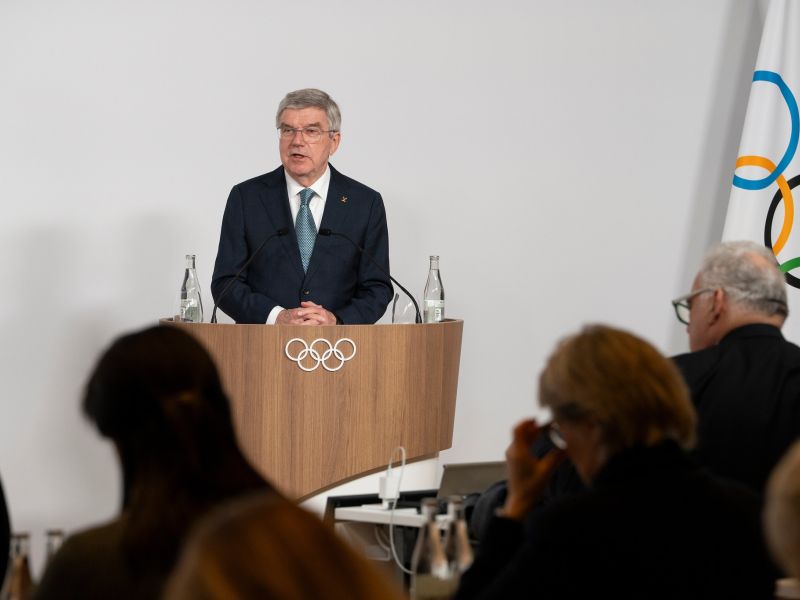
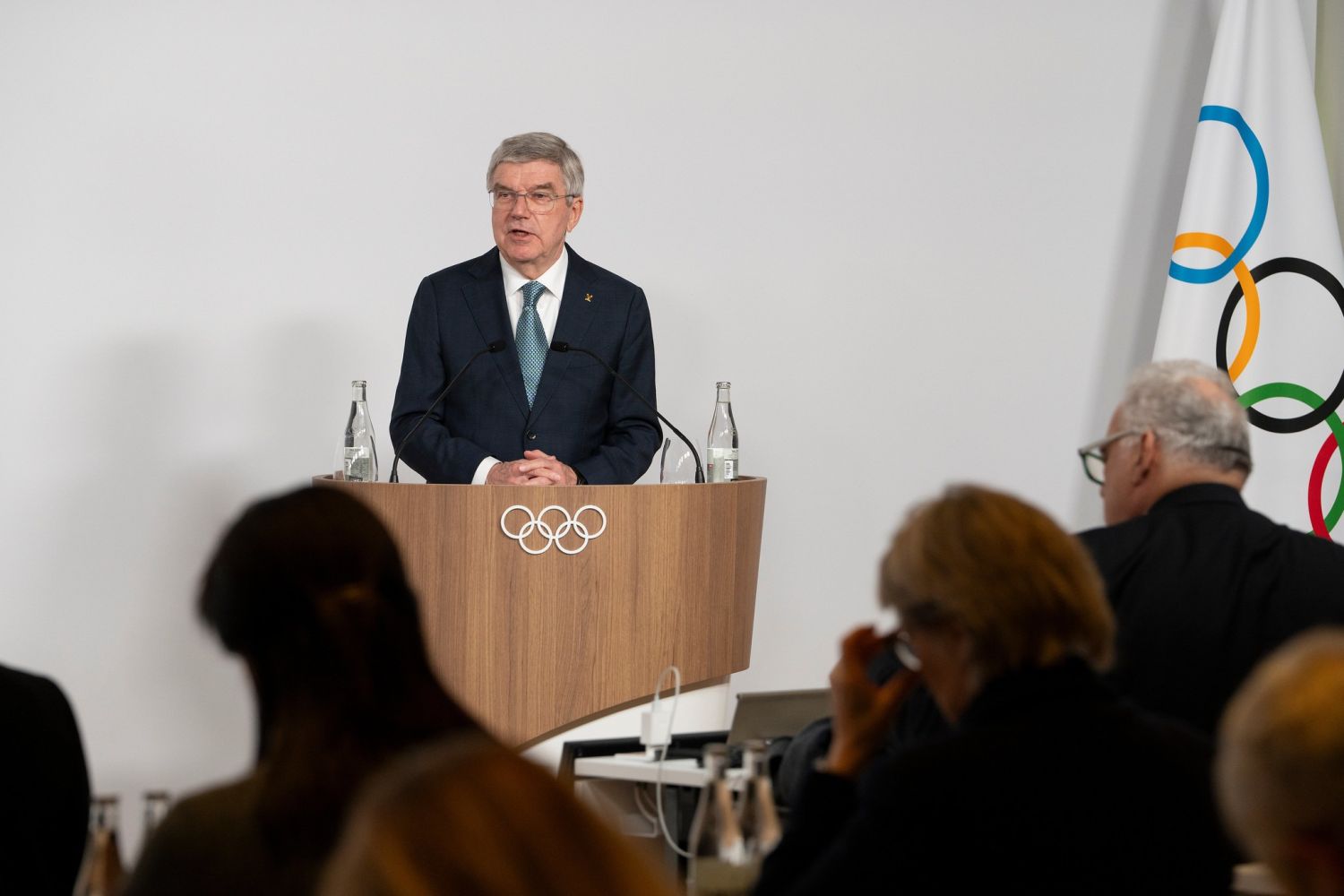
IOC President Thomas Bach said: “The choice of Dolomiti Valtellina 2028 is a sign of the IOC’s confidence in Italy’s ability to deliver outstanding, world-class winter sports events. The Olympic Movement and the host regions are already excited about Milano Cortina 2026, with just over a year to go before the Olympic and Paralympic Winter Games. Today’s news means that the enthusiasm will continue through to the end of the decade, and the benefits for local communities will carry on.”
Abodi added: “Italy is once again ready to put heart, passion and expertise into hosting an event that will not only be a spectacular sporting occasion but also a significant opportunity for the whole nation’s growth. We aim to inspire younger generations to embrace the values of sport as a tool for inclusion and social cohesion – a universal language capable of uniting cultures and nations and fostering the diplomacy we so need.”
Dolomiti Valtellina 2028 will be possible, Abodi continued, thanks to full collaboration between the Government, the Lombardy Region, the Veneto Region, the Autonomous Province of Trento and CONI. “The organisation of the Winter Youth Olympic Games will be another showcase for the infrastructure delivered by SIMICO – Società Infrastrutture Milano Cortina – leaving further positive legacies in terms of sports facilities, educational programmes and social initiatives that will continue to have an impact long after the YOG 2028 have concluded.”
Karl Stoss, IOC member and Chair of the Future Host Commission for the Olympic Winter Games, the IOC body responsible for monitoring and assessing interest in hosting the Olympic Winter Games and the Winter Youth Olympic Games, presented the IOC’s report on Dolomiti Valtellina 2028. “Dolomiti Valtellina 2028 will consolidate the impact of Milano Cortina 2026 and further build on the legacy programmes to develop young athletes and civic leaders,” said Stoss. “The Commission found that the vision for the Youth Olympic Games is fully aligned with long-term regional plans, youth policies, sport and education initiatives, and the goals of Olympic Agenda 2020 and 2020+5.”
The programme, running from 15 to 29 January 2028, will include all seven Olympic winter sports: biathlon, bobsleigh, curling, ice hockey, luge, skating and skiing.
Seven of the 11 proposed venues for the YOG will already be in use in 2026: the Stelvio slope in Bormio for alpine skiing, the Aerials & Mogul Park and Snow Park in Livigno for freestyle and snowboard, the Sliding Centre in Cortina for bobsleigh, skeleton and luge, the Predazzo ski jumping stadium, the Tesero cross-country ski stadium, and the Cortina Olympic Ice Stadium for curling. There is also the opportunity to host competitions at venues that could not be used for 2026.
No athlete will be more than an hour away from their competition venue, with seven of the 11 venues located within 15 minutes of their respective villages.
A festival of sport, art and local culture will take place throughout 2027, culminating in the Olympic Torch celebrations in December. During the YOG, festival sites will operate in Bormio and Trento.
The YOG will provide young people with a platform to take on leadership roles, practise winter sports and adopt healthier lifestyles. An ambitious series of legacy initiatives will be extended from 2026 to 2028, including Milano Cortina 2026’s “More Movement” goal, promoting 30 minutes of daily exercise and working with national federations to encourage youth participation in competitive sport.
The recent hosting of the Olympic Winter Games will bring efficiencies in areas such as venues, transport infrastructure, workforce and marketing.
The YOG will be managed by a dedicated Organising Committee with a Memorandum of Understanding with Milano Cortina 2026, to foster collaboration between the two entities.
CONI President Giovanni Malagò stated: “This is a historic day for Italian sport and for athletes around the world. Building on the extraordinary legacy of Milano Cortina 2026, Dolomiti Valtellina 2028 will offer a unique opportunity to inspire new generations, showcase the transformative power of sport, and set new benchmarks for global events. This major achievement for our country was made possible thanks to the strong support of the national Government and the dedication of our regional and local partners. Italy and CONI have proven to be reliable partners of the IOC, and together we will certainly deliver an unprecedented edition of the YOG.”
IOC members voted 89 “yes” to Dolomiti Valtellina and 1 “no” out of 90 valid votes, with 2 abstentions.
Il CIO assegna a Dolomiti Valtellina i Giochi Olimpici Giovanili Invernali 2028

Winter EYOF: 56 Azzurrini to compete in Georgia. Women’s national hockey team debut on 7 February
- BAKURIANI 2025
The team for the seventeenth edition of the Winter European Youth Olympic Festival has been announced.
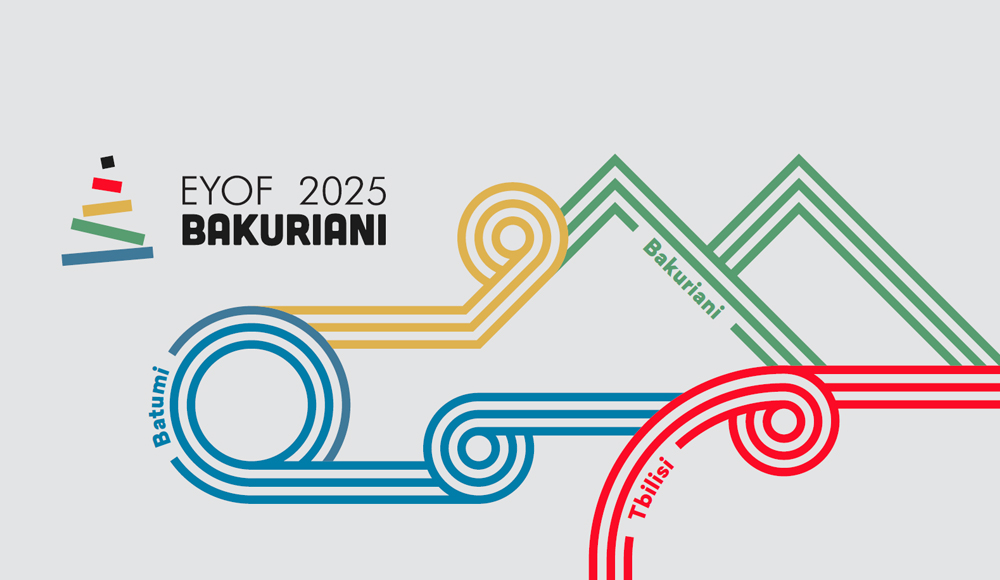
Fifty-six Azzurrini will represent Italy at the event organised by the European Olympic Committees, dedicated to athletes aged 14 to 18, scheduled from 9 to 16 February in the Georgian cities of Bakuriani, Tbilisi and Batumi.
The Italian team will compete across all eight disciplines on the programme, with a total of 56 athletes – 19 boys and 37 girls – facing their peers from other European nations. Georgia’s capital, Tbilisi, will host the hockey tournament, while the biathlon, freestyle skiing, alpine skiing, cross-country skiing and snowboarding events will take place on the slopes of Bakuriani. Batumi, meanwhile, will stage the figure skating and short track competitions.
Among the selected Azzurri are two athletes who were part of the delegation that topped the medal table at the Gangwon 2024 Winter Youth Olympic Games last year. Gregorio Marchelli, who will compete in snowboarding, and Giorgia Todesco, a member of the ice hockey team.
It will be the women’s ice hockey team that kicks off the competitions, facing Finland in the first match of the group stage, scheduled for Friday 7 February at the Tbilisi Ice Arena.
The official opening ceremony of the Bakuriani 2025 Winter EYOF will take place on 9 February.
Bakuriani 2025 takes over from the edition held in the mountains of Friuli Venezia Giulia in January 2023, where Italy achieved a record result with 21 medals: 6 golds, 8 silvers and 7 bronzes.
Italia Team bids farewell to 2024 with pride and awareness: records in Paris and a year of extraordinary successes
- THE TRICOLOUR FLIES HIGH
A year of thrills, a year of triumphs, a year of medals. 2024 closes as a historic chapter for Italian sport, with the Azzurri shining both at senior and youth level.
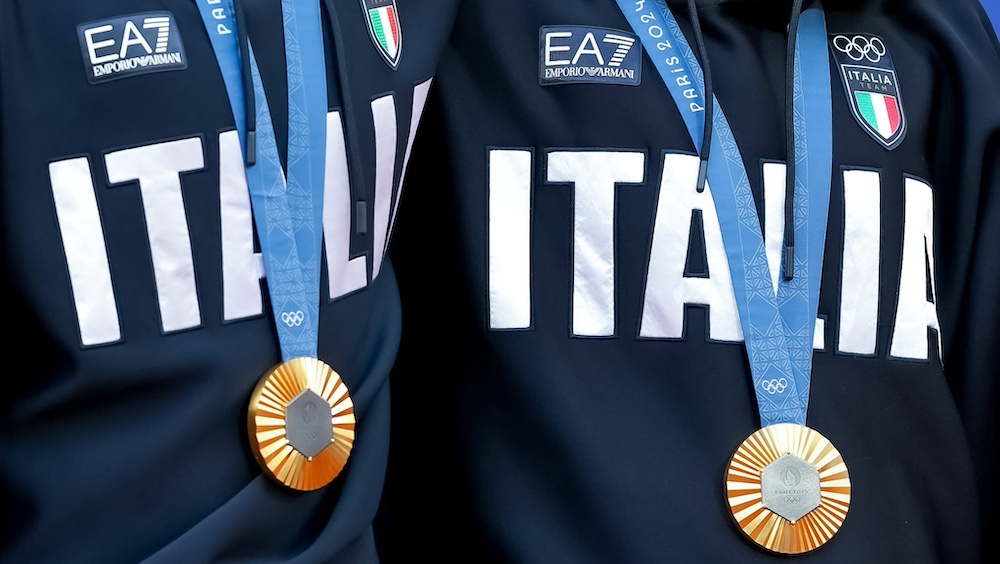
Just hours before the arrival of 2025, it is time to take stock. The numbers show an Italia Team excelling across all rankings: third for number of podiums (across the Olympic Games, World Championships, European Championships, World Cup stages and international tournaments), behind the United States and France – one position better than in 2023; fourth worldwide (up two places from the previous year) and second in Europe for victories. Italia Team is also third for the number of athletes placed among the top eight across all competitions held this year. It reflects the strength of a thriving and victorious multisport movement, starting from the highlight of the year: Paris 2024, the best Olympics in the history of Italia Team.
40 medals (12 golds, 13 silvers, and 15 bronzes), the same number as the record set in Tokyo 2020 but with two more golds (10 to 12) and three more silvers (10 to 13). The ninth-place finish in the medal table confirms our country’s place among the world’s sporting elite (seventh overall in terms of podiums, third in Europe behind Great Britain and host nation France). Since the last four days of Rio 2016, Italy has never been off the Olympic podium. This streak continued in Tokyo and Paris (photo: Simone Ferraro CONI), reaching 36 consecutive days, and remaining open ahead of the next major summer target: Los Angeles 2028.
The year began with the Olympic Games – the Winter Youth Olympic Games in Gangwon (South Korea), where, for the first time in any Olympic event, senior or junior, Italia Team won the overall medal table (a day in advance) with a record number of gold medals (11): a feat never before achieved by any other country in the history of the Winter Youth Olympic Games.
But the Tricolour was not only flown proudly under the five rings. From the world title of judoka Odette Giuffrida to the dominance of sailors Ruggero Tita and Caterina Banti in the Nacra 17, from the world championship victories of Simona Quadarella (swimming) and Francesco Fortunato and Valentina Trapletti (race walking) to what proved to be the finest season in the history of Italian tennis, culminating in Italy’s triumphs both in the men’s Davis Cup and the women’s Billie Jean King Cup.
And then the multiple European titles, the World Cup successes, and the great results collected on snow and ice by athletes moving confidently towards the next five-ringed milestone; the home Olympics: Milano Cortina 2026. We celebrate the achievements of today and work towards the triumphs of tomorrow, always with the passion for sport and the Azzurra shirt.
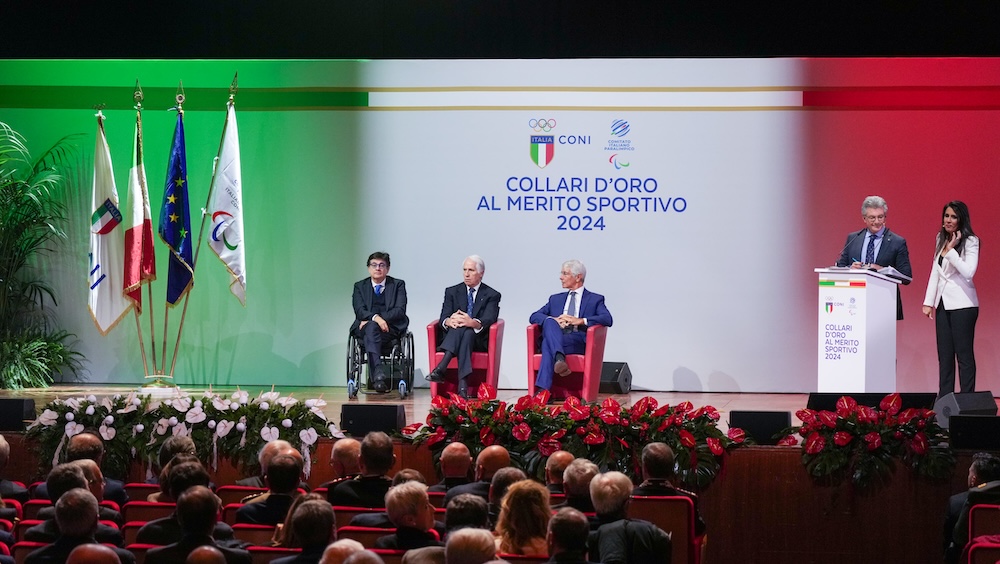
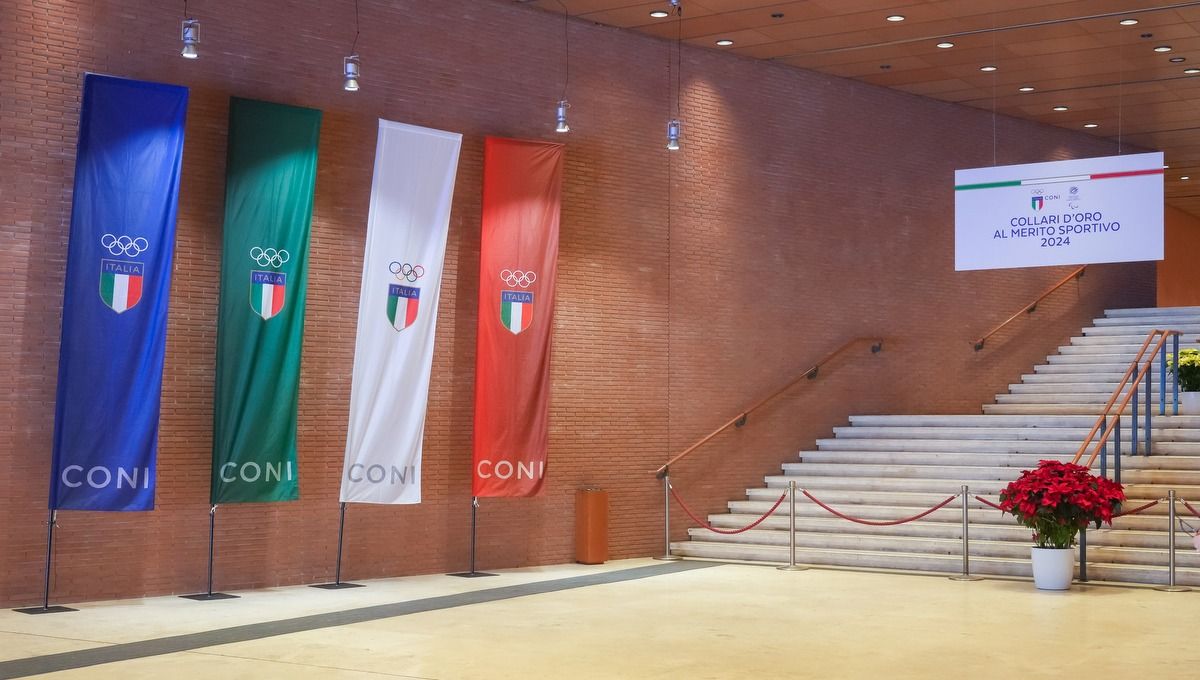
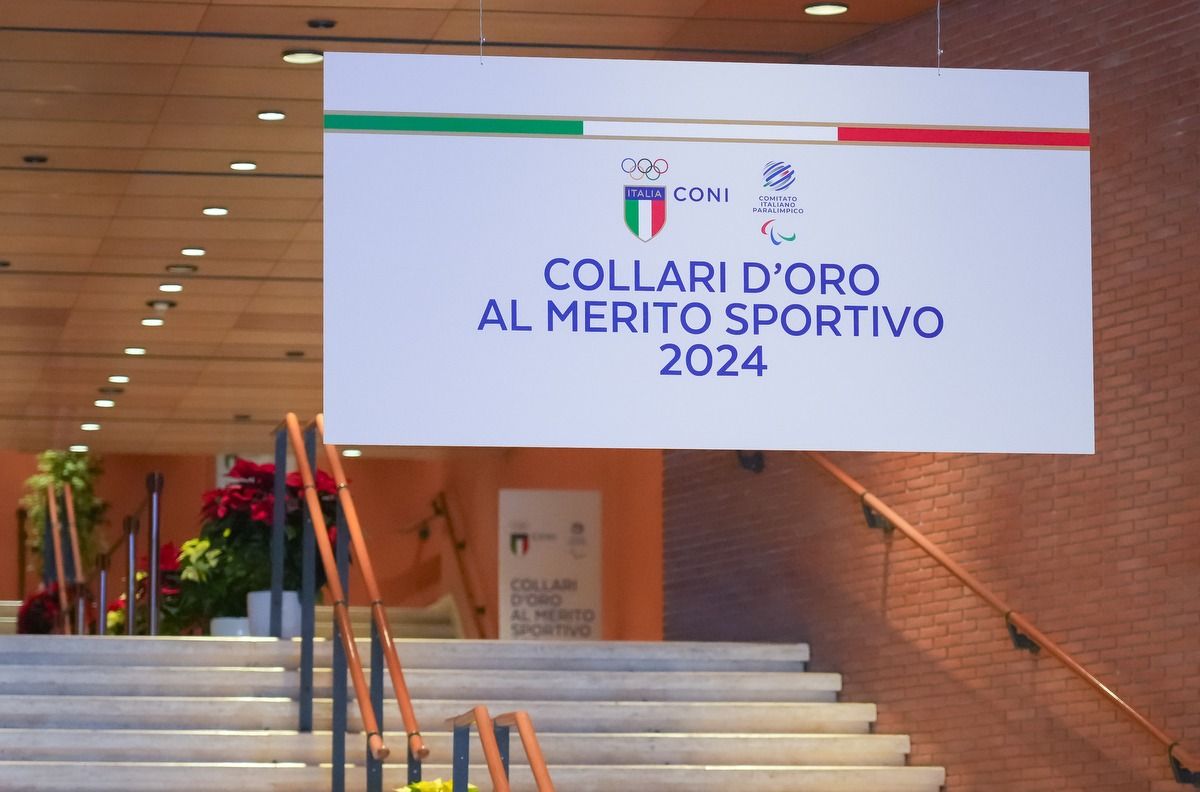
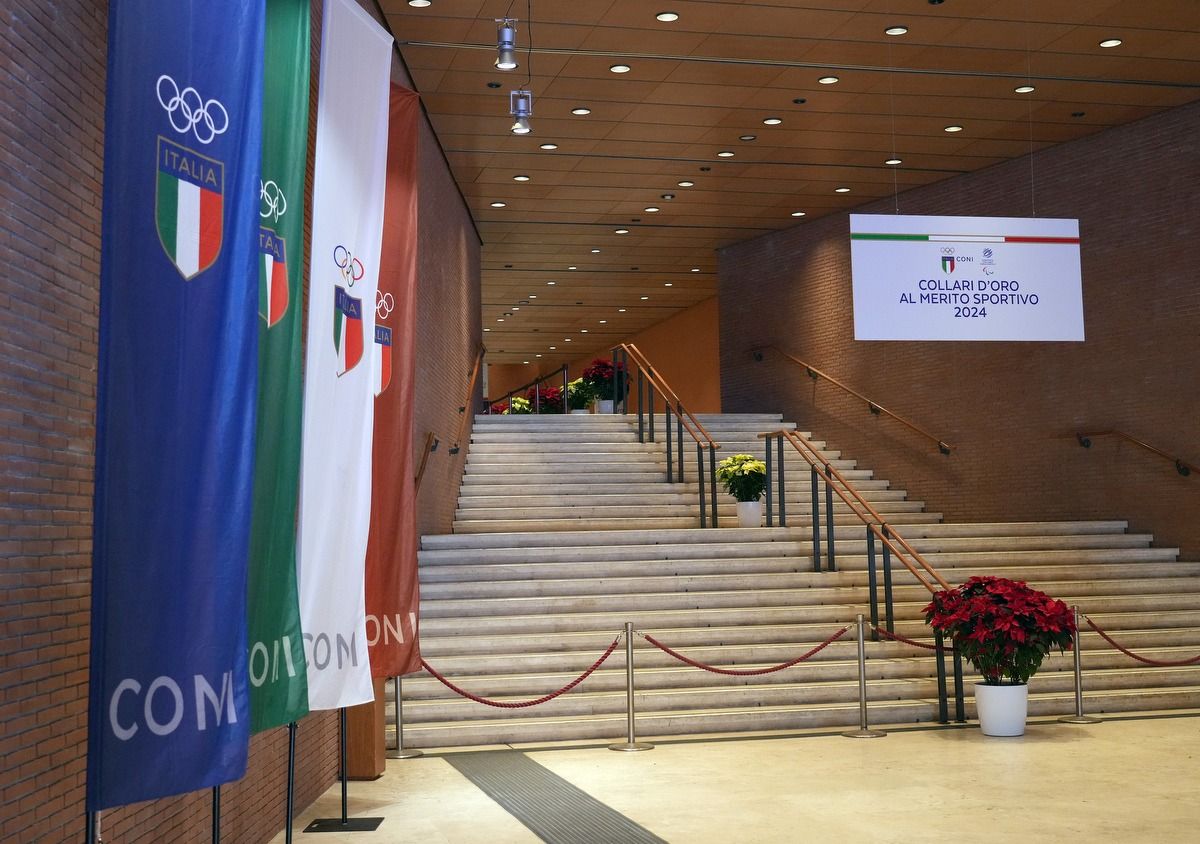
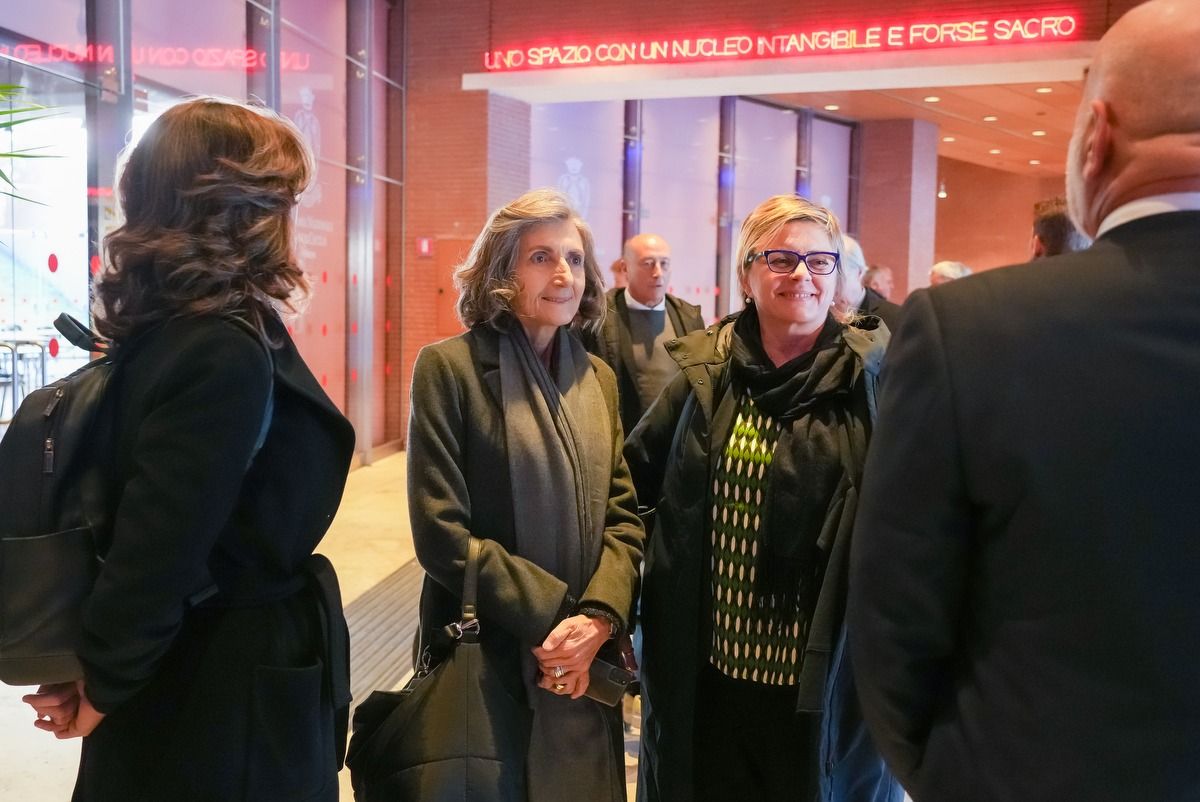
Collari d’Oro awarded. Premier Meloni: “2024 has been an unforgettable year for Italian sport”
- AUDITORIUM PARCO DELLA MUSICA
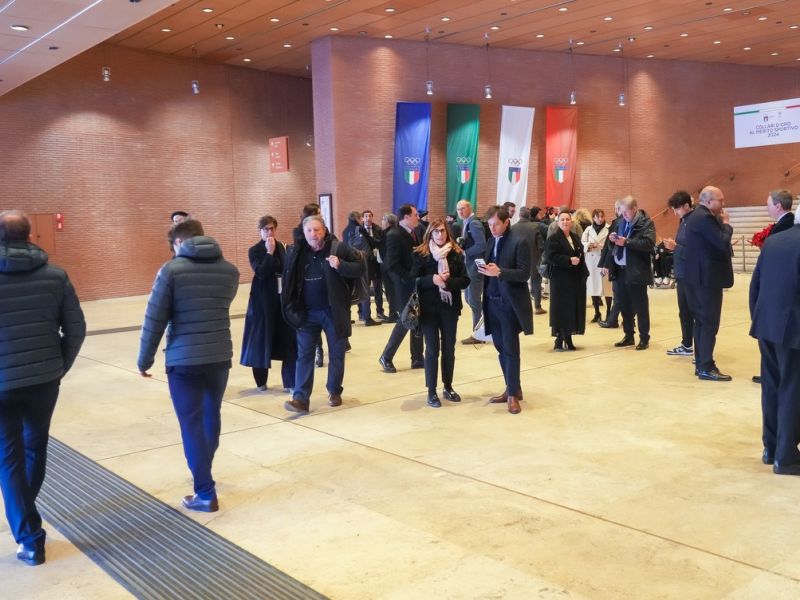
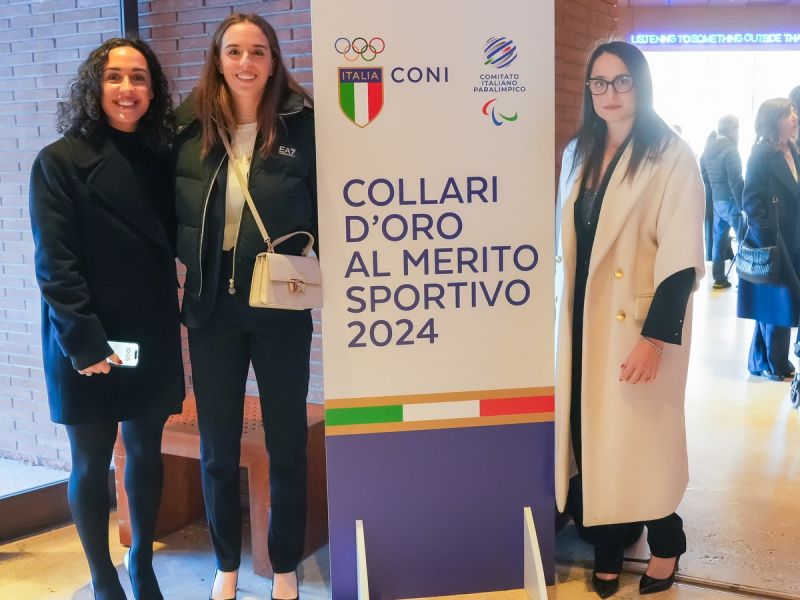
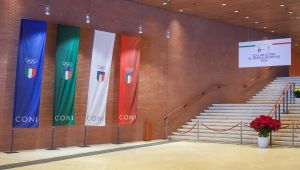
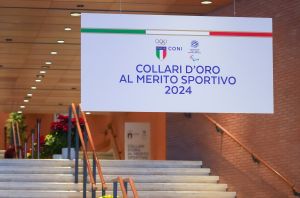
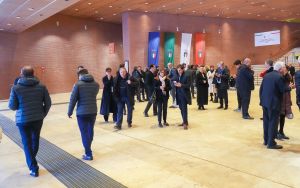
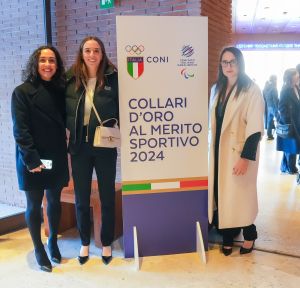
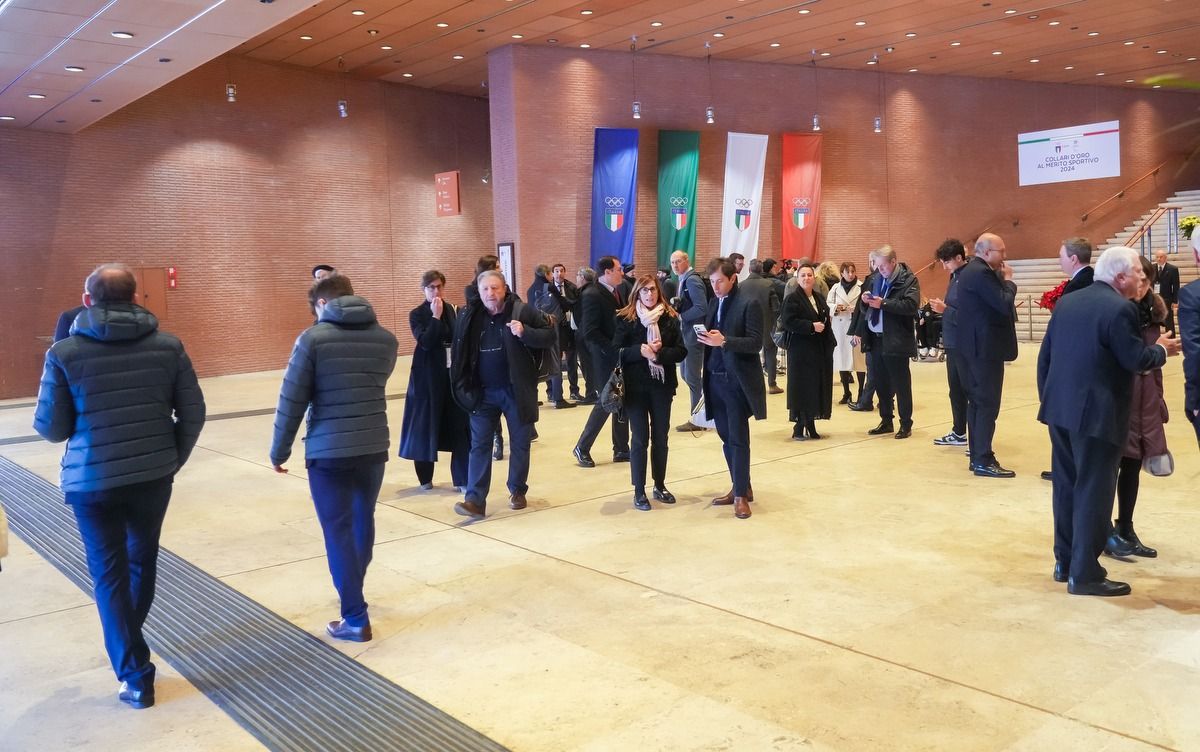
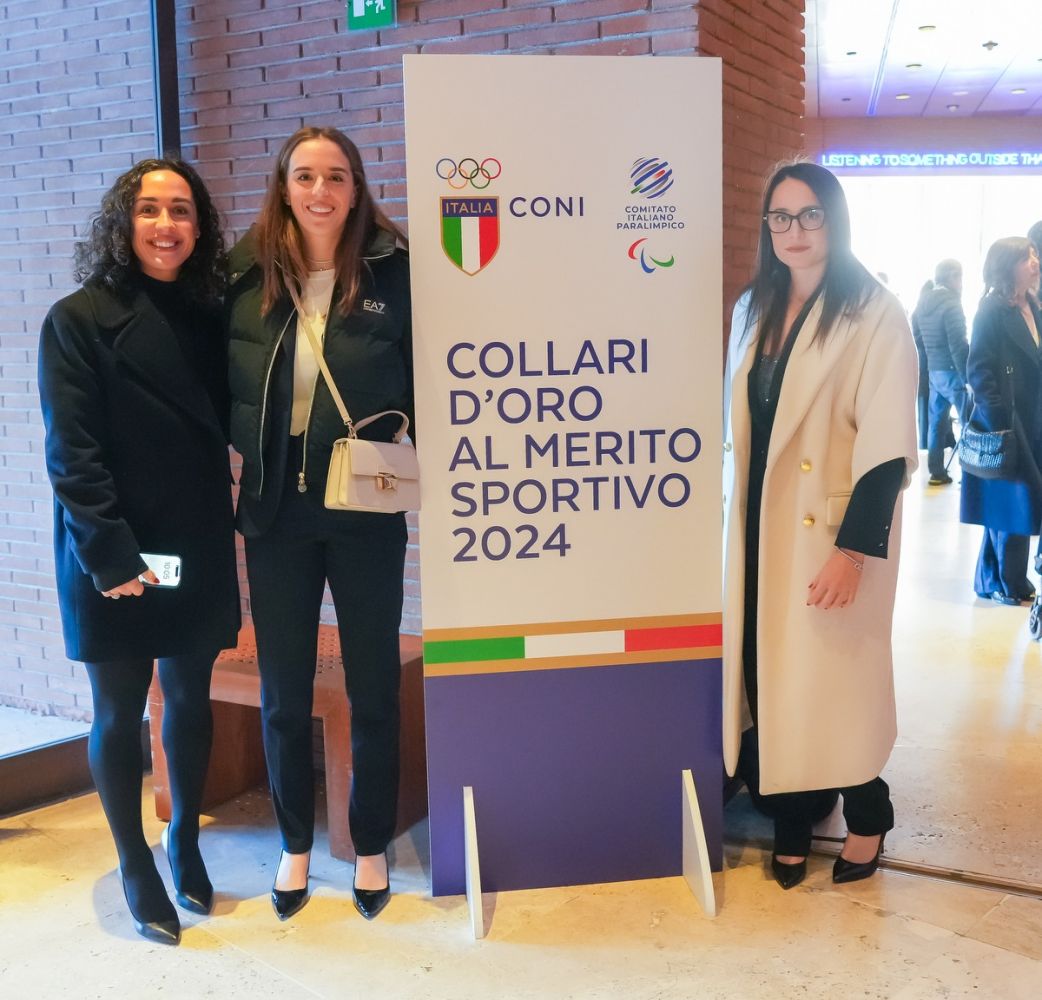
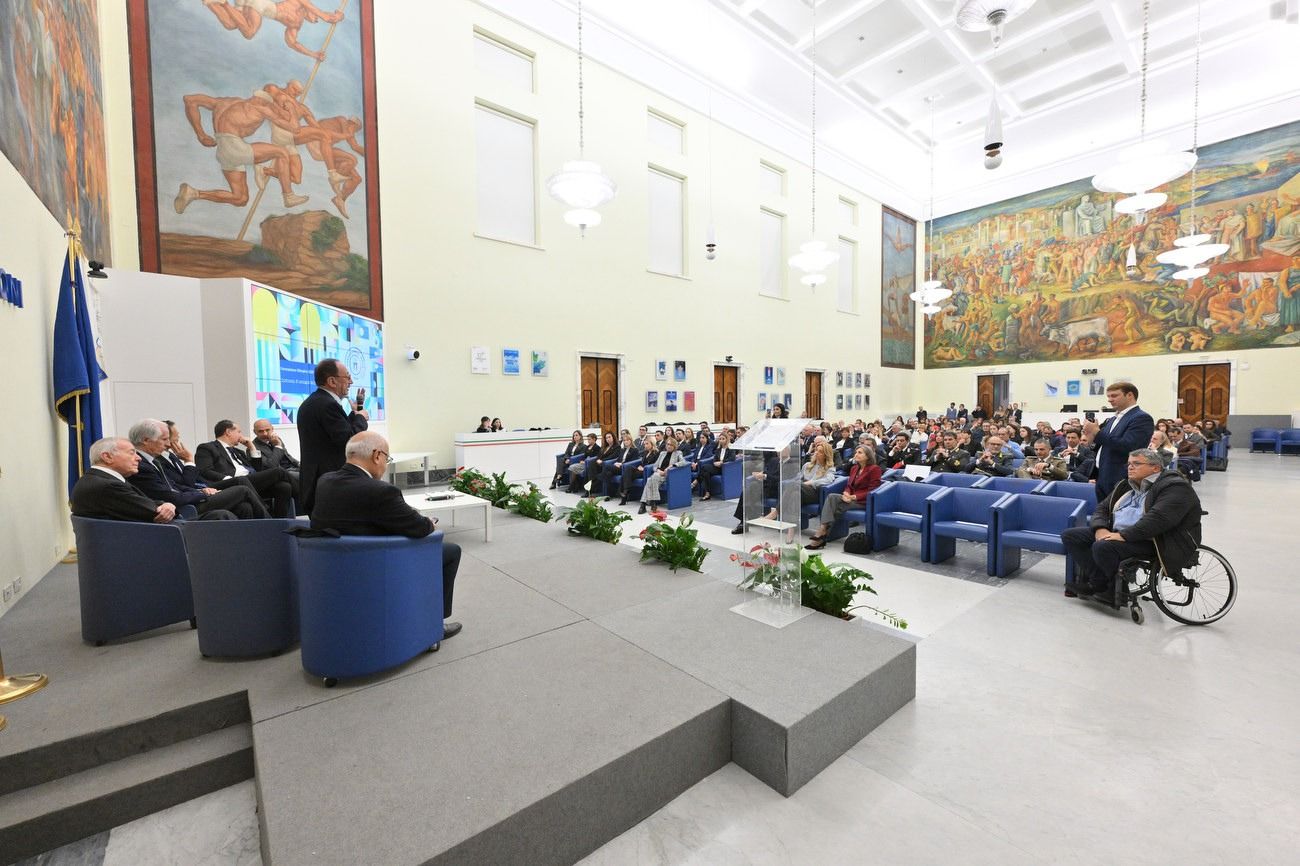
An extraordinary year filled with triumphs, medals, and goals achieved, but also obstacles and difficulties from which our splendid athletes rose again with pride and perseverance. The Sala Sinopoli at the Auditorium Parco della Musica ‘Ennio Morricone’ in Rome hosted the ceremony for the awarding of the Collari d’Oro for Sporting Merit (photos: Simone Ferraro and Luca Pagliaricci CONI). The gold medallists from the Paris 2024 Olympic and Paralympic Games, world champions, great coaches, sports clubs, and personalities who distinguished themselves over the year received the highest honour in Italian sport during a grand celebration broadcast live on Rai 2.
The ceremony opened with a letter from Prime Minister Giorgia Meloni: “Dear President, dear athletes, coaches, and officials of Italian sport, today we celebrate the Collari d’Oro for Sporting Merit, the highest honour of the Italian National Olympic Committee. It is a solemn moment to honour the achievements that characterised 2024, an unforgettable year for Italian sport. My first thought goes to the forty medals won at the Paris Olympic Games, where Italy stood on the podium from the first to the last day and confirmed its place among the top ten nations in the medal table. The Azzurri expedition collected twelve golds, thirteen silvers, and fifteen bronzes, as well as many fourth places and other excellent results, all achieved with honour. This element confirmed the solidity and human qualities of our Azzurri. Absolute human and sporting values laid the groundwork for the extraordinary achievements of our Paralympic athletes, who won seventy-one podiums, including twenty-four golds, fifteen silvers, and thirty-two bronzes, breaking every record and touching our hearts deeply. In terms of results and placements, Paris was by far the most fruitful edition of the Games for the Tricolore: we surpassed the results of Tokyo 2020, and this made us particularly proud. The many results achieved by our athletes in other competitions across many disciplines also deserve to be remembered and celebrated. I think, among many, of tennis: twenty-six titles won, a milestone never reached before. A special mention goes to the wonderful world triumphs, for the first time in the same year, in the Davis Cup, the second consecutive one, and in the Billie Jean King Cup, thanks to two stellar teams of Azzurri tennis players with the Italian crest on their chests. Historic successes, made even more emotional by Jannik Sinner’s first ATP Finals victory in Italy, in Turin. But, returning to Paris, I also recall with great joy the victories of Julio Velasco’s girls, which will remain indelible in the hearts of volleyball lovers, myself included. The Azzurri thrilled us and made our hearts beat faster, taking the Tricolore to the top of the world. These victories are not just sporting successes but moments that unite us, making us feel proudly Italian, rediscovering the identity and strength of our nation. These successes and great performances testify to the excellence and talent of Italian sport, made possible also thanks to the invaluable contribution of coaches, associations, sports clubs, Federations, sports disciplines, promotion bodies, and many others, including families. This is the world of sport. Fascinating, increasingly relevant and complex, in which every figure – from the athlete to the coach, from the official to the fans, from bodies to institutions, up to the organisations that regulate and promote sport at national and international levels – plays a fundamental role, with great responsibility. It is the constant collaboration, the necessary harmony, and a desired synergy among those in positions of responsibility in sport and for sport that create a true community, where everyone plays their part, respecting roles, towards common goals. A community where we all win and lose together because, while it is true that every victory is the result of collective effort, it is equally certain that every defeat reminds us that no one can succeed alone. Sport lives and thrives thanks to the contribution of every component. And it is precisely this balance that makes it one of the most engaging expressions of society, capable of promoting values starting from respect, sacrifice, and team spirit. Values that we even wanted to be enshrined in our Constitution. Recognising the educational, social, and psychological well-being promotion value of sporting activity in all its forms in the Constitution was a historic step for the entire world of sport, in every form and expression. Starting from grassroots and local sport, which is the forge of our talents but also a powerful factor in social cohesion, capable of conveying positive values and building a sense of belonging and unity of purpose. Especially in the most complex situations in our country, where sport can represent an opportunity for overcoming adversity. This is the reason why this Government has decided to invest significant financial resources, which will continue to grow, to build grassroots sports infrastructure in the outskirts and areas most in need of institutional attention, and to invest further in the educational alliance between the sports system, schools, and universities. Sport is one of the pillars of the regeneration and redevelopment programme in Caivano, which we will continue to pursue with great determination and which will become a model to be replicated, contextualised, in other cities. In record time, we have reclaimed and redeveloped the former “Delphinia” sports centre, also thanks to the decisive contribution of the Army and the Forestry Carabinieri, and today the members of the public in the area have a new multipurpose centre where they can practice over forty sports disciplines, thanks to the valuable collaboration of Sport e Salute and the Fiamme Oro. The new “Pino Daniele” Centre is a symbol of hope in an area where the State has been absent for too long, and sport is beginning to make a difference. If sport manages to save even one young person from the abyss of drugs or a future of crime, it will mean that our efforts have not been in vain and that it was worth believing in this project and working tirelessly to make it happen. Promoting sport in all its forms also means recognising the social and economic importance of sports workers and volunteers and the contribution this sector makes to the well-being and prosperity of the nation. The Government has worked on the reform of sports labour, improving it with a framework measure that recognises the specific characteristics of the sector, ensures new protections for workers, and guarantees greater transparency and simplification, especially for small amateur sports associations and clubs. Long-awaited measures that, if necessary, we will further improve, gradually guiding athletes, sports clubs, and operators, even at the amateur level, towards a new and more advanced management of labour relations in the sector. Dear friends, today we celebrate the victories achieved by the Italian sports movement in 2024. Successes that do not represent an endpoint but a starting point. And the spur to always do better, with even more enthusiasm and determination, each in their role but in common synergy. Synergy, collaboration, and teamwork: necessary and decisive elements for the Italian System to respect the timetable for the celebration of the 2026 Winter Olympic and Paralympic Games in Milano-Cortina and the Mediterranean Games in Taranto, and to provide the right support for the Winter Universiade and the Special Olympics World Winter Games, scheduled for 2025 in Piedmont. There is still much work to be done, but I am convinced that Italy will once again prove itself up to the challenge and capable of welcoming, organising, and hosting major events. We have a double opportunity ahead of us: to achieve new and ambitious competitive goals and to affirm the specific quality and strength of a uniquely Italian sports model, which creates social value and has a positive impact on people and communities. I thank you and renew my congratulations to all the awardees.”
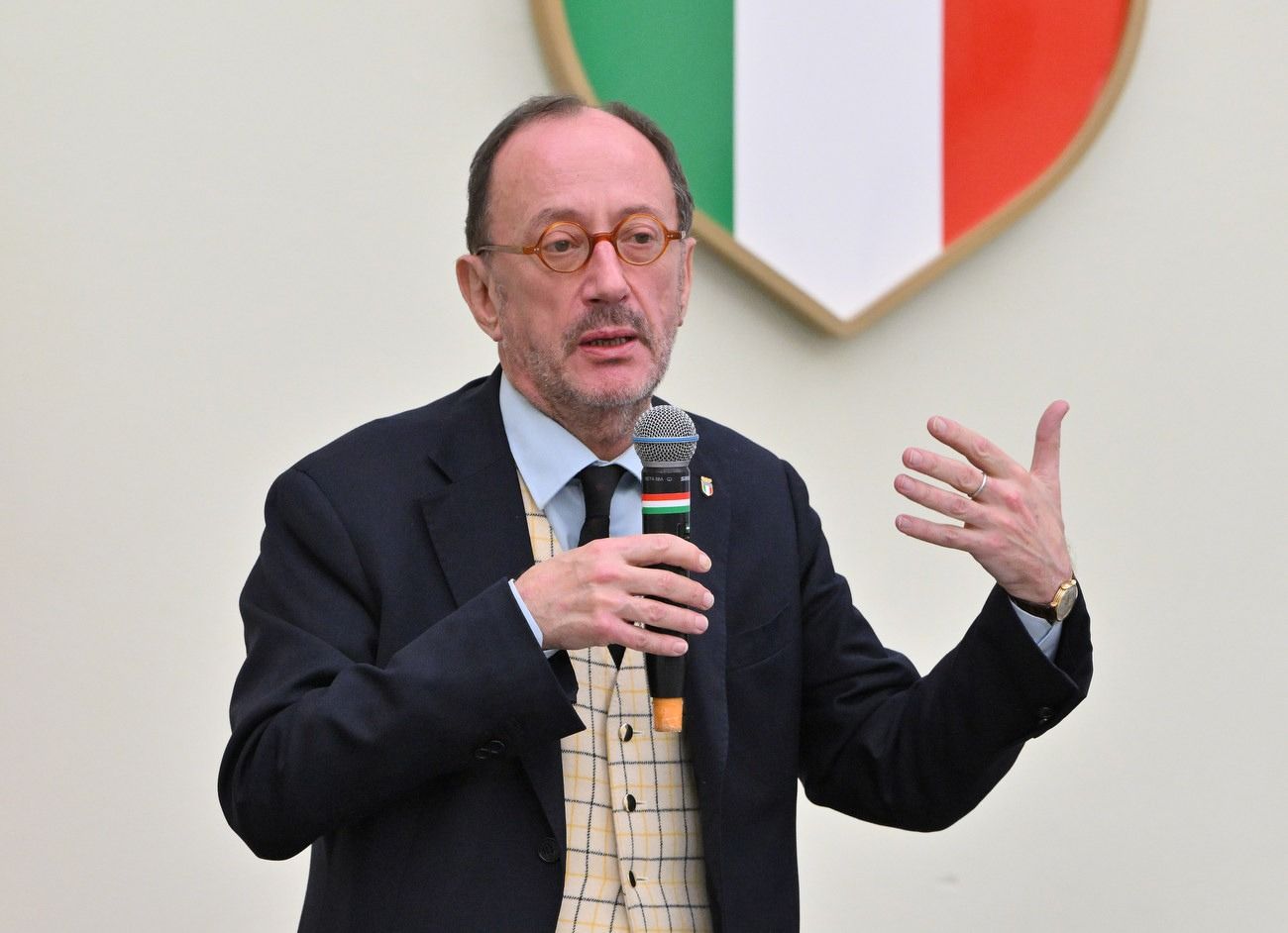
CONI President Giovanni Malagò then spoke: “The Prime Minister’s words are important and stimulating. In sport, we always start over; there is always a new season. We have achieved extraordinary results, but we know we cannot rest on our laurels. Each time, we write a new page in the wonderful book of Italian sport history. In 2024, Italy is third in the world ranking of all Olympic disciplines, considering international competitions. This ranking gives the best idea of the global forces in sport. The United States is first, France second, and Italy third. This third place is confirmed in the ranking of the number of podiums. We drop to fourth only in the number of victories. This shows the strength of our wonderful 2024: 3,686 athletes scored points, 1,585 were in the top three, and 485 won a gold medal. This had never happened before. It is one of the merits of our sports system: we have become a multi-sport and multi-disciplinary country. There are new sports that make us happy, in addition to those with great tradition. Italians are very proud of these results, and we are happy to have made them proud. I believe it would be a great mistake to underestimate the complexity and the difficulties overcome. The credit goes to that incredible movement that starts from the grassroots, and passes through amateur sports clubs, State bodies, Federations, and CONI’s Olympic Preparation. To all of them, the coaches and athletes, a ‘thank you’ from all of us. I conclude by saying that 2025 prepares us for Milano Cortina 2026. We will reach the milestone of 800 Olympic medals; it is a long love story that accompanies Italy towards sport, excellence of which we are all proud.”
CIP President Luca Pancalli also spoke: “I am proud, as a sportsman, because this is the most beautiful image we can give to the country. Sport coming together, all as one. What Italian sport has done in this country has not been done in many other sectors of civil society. We have the ability to regenerate and project ourselves into the future. We celebrate the extraordinary results of 2024: I thank the athletes, who represent the most important aspect of our actions, but I also thank the families, coaches, military bodies, and Federations. An athlete’s result is always that of a group; the results of Italian sport are those of a team.”
The Minister for Sport and Youth, Andrea Abodi, also spoke. “It is a pleasure to come together to celebrate a splendid year and launch new challenges. My first thought goes to those who fell and got back up: Ambra Sabatini and Sofia Goggia. As humans, we fall, we get up, and we try to continue our journey with a sense of responsibility, duty, and honour. We must do as they did. Daily commitment, the desire to recover, not to give up. Victories are the tip of an iceberg that starts from the base. We must commit ourselves to allow athletes to continue achieving certain results.” Abodi also paid tribute to Matilde Lorenzi, a young skier who tragically passed away on 28 October following a training accident.
Also present at the event were Undersecretary of Defence Isabella Rauti, Undersecretary for the Environment Claudio Barbaro, and other leaders of Italian sport: CONI Secretary General Carlo Mornati, Vice Presidents Silvia Salis and Claudia Giordani, CIP Secretary General Juri Stara, and numerous Federal Presidents, coaches, and officials of the movement.
Le stelle dello sport al Parco della Musica, consegnati i Collari d'Oro 2024




The first ‘Giulio Onesti’ Olympic Management Course concludes. Malagò: “A course that highlights the importance of specialisation in sport”
- CONI
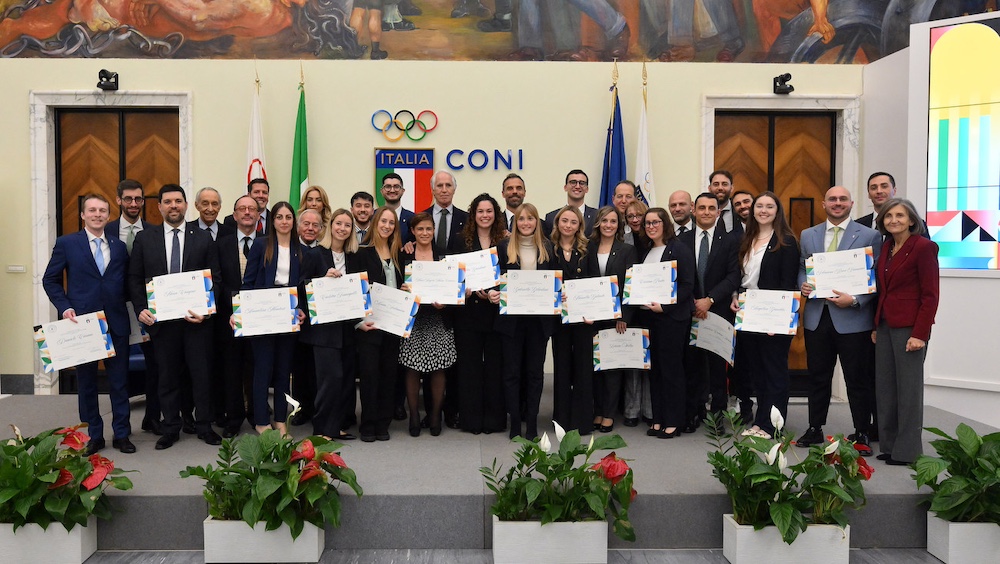
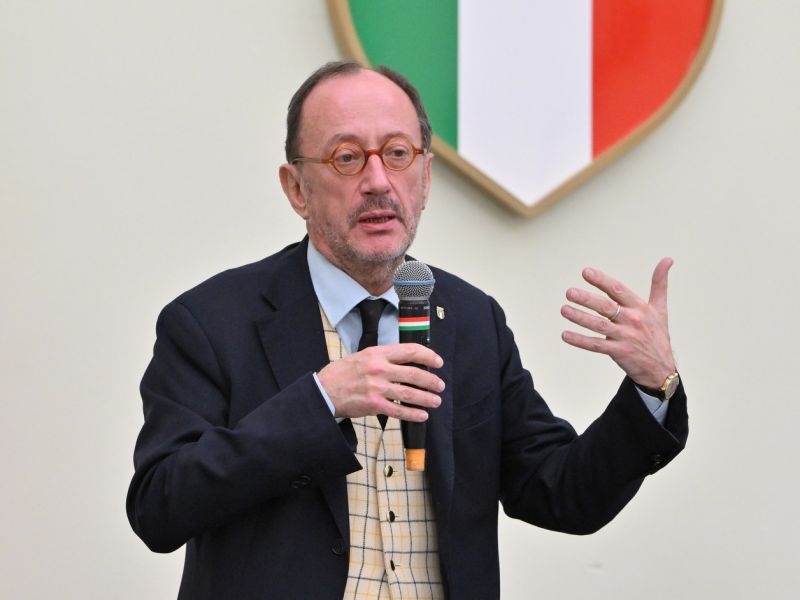
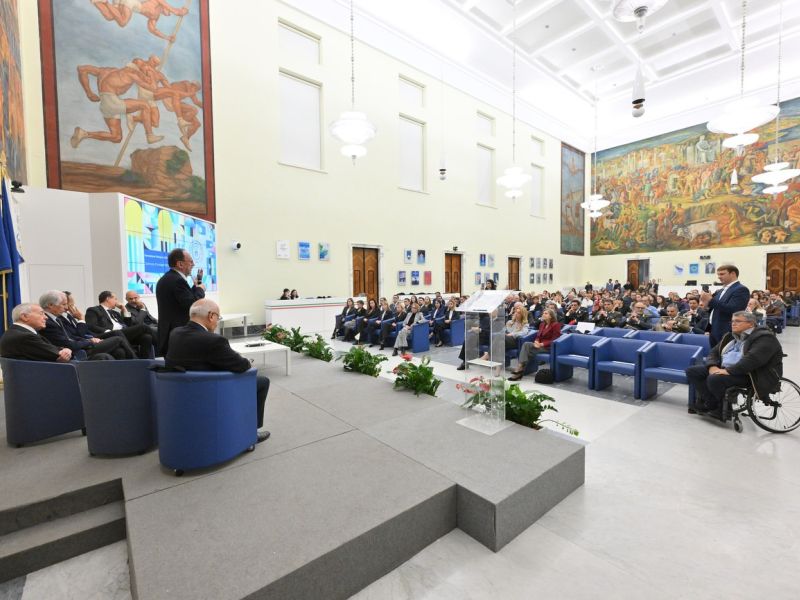
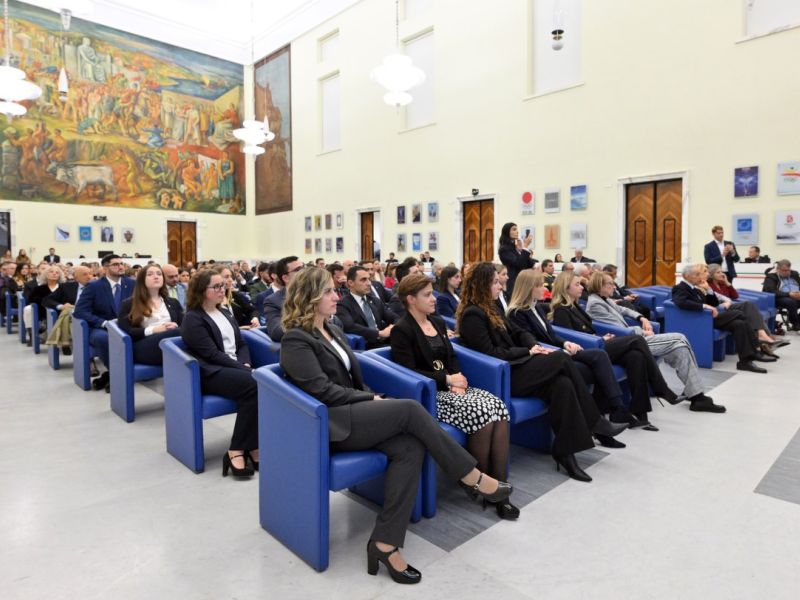
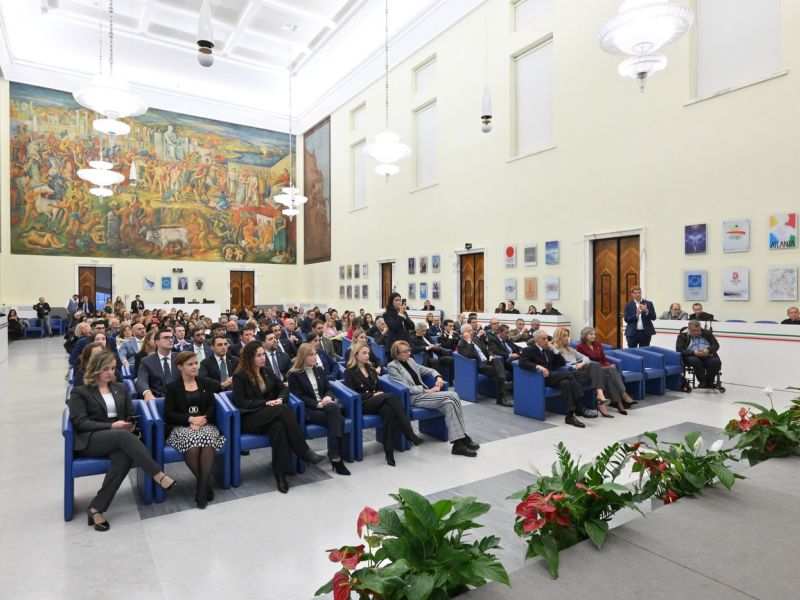
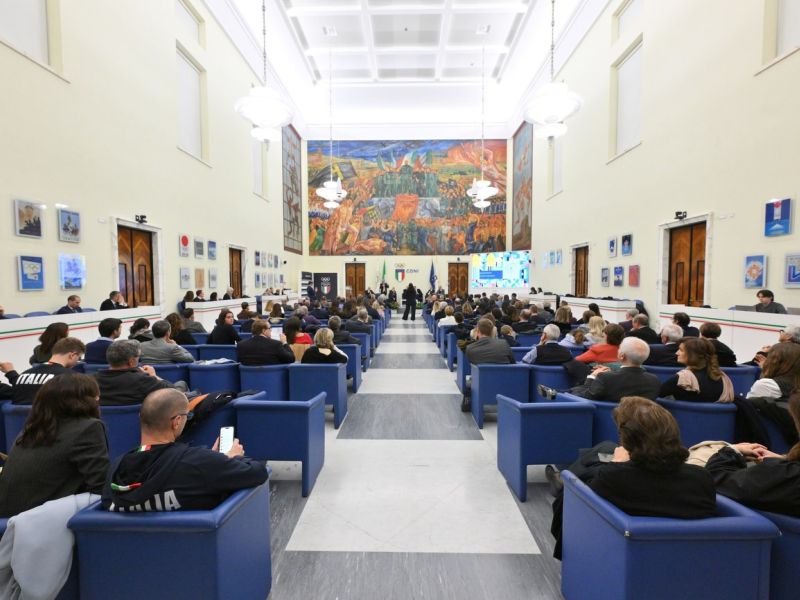
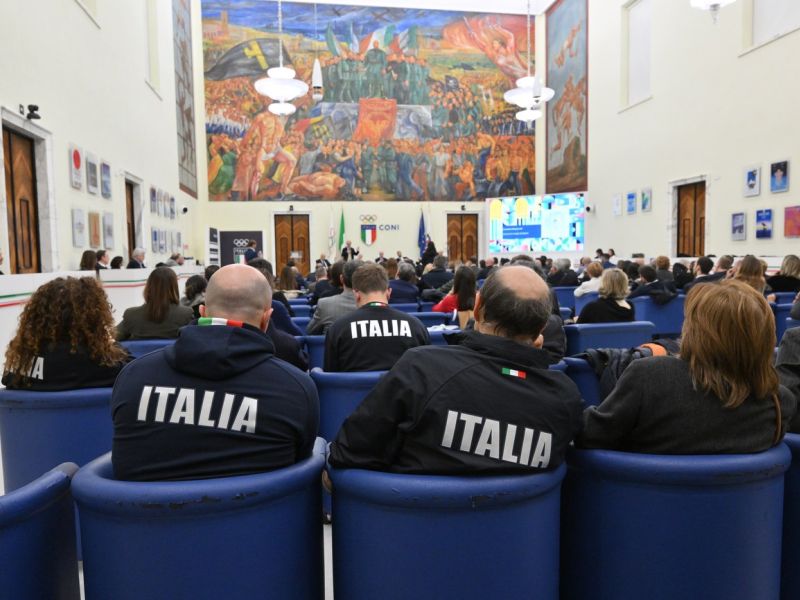
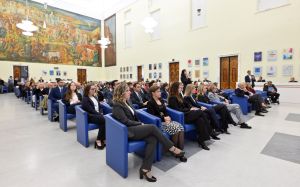
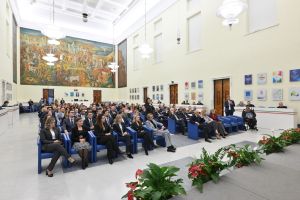
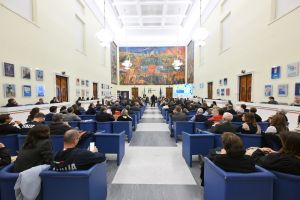
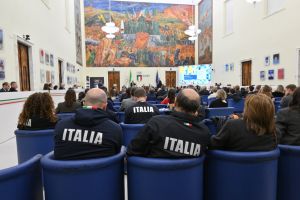
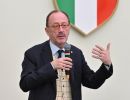
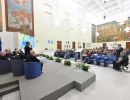
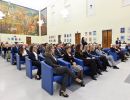
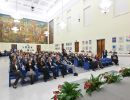
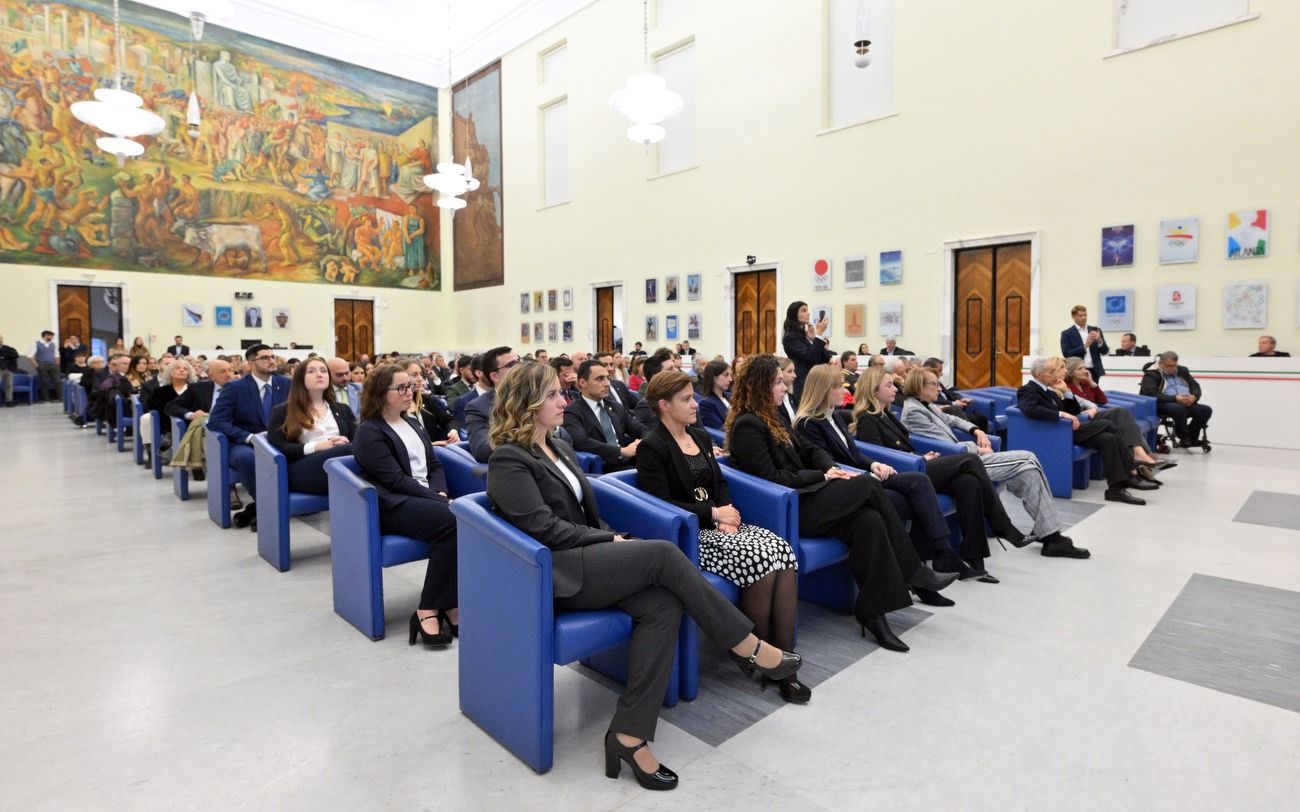
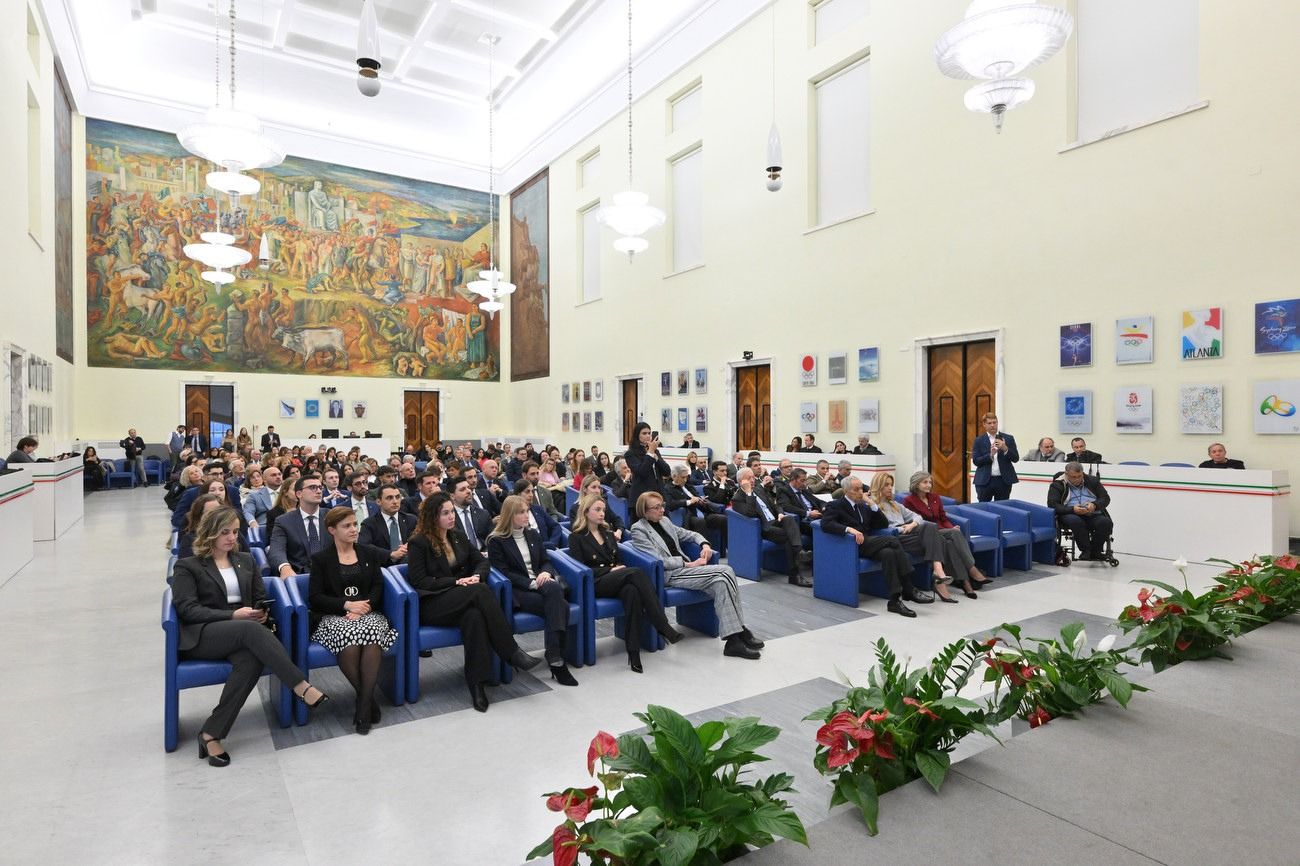
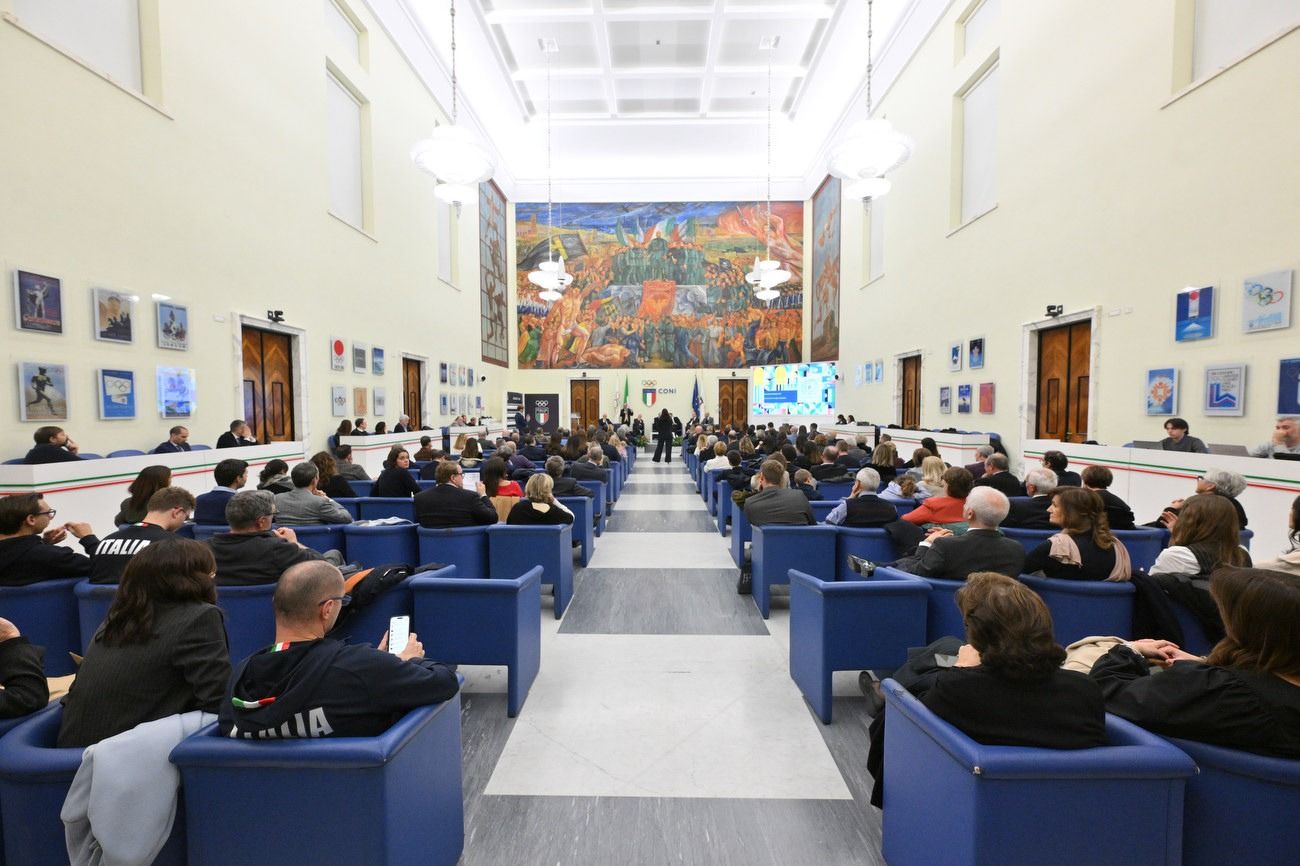
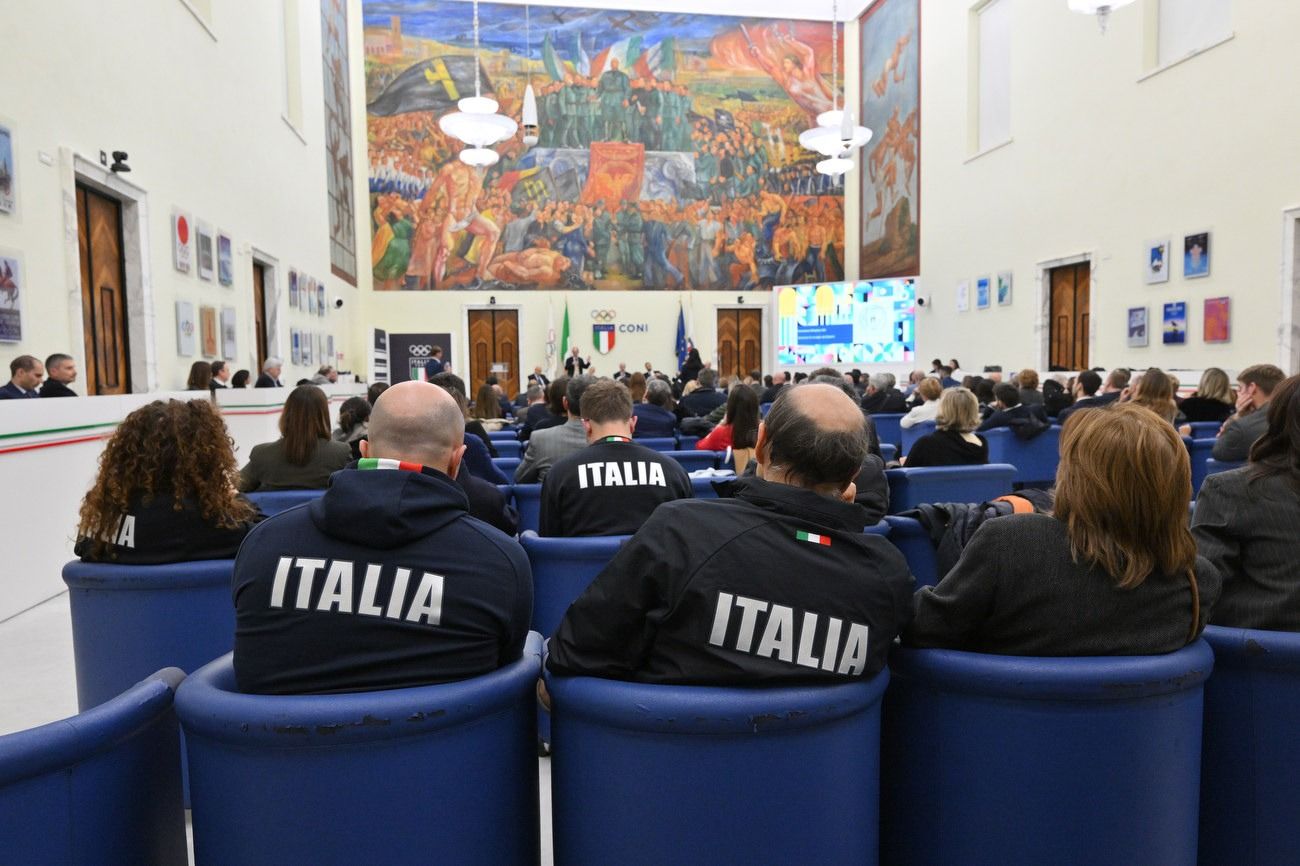
The first edition of the ‘Giulio Onesti’ Olympic Management Course, launched by CONI’s Advanced School of Olympic Specialisation, has come to an end. The Salone d’Onore at CONI hosted the graduation ceremony (photo: Ferdinando Mezzelani GMT), marking the conclusion of the course for ten male and ten female graduates, as well as two former athletes: double Olympic bronze medallist in rowing Matteo Castaldo and former Azzurro swimmer Marco Belotti, who participated in two Olympic Games. The aim is to create cutting-edge, highly qualified professionals who will contribute to the success of sport and the Olympic team.
“Many people try to enter the world of sport, some of you have been champions,” said CONI President Giovanni Malagò, addressing the students during the ceremony. “This course highlights the importance of integration and specialisation in the world of sport. This year it was named after Giulio Onesti, and the next edition will be dedicated to the memory of Franco Chimenti, a person to whom Italian sport owes a great deal”.
The 300-hour course, divided into nine modules with mandatory attendance and residency, took place from 6 May to 16 October 2024 at the ‘Giulio Onesti’ Olympic Preparation Centre in Rome. It provided an in-depth understanding of the Olympic System at national and international levels, with a focus on the management of CONI and other sports institutions. Enhance understanding of sport, Olympic values and regulations for people of all abilities and disabilities and stimulate an in-depth understanding of legal, finance, marketing, innovation and management and contracting skills: these were some of the course’s aims.
The training programme also included an internship: the students were integrated into CONI’s Olympic Delegation for the Paris 2024 Olympic Games (the internship took place between Rome and Paris), with roles individually assigned by CONI’s Secretary General and Head of Mission for the French Olympics, Carlo Mornati.
“Today, a circle has been closed,” emphasised CONI Secretary General Carlo Mornati. “It was a great course, characterised by professionalism. The students came to Paris with us and had an important professional experience”. Also present was Angelo Maria Petroni, Scientific Director of the Advanced School of Olympic Specialisation: “This is a professional school, not an academic course. When you come here, you’ve ‘already eaten’ – you have to learn to put it in practice. Now we can say it: it worked. Sport is not a separate world but a part of civil society, the economy, and the nation. CONI is an autobiography of Italy.” Gianni Letta, President of the Committee of Trustees for Olympic Training, who opened the first Olympic Management Course for General Secretaries with a lecture last February, added: “I guarantee that our congratulations to the graduates are genuine, sincere, and well-deserved. These diplomas are not just decorated parchments: they are important documents that have had substantial value throughout history. CONI’s school is a prestigious institution in our country, loved by all and appreciated worldwide. No valid organisation today can do without excellent managers. We wish you a brilliant career”. Carlo Nardello, Consultant for the Olympic Training Project, then outlined the various stages of the course, and Giampiero Pastore, Director of CONI’s Institute of Sports Medicine and Science, reiterated the importance of the contribution of CONI professionals to the success of the course and initiated the graduation ceremony.
The second edition of the Olympic Management Course, dedicated to the memory of Franco Chimenti, is scheduled to run from 5 May to 10 October 2025.
Cerimonia dei diplomi per gli allievi del 1° Corso in Management Olimpico
Page 26 of 146