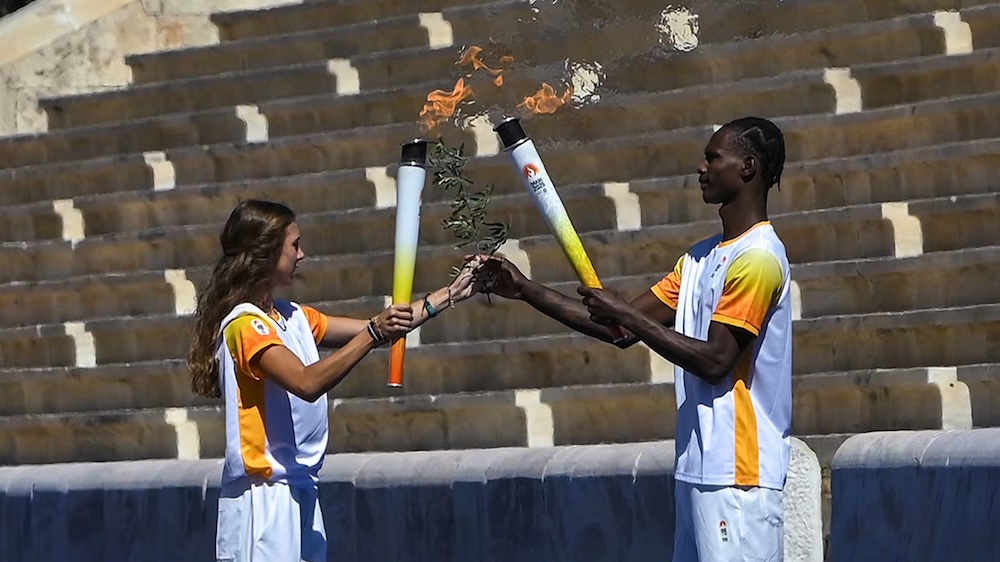
Dakar 2026 flame lit in Athens as historic journey to Africa begins
- YOG
The Youth Olympic flame for Dakar 2026 has been lit at the historic Panathenaic Stadium in Athens, Greece. This marks the start of its journey to Dakar in Senegal and another major milestone on the road to the first Olympic sporting event ever held on African soil.
The lighting of the Youth Olympic flame is one of the defining moments of any Youth Olympic Games (YOG). This edition, in particular, is historic, as it links Greece, the birthplace of the Olympic Games, with a new chapter in Olympic history, as the YOG head to Africa for the first time.
Lit using the sun’s rays - in keeping with Olympic tradition - the flame was formally handed over to Senegal before beginning its journey towards Dakar.
Dakar 2026 Ambassador and Senegalese Olympian Oumy Diop, also an Olympic Solidarity scholarship-holder, took part in the ceremony, representing the generation of young Senegalese and African athletes who will be at the heart of the YOG.
“In just a few weeks, Senegal will welcome young athletes from around the world for the first Olympic competition ever to be held on African soil. That is a proud moment for Senegal. And it is a proud moment for Africa. And it is going to open an important new chapter for the Olympic Movement”.
From Athens to Dakar
After the lighting ceremony, the flame will travel to Senegal, where it is due to arrive in Dakar on Saturday.
Throughout the journey, it will burn in a special lantern. The lantern enables the flame to travel safely, including by air, under the supervision of flame guardians, ensuring that the flame carried by torchbearers in Senegal is the same Youth Olympic flame lit in Athens.
A major celebration in Dakar will welcome the flame, before it begins its journey across Senegal, bringing together young people, athletes, cultural figures and communities around the Olympic values.
What does “Pass the Energy” mean?
From 14 September to 30 October, the Youth Olympic flame will travel through all 14 regions of Senegal under the theme “Pass the Energy”.
The concept reflects the wider idea of passing energy between people, communities and generations as the flame travels across the country.
Rooted in the Olympic values of excellence, respect and friendship, “Pass the Energy” will celebrate solidarity, connection and the energy and creativity of Senegalese and African young people.
At each stage of the Flame Tour, communities will have an opportunity to contribute to that energy and carry the spirit of Dakar 2026 forward towards the Games.
Several hundred participants from different backgrounds are expected to be involved across more than 30 stages around the country.
A journey towards historic Games
The Flame Tour will bring Dakar 2026 directly to communities across Senegal, with sporting, cultural and educational celebrations accompanying the journey.
Schools and young people will play a central role, while local athletes, artists and community representatives will contribute to events reflecting the identities of the various regions.
The journey will reflect the Dakar 2026 motto, “Africa Welcomes, Dakar Celebrates”, and the ambition for the Games to be delivered by young people, for young people and with young people.
Dakar 2026 will bring together the world’s best young athletes while engaging young people across Senegal and Africa through sport, culture, education and volunteering.
The flame will return to Dakar at the end of its national journey ahead of the Opening Ceremony on 31 October at the Stade Abdoulaye Wade in Diamniadio, where the Youth Olympic cauldron will be lit.
After the Opening Ceremony, the cauldron will be located at Corniche West, home to the Dakar 2026 festival site and cycling venue, where the flame will remain alight throughout the Games until 13 November.
Dakar 2026 will bring together the young athletes from around the world from 31 October to 13 November 2026, for the first Olympic sports event to be held on African soil.
The official ticketing site for the Dakar 2026 YOG is now open. Book your tickets!
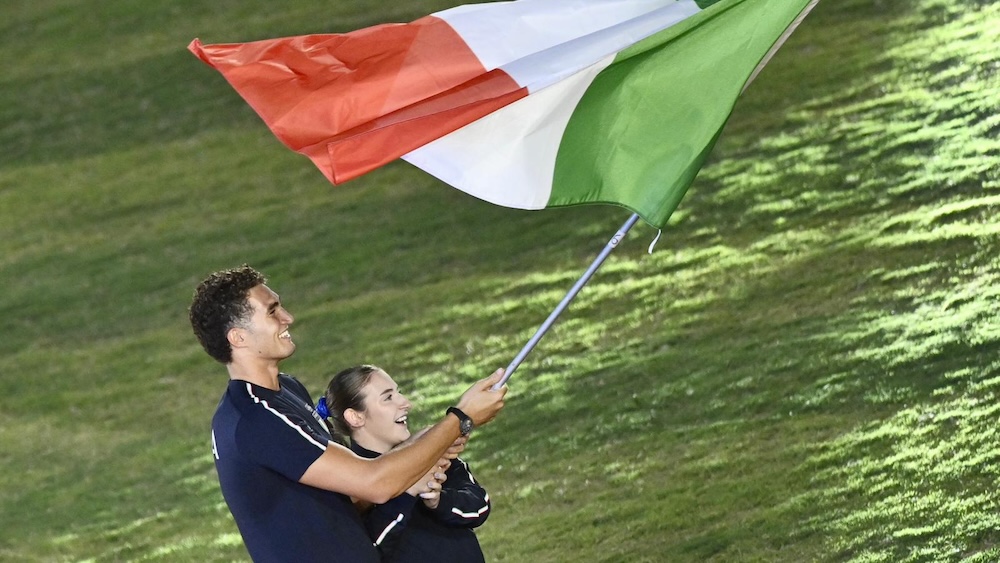
Taranto 2026 comes to an end: record-breaking Italia Team represented at the Iacovone Stadium by flagbearers Andreoli and Condemi
- CLOSING CEREMONY
The curtain has come down on an unforgettable 20th edition of the Mediterranean Games.
The Closing Ceremony at the Erasmo Iacovone Stadium marked the end of Taranto 2026, a record-breaking event for Italia Team.
The Italians, who topped the medal table for the sixth consecutive edition in a run stretching back to Almería 2005, brought their extraordinary campaign in Puglia to a close with 224 medals: 74 gold, 78 silver and 72 bronze.
Having surpassed the previous all-time record for the total number of podium finishes — the 193 achieved at Bari 1997 — and broken through the historic 200-medal barrier, Taranto 2026 also became Italy’s second-best Mediterranean Games ever in terms of gold medals.
The 74 titles were bettered only by Bari 1997, when Italy won 76, while the totals recorded at Athens 1991 with 67, Latakia 1987 with 69 and Mersin 2013 with 70 were all surpassed during the final days of competition.
The figures underline the achievements of a seemingly unstoppable team.
Among those attending the Closing Ceremony (photo: Andrea Masini/CONI) were Minister for Sport and Youth Andrea Abodi, CONI Secretary General Carlo Mornati, senior officials from the Taranto 2026 Organising Committee and the International Committee of the Mediterranean Games, as well as other representatives of political and sporting institutions.
It was an evening shaped by the music, traditions, colours and lights that characterise Puglia.
As is customary, Greece led the parade of delegations, accompanied by music and the applause of a celebrating crowd, whose enthusiasm rose even further when Italia Team flagbearers Angela Andreoli and Francesco Condemi appeared on the pitch at the Iacovone.
Mia Zottoli, Miss World Italy 2026, handed the Italian flag to the Italian Navy Honour Guard, which raised it to the sound of the Italian national anthem.
Kosovo basketball player Adhurim Alijaj then carried the flag of his country, which will host the next edition of the Mediterranean Games.
The flag handover ceremony then took place, marking the passing of the baton from Italy, represented by Taranto Mayor Piero Bitetti, to Kosovo, represented by Pristina Mayor Përparim Rama, in the presence of Mehrez Boussayene, First Vice-President acting as President of the International Committee of the Mediterranean Games.
Boussayene then addressed the audience, as did Taranto 2026 President Massimo Ferrarese.
The music started again and the people of Puglia experienced with emotion and enthusiasm the celebration the occasion deserved.
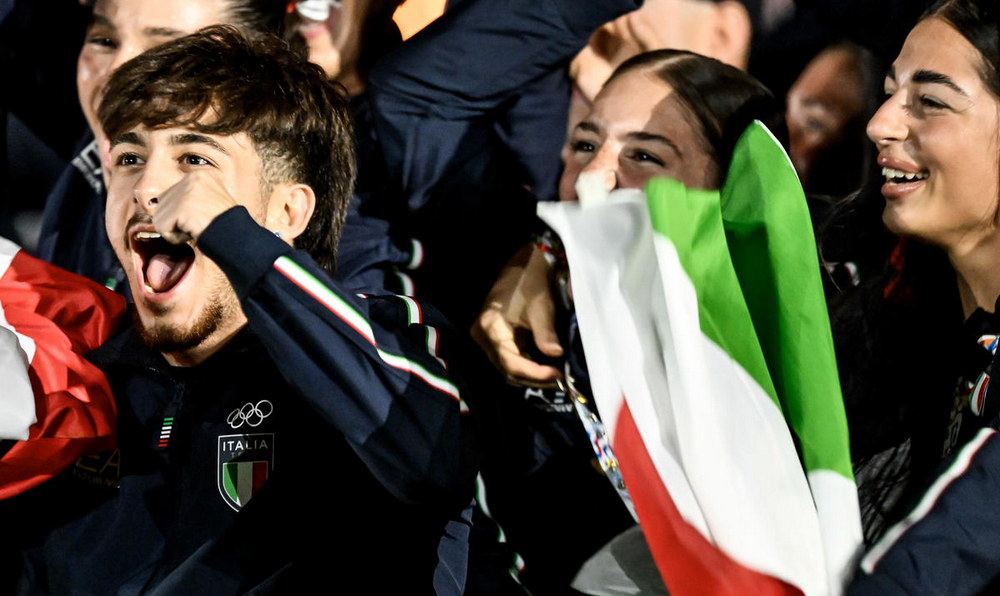
Taranto 2026 by the numbers: record-breaking Games and sixth consecutive victory in the medal table
- ITALIA TEAM
Taranto 2026 is drawing to a close — and has already made history.
As the Closing Ceremony of the 20th Mediterranean Games prepares to get under way, Italia Team can look back with satisfaction at the figures from an edition that has earned its place in the history of Italian sport.
Taranto 2026 has become Italy’s most successful Mediterranean Games ever in terms of total medals, surpassing the previous record of 193 podium finishes set at Bari 1997.
For the first time, Italy has broken through the 200-medal barrier — a feat no European country had previously achieved at a multi-sport event such as the Olympic Games, European Games or Mediterranean Games.
Italia Team topped the medal table for the sixth consecutive edition, continuing a run that began at Almería 2005, with 224 medals: 74 gold, 78 silver and 72 bronze.
That total was more than double the 111 medals won by second-placed Türkiye.
Gold for the Settebello, Italy’s men’s water polo team, took the country’s tally of titles to 74, its second-best result behind Bari 1997.
Italy’s dominance was evident across almost every sport, with 25 of the 27 National Sports Federations represented at the Games winning at least one medal — 92.6 per cent.
FIN, the Italian Swimming Federation, was the most successful, collecting 52 medals: 51 in swimming and the gold medal won in water polo.
Of the 494 Italian athletes competing at Taranto 2026, 309 reached the podium at least once: 169 women and 140 men.
In other words, 62.6 per cent of the Italian athletes competing across the various venues won at least one medal — almost two out of every three.
The Italian athlete to win the most gold medals was swimmer Alberto Razzetti, with three victories in the 100m butterfly, 200m butterfly and 400m individual medley.
Among the women, Benedetta Gava stood out in artistic gymnastics with a hat-trick of gold medals in the vault, floor exercise and team competition, while finswimmer Viola Magoga also reached the top step of the podium three times, winning the 50m bi-fins, 100m bi-fins and the 4x50m mixed bi-fins relay.
The strongest Italia Team ever honoured Taranto 2026 in the best possible way: the 20th Mediterranean Games were very much an Italian affair.
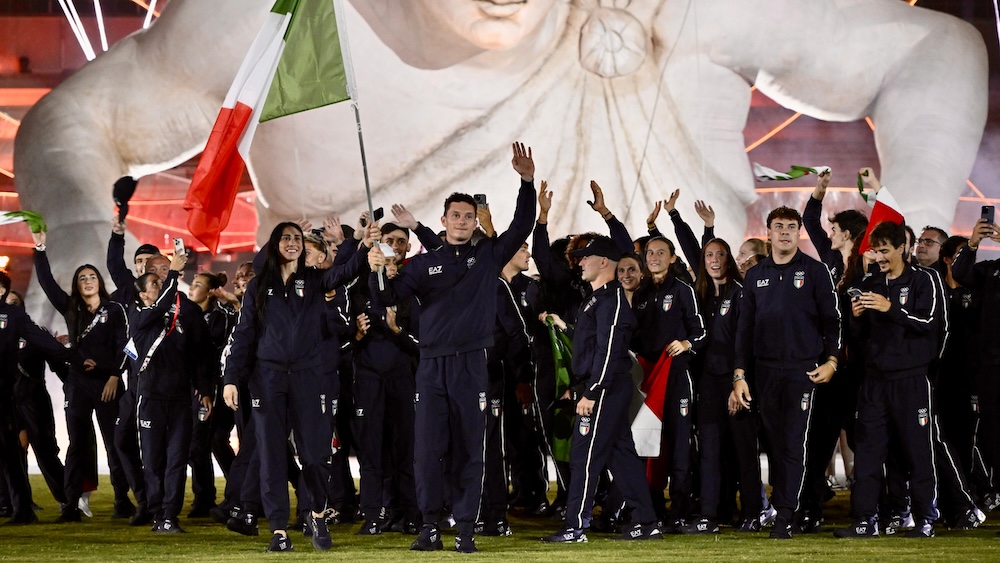
President Mattarella declares Taranto 2026 open as flagbearers Testa and Tortu lead an enthusiastic welcome for Italia Team
- OPENING CEREMONY
The opening ceremony of the 20th Mediterranean Games was staged at Taranto’s Erasmo Iacovone Stadium.
Italy is hosting the event for the fourth time in its history and, for the third time, the Games were officially opened by the country’s Head of State.
Following Antonio Segni at Naples 1963 and Oscar Luigi Scalfaro at Bari 1997 — unlike Pescara 2009, when Prime Minister Silvio Berlusconi performed the role in the absence of Giorgio Napolitano — President of the Republic Sergio Mattarella declared the Games open during a memorable evening also attended by Prime Minister Giorgia Meloni.
Five other heads of state attended the ceremony alongside host President Sergio Mattarella, representing Albania, Lebanon, Libya and North Macedonia, together with Kosovo’s acting head of state. Two other prime ministers were present alongside Giorgia Meloni, those of Algeria and Serbia.
The President of Croatia delegated her sports adviser Tomislav Paškvalin — Olympic champion in 1984 and 1988 and world champion with Yugoslavia in 1986 — who during his playing career represented, among others, Pro Recco and AN Brescia.
Also at the Erasmo Iacovone Stadium were Senate President Ignazio La Russa; President of the Chamber of Deputies Lorenzo Fontana; Constitutional Court Vice-President Luca Antonini; Ministers Andrea Abodi, Tommaso Foti, Orazio Schillaci and Gianmarco Mazzi; European Commission Executive Vice-President Raffaele Fitto; European Olympic Committees President Spyros Capralos, representing the International Olympic Committee; Mehrez Boussayene, who became President of the International Committee of the Mediterranean Games in January following the death of the late Davide Tizzano; newly elected International Committee of the Mediterranean Games President Francesco Purromuto; CONI President Luciano Buonfiglio; Sport e Salute President Marco Mezzaroma; Sport e Salute Chief Executive Diego Nepi Molineris; Taranto 2026 Organising Committee President Massimo Ferrarese; and other representatives from the worlds of politics and sport.
Music, colour, flags, tradition and innovation brought the spectacular ceremony to life (photos: Mattia Martegani and Andrea Masini/CONI).
The event opened with the Italian flag being carried into the stadium and handed to the Presidential Cuirassiers by Antonella Palmisano, the only woman from Puglia in Italian history to have won an Olympic gold medal, having triumphed in the 20km race walk at Tokyo 2020. The Italian national anthem then rang out during the flag-raising ceremony.
All the delegations paraded behind their respective flagbearers. A huge roar greeted Italia Team as it entered the pitch at the Erasmo Iacovone Stadium, represented by around 270 athletes and officials from 15 federations and 16 sports, including the men’s and women’s volleyball teams, men’s and women’s football teams and the men’s handball team.
The Italian delegation was led by Irma Testa and Filippo Tortu, who later went up to the presidential stand to greet President of the Republic Sergio Mattarella — something never previously done by two flagbearers.
“It was wonderful, an indescribable feeling,” Testa said. “Before going in, we were almost calm, then we entered this beautiful stadium packed with people and it was incredibly emotional.
“Walking past President Mattarella was very moving, and meeting him and speaking to him was even more special. He is a man of sport, someone who loves sport and loves us athletes. He is one of us and meeting him was wonderful for both of us.
“Good luck to all of us. We have to win lots of medals.”
Tortu echoed her words.
“Before going in, I was completely relaxed. The moment I stepped into the stadium was the most powerful emotion I have ever experienced.
“It was fantastic. I could feel the energy both from the crowd and from the whole team behind us, who at one point almost swept us along.
“When we went to greet President Mattarella and Prime Minister Meloni, it was all incredibly intense. The emotion was extraordinary. I want to thank both of them, on my own behalf and on behalf of the entire Italian team, for honouring us with their presence.”
The Italian Navy carried in and raised the flag of the International Committee of the Mediterranean Games as its anthem was played, before Taranto 2026 Organising Committee President Massimo Ferrarese addressed the audience.
“Mr President of the Italian Republic, Sergio Mattarella, Prime Minister Giorgia Meloni, President of the ICMG Mehrez Boussayene, dear athletes, dear members of the Mediterranean Family, distinguished guests: welcome to Taranto. Welcome to Puglia. Welcome to Italy. Where history meets the future, and where sport brings us together as one family.
“Tonight, we celebrate not only sport, but also friendship, peace and unity. Please allow me to continue in Italian, my language.
“It is with profound emotion that I welcome you to Taranto, a city which has looked out over the Mediterranean for almost 3,000 years and which today has the honour of hosting the 20th edition of the Games.
“Taranto understands the value of time and hospitality. Throughout its millennia of history it has been a bridge between peoples, cultures and civilisations. It has watched ships depart and welcomed women and men with different languages, traditions and dreams.
“Just a short distance from this stadium, in the National Archaeological Museum of Taranto, a young athlete has lain for 2,500 years. He is the Athlete of Taranto, the oldest evidence preserved by this land of the bond between the Mediterranean and sport.
“Tonight, his heirs are here.
“The Mediterranean means meeting. It means dialogue. It means sharing. Today, the time of history joins the time of sport.
“Every athlete knows that a single instant can change a life. A single second can give meaning to years of training, sacrifice, renunciation and hope. This is the deepest meaning of the Mediterranean Games.
“Sacrifice and the desire for self-improvement belong to every human being. Like the athletes, we too have faced a race against time in the planning, construction of facilities and organisation of these Games, built day after day with passion, responsibility and team spirit.
“I thank the Italian Government for its great support and constant co-operation, and for believing in and supporting our project. None of this would have been possible without that decisive contribution.
“I thank the International Committee of the Mediterranean Games for the support it has constantly provided over these years. Thank you, President Boussayene.
“Italy is proud to welcome you.
“And allow me to give special thanks to all those who, through their commitment, expertise and extraordinary dedication, have made all of this possible. We are proud of you.
“The motto of these Games is ‘Embrace the Future’. Together, we embrace the future.
“The future is built by choosing dialogue rather than conflict, respect rather than intolerance, and co-operation rather than division.
“Italy has always been a land of encounters, where peoples and cultures have built relationships, knowledge and peace. Tonight, that history continues here, in this land, which from today becomes its guardian.
“These Games are dedicated to the boys and girls of this city, which has given so much to our country and to Europe.
“Over the coming days we will see great athletes compete with passion and dedication. Every victory will be a source of pride. But the greatest success will be coming together, united by the values of sport, friendship and peace.
“I wish all the athletes days filled with success and everyone else unforgettable days.”
He was followed by Mehrez Boussayene, President of the International Committee of the Mediterranean Games.
President of the Republic Sergio Mattarella then delivered his address and formally declared the 20th Mediterranean Games open.
Mauro De Filippis of shooting read the athletes’ oath, while fencer Flavia Bonanni delivered the judges’ oath.
To close the ceremony, Valentina Rodini — Olympic gold medallist at Tokyo 2020 in the lightweight women’s double sculls alongside Federica Cesarini, winner of the lightweight single sculls at the Tarragona 2018 Mediterranean Games and now a member of the CONI Executive Board — represented the Italian team in the traditional Water Ceremony.
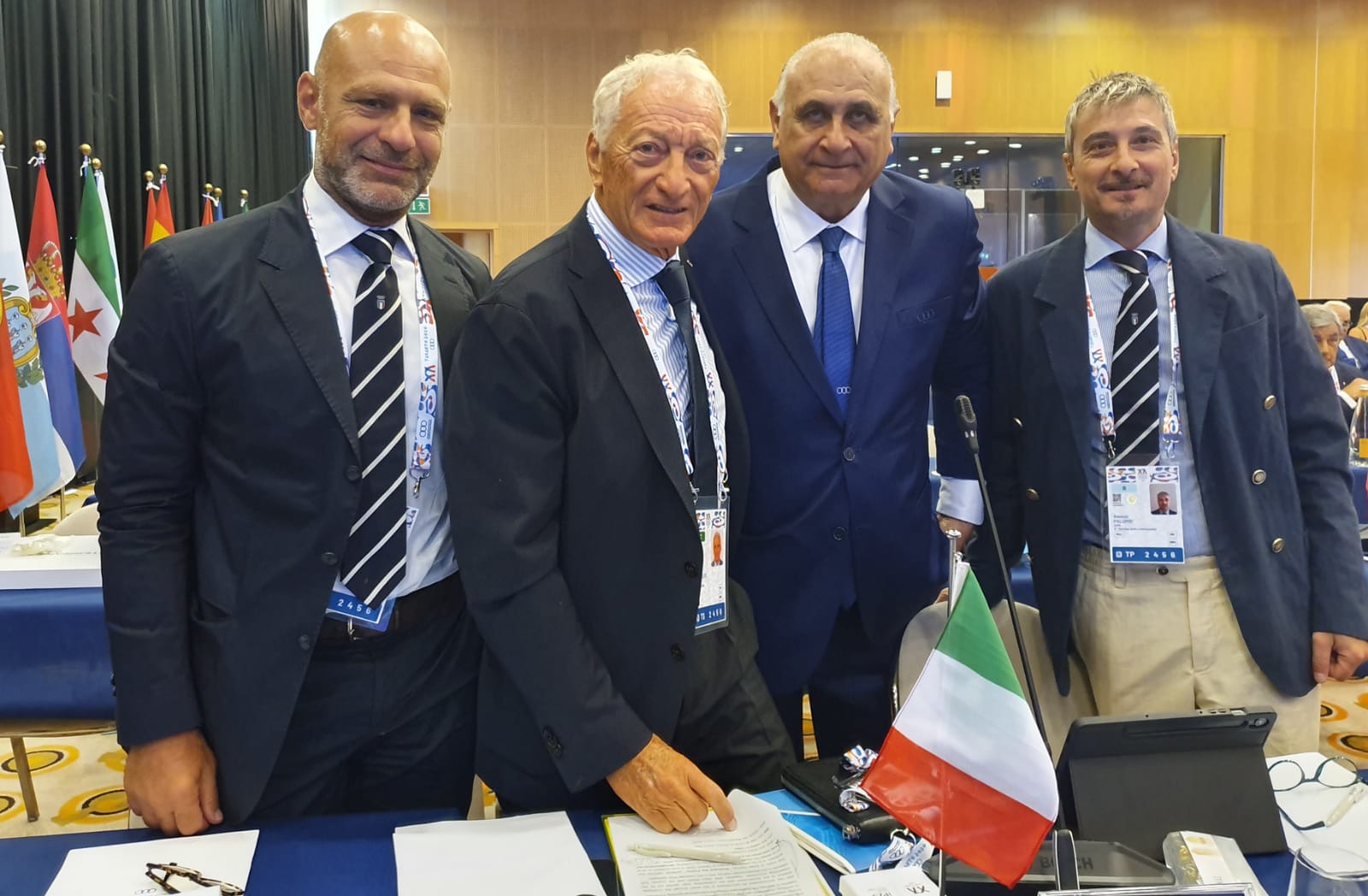
Francesco Purromuto elected ICMG President. Buonfiglio remembers Tizzano and looks ahead to Taranto 2026: “Proud to host this great event”
- IN CASTELLANETA MARINA
The General Assembly of the International Committee of the Mediterranean Games, meeting in Castellaneta Marina in the province of Taranto, has elected Francesco Purromuto by acclamation as the new ICMG President for the next four-year term.
Delegates from all 26 countries affiliated to the international organisation took part in the vote.
Purromuto, who served as President of the Italian Handball Federation from 1997 to 2017 and was previously Chairman of the ICMG Legal and Ethics Commission, succeeds Davide Tizzano, who died prematurely at the end of 2025. In recent months, the Committee had been led on an interim basis by its First Vice-President, Tunisia’s Mehrez Boussayene.
Purromuto thanked the Assembly for its confidence and expressed his satisfaction at being elected.
“I am honoured to have become President of this great organisation. I renew my gratitude to the ICMG and, above all, to CONI, President Buonfiglio and Secretary General Carlo Mornati.
“I promise to devote commitment, passion and dedication to achieving the objectives we have set ourselves. We are one great family. We represent different cultures, but we share the same values and the same goals.
“We must safeguard one of the founding principles of the Olympic Movement, the autonomy of sport: it is not a privilege, it is a responsibility. We will act in a spirit of co-operation and respect. We are living through a period in which we must preserve our identity without turning our backs on innovation, with the aim of seizing new opportunities. There are necessary changes that can no longer be postponed.”
CONI President Luciano Buonfiglio also attended the meeting and delivered an opening address to the Assembly.
“It is a great honour for Italy to welcome the ICMG General Assembly to Taranto on the eve of the 20th edition of the Mediterranean Games. The opportunity to host this important event for the fourth time in Italy confirms the strong bond between our country and the movement it represents, as well as the values that inspire it: friendship, respect, co-operation and solidarity.
“Our heartfelt thanks go to the Italian Government, Ministers Andrea Abodi and Tommaso Foti, European Commission Executive Vice-President Raffaele Fitto, the Region, the Municipality, Massimo Ferrarese, Carlo Molfetta and the entire Organising Committee, as well as all the institutions involved. Their support, together with the commitment and efforts made over these years, has been fundamental in addressing and overcoming the difficulties and making the organisation of this event possible.
“As we also demonstrated with the Milano Cortina 2026 Olympic and Paralympic Games, Italy knows how to work as a team and achieve the most ambitious objectives.
“At this moment, our thoughts turn to Davide Tizzano, an unforgettable figure within our movement. A two-time Olympic champion, sports administrator and President, and above all a man of great passion, Davide embodied sport with vision, ability and generosity.
“His passing has left a profound void, but his example continues to live on through the projects he supported, the values he defended and the people he inspired.
“Italy renews its commitment to the interests of the Mediterranean movement, with the aim of promoting dialogue, inclusion, education and peace.
“The Assembly’s decisions must help identify the most appropriate paths for the future of the event, responding to the needs arising from the historical context in which we are living and the challenges that define it.
“With the motto ‘Embrace the Future’, Taranto 2026 is looking ahead through unity and a shared vision. Our hope is that these Games will leave a positive legacy for future generations.”
The CONI delegation also included Alessio Palombi and Giampiero Pastore, respectively Head of Olympic Preparation and Head of the Institute of Sports Medicine and Science.
Others in attendance included Taranto Mayor Piero Bitetti; Carlo Molfetta, Director General of the Organising Committee; EOC President Spyros Capralos, who delivered a message on behalf of the International Olympic Committee; Mustapha Berraf, President of the Association of National Olympic Committees of Africa; and IOC Member Aya Medany, the former Egyptian modern pentathlete.
During the meeting, the Assembly also established the new Executive Committee.
Mehrez Boussayene of Tunisia was elected by acclamation as First Vice-President, Bernard Amsalem of France as Second Vice-President, Iakovos Filippousis of Greece as Secretary General and Panayotis Ioannides of Cyprus as Treasurer.
The following seven members were also elected: Yasser Idris of Egypt, Maja Peković of Montenegro, Pedro Farromba of Portugal, Cayetano Cornet of Spain, Abdellatif Idmahamma of Morocco, Blaž Perko of Slovenia and Ayda Uluç of Türkiye.
President Buonfiglio meets Italy’s athletics team ahead of European Championships and Mediterranean Games: “Make us proud once again”
- AT THE ‘GIULIO ONESTI’ CPO
CONI President Luciano Buonfiglio today met Italy’s national athletics team, who are attending a training camp at the Giulio Onesti Olympic Training Centre at Acqua Acetosa ahead of the forthcoming European Championships in Birmingham and the Mediterranean Games in Taranto.
After greeting the athletes individually, Buonfiglio addressed the team and offered his encouragement, highlighting the importance of the results achieved in recent years.
“I spoke to President Stefano Mei and told him that I would be coming to see you to express CONI’s support and closeness ahead of the events awaiting you. You have shown that you are among the strongest national teams at international level and I am certain that you will give everything to make us proud of you once again, also on behalf of those who were not selected.”
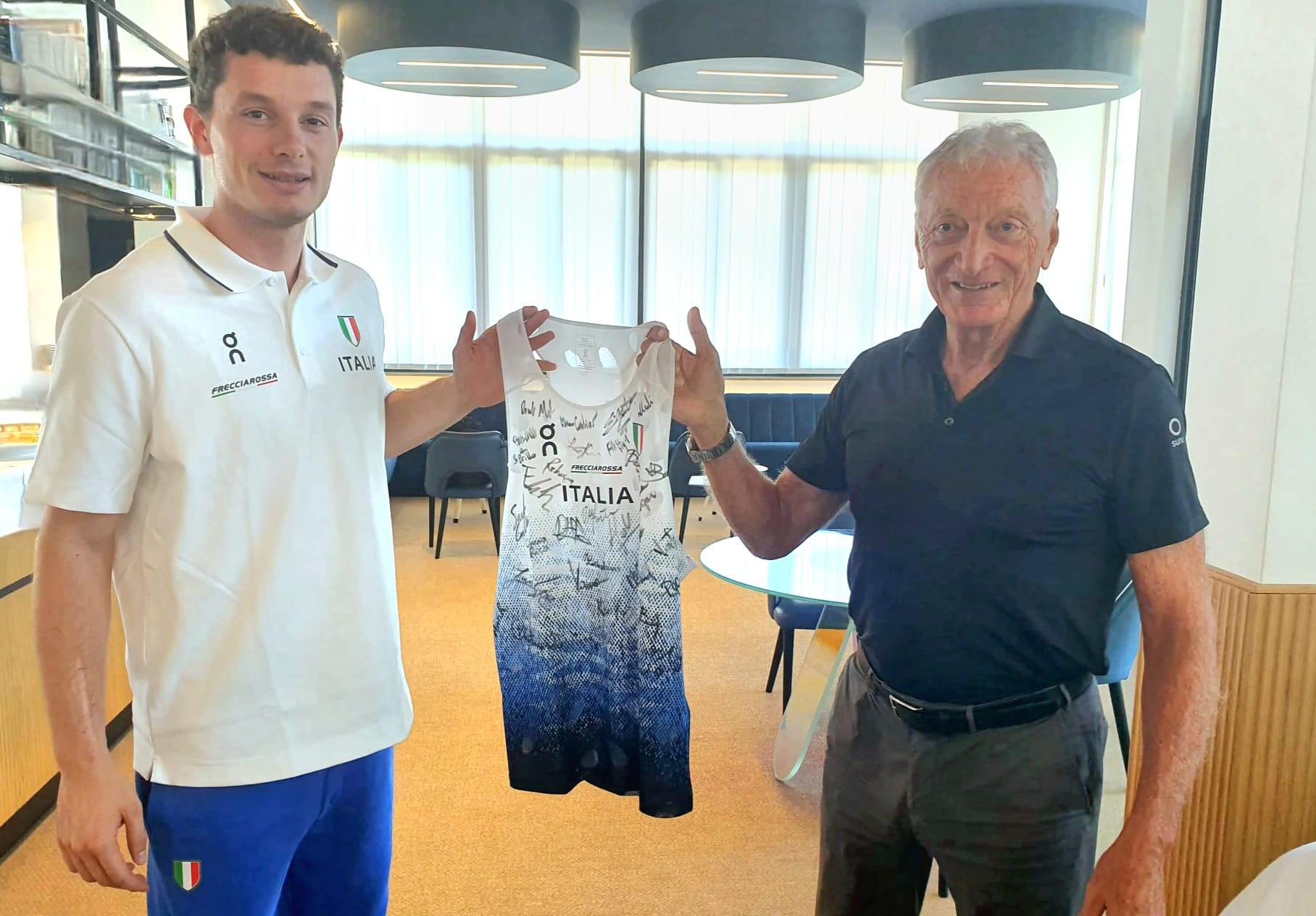
Buonfiglio was welcomed by Deputy Technical Director Roberto Pericoli, sprinting head Filippo Di Mulo, Head of the Technical Department Riccardo Ingallina and Deputy Federal Doctor Dino Petrucci. He was presented with a competition vest signed by the Italian athletes.
The shirt was handed to him by Olympic champion Filippo Tortu, who was named yesterday as one of Italy’s flagbearers for Taranto 2026 alongside boxer Irma Testa.
The national team will compete at the European Championships from 10 to 16 August with its largest-ever squad: 132 athletes, comprising 70 men and 62 women. It will then compete at the Mediterranean Games from 30 August to 3 September.
Taranto 2026: 494 athletes named in Italia Team, including four Olympic champions
- MEDITERRANEAN GAMES
Italia Team is ready for Taranto 2026. With three weeks to go before the start of competition, the Italian squad for the 20th edition of the Mediterranean Games, taking place in Puglia from 21 August to 3 September, has been officially confirmed.
The delegation will comprise 494 athletes — 258 men and 236 women — competing across every sport on the programme. Athletics will have the largest representation with 82 athletes, followed by swimming with 48.
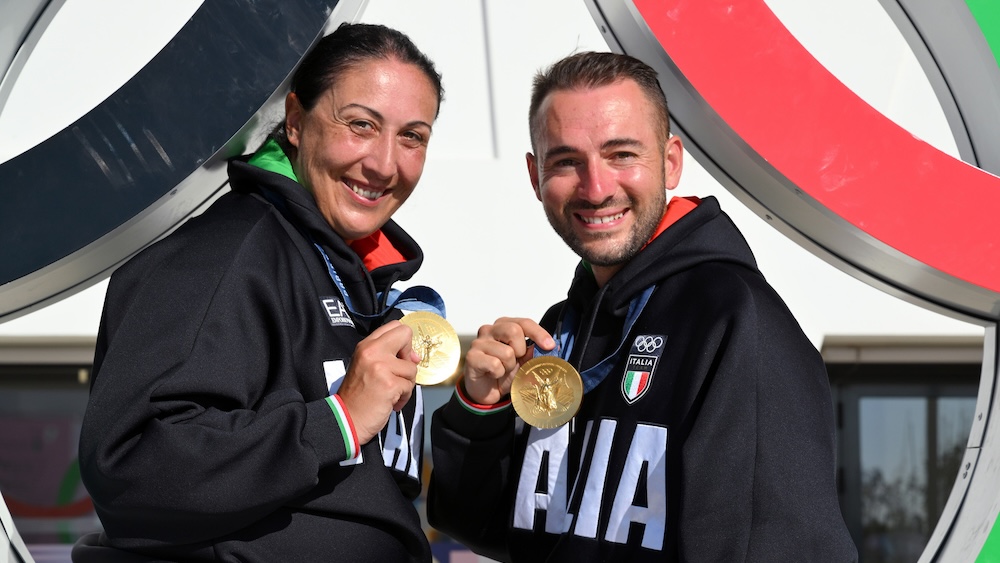
Irma Testa and Filippo Tortu will be the Italia Team flagbearers. Four Olympic champions will compete in Taranto: Gianmarco Tamberi and Filippo Tortu in athletics, and Diana Bacosi and Gabriele Rossetti in shooting (photo: Ferdinando Mezzelani GMT/CONI).
A further seven athletes who have previously won Olympic medals will also be in action: Angela Andreoli in artistic gymnastics, Abraham De Jesus Conyedo Ruano in wrestling, Irma Testa in boxing, Francesca Palumbo in fencing, Federico Nilo Maldini and Paolo Monna in shooting, and Silvana Maria Stanco in shooting.
Alessio Palombi is the Italia Team Chef de Mission.
Two years to go, the countdown has begun. Two years until Los Angeles 2028
- OLYMPIC GAMES
Two years to go: LA28 is the target. The countdown is already under way, with two years remaining until the Opening Ceremony of the Los Angeles 2028 Olympic Games. The Olympic spectacle will return to California for the third time, following the 1932 and 1984 editions.
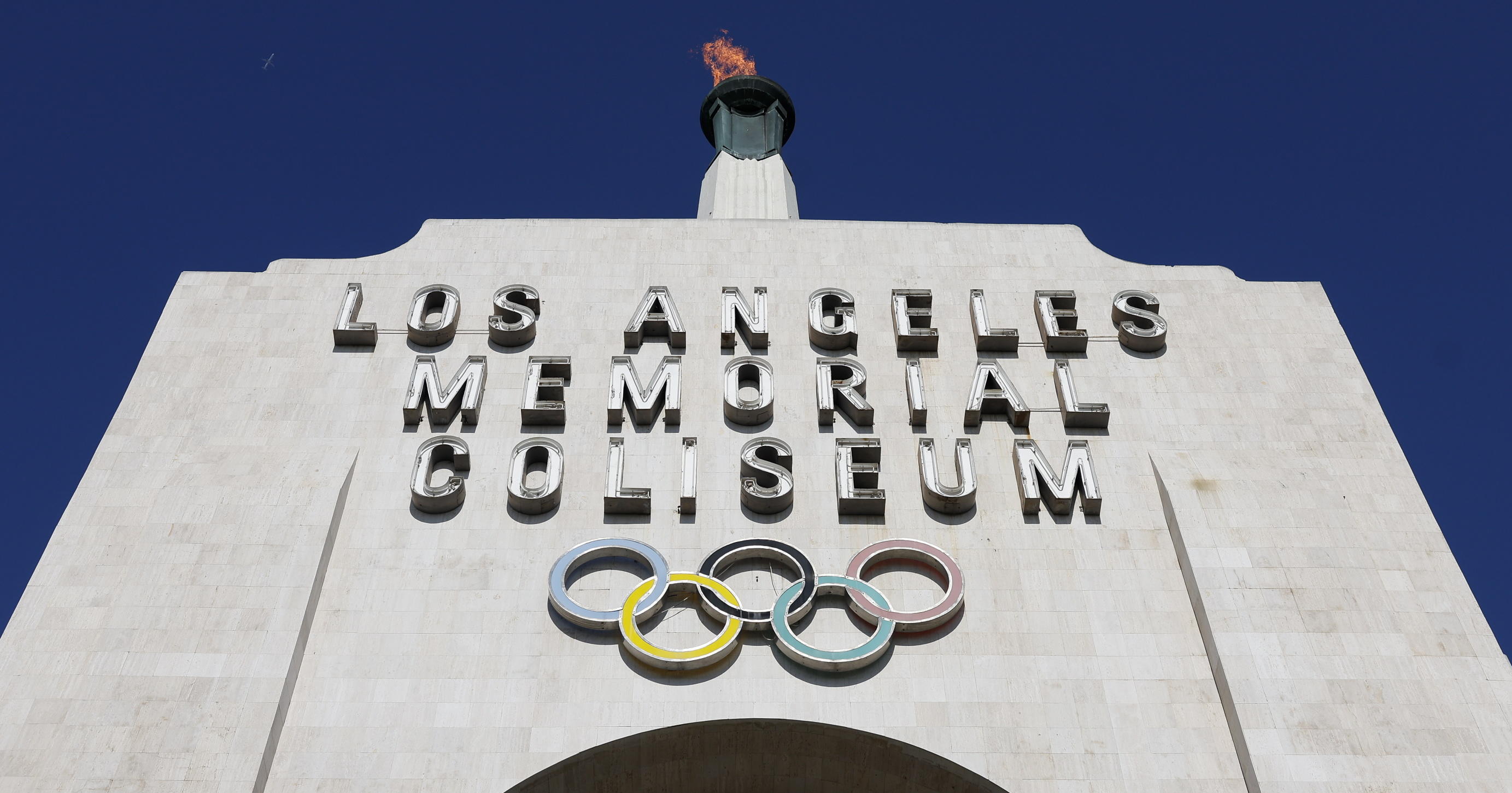
On 14 July 2028, the Olympic Opening Ceremony will be jointly staged at the Los Angeles Memorial Coliseum (Ansa photo) – which will become the first venue in history to host events at three editions of the Olympic Games – and at the stadium in Inglewood.
The use of the two venues, designated respectively to host the athletics and swimming competitions, reflects the revised schedule, with athletics moving to the first week and swimming to the second.
The programme for the 34th edition of the Summer Olympic Games will feature 36 sports and 353 events: 161 women’s, 166 men’s and 26 mixed events, 22 more than at Paris 2024.
For the first time in the history of the Olympic Games, female participation, at 50.3%, will exceed male participation, at 49.7%. Of the 11,198 athletes expected to compete, 5,635 will be women and 5,563 men. Every team sport will feature at least the same number of women’s and men’s teams, with women’s water polo adding two teams to bring the total to 12. Football will feature 16 women’s teams, four more than the 12 competing in the men’s tournament.
The baseline quota of 10,500 athletes has been increased by a further 698 places, allocated to the five sports proposed by the LA28 Organising Committee: baseball/softball, cricket, flag football, lacrosse and squash.
Archery, athletics – with the mixed 4x100m relay – golf, gymnastics, rowing – with the coastal beach sprint – and table tennis will all introduce new mixed events.
The Olympic Closing Ceremony will take place at the Memorial Coliseum on 30 July 2028, celebrating the spirit of the Games and further cementing Los Angeles’s status as an Olympic city. Anticipation is building and Olympic fever is rising: LA28 is on the horizon.
Olympic Q-Series sports programme confirmed for Tokyo, Shanghai, Montreal and Orlando
- ROAD TO LOS ANGELES 2028
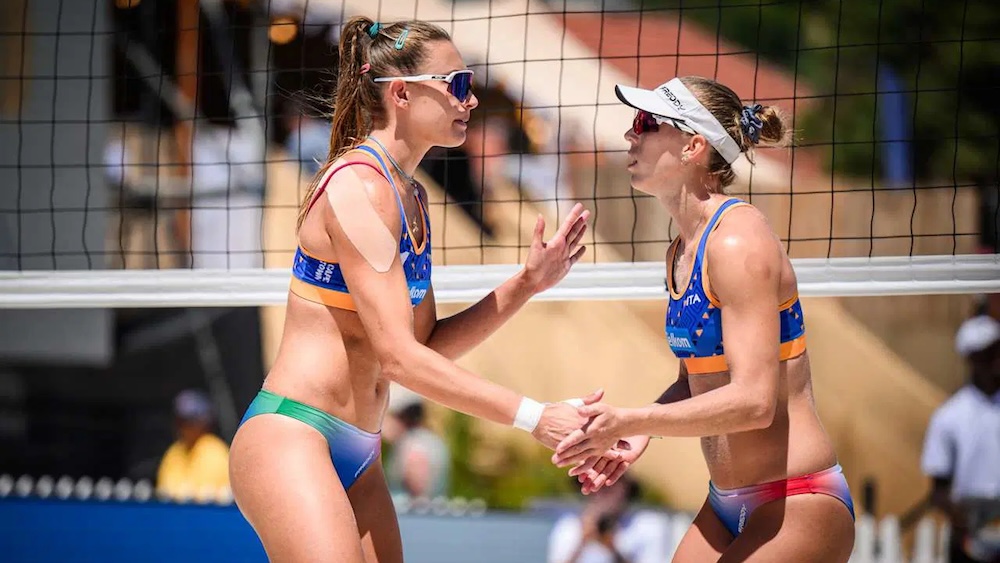
The sports programme for each stop of the Olympic Q-Series has been confirmed, with Tokyo, Shanghai, Montreal and Orlando set to stage a dynamic mix of team and individual sports on the road to the Los Angeles 28 Olympic Games.
Each stop will host four sports. The Series will open in Tokyo from 4 to 7 May 2028, with the Japanese capital staging 3x3 basketball, BMX freestyle, climbing and skateboarding (park and street). One week later, the Olympic Q-Series will move to Shanghai from 11 to 14 May 2028, where athletes will compete in 3x3 basketball, beach volleyball (photo Beach Volleyball World), BMX freestyle and climbing. The North American leg will begin in Montreal from 1 to 4 June 2028. The Canadian stop will feature flag football, beach volleyball, BMX freestyle and skateboarding (park). The Series will conclude in Orlando from 8 to 11 June 2028, with the US stop hosting flag football, beach volleyball, climbing and skateboarding (park).
The Olympic Q-Series is designed to bring qualification events closer to fans, combining high-performance sport with an urban festival atmosphere. The 2028 edition builds on the inaugural edition held in 2024, while expanding the concept to four host cities and six sports on the road to LA28.
Further details on the Olympic Q-Series 2028 – including ticketing for each stop – will be confirmed at a later date.
New disciplines, additional events on the programme and gender equality: what’s new at the Winter Olympic Games
- ALPES 2030
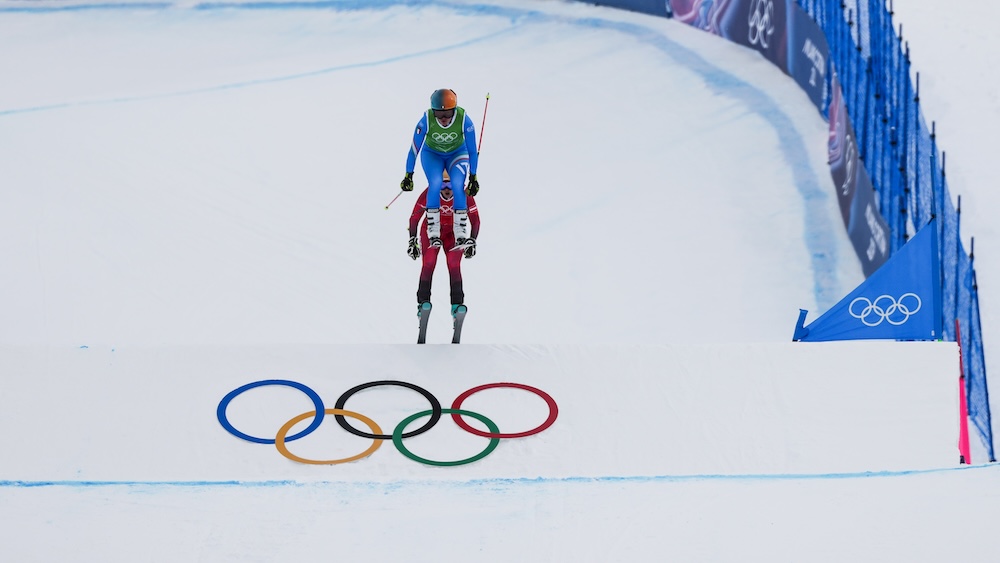
The Alpes 2030 Olympic Winter Games will make history as the first Winter Games with gender parity. The athlete quota places will be distributed equally. Some 3,046 athletes (1,525 female and 1,521 male, including athletes in ski mountaineering proposed by the OCOG as an additional sport) are set to compete across 126 events – 56 for women, 55 for men and 15 mixed. This was confirmed today by the International Olympic Committee (IOC) Executive Board (EB) as part of the discipline and event review. As part of the review, it was decided that freeride (ski and snowboard) and synchro9 (figure skating) athletes will feature for the first time on an Olympic stage. The IOC EB also confirmed the retention of snowboard parallel giant slalom, while Nordic combined was not retained.
The Alpes 2030 discipline and event programme was approved by the IOC EB following the recommendations of the Olympic Programme Working Group (OPWG), which assessed the proposals submitted by the International Federations (IFs) and the Organising Committee with regard to ski mountaineering.
Overall, 26 new events were proposed by the IFs and the Organising Committee. The IOC EB decided to add three disciplines and 16 events, to enhance gender equality, innovation and youth interest, in line with the principles approved in 2024.
The discipline and event changes introduced for Alpes 2030 concern four sports.
Biathlon: mixed singles relay (event)
Skating: figure skating: synchro9 (event); speed skating: men’s team sprint and women’s team sprint (events)
Ski and snowboard: freeride (discipline) with men’s ski, men’s snowboard, women’s ski, women’s snowboard (events); freestyle skiing: mixed team ski cross (event); snowboard: mixed team snowboard parallel (event); ski jumping: women’s super team (event); removal of Nordic combined (discipline).
Ski mountaineering (sport proposed by the French Alps 2030 Organising Committee and approved by the 146th IOC Session in June): individual (discipline): men’s individual and women’s individual (events); sprint (discipline): men’s sprint, women’s sprint and mixed relay (events).
Athlete quotas have also been adjusted across several sports and disciplines, with the overall quota set at 3,046 athletes, comprising 1,525 female athletes and 1,521 male athletes (including the OCOG-proposed sport of ski mountaineering).
These changes reflect the IOC’s commitment to ensuring that gender parity is achieved, and that the Olympic programme continues to evolve and remain relevant to future generations of athletes and fans, while controlling cost and complexity.
Freeride (ski and snowboard) and synchro9 (figure skating) will make their first appearance on the Olympic stage at Alpes 2030.
Freeride has experienced rapid international growth, benefitting from a strong youth fanbase and visually spectacular competition. It uses a natural field of play, which minimises its impact on the Games. Comprising four events, it will provide an Olympic opportunity for 44 athletes (22 women and 22 men) to compete at the Games for the first time. Freeride started in the 1990s to develop as a discipline.
The inclusion of synchro9, a team event, is a key factor in achieving gender parity at Alpes 2030. The event will be contested in the existing figure skating venue. Synchronised skating has demonstrated strong spectator appeal and delivers a dynamic competition atmosphere. It was officially recognised as a discipline by the International Skating Union (ISU) in the 1990s.
When approving the Milano Cortina 2026 sports programme in 2022, the IOC EB decided to closely monitor the performance of snowboard parallel giant slalom (PGS) and Nordic combined, considering challenges observed in past editions of the Games from a participation and audience engagement perspective.
During every Games edition, the IOC conducts a global study covering all Olympic Winter Games sports, disciplines and events across key markets on all five continents. The evaluation during Milano Cortina 2026 measured 14 popularity indicators across broadcast coverage, digital media, general public interest, ticketing and press, involving up to 50+ markets per indicator.
The IOC EB noted that PGS – as part of the discipline of snowboard – had demonstrated significant improvement since Beijing 2022 across a number of popularity indicators. It was therefore decided to retain the PGS events on the Alpes 2030 programme, provided that they will not have a standalone field of play.
Based on the findings of this study, together with trends observed across previous studies of past editions of the Olympic Winter Games, the IOC EB discussed the status of Nordic combined and decided not to include the discipline on the Alpes 2030 programme.
Across most of the popularity indicators, Nordic combined ranked lowest among all Olympic Winter Games disciplines at Sochi 2014, PyeongChang 2018, Beijing 2022 and Milano Cortina 2026. At the most recent Olympic Winter Games, it was the lowest-ranked discipline in 11 of the 14 popularity indicators assessed.
In addition, the discipline continues to face challenges in terms of universality and participation at the Olympic Games. Only five National Olympic Committees (NOCs) won medals in Nordic combined across the last four editions of the Olympic Winter Games.
Nordic combined will remain on the programme of the Dolomiti Valtellina 2028 Winter Youth Olympic Games and is eligible for future inclusion at the Utah 2034 Olympic Winter Games through the candidate discipline pathway under the evaluation process established within the Fit for the Future strategic framework.
Nordic combined athletes and Olympians will continue to have access to all the programmes designed for athletes and Olympians which are available via Athlete365.
As a result of the changes introduced to the programme, Alpes 2030 is set to achieve gender parity by quota allocation for the first time in Olympic Winter Games history, building on the progress achieved at Milano Cortina 2026, which delivered the most gender-balanced edition to date.
Female athlete quota places will account for 50 per cent of the total quota of 3,046 athletes. The programme will also achieve parity in the number of events staged, with 56 women’s and 55 men’s events, in addition to 15 mixed events.
Additionally, four sports will increase women’s participation, with two reaching full parity.
- Luge: from 44.3% to 50%
- Skiing: from 48.6% to 50%
- Bobsleigh: from 32.9% to 39.5%
- Ice hockey: from 43.4% to 45.6%
The seven sports on the Alpes 2030 initial sports programme were approved by the 142nd IOC Session in Paris in July 2024, at the same time as the host election.
In addition, ski mountaineering was officially included as an additional sport on the programme for the Alpes 2030 Olympic Winter Games. The decision was taken by the 146th IOC Session in Lausanne in June 2026, following a proposal from the French Alps 2030 Organising Committee.
Further information on the Olympic programme can be found via this link: Sports programme and results - FAQ (olympics.com).
The French Alps 2030 Organising Committee also proposed some updates to the Alpes 2030 venue masterplan which were approved by the IOC EB in addition to those approved at the previous meeting on 22 June.
Following the 146th IOC Session decision on 25 June 2026 to include ski mountaineering in the Alpes 2030 sports programme, the EB approved Montgenèvre as the host venue for this sport. This allows for integration with an existing competition venue and the Olympic Village in Briançon, ensuring operational efficiency and athlete convenience.
The IOC EB also approved adjustments to the Paralympic venue masterplan to create a more compact plan and maximise the use of Olympic venues, subject to approval by the International Paralympic Committee Governing Board.
As a principle, feedback on the 14 popularity indicators has also been provided to all International Federations so that they can work closely with the IOC to further improve for the next Games editions, particularly those disciplines and events with lower rankings.
The discipline and event programme for Alpes 2030 was assessed in line with the previously established evaluation criteria and not under the new framework approved on 25 June 2026 by the IOC Session, as part of the IOC Fit for the Future process, which will be applied only from Brisbane 2032 onwards.
Page 7 of 146