
Tokyo 2020, program also confirmed for 2021. Opening with softball, 1st medal from the shooting range
- OLYMPIC GAMES
Same schedule to be used for 2021. The Organising Committee of the Olympic and Paralympic Games in Tokyo 2020 confirmed that the programme will be kept the same, despite being postponed until next year due to the Covid-19 pandemic.
The Organising Committee, the IOC and the International Paralympic Committee agreed in April that, given the critical impact of the programme on all aspects of preparation, each session of the 2021 competition would, in principle, be scheduled as originally planned for 2020. This had an impact on the programme which, apart from some adjustments for certain events mainly due to operational reasons, was collectively confirmed. While preparations for the Games continue, Tokyo 2020 is working to resolve any remaining issues, including those related to the period of use of the competition venues.
The competitions will start at Fukushima Baseball Stadium with softball at 9am local time on 21st July 2021, two days before the Opening Ceremony.
The preliminary football matches will begin on the same day, with the preliminary rowing stages and the archery ranking rounds to be held on 23rd July, the official start day of the Olympic event.
The first medal will be awarded in the 10-metre female air rifle the following day (with the final starting at 8:30 local time).
Six other sports will also be awarded on 24th July: archery, cycling, fencing, judo, taekwondo and weightlifting, for a total of 11 medal events.
The same day will also see the start of urban sports, an exciting new feature of Tokyo 2020, with men's and women's 3x3 basketball. Street skateboarding will make its debut on the 25th and 26th July. Following these are the BMX Freestyle (park) (31st July and 1st August), skateboarding (park) (4th and 5th August) and sport climbing events (3rd to 6th August).
Fans around the world will then focus on “Super Saturday” and “Golden Sunday” on 31st July and 1st August, days when an exciting series of medal events will take place. 21 medals will be awarded during Super Saturday, including events debuting at the Games such as the mixed judo team, the mixed triathlon relay and the mixed trap team, which will help make Tokyo 2020 the first Olympics in history where gender equality in the total number of athletes will be respected. On the same day, the men's football quarter-finals will be held in four different venues in Japan. Golden Sunday, on the other hand, will award 25 gold medals, including the men's 100-metre athletics, the men's and women's gymnastics finals, and the men's single tennis final. Golden Sunday will also be the final day of fencing and swimming, with five finals planned.
The second part of the Games, which will start on 30th July, will see the semi-finals and finals of wrestling, karate and other team events, as well as the athletics events that will be held at the Olympic Stadium, the main venue of the Japanese Games.
The athletics finals will be held in all sessions, with the exception of the 30th and 31st July, during which they will only take place in the morning. The 4x100 men's and women's relay race will take place on the evening of 6th August.
The second “Super Saturday” is scheduled for Saturday 7th August, on the eve of the Closing Ceremony, and will ensure no fewer than 34 medal events, the highest number awarded on a day in Tokyo 2020. These include the men's basketball, football and volleyball finals, the women's marathon, the baseball final, the individual all-around rhythmic gymnastics and the synchronised swimming team free routine. The closing day, however, will begin with the men's marathon scheduled in Sapporo and will end with the men's water polo final which will start at 4:30pm.
The prize-giving ceremony for the women's marathon will be held, for the first time in Olympic history, during the Closing Ceremony, together with the men's one, reiterating gender equality among athletes and making this edition of the Games truly memorable.
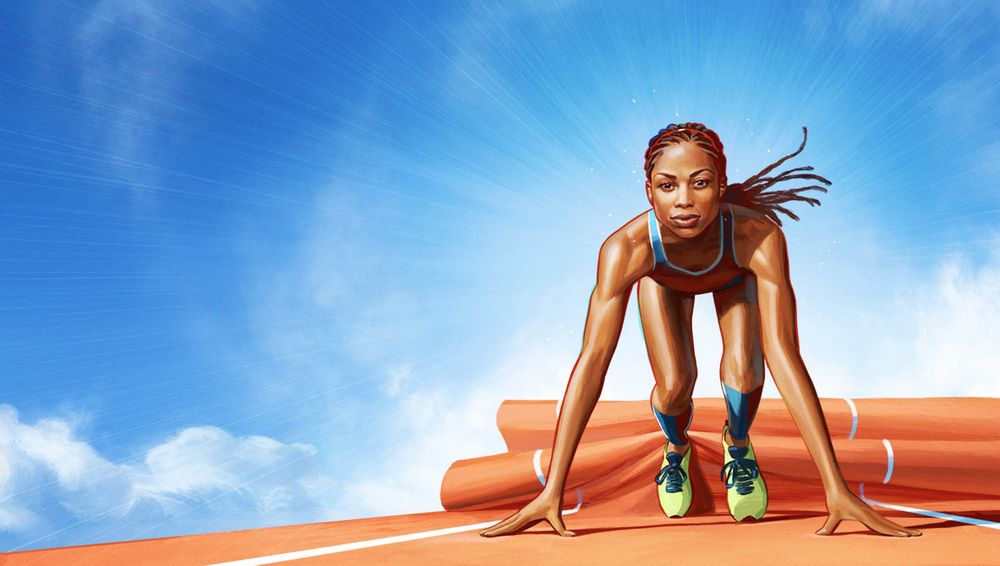
IOC, IPC and Airbnb announce Summer Festival of Olympian and Paralympian online experiences
- KICK OFF ON 24 JULY
The International Olympic Committee (IOC), the International Paralympic Committee (IPC) and Worldwide Olympic Partner Airbnb are announcing a five-day summer festival featuring more than 100 Olympian and Paralympian Online Experiences hosted virtually by some of the world’s best athletes. The festival of Olympian and Paralympian Online Experiences will kick off on 24 July, when the Olympic Games Tokyo 2020 were originally scheduled to begin, and is an opportunity for athletes to generate income while they share their passion for the Olympic and Paralympic Games and their sport with guests.
“The Olympic Games bring the whole world together and, whilst we will all have to wait one more year to celebrate in Tokyo, the Olympic flame continues to be the light at the end of the dark tunnel humankind is currently going through,” said IOC President Thomas Bach. “It demonstrates that we are stronger together. This festival is a great platform to unite and inspire the world in the spirit of friendship and solidarity this summer. The IOC puts the athletes at the heart of the Olympic Movement and supports them at every stage of their journey. We are delighted to collaborate with Airbnb to provide innovative economic empowerment opportunities for Olympic and Paralympic athletes around the world”.
Throughout the five days of programming across multiple time zones, the line-up will showcase a variety of interactive Online Experiences that guests can book on Airbnb from 22 July. Spectators can also watch select Online Experiences live or on replay on the Airbnb Olympic and Paralympic YouTube channels. While many hosts will continue to offer their activities after the event ends, like the art of reinvention with Olympian Simidele Adeagbo (skelton, Nigeria) and positive thinking with Paralympic hero Stephen Miller (athletics, Great Britain), several will be once-in-a-lifetime Online Experiences available exclusively during the festival*, like:
25 July: Build resilience to overcome obstacles with Yusra Mardini (swimming, IOC Refugee Olympic Team Rio 2016); learn about returning to sport after motherhood with Allyson Felix (athletics, USA); and work up a sweat in an inclusive session with Tatyana McFadden (athletics, USA)
26 July: Cook up a storm with legend Colin Jackson (athletics, Great Britain); join a scenic training ride with Jonny Brownlee (triathlon, Great Britain); discover velodrome secrets with Elia Viviani (track cycling, Italy)
27 July: Chat mind, body and spirit with Jackie Joyner-Kersee (athletics, USA); push through boundaries and level up in life with Meb Keflezighi (marathon, USA); get vulnerable to unlock greatness with Kerri Walsh Jennings (beach volleyball, USA); and Zumba beachside in paradise with Tom Hintnaus (athletics, Brazil)
28 July: Get a glimpse into quarantine training with two-time Grand Slam-winning Naomi Osaka (tennis, Japan); run, breathe and connect with a sprinter Zhenye Xie (athletics, China); learn a Grand Slam-inspired training regime with Sania Mirza (tennis, India); and master perseverance with Pita Taufatofua (taekwondo and cross-country skiing, Tonga)
29 July: Fall in love with sneaker culture with Rui Hachimura (basketball, Japan); get up close and personal at home with Jordy Smith (surfing, South Africa); see beyond the boundaries of vision with blind champion Lex Gillette (athletics, USA)
“At a time when it is difficult for people to gather and celebrate the exceptional performance of athletes, Airbnb is proud to host the summer festival, which is a new way to experience the Olympic and Paralympic spirit online,” said Airbnb Co-Founder Joe Gebbia. “Guests will be able to connect and interact with some of the most elite competitors within the Olympic and Paralympic Movement, giving them even more reasons to cheer them on next year.”
While the festival will give fans unprecedented global access to connect with athletes from over 20 countries and regions, all from the comfort of their homes, numerous Online Experiences in the line-up will also meaningfully promote:
Economic opportunities for athletes: Just as Online Experiences were launched as a way for hosts to earn money during the global pandemic, Olympian and Paralympian Online Experiences are a new platform to provide direct earning opportunities for athletes, underlining the efforts of the IOC, the IPC and Airbnb to support athletes, and to put them at the heart of the Olympic and Paralympic Movement.
Resilience through adversity: Numerous athlete hosts will inspire perseverance through their Online Experiences, like Yusra Mardini, the Syrian swimmer who became a member of the first ever IOC Refugee Olympic Team in 2016 and whose story became known for saving 20 lives with her sister, including their own lives, during a treacherous journey from Syria to find safety in Europe, who will host a one-off workshop on resilience. Another inspiring option is co-hosted by Tegla Loroupe, Chef de Mission for the IOC Refugee Olympic Team, and Rio 2016 Olympian, IOC Refugee Olympic Team hopeful for Tokyo 2020 James Chiengjiek Nyang, as they will transport guests virtually to the Tegla Loroupe Training Centre in Kenya. Tegla has been the guide and mentor to the IOC Refugee Olympic Team. Learn more about the IOC Refugee Olympic Team here.
The world-class hospitality of Japan: In addition to the Olympian and Paralympian Online Experiences, and as a way to celebrate Tokyo 2020, local hosts in Japan will offer guests a way to travel the country and explore its cultures and traditions from their living rooms. Through support from Shibuya City Tourism Association, local hosts will lead a package of unique online activities like Become a Ramen Expert and A Tour of Historic Shibuya. Other ways to be virtually transported to Japan will include Sake Secrets from Japan's Oldest Brewery and Explore Kyoto Where Unique Old Gods Live.
"Paralympians and Para athletes are masters of innovation and finding creative solutions to daily challenges they face,” said IPC President Andrew Parsons. "The summer festival of Olympian and Paralympian Online Experiences celebrates this tenacity and gives Para athletes a platform to share their stories to empower others, while also offering a new earning opportunity especially needed during these difficult times."
For more information on the summer festival line-up, visit airbnb.com/festival.
If fans miss the chance to participate in the five-day event, many athletes will continue to host their Experiences – both online and in person in countries where it’s safe and permissible to do so – with even more to be added to Airbnb in the coming months and years.
Olympic and Paralympic athletes who are interested in sharing their passions with guests to earn supplemental income can learn more and sign up to become a host here
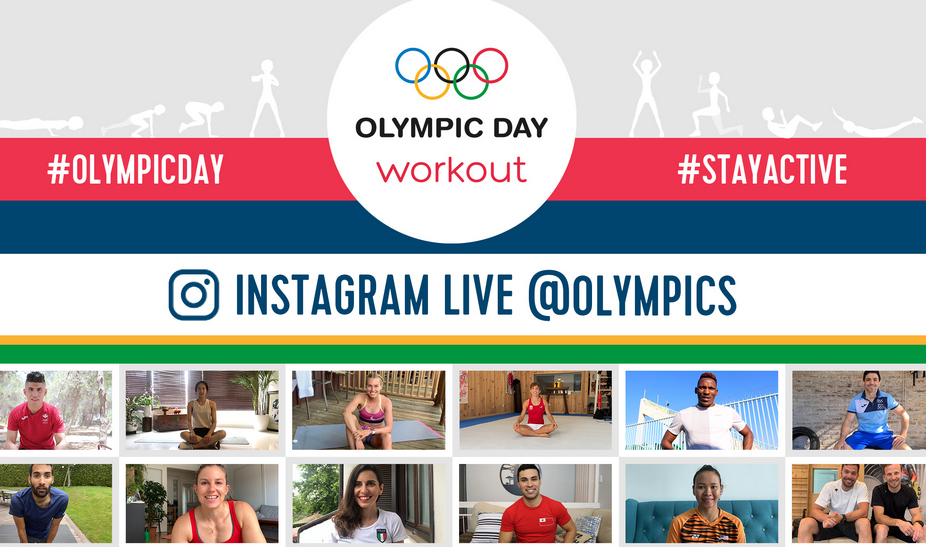
Olympic Day 2020, the world's biggest online olympic workout
- IOC
Olympic Day 2020 will see Olympians, athletes and fans all over the globe get active in the world’s largest 24-hour digital Olympic workout. Twenty-three Olympic athletes have already joined the recording of an official Olympic Day workout video, and on Olympic Day, athletes from around the world will lead live workouts at 11 a.m. local time across 20 time zones on @olympics Instagram live.
As the world gets ready to take part in #OlympicDay, Olympic champions, ranging from Kenya’s 1500m gold medallist Faith Kipyegon, to France’s most decorated Olympian of all-time, Martin Fourcade, teamed up with Tokyo 2020 hopefuls such as Dina Pouryounes, a taekwondo athlete hailing from Iran aiming to represent the Olympic Refugee Team, and the USA’s 13-time Paralympic gold medal-winning swimmer Jessica Long. (The full list of athletes can be found below.)
Since the COVID-19 pandemic forced the world into lockdown and the postponement of the Olympic Games Tokyo 2020, close to 5,000 Olympians have engaged with a remarkable 243 million people online across more than 50 countries in the IOC’s #StayStrong, #StayActive, #StayHealthy campaign by sharing their daily workouts and uplifting tips on how to stay healthy in body and mind. Olympic Day 2020 will take this campaign to the next level.
“Celebrating Olympic Day may feel very different from all previous years, but at the same time, on this Olympic Day, our message of the power of sport to bring hope and optimism to everyone resonates even stronger,” said IOC President Thomas Bach. “Let us join together to use this power of sport to prepare the postponed Olympic Games Tokyo 2020 as a moment of solidarity and resilience of humankind,” he added.
The entire Olympic Movement has been mobilised to join the online activities on 23 June. The IOC and its partners, including Olympic Games Organising Committees for Tokyo 2020, Beijing 2022, Paris 2024, Los Angeles 2028 and Milano-Cortina 2026, the National Olympic Committees (NOCs), International Federations (IFs), Worldwide Olympic Partners and rights-holding broadcasters, will be among those encouraging fans to join the virtual workouts.
For example, Worldwide Olympic Partners Coca-Cola, Samsung and Toyota have supported the campaign by encouraging their athlete ambassadors around the world to host workout sessions. In addition, Alibaba will support a #StayStrong live stream organised by the Chinese Olympic Committee and Beijing 2022, featuring over 350 Chinese athletes and medallists of different generations.
Follow all the action throughout the 24 hours on 23 June:
- Live workouts on @olympics Instagram at 11 a.m. local time in different time zones around the world, with locally relevant athletes hosting the live activations.
- A compilation workout video featuring 23 different Olympians from around the world showcasing their favourite workout moves will be available on the olympicchannel.com/olympicday
Olympic Day 2020 was always set to stand out in the event’s 72-year history. Commemorating the birth of the modern Olympic Games on 23 June 1894, Olympic Day was established in 1948 and is celebrated to promote participation in sport regardless of age, gender or athletic ability, as well as being an opportunity to celebrate the Olympic values around the world.
“We are all in the same situation right now,” added the IOC President, Thomas Bach. “With the global coronavirus crisis, all of us are living with much uncertainty about the future. In these difficult times, we need the values of sport, our shared Olympic values of excellence, friendship, respect and solidarity, more than ever. The Olympic flame can be the light at the end of the dark tunnel that we all find ourselves in now. On Olympic Day, we are sending this Olympic message to everybody. Please stay strong, stay active, stay healthy. In this Olympic spirit, I wish you all a wonderful Olympic Day 2020,” the President concluded.
The athletes involved in the Olympic Day workout video are:
- Laurie Hernandez (USA, artistic gymnastics)
- Faith Kipyegon (Kenya, athletics)
- Lutalo Muhammad (Great Britain, taekwondo)
- Sandra Sanchez (Spain, karate)
- Meli Derenalagi (Fiji, rugby 7s)
- Martin Fourcade (France, biathlon)
- Tokashiki Ramu (Japan, basketball)
- Eileen Gu (China, freestyle skiing)
- Colleen Quigley (USA, athletics)
- Zeyad Eashash (Jordan, boxing)
- Vinesh Phogat (India, wrestling)
- Tobias Wendel and Tobias Arlt (Germany, luge)
- Federico Molinari (Argentina, artistic gymnastics)
- Dina Pouryounes (Refugee, taekwondo)
- Valentina Marchei (Italy, figure skating)
- Pita Taufatofua (Tonga, taekwondo/cross-country skiing)
- Vivian Kong (Hong Kong China, fencing)
- Petra Klingler (Switzerland, sport climbing)
- Isaac Makwala (Botswana, athletics)
- Pandelela Rinong (Malaysia, diving)
- Agatha Rippel (Brazil, beach volleyball)
- Jessica Long (USA, para swimming)
The athletes lined up for the live Instagram workouts, scheduled at 11 a.m. local time across 20 time zones on @Olympics Instagram include:
- Pita Taufatofua (taekwondo/cross-country skiing) - Tonga
- Tyla Nathan-Wong (rugby 7s) - Wellington, New Zealand
- Melissa Wu (diving) - Brisbane, Australia
- Yamamoto Seito (athletics) - Tokyo, Japan
- Hong Zhang (speed skating) - Beijing, China
- Marcus Fernaldi Gideon, Anthony Ginting and Jonatan Christie (badminton) - Jakarta, Indonesia
- Elizabet Tursynbayeva (figure skating) - Kazakhstan
- PV Sindhu (badminton) - Hyderabad, India
- Aisam ul Haq Qureshi (tennis) - Pakistan
- Zeyad Eashash (boxing) - Amman, Jordan
- Margarita Mamun (rhythmic gymnastics) - Moscow, Russia
- Cameron van der Burgh (swimming) - Cape Town, South Africa
- Johanne Defay (surfing) - Europe
- Abdullah Sediqi (refugee scholarship holder, taekwondo) - Europe
- Desire Operanozie (football) - Lagos, Nigeria
- Cherif Fall (surfing) - Dakar, Senegal
- Hugo Calderano (table tennis) - Rio, Brazil
- Mikel Thomas (athletics) - Port of Spain, Trinidad and Tobago
- Rommel Pacheco (diving) - Mexico City, Mexico
- Natalie Spooner (ice hockey) - Calgary, Canada
- Kyla Ross (artistic gymnastics) - Los Angeles, USA
- TBC - Tahiti/Hawaii
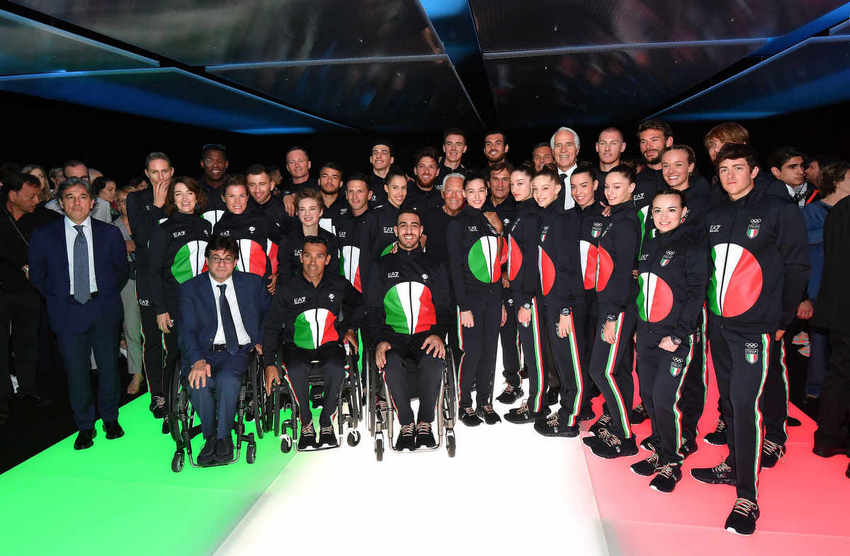
With Axpo Italia and Pulsee, the Italia Team is full of energy in view of Tokyo 2020
- NEW PARTNERSHIP
Axpo Italia and Pulsee are sponsors of the Italia Team for the 2020 Tokyo Olympics, the first to sign a post-Covid 19 agreement. The energy company, fourth in Italy and owner of Pulsee, a fully digital light and gas supply brand, has decided to directly support the Italian National Olympic Committee (CONI), signing an agreement as Official Partner.
The collaboration will start tomorrow (12th June), the day in which the first match of the Italian Cup is played - the same day on which the sport officially restarts in Italy, and on which Axpo Italia celebrates its first 20 years in Italy.The partnership will cover the run-up to the 2020 Tokyo Olympic Games and will culminate with the sporting event, which will take place in the Japanese capital from 23rd July to 8th August 2021.
Tomorrow will also see the launch of a communication campaign (media, TV, digital and press) dedicated to the new alliance rooting for Italy, and for the recovery of companies in Italy, which Axpo has been supporting for 20 years.
During the Games, Axpo Italia and Pulsee will also sponsor Casa Italia, headquarters of the Italia Team in Tokyo.
“This partnership is the beginning of a new phase. It is the first sponsorship contract signed by CONI after the beginning of the Coronavirus and is a very important sign of recovery and hope,” explained Giovanni Malagò, president of CONI. “We are proud to be supported by a company like Axpo Italia, and I hope that this association will give us a lot of good energy and enthusiasm and will bode well for a brighter future for all Italian sport to enable the achievement of even greater results”.
The partnership between Axpo Italia and CONI strengthens the energy company's long-standing commitment to the world of sport in Italy. Pulsee is, in fact, a sponsor of young sports talents, such as tennis players Matteo Berrettini and Lorenzo Sonego and alpine skier Elena Curtoni. Axpo Italia supports Italian sporting excellence such as Imoco Volley, an Italian women's volleyball club based in Conegliano that plays in the Serie A1 championship. It also supports other organisations including Legnano Basketball, Polisportiva Dinamo Sassari, Biella Basketball and Fortitudo Agrigento.
“We believe that sport plays an important role in life, and that's why we decided to start this great partnership. Dedication, tenacity and respect for others represent values that we try to constantly apply in our company, to grow both personally and professionally,” stressed Salvatore Pinto, president of Axpo Italia.
“The alliance with CONI consolidates the commitment that Axpo Italia has undertaken for years to promote sport. The project has a strong cultural value and, by accompanying the Italian Olympic team to the Olympics and supporting their journey, we want to get even closer to the community. Energy drives us to do our best every day, just like the athletes,” added Simone Demarchi, CEO of Axpo Italia.
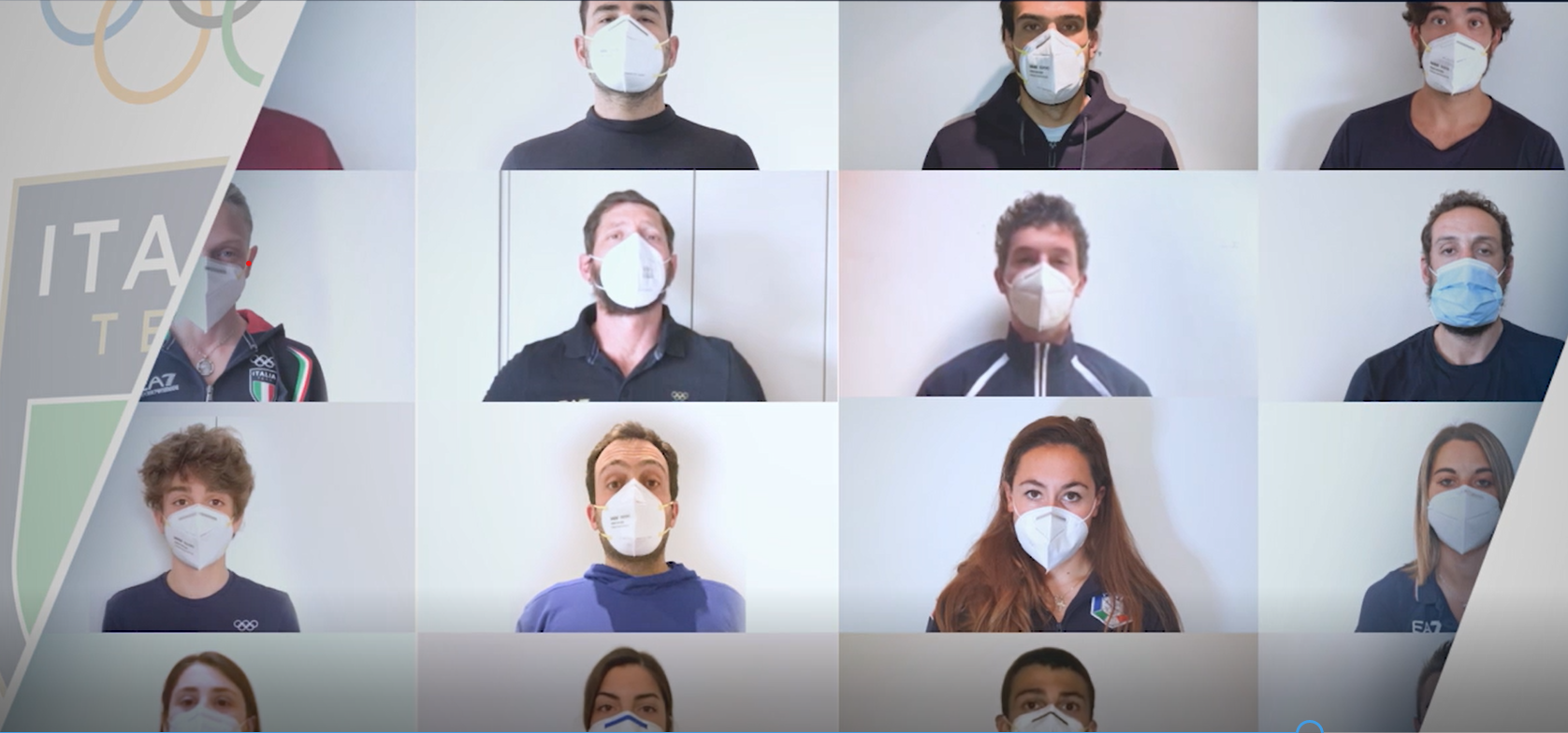
#Iplayprotected, video of Italia Team’s athletes for the new phase in fight against the virus
- CONI
Italia Team’s athletes, after the message sent to the doctors and paramedical staff during the first phase of the pandemic, have made another video to raise awareness among the community for the new phase in the fight against the Covid-19 virus, through the hashtag #iplayprotected..
Thanks to all athletes for this campaign:
- Marco Belinelli (Basketball)
- Vito Dell’Aquila (Taekwondo)
- Francesco Di Fulvio (Waterpolo)
- Arianna Fontana (Short track)
- Danilo Gallinari (Basketball)
- Sofia Goggia (Alpine Skiing)
- Jessica Rossi (Shooting)
- Daniele Lupo (Beach Volley)
- Alessandro Mazzara (Skateboard)
- Francesco Molinari (Golf)
- Aldo Montano (Fencing)
- Erika Piancastelli (Softball)
- Irma Testa (Boxing)
- Filippo Tortu (Athletics)
- Giuseppe Vicino (Rowing)
- Elia Viviani (Cycling)
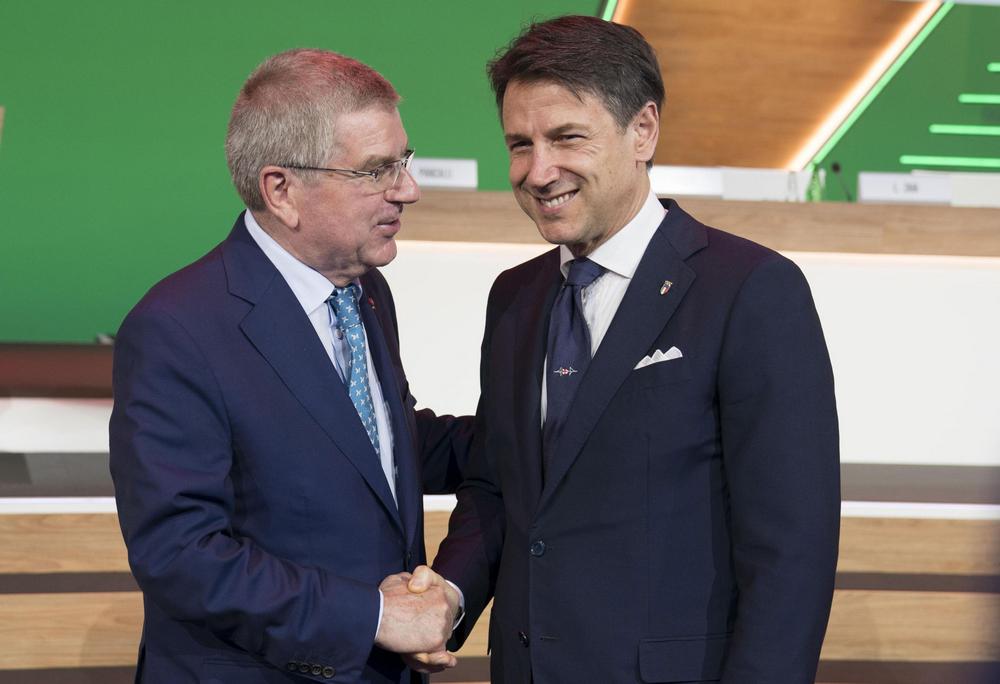
Bach writes to Conte: thanks for the approval of the Olympic Law by the Chamber of Deputies
- MILANO CORTINA 2026
IOC President, Thomas Bach, has sent a letter to the President of CONI, Giovanni Malagò, with prayer to forward it to the President of the Council of Ministers, Giuseppe Conte.
Malagò has informed the Minister for Youth Policies and Sports, Vincenzo Spadafora, of the letter and has brought also to the attention of the Executive Board of the Milano Cortina 2026 Foundation who met this afternoon by videoconference.
Yours Excellecy,
Please accept my heartfelt congratulations on the approval of the Olympic Law for the Olympic Winter Games Milano Cortina 2026 by the Chamber of Deputies of the Italian Parliament. The overwhelming result with near unanimous support is another reflection of the great unity of the Italian people behind these Games for a brighter future outlook.
This remarkable outcome is also sign of your leadership in these challenging times.Please accept my heartfelt congratulations on the approval of the Olympic Law for the Olympic Winter Games Milano Cortina 2026 by the Chamber of Deputies of the Italian Parliament. The overwhelming result with near unanimous support is another reflection of the great unity of the Italian people behind these Games for a brighter future outlook. This remarkable outcome is also sign of your leadership in these challenging times.The International Olympic Committee is looking forward to continuing its close and fruitful cooperation with your Government and the Italian Olympic Committee, under the excellent leadership of its President and IOC Member, Mr Giovanni Malago.
Together with all our Italian friends and partners, we are committed to make the Olympic Winter Games Milano Cortina 2026 an unforgettable success story.Please allow me to thank you very much for your continued personal support and I am sure that we can look forward to another strong signal of confidence in the success of the Olympic Winter Games Milano Cortina 2026 when the Olympic Law is submitted to the Senate of the Republic for approval.2Over the last few weeks, our thoughts have been with all the Italian people going through this unprecedented crisis. I wish you and all your citizens good health and all the very best.Please accept, Your Excellency, the assurances of my highest consideration and personal esteem,
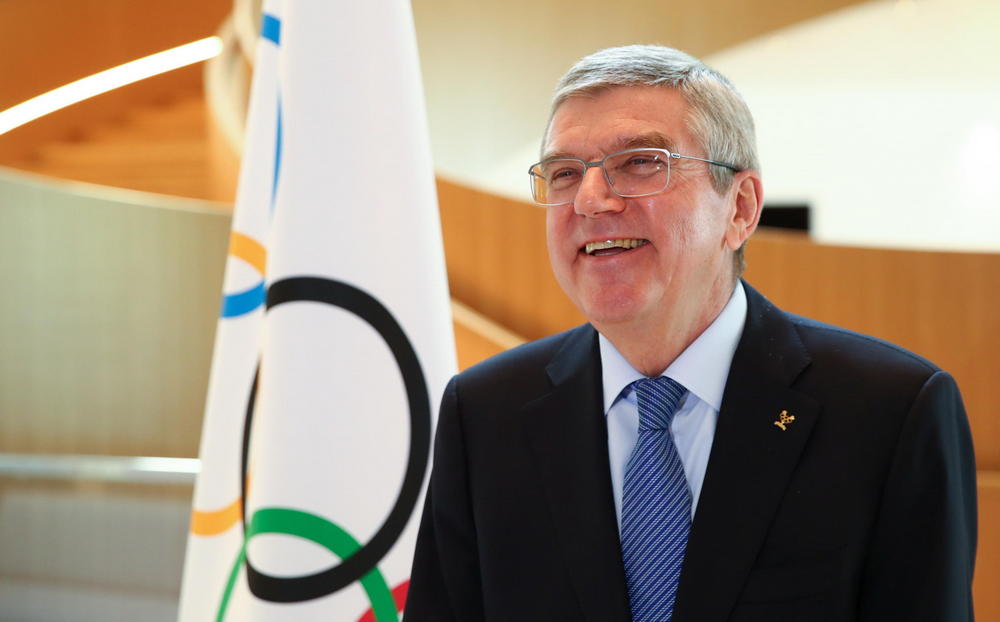
Bach writes to Malagò: thank you CONI for #ItaliaConVoi video, demonstration of the Olympic spirit
- IOC'S LETTER
"Thank you" to CONI and Italian sport. The President of the IOC, Thomas Bach, with a letter addressed to the President Giovanni Malagò, wanted to testify the unanimous appreciation of the International Olympic Committee for sharing the inspirational #ItaliaConVoi video, “put together so beautifully by Italian athletes and Team Italia in support of doctors and paramedical staff who are at the forefront of fighting the COVID-19 pandemic”.
“In these difficult times that Italy is living through right now, let me express my strong support and appreciation for this wonderful initiative of CONI and the Italian athletes. Italy is an integral part of our Olympic Movement and the Italian Olympic family holds a special place in our hearts. This video, with such a moving message from the Italian Olympic athletes, is a wonderful demonstration of the Olympic spirit. Initiatives like yours, with the athletes leading by example, show that sport is doing its part in this crisis. Thank you and all the athletes for demonstrating that solidarity runs strong in our Olympic community”.
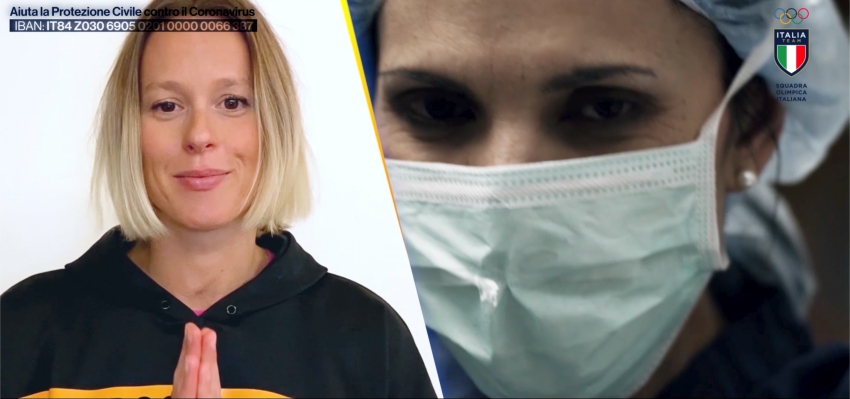
IOC chooses CONI's videos for World Health Day 2020
- FOR THE FIRST TIME
At a time when populations are being asked to stay at home to contain the spread of the COVID-19 pandemic, athletes are not only setting examples on how to #StayActive / #StayStrong / #BeActive / #HealthyAtHome and leverage physical activity to face this unprecedented situation, as celebrated yesterday on the occasion of the International Day of Sport for Development and Peace, but many of them are also working actively in healthcare facilities.
Some have successfully combined medical studies or nursing with their sporting careers, or have switched to health work after retirement. Others have shown their gratitude to all the health workers who are toiling untiringly every day to save lives. This is the case of athletes from the Italian Olympic Team, who came together in the video below to show their support and say an enormous thanks, or “grazie”, to all the medical staff fighting the pandemic.
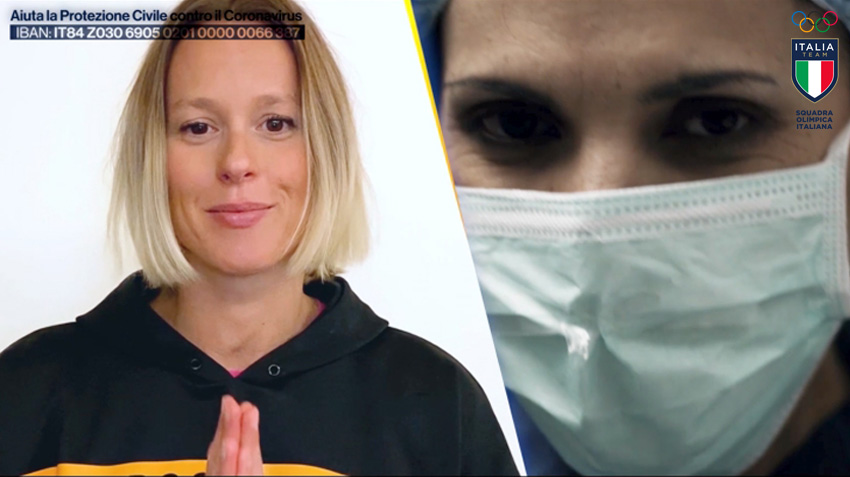
Italian Olympic Sport United for doctors and paramedical staff
- CONI
This is the message that Italia Team’s athletes have made for doctors and paramedical staff who, in these days, are fighting for saving our life.
ITALY WITH YOU
“Today we are not the strongest”
“We are not the fearless”
“We are not the tireless”
“We are not the record breakers”
“We are not the fighters”
“We are not the hope givers”
“We are not the heroes…”
“Today you are the heroes”
“You in intensive care units”
“You in labs”
“You on ambulances”
“You the frontline fighters”
“You full of care and smiles”
“You are our hope”
“And from the deep of our heart”
“The Italia Team says: GRAZIE”
Italian Olympic Sport United for doctors and paramedical staff
Thanks to: Federica Brignone, Frank Chamizo, Elisa Di Francisca, Paola Egonu, Michela Moioli, Gregorio Paltrinieri, Federica Pellegrini, Simona Quadarella, Dorothea Wierer, Ivan Zaytsev and to all italian olympic athletes who ideally share this message.
New dates for Tokyo 2020 confirmed for 2021. The Summer Games will be celebrated from 23 July
The International Olympic Committee (IOC), the International Paralympic Committee (IPC), the Tokyo 2020 Organising Committee, the Tokyo Metropolitan Government and the Government of Japan today agreed new dates for the Games of the XXXII Olympiad, in 2021. The Olympic Games Tokyo 2020 will be celebrated from 23 July to 8 August 2021. They also agreed on new dates for the Paralympic Games, which will be celebrated from 24 August until 5 September 2021.
The leaderships of the key parties came together via telephone conference earlier today, joined by IOC President Thomas Bach, Tokyo 2020 President Mori Yoshirō, Tokyo Governor Koike Yuriko and Olympic and Paralympic Minister Hashimoto Seiko, and agreed on the new schedule.
This decision was taken based on three main considerations and in line with the principles established by the IOC Executive Board (EB) on 17 March 2020 and confirmed at its meeting today. These were supported by all the International Summer Olympic Sports Federations (IFs) and all the National Olympic Committees (NOCs):
1. To protect the health of the athletes and everyone involved, and to support the containment of the COVID-19 virus.
2. To safeguard the interests of the athletes and of Olympic sport.
3. The global international sports calendar.
These new dates give the health authorities and all involved in the organisation of the Games the maximum time to deal with the constantly changing landscape and the disruption caused by the COVID-19 pandemic. The new dates, exactly one year after those originally planned for 2020 (Olympic Games: 24 July to 9 August 2020 and Paralympic Games: 25 August to 6 September 2020), also have the added benefit that any disruption that the postponement will cause to the international sports calendar can be kept to a minimum, in the interests of the athletes and the IFs. Additionally, they will provide sufficient time to finish the qualification process. The same heat mitigation measures as planned for 2020 will be implemented.
In a call on Tuesday 24 March 2020, based on information provided by the WHO at the time, IOC President Thomas Bach and Japanese Prime Minister Abe Shinzō concluded that the Olympic Games Tokyo 2020 would be held in their complete form and not later than summer 2021. The Prime Minister reiterated that the government of Japan stands ready to fulfil its responsibility for hosting these successful Games. At the same time, IOC President Thomas Bach stressed the full commitment of the IOC to successful Olympic Games Tokyo 2020.
Following today’s decision, the IOC President said: “I want to thank the International Federations for their unanimous support and the Continental Associations of National Olympic Committees for the great partnership and their support in the consultation process over the last few days. I would also like to thank the IOC Athletes’ Commission, with whom we have been in constant contact. With this announcement, I am confident that, working together with the Tokyo 2020 Organising Committee, the Tokyo Metropolitan Government, the Japanese Government and all our stakeholders, we can master this unprecedented challenge. Humankind currently finds itself in a dark tunnel. These Olympic Games Tokyo 2020 can be a light at the end of this tunnel.”
Andrew Parsons, the President of the IPC, commented: “It is fantastic news that we could find new dates so quickly for the Tokyo 2020 Games. The new dates provide certainty for the athletes, reassurance for the stakeholders and something to look forward to for the whole world. When the Paralympic Games do take place in Tokyo next year, they will be an extra-special display of humanity uniting as one, a global celebration of human resilience and a sensational showcase of sport. With the Tokyo 2020 Paralympic Games 512 days away, the priority for all those involved in the Paralympic Movement must be to focus on staying safe with their friends and family during this unprecedented and difficult time.”
The President of the Tokyo 2020 Organising Committee, Mori Yoshirō, said: “IOC President Thomas Bach and the Tokyo 2020 Organising Committee held a conference call today to discuss in detail the revised dates of the Tokyo 2020 Games. Minister for the Tokyo Olympic and Paralympic Games Hashimoto Seiko and Tokyo Governor Koike Yuriko joined the call. I proposed that the Games should be hosted between July and August 2021, and I really appreciate that President Bach, having discussed this proposal with the various international sports federations and other related organisations, kindly accepted my proposal. A certain amount of time is required for the selection and qualification of athletes and for their training and preparation, and the consensus was that staging the rescheduled Games during the summer vacation in Japan would be preferable. In terms of transport, arranging volunteers and the provision of tickets for those in Japan and overseas, as well as allowing for the COVID-19 situation, we think that it would be better to reschedule the Games to one year later than planned, in the summer of 2021. Notwithstanding the postponement of the Olympic and Paralympic Games for the first time in history, and various other issues that have already been highlighted, the event schedule is the cornerstone of future preparations, and I am convinced that taking this decision promptly will help speed up future preparations. I would like to thank all the stakeholders, including the host city Tokyo and the Government of Japan, for their hard work during this short period. The Tokyo 2020 Organising Committee will continue to work hard for the success of next year's Games.”
Governor Koike Yuriko said: “In consideration of the global coronavirus outbreak, we need a certain timeframe before we fully prepare for the delivery of Games that are safe and secure for the athletes and spectators. Also, the preparation for the new dates will go smoothly, as the dates match with same timeframe as the original competition dates, corresponding with ticketing, venue staffing, volunteers and transport. Therefore, I believe that celebrating the opening of the Olympic Games Tokyo 2020 on 23 July 2021 is ideal. The athletes, volunteers, torchbearers and local municipality governments have been concerned about the situation. Since we now have concrete new dates to aim for, the Tokyo Metropolitan Government will commit all its resources, and work closely with the Tokyo 2020 Organising Committee, the national government and other stakeholders to fully prepare for the delivery of Games that are safe and secure.”
It has previously been confirmed that all athletes already qualified and quota places already assigned for the Olympic Games Tokyo 2020 will remain unchanged. This is a result of the fact that these Olympic Games Tokyo , in agreement with Japan, will remain the Games of the XXXII Olympiad.
Page 64 of 146