

Record-breaking Milano Cortina, General Secretary Carlo Mornati: “This truly is the strongest Italia Team ever”
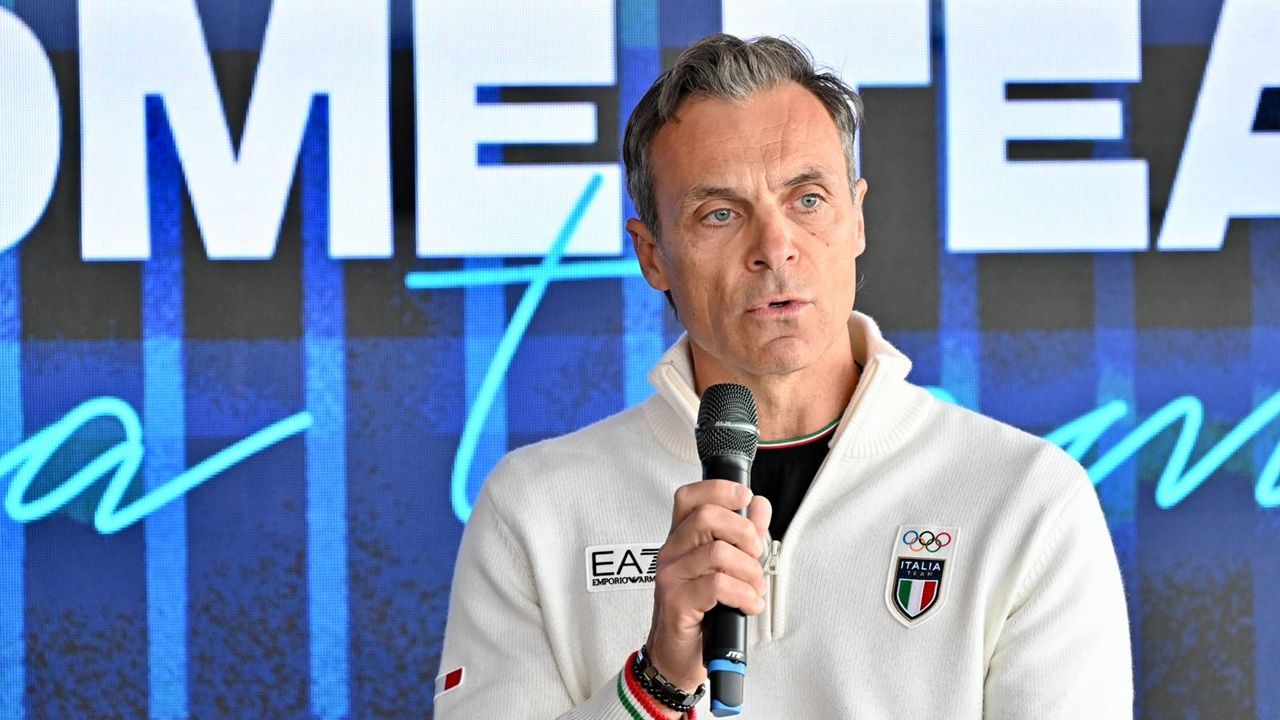
On the morning of the penultimate day of the Milano Cortina 2026 Olympic Winter Games, CONI General Secretary and Chef de Mission Carlo Mornati addressed the press from Casa Italia Livigno, offering reflections on Italy’s performances at these Games and on the pathway that has enabled the Italia Team to reach a record tally of 29 medals (including ten gold), with competitions still to be concluded.
“When we discussed medal projections, I went so far as to say that this would be our strongest Olympic team ever. We had the highest Olympic Index in our history in winter disciplines — the algorithm that takes into account all athletes' performances weighted across the 116 events of the Games: it stood at 6.58 and after nineteen days of competition it has risen to 7.15. The result is exceptional. Today, even with the Games not yet finished, we can say that we truly have the strongest Azzurri team ever, and that it has translated this strength into medals,” Carlo Mornati began during the press conference in Livigno, in the presence of Deputy Chef de Mission Elisa Santoni (Valtellina Cluster Manager), with links to the other hospitality houses. At Casa Italia Cortina, hosted at the Farsetti Gallery, Deputy Chef de Mission Vicario Alessio Palombi and Deputy Chef de Mission and Head of Communications and Protocol Danilo Di Tommaso were present, while at Casa Italia in Milan, at the Triennale, Deputy Chefs de Mission Enzo Bartolomeo (Milan Cluster Manager) and Giampiero Pastore (IMSS Manager) attended. Also connected was Deputy Chef de Mission and Val di Fiemme Cluster Manager Alessio Boggiatto.
“This is not a final balance — that will come at the end,” the General Secretary clarified. “But rather a technical reflection towards the close of the Olympics, with many athletes still competing. We entered sixteen disciplines and won medals in ten of them. Behind the numbers lies eight years of work by two federations and by the Olympic Committee, as well as, naturally, the athletes’ efforts,” Mornati explained — just minutes before the remarkable one-two secured by Simone Deromedis (gold) and Federico Tomasoni (silver) in the men’s ski cross, medals number 28 and 29 for Italy — later recalling figures from the Censis report entitled The Social Value of CONI’s Institutional Functions, presented last 16 December. “After Paris we commissioned Censis to carry out a study to verify the true social value behind Italian sporting success. The data were exceptional: for 89% of Italians, across a sample ranging from 15 to 90 years of age, winning Olympic medals is extremely important because it brings prestige and fosters unity within the country, enabling it to hold a prominent position internationally. That is something very beautiful, and the same applies socially. For 87% of Italians, medals won by athletes are important because they encourage young people to take up sport. Knowing that behind these successes there will be more registered members and youngsters approaching sport gives enormous social value to the work we do every day,” Mornati added, recalling scholarships amounting to €1,120,000 and prize money totalling €6,240,000 distributed by CONI. “We are very pleased. Referring again to the Censis report, for 81.3% of Italians it is essential to guarantee financial support to athletes competing at major events and therefore at the Olympic Games. It is not an aspect felt only by us, but one that carries social value for Italians,” Mornati’s words.
Behind the success lies work stretching from the Olympic Preparation Centres to scientific research and sports medicine. “We entered 196 athletes and there are 268 officials. Fifty belong to CONI and 218 to the federations. That is an exceptional number. If there is one field in which CONI is the undisputed Olympic champion, it is precisely this. The Olympic Games average is around 100 officials; we have 168 more. This means every single athlete has an engineer, a physiotherapist, a doctor, a coach and technical support staff well above the average of their competitors,” Carlo Mornati recalled. “Milano Cortina, like Paris, marks the end of a journey. The main strands of CONI’s Olympic preparation are relations with the federations, assistance to athletes, the use of Olympic Preparation Centres and research conducted by the Institute of Sports Medicine and Science. Sport must live daily life alongside athletes and that is what we have tried to do since 2014: full completion came in Paris in 2024, while in Milano Cortina there has been an explosion,” Mornati explained. “In every cluster and structure this small ecosystem has been replicated and the athlete found the same physiotherapist, the same engineer and the same technician who had followed them over the years. Of the 196 athletes across sixteen disciplines, before coming here 104 from nine disciplines were directly supported within this ecosystem. The intervention is at the request of the federations and it means the relevant federations have great trust in CONI’s technical-scientific tools.” (agc)